Physical Address
304 North Cardinal St.
Dorchester Center, MA 02124
Physical Address
304 North Cardinal St.
Dorchester Center, MA 02124

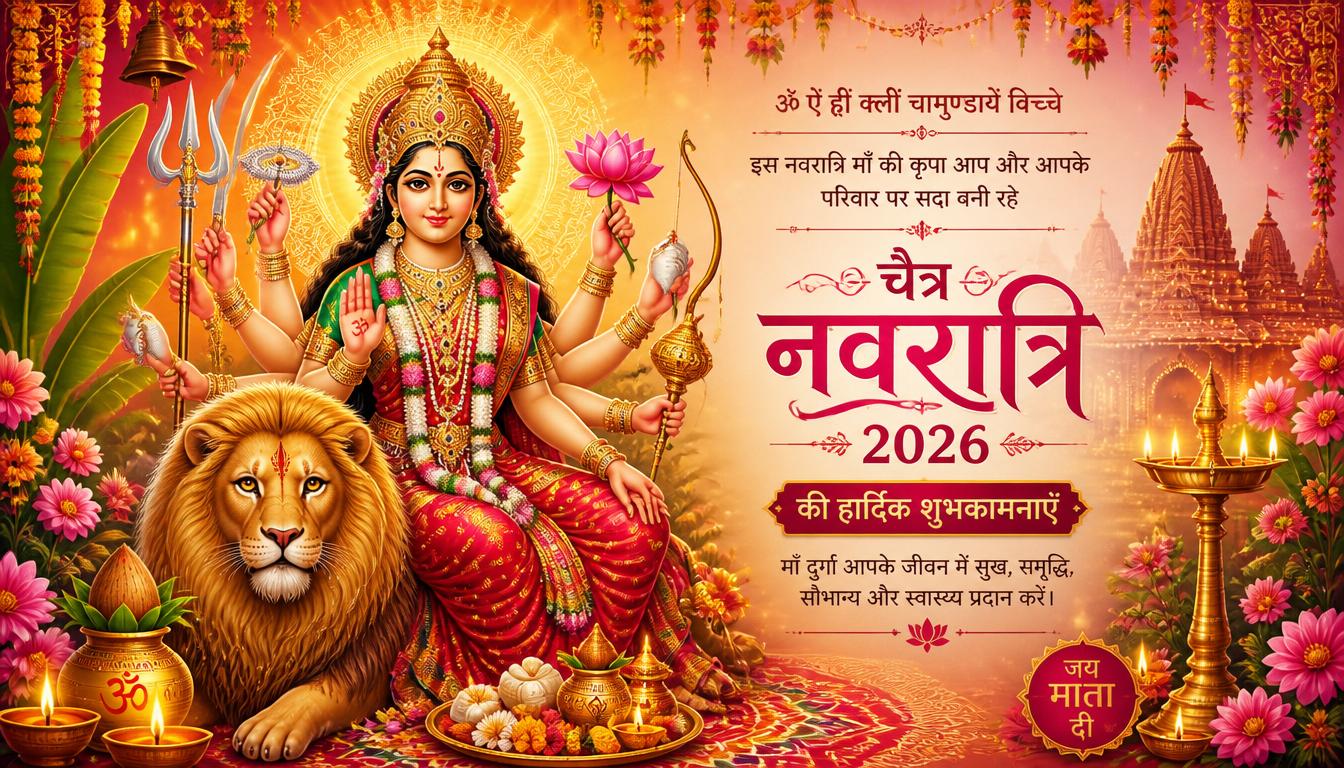
Chaitra Navratri 2026 is one of the most sacred and spiritually uplifting festivals in Hinduism. Every year, millions of devotees eagerly wait to know the exact Chaitra Navratri 2026 date, the auspicious Ghatasthapana Muhurat, and the deeper religious significance behind these nine divine days.
This festival marks the worship of Goddess Durga in her nine powerful manifestations, collectively known as Navdurga, and is considered the spiritual beginning of a new cycle of life.
The arrival of Chaitra Navratri also coincides with the onset of spring, bringing a sense of renewal, positivity, and fresh energy.
For devotees, it is not merely a festival but a period of self-discipline, devotion, fasting, and spiritual transformation.
Whether you are observing Navratri for the first time or have followed the tradition for years, understanding its rituals and significance can make the experience even more meaningful.
Chaitra Navratri 2026 will begin on Thursday, 19 March 2026, and conclude on Friday, 27 March 2026.
The festival starts on the Pratipada Tithi of Shukla Paksha in the month of Chaitra according to the Hindu lunar calendar. The ninth and final day is celebrated as Ram Navami, commemorating the birth of Lord Rama.
| Event | Date |
|---|---|
| Chaitra Navratri Begins | 19 March 2026 |
| Ghatasthapana | 19 March 2026 |
| Durga Ashtami | 26 March 2026 |
| Ram Navami | 27 March 2026 |
| Chaitra Navratri Ends | 27 March 2026 |
Because this Navratri culminates with Ram Navami, it is often referred to as Rama Navratri. It is also known as Vasanta Navratri, as it falls during the spring season.
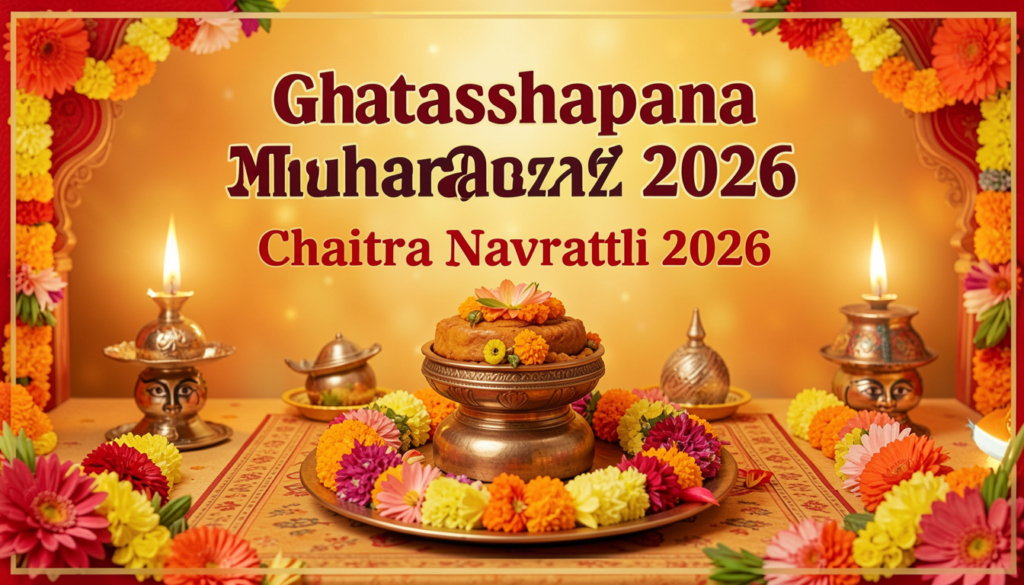
Ghatasthapana, also known as Kalash Sthapana, marks the official beginning of Navratri worship. This sacred ritual symbolizes inviting divine energy into the home and establishing the presence of Maa Durga for the next nine days.
| Ritual | Date | Time |
| Pratipada Tithi Begins | 18 March 2026 | 07:05 PM |
| Pratipada Tithi Ends | 19 March 2026 | 07:44 PM |
| Ghatasthapana Muhurat | 19 March 2026 | 06:11 AM – 10:33 AM |
| Abhijit Muhurat | 19 March 2026 | 11:54 AM – 12:42 PM |
Performing Kalash Sthapana during the prescribed muhurat is believed to attract peace, prosperity, and divine blessings. Many families consider this ritual the foundation of their entire Navratri observance.
Chaitra Navratri represents the victory of good over evil and the awakening of divine feminine energy, known as Shakti.
In Hindu philosophy, Goddess Durga symbolizes courage, righteousness, protection, and spiritual strength. During these nine days, devotees worship her different forms to seek blessings for health, prosperity, wisdom, and inner peace.
The spiritual significance of Chaitra Navratri includes:
Many spiritual teachers believe that the energies during Navratri are uniquely favorable for meditation, mantra chanting, and self-reflection. It’s kind of a reset button for the soul, you could say.
For many Hindu traditions, Chaitra month marks the beginning of the New Year. Festivals such as Gudi Padwa in Maharashtra and Ugadi in Andhra Pradesh and Telangana occur around the same period.
This connection makes Chaitra Navratri particularly significant because it represents:
Many families start important activities, business plans, and personal commitments during this period because it is regarded as highly auspicious.
The roots of Navratri are deeply connected to the story of Goddess Durga and Mahishasura.
According to Hindu scriptures, the demon king Mahishasura gained immense powers and began troubling gods and humans alike. Unable to defeat him individually, the gods combined their energies to create Goddess Durga, the supreme embodiment of divine power.
A fierce battle followed for nine days and nights.
On the tenth day, Durga defeated Mahishasura, symbolizing the triumph of righteousness over evil. This victory is remembered every Navratri and inspires devotees to overcome their own negative tendencies and challenges.
This ancient narrative continues to resonate today because everyone faces struggles, doubts, and obstacles in life. The festival reminds us that perseverance and faith can overcome darkness.
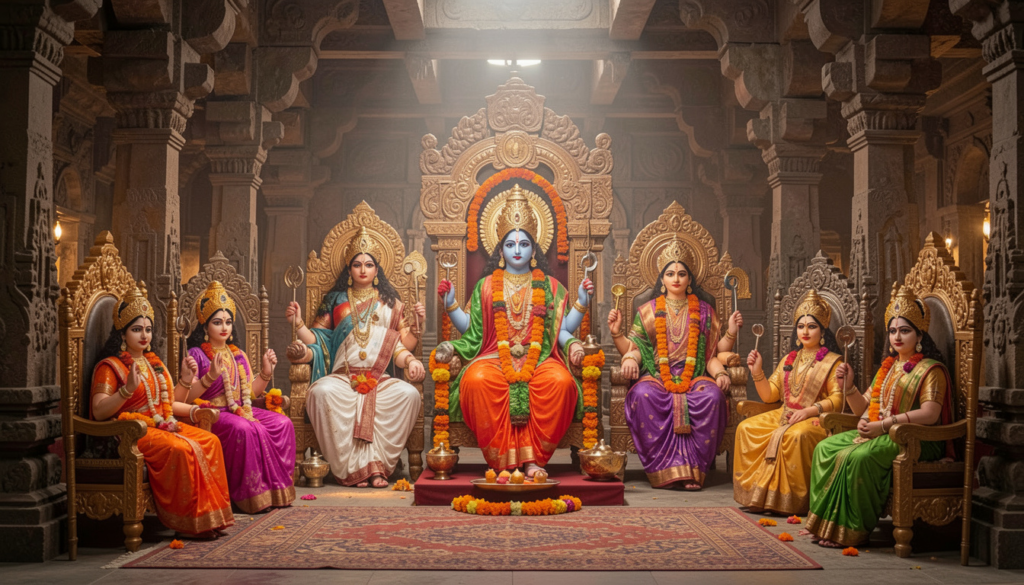
Each day of Navratri is dedicated to a different manifestation of Maa Durga.
Many devotees follow the daily Navratri colour tradition. While not mandatory, these colours are believed to enhance spiritual connection with the Goddess.
Each colour carries a symbolic vibration:
Wearing these colours during worship creates a sense of unity and devotion among participants.
One area many guides fail to explain properly is the actual process of performing Ghatasthapana. Here’s a practical step-by-step method.
Choose a clean and peaceful area in your home. The puja space should ideally face east or north.
Spread soil in the tray and sow barley seeds. These seeds symbolize growth, prosperity, and abundance.
Fill the Kalash with water and place betel nuts, coins, and rice inside. Decorate it with mango leaves and place a coconut wrapped in red cloth on top.
Offer prayers and make a spiritual resolution for the Navratri period.
Chant Durga mantras and invite the divine presence of the Goddess into the Kalash.
An Akhand Jyoti is a continuously burning lamp maintained throughout the nine days. It symbolizes uninterrupted divine blessings.
Many devotees unknowingly make errors during Kalash Sthapana.
Avoid:
Paying attention to these details helps maintain the sanctity of the ritual.
Fasting or Vrat is one of the most widely observed aspects of Chaitra Navratri.
Some devotees observe:
The purpose of fasting isn’t just dietary restriction. It encourages discipline, mental clarity, and spiritual focus.
One of the most sacred texts recited during Navratri is the Durga Saptashati, also known as Devi Mahatmya.
The scripture contains 700 verses describing the glory, victories, and divine powers of Goddess Durga.
Benefits traditionally associated with its recitation include:
Many families read one chapter daily throughout Navratri, while others complete the entire text during the nine-day period.
Kanya Puja is among the most cherished Navratri traditions.
Young girls are worshipped as embodiments of the Goddess. Their feet are washed, prayers are offered, and special meals are served.
This ritual teaches:
For many households, Kanya Puja becomes the emotional highlight of Navratri.
Though devotion to Maa Durga remains universal, celebrations vary across regions.
In states such as Uttar Pradesh, Delhi, Haryana, and Punjab:
The festival coincides with Gudi Padwa, the Marathi New Year.
Families:
Here, Navratri aligns closely with Ugadi, the Telugu New Year.
Celebrations include:
These regional traditions beautifully demonstrate India’s cultural diversity while maintaining shared spiritual values.
Devotees believe that sincere observance of Navratri offers numerous benefits.
Many people notice that even a simple commitment to daily prayer during Navratri creates a noticeable sense of calm and purpose.
Chaitra Navratri 2026 is much more than a religious festival. It is a sacred opportunity to reconnect with faith, discipline, and the transformative power of Shakti. Beginning on 19 March 2026, these nine divine days invite devotees to worship Goddess Durga, perform Ghatasthapana, observe fasting, and seek spiritual growth.
Whether you follow elaborate rituals or keep your observance simple, the essence of Navratri remains the same: devotion, self-improvement, and the victory of light over darkness. May the blessings of Navdurga fill your life with strength, prosperity, wisdom, and peace.
Chaitra Navratri 2026 will begin on Thursday, 19 March 2026. The festival starts on the Pratipada Tithi of Shukla Paksha in the Chaitra month and continues for nine days, ending with Ram Navami on 27 March 2026.
The most auspicious Ghatasthapana Muhurat falls on 19 March 2026 between 06:11 AM and 10:33 AM. Devotees who cannot perform the ritual during this period may use the Abhijit Muhurat as an alternative.
Chaitra Navratri honors Goddess Durga and her nine divine forms. It symbolizes the victory of good over evil, spiritual purification, self-discipline, and the awakening of divine feminine energy. Many traditions also consider it the start of the Hindu New Year.
The nine forms are Maa Shailputri, Maa Brahmacharini, Maa Chandraghanta, Maa Kushmanda, Maa Skandamata, Maa Katyayani, Maa Kalaratri, Maa Mahagauri, and Maa Siddhidatri. Each form is worshipped on a specific day and represents unique divine qualities.
Navratri 2026 will be celebrated in two major forms. Chaitra Navratri is expected from 19 March to 27 March 2026, while Sharad Navratri, the most widely celebrated Navratri, is expected from 11 October to 19 October 2026, followed by Vijayadashami (Dussehra) on 20 October 2026.