Physical Address
304 North Cardinal St.
Dorchester Center, MA 02124
Physical Address
304 North Cardinal St.
Dorchester Center, MA 02124

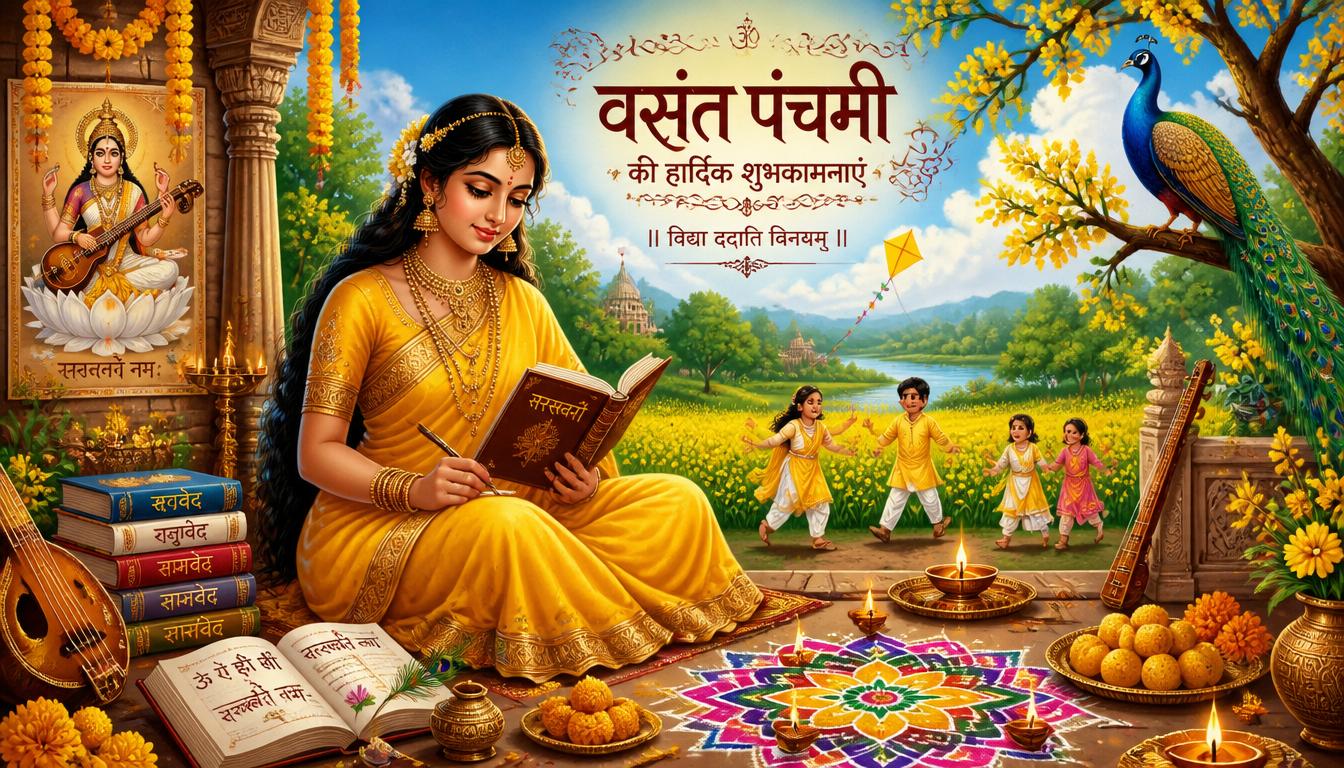
Vasant Panchami 2026: Saraswati Puja Date, Timing, Significance & Rituals is one of the most searched topics among devotees, students, parents, and spiritual seekers as the auspicious festival approaches.
Celebrated with devotion across India and many parts of the world, Saraswati Puja is dedicated to Maa Saraswati, the divine goddess of wisdom, learning, music, speech, and creative arts.
This sacred occasion is not just a religious observance; it is a celebration of knowledge, intellectual growth, creativity, and the arrival of spring.
For students preparing for exams, artists seeking inspiration, and families introducing children to education, Vasant Panchami holds a special place.
The festival reminds us that true education goes beyond books and degrees it shapes character, wisdom, and understanding.
In this detailed guide, you’ll learn everything about Saraswati Puja 2026, including its date, muhurat, spiritual significance, rituals, mythology, and regional celebrations.
Saraswati Puja 2026 will be celebrated on Friday, 23 January 2026. The festival falls on Magha Shukla Panchami, which is popularly known as Vasant Panchami or Basant Panchami.
This day is considered highly auspicious for:
Devotees believe that worshipping Maa Saraswati on this day helps remove ignorance and opens the doors to knowledge and wisdom. It is a beautiful tradition that has continued for centuries, and honestly, its relevance feels just as strong today.
Performing worship during the prescribed muhurat is considered important because the spiritual energy of the day is believed to be especially favorable for learning and intellectual pursuits.
| Event | Timing |
|---|---|
| Saraswati Puja Date | Friday, 23 January 2026 |
| Panchami Tithi Begins | 23 January 2026, 02:28 AM |
| Panchami Tithi Ends | 24 January 2026, 01:46 AM |
| Best Saraswati Puja Muhurat | 07:13 AM to 12:33 PM |
The morning hours are generally preferred for worship. During this period, devotees perform prayers, chant mantras, offer flowers, and seek divine blessings for success in studies, arts, and creative fields.
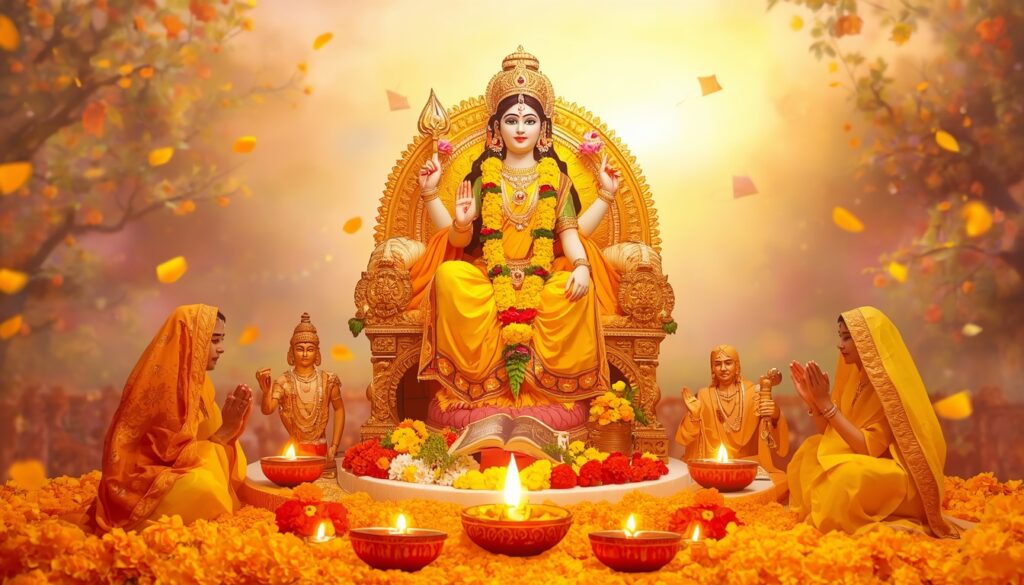
Vasant Panchami marks the arrival of Vasant Ritu, the spring season. It symbolizes renewal, positivity, growth, and fresh beginnings.
Nature itself seems to celebrate the festival. Mustard fields bloom in golden yellow shades, flowers blossom, and the environment feels energetic and refreshing. This seasonal transformation is one reason why yellow has become the dominant color associated with the festival.
The relationship is quite clear:
Vasant Panchami → marks → arrival of Vasant Ritu.
For many people, the festival represents both spiritual awakening and personal growth. It’s not only about worship; it’s about embracing learning and new opportunities.
Maa Saraswati is the Hindu goddess of wisdom, knowledge, learning, speech, music, and creative arts.
She is often depicted:
Each symbol carries deep meaning.
Maa Saraswati → represents → wisdom, learning, music, speech, and arts.
The white attire symbolizes purity of thought. The lotus signifies rising above worldly distractions. The veena reflects harmony between intellect and creativity. The sacred scriptures symbolize eternal knowledge.
Together, these symbols remind devotees that learning should be balanced with humility and wisdom.
The spiritual importance of Saraswati Puja goes far beyond academic achievement.
According to Hindu philosophy, ignorance is one of the greatest obstacles to human growth. Knowledge illuminates the path toward truth and self-realization.
Devotees seek blessings for:
Many people also believe that sincere prayers on this day help remove confusion, negativity, and intellectual obstacles.
In a way, Saraswati Puja teaches us that education is not merely about collecting information. It’s about developing understanding, ethics, and discernment.
One topic many articles touch only briefly is the mythological origin of the festival.
According to Hindu tradition, when the universe was created by Lord Brahma, it lacked sound, expression, and creativity. Observing this emptiness, Brahma manifested Saraswati from his divine energy.
She appeared holding a veena and filled creation with music, speech, knowledge, and wisdom.
This ancient legend explains why:
Saraswati Puja → is dedicated to → Maa Saraswati.
Several Puranic traditions also describe Saraswati as the divine force behind language, literature, music, and intellectual pursuits.
Because of these associations, students, teachers, writers, and artists continue to honor her with deep devotion.
Yellow is perhaps the most recognizable symbol of the festival.
Yellow color → symbolizes → wisdom, prosperity, positivity, and spring.
The color is associated with:
On Vasant Panchami, devotees commonly:
The vibrant color beautifully reflects the golden mustard fields that bloom during this season.
Many people search for a complete puja procedure. Here is a practical guide.
Prepare the following items:
Clean the puja room and arrange decorations using flowers and rangoli. A clean environment is believed to attract positive energy.
Place the image or idol of Maa Saraswati on a decorated platform.
Place a sacred Kalash near the deity and invoke divine blessings.
Offer yellow flowers while chanting Saraswati mantras.
Keep books, notebooks, pens, musical instruments, and art tools before the goddess.
Recite sacred prayers with concentration and devotion.
Conclude the worship by performing Saraswati Aarti.
Share fruits and sweets among family members and devotees.
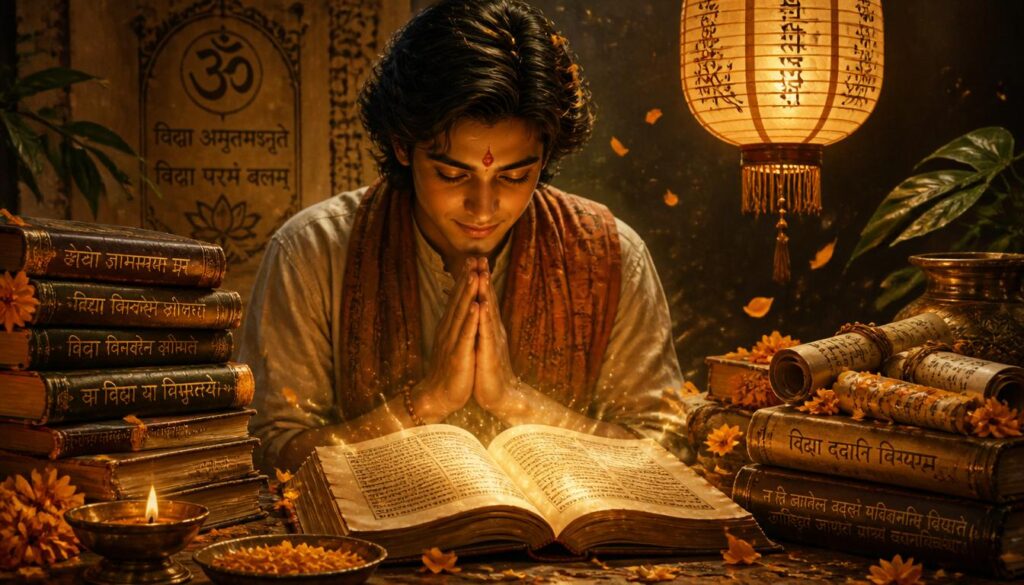
A unique ritual associated with the festival is Pustak Puja.
Pustak Puja → honors → books and educational materials as sacred knowledge.
During this ritual:
The practice teaches that education should be approached with reverence and gratitude.
One of the most beautiful traditions associated with Saraswati Puja is Vidyarambh Sanskar.
Vidyarambh Sanskar → symbolizes → beginning of education and learning.
Parents often introduce young children to writing their first letters on this day. This ceremony represents the child’s first formal step into the world of knowledge.
Many families consider it one of the most auspicious days to begin a child’s educational journey.
Chanting sacred mantras forms an important part of the worship.
Ya Kundendu Tusharahara Dhavala
Ya Shubhra Vastra Avrita
Ya Veena Vara Danda Manditakara
Ya Shweta Padmasana
Ya Brahmachyuta Shankara Prabhritibhir
Devaih Sada Vandita
Sa Mam Pattu Saraswati Bhagavati
Nihshesha Jadyapaha
This revered shloka praises the purity, wisdom, and grace of the goddess.
The belief is simple yet powerful.
Saraswati Mantra Chanting → enhances → memory, concentration, and intellectual clarity.
Among all devotees, students perhaps feel the strongest connection with the festival.
Students seek blessings for:
Students → seek blessings for → education, examinations, and concentration.
Educational institutions often organize special ceremonies where students participate actively in worship and cultural programs.
The festival serves as a reminder that learning is a lifelong process, not just something connected to exams.
The astrological significance of Vasant Panchami is often overlooked.
In Hindu astrology, Magha Shukla Panchami is regarded as highly auspicious because it falls during a period associated with growth, positivity, and learning.
Many astrologers recommend beginning:
The Panchami Tithi is believed to support intellectual and creative development, making it particularly favorable for Saraswati worship.
Although the essence remains the same, celebrations vary across different regions.
West Bengal hosts some of the grandest Saraswati Puja celebrations.
Schools, colleges, and community organizations install beautifully decorated idols. Students participate enthusiastically in rituals and cultural activities.
The festival is observed with devotion in educational institutions and homes. Traditional offerings and prayers are common.
Community celebrations and cultural programs form an important part of the observance.
Families perform puja at home and visit temples. Yellow attire remains a major feature.
The blooming mustard fields create a naturally festive atmosphere. Basant celebrations are closely linked with the arrival of spring.
Although Saraswati worship is especially prominent during Navaratri, Vasant Panchami is still considered favorable for starting educational and artistic pursuits.
The influence of Saraswati Puja extends well beyond India’s borders.
The festival is celebrated widely in schools, colleges, and temples.
A significant tradition known as Haate Khori introduces children to learning for the first time under the blessings of Maa Saraswati.
Across countries such as:
Hindu communities organize cultural events, group prayers, and educational programs.
Technology has also made virtual Saraswati Puja celebrations increasingly common.
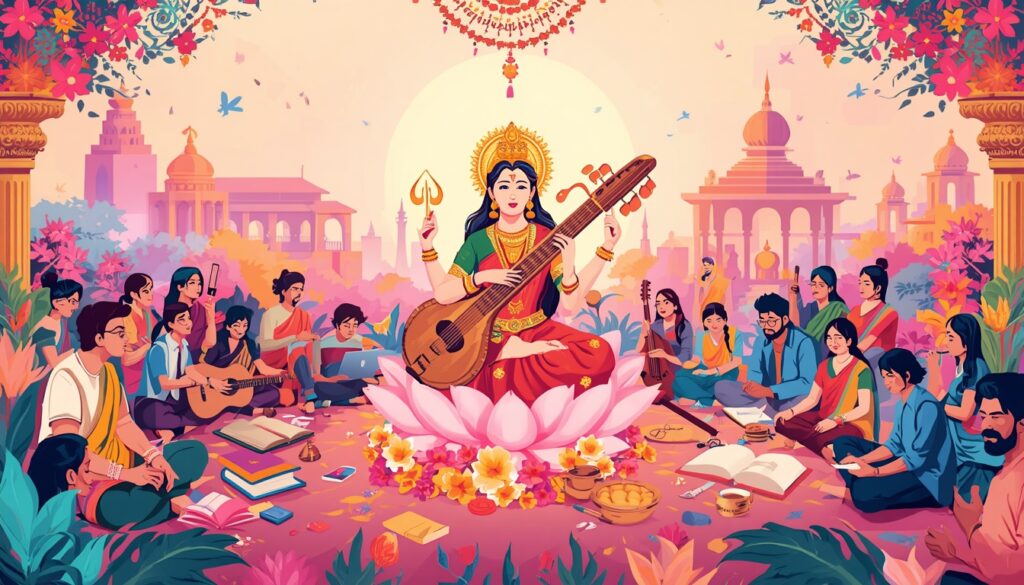
Despite rapid technological advancement, the festival remains highly relevant.
Today’s world values innovation, education, communication, and creativity more than ever. Interestingly, these are the exact qualities associated with Maa Saraswati.
Modern celebrations often include:
The methods may evolve, but the core message remains unchanged respect knowledge and pursue learning with dedication.
Beyond rituals and traditions, Saraswati Puja offers timeless lessons.
These values continue to inspire students, teachers, artists, and professionals across generations.
Vasant Panchami 2026: Saraswati Puja Date, Timing, Significance & Rituals is much more than a religious festival. It is a celebration of wisdom, creativity, education, and personal growth.
Dedicated to Maa Saraswati, the divine embodiment of knowledge, the festival inspires millions to pursue learning with sincerity and devotion.
Whether you are a student seeking academic success, an artist searching for inspiration, or a parent introducing a child to education, Saraswati Puja offers a meaningful opportunity to honor the transformative power of knowledge.
As spring arrives and nature blossoms, the festival reminds us that growth both intellectual and spiritual is always possible.
Saraswati Puja 2026 will be celebrated on Friday, 23 January 2026. The festival falls on Magha Shukla Panchami and is also known as Vasant Panchami or Basant Panchami. It is considered one of the most auspicious days for education and learning.
Yellow symbolizes wisdom, prosperity, positivity, and the arrival of spring. The color reflects blooming mustard fields and represents intellectual growth. Devotees wear yellow clothes and offer yellow flowers to celebrate the seasonal and spiritual significance of the festival.
Vidyarambh Sanskar marks a child’s formal introduction to education. Parents encourage children to write their first letters or begin learning on this auspicious day. The ceremony symbolizes the beginning of a lifelong journey toward knowledge and wisdom.
The Ya Kundendu Saraswati Shloka is one of the most widely recited prayers during Saraswati Puja. Devotees chant it to seek blessings for wisdom, concentration, memory, creativity, and academic success while honoring Maa Saraswati’s divine presence.
Saraswati Puja in 2026 will be celebrated on Vasant Panchami, a festival dedicated to Goddess Saraswati. The auspicious puja time may vary by location and local Panchang calculations.
Saraswati Puja is expected to be observed on 22 January 2026, coinciding with the festival of Vasant Panchami. Devotees worship Goddess Saraswati for wisdom, learning, and knowledge.
In West Bengal, Saraswati Puja is likely to be celebrated on 22 January 2026. Schools, colleges, and homes across the state organize special prayers and cultural activities on this day.
The exact puja timing depends on the Panchami Tithi and regional Panchang traditions. Devotees are advised to follow local religious calendars for the most accurate muhurat.
Vasant Panchami is expected to fall on 22 January 2026 and marks the arrival of spring in many parts of India. The festival is celebrated with Saraswati Puja, prayers, and educational ceremonies.