Physical Address
304 North Cardinal St.
Dorchester Center, MA 02124
Physical Address
304 North Cardinal St.
Dorchester Center, MA 02124

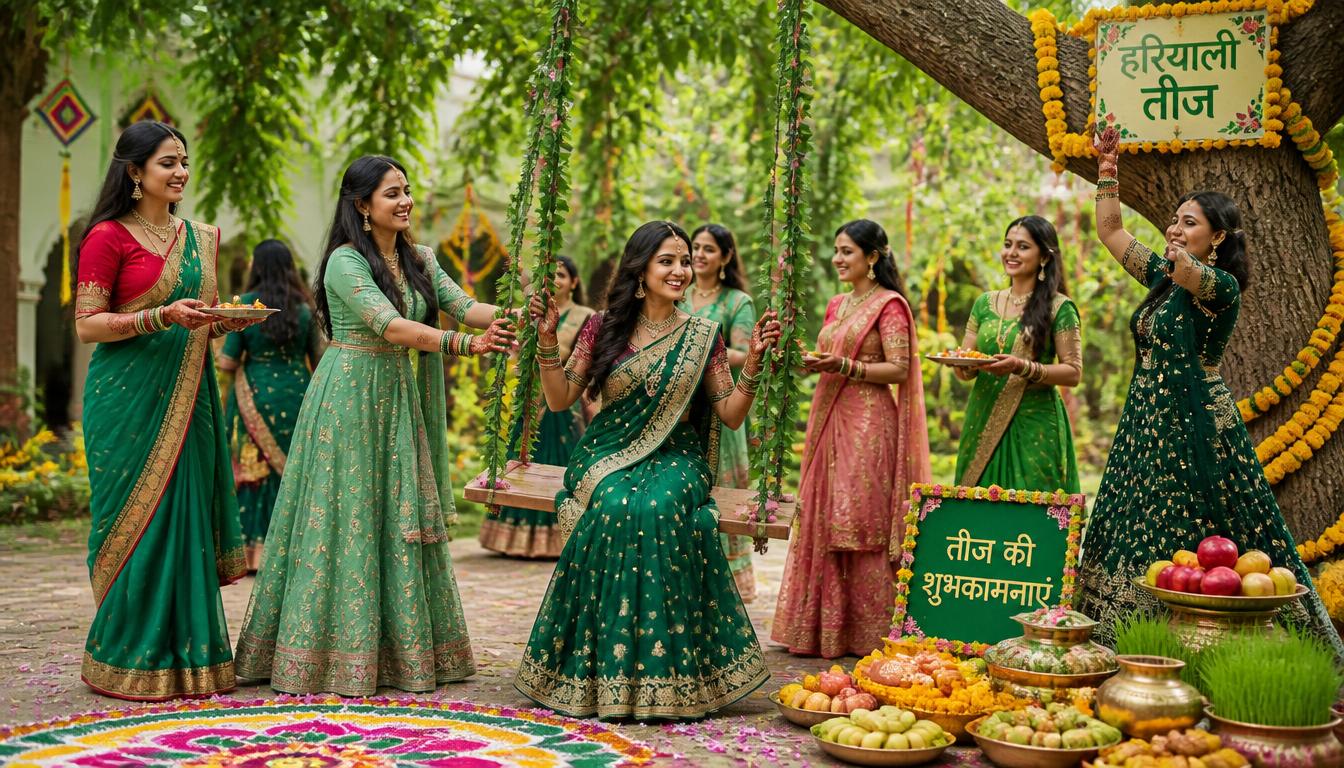
The arrival of the monsoon changes more than the weather. Trees become greener, courtyards smell of wet earth, and old songs suddenly feel closer to the heart. Somewhere between these rainy days comes Hariyali Teej 2026, a festival filled with devotion, color, music, family affection and the gentle excitement of Sawan.
In 2026, Hariyali Teej will be observed on Saturday, August 15, 2026. It falls on Shravana Shukla Tritiya, the third day of the bright fortnight in the lunar month of Shravana. The festival is closely associated with Goddess Parvati and Lord Shiva, and is especially observed across several parts of North India.
For many families, this is not simply a day marked on the calendar. It is a day when women dress in green, swings appear in courtyards, bangles make their familiar sound, and prayers for love and family harmony become part of the celebration. The atmosphere is devotional, but also wonderfully human.
So, when is Hariyali Teej 2026? The festival falls on Saturday, August 15, 2026. According to the Panchang, the relevant Shukla Paksha Tritiya tithi begins on August 14 and ends on August 15, with exact timings varying by location.
The festival arrives during Shravan, also commonly called Sawan, the monsoon period traditionally associated with devotion to Shiva. The greenery of the season is one reason the celebration is called Hariyali Teej, with green becoming almost the unofficial color of the day.
Hariyali Teej date: Saturday, August 15, 2026
Tithi: Shravana Shukla Tritiya
Season: Varsha Ritu, or monsoon season
Paksha: Shukla Paksha
The festival usually occurs around two days before Nag Panchami, although the exact calendar relationship should be checked against the local Panchang.
Hariyali Teej is a Hindu festival dedicated especially to the devotion of Goddess Parvati and Lord Shiva. It celebrates the sacred union of Shiva and Parvati and is traditionally associated with prayers for a harmonious and happy married life.
The festival is particularly prominent among women in places such as Rajasthan, Uttar Pradesh, Madhya Pradesh, Bihar and Jharkhand. Customs can look different from one family or region to another, which is actually part of its charm.
In many households, married women may return to their parents’ home, receive gifts, wear new clothes and participate in Teej celebrations with sisters, relatives and friends. Green saris, green bangles, henna, swings and traditional songs create the recognizable festive scene.
Hariyali Teej is also known as Chhoti Teej and Shravana Teej in some traditions. It should not be confused with Kajari Teej, Hartalika Teej, Akha Teej or Akshaya Tritiya, which are separate observances.
The spiritual heart of the festival lies in Shiva-Parvati worship. Goddess Parvati is revered as a symbol of devotion, feminine grace, determination and spiritual strength, while Shiva represents the divine counterpart in their sacred union.
For many devotees, the day becomes an opportunity to pray for marital happiness, family harmony, health, longevity and emotional well-being. These wishes are expressed through fasting, puja, prayers and other traditional practices.
The festival also carries a strong message about feminine power. Women are not merely dressing beautifully for the occasion; in traditional celebrations, they participate actively in worship, songs, family customs and community life. There is a softness to Teej, but it isn’t a weak softness.
The green surroundings of Sawan add another layer. Green represents freshness, life, renewal and the beauty of nature after the arrival of rain. That is why green attire, green sari and green bangles have become such familiar parts of Hariyali Teej celebrations.
There is no single way every family observes the festival. Customs differ according to region, family tradition and local religious practice.
Still, several traditions appear repeatedly in descriptions of the Hariyali Teej rituals.
Women may wake early, bathe and prepare for the day. Homes are cleaned and decorated, while the puja area is arranged with images or representations of Shiva and Parvati.
A traditional Teej vrat may then be observed. Some women keep a strict fast, while others follow modified practices depending on their health, family tradition and personal circumstances. Fasting should not be treated as a requirement that overrides health or medical needs.
During Hariyali Teej puja, devotees offer flowers, fruits, sweets and other customary items while praying to Goddess Parvati and Lord Shiva.
Another beautiful tradition is the preparation of swings. Swings may be tied to strong tree branches or installed in courtyards, and women gather around them singing Teej songs.
The result can feel almost like a small festival inside the festival. Someone is singing, somebody is fixing bangles, another person is preparing sweets, and the swing is moving a little too fast because nobody wants to admit they are nervous.
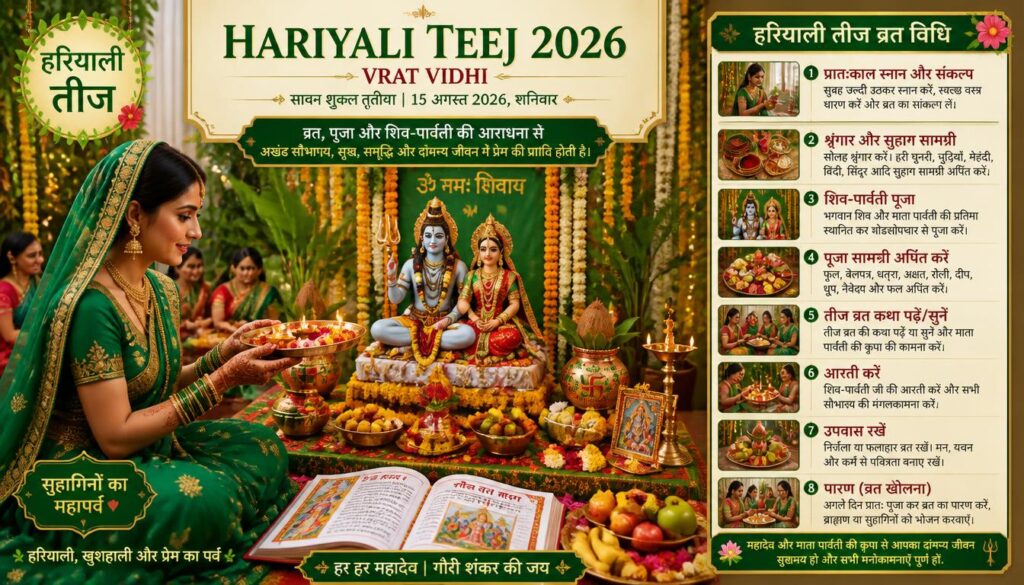
The exact Hariyali Teej vrat vidhi can vary according to regional and family traditions. People who observe the vrat commonly begin with personal purification and preparation before worship.
The puja space is decorated, and images of Goddess Parvati and Lord Shiva are placed respectfully. Offerings may include flowers, fruits, sweets, clothing or other traditional puja materials.
Devotees may listen to Teej-related stories, recite prayers and perform aarti. Some traditions include offerings associated with Parvati’s married form, often represented through symbols of married life.
The important thing is to understand that rituals are not identical everywhere. A family in Rajasthan may have customs that differ from a family in Uttar Pradesh or Bihar, and both can still be meaningful expressions of Hariyali Teej traditions.
Hariyali Teej fasting is traditionally observed by many women, especially married women praying for a happy and enduring marriage. In some communities, unmarried women may also observe the festival with prayers for a suitable future marriage.
The vrat is often connected with devotion to Parvati and the story of her dedication to Shiva. Rather than seeing fasting only as going without food, many devotees understand it as an act of discipline and focused worship.
Traditional prayers may include devotional chants associated with Shiva and Parvati. Some devotees may recite the Shiva Chalisa, Durga Devi Chalisa, Lingashtakam, Rudrashtakam or other prayers according to their own tradition.
Mantras sometimes associated with worship include “Om Namah Shivaaya Parvatipataye Namah” and “Om Hrim Shreem Parvatidevyai Namah.”
A simple prayer offered with sincerity can feel more meaningful than a long ritual performed only because someone else expects it. That small distinction matters.
Ask someone to picture Teej and there is a good chance the first image will involve green.
Hariyali Teej green clothes are strongly associated with the festival because the celebration takes place during the lush monsoon season. Women may wear a Hariyali Teej green saree, lehenga or other traditional clothing.
Green bangles are another familiar feature. Henna may also be applied to the hands, creating intricate designs that complement the festive clothing.
Then come the swings.
Hariyali Teej swings are more than decoration. They create a social space where women gather, sing, laugh and exchange stories. In some families, the swing itself becomes the center of the celebration for a while.
And yes, somebody will almost certainly insist on one more turn.
For Hariyali Teej married women, the festival has a particularly strong connection with prayers for a harmonious and enduring marriage.
Traditionally, married women may pray for the well-being and longevity of their husbands while seeking blessings for marital happiness, family harmony and a strong marital bond.
Another important custom is visiting the parents’ home. This reflects the emotional side of Teej that isn’t always visible in descriptions of rituals. A daughter returning home during a festival can turn an ordinary monsoon afternoon into a very memorable family gathering.
Parents may also send a traditional gift package known as Sindhara to their daughter and her in-laws. It can include sweets such as Ghewar, henna, bangles and other gifts. Because of this custom, Hariyali Teej is also called Sindhara Teej in some traditions.
Hariyali Teej unmarried women may also participate in fasting, prayers and celebrations according to their family traditions.
For some, the occasion is associated with prayers for a loving and harmonious future marriage. For others, it is simply a beautiful religious and cultural celebration shared with mothers, sisters, friends and relatives.
The meaning of a festival can grow beyond one particular wish. Young women may enjoy the songs, clothing, mehndi, swings and family gatherings while also learning customs passed down by older generations.
That is how traditions survive, actually not just through books, but through someone sitting beside you and saying, “This is how your grandmother used to do it.”
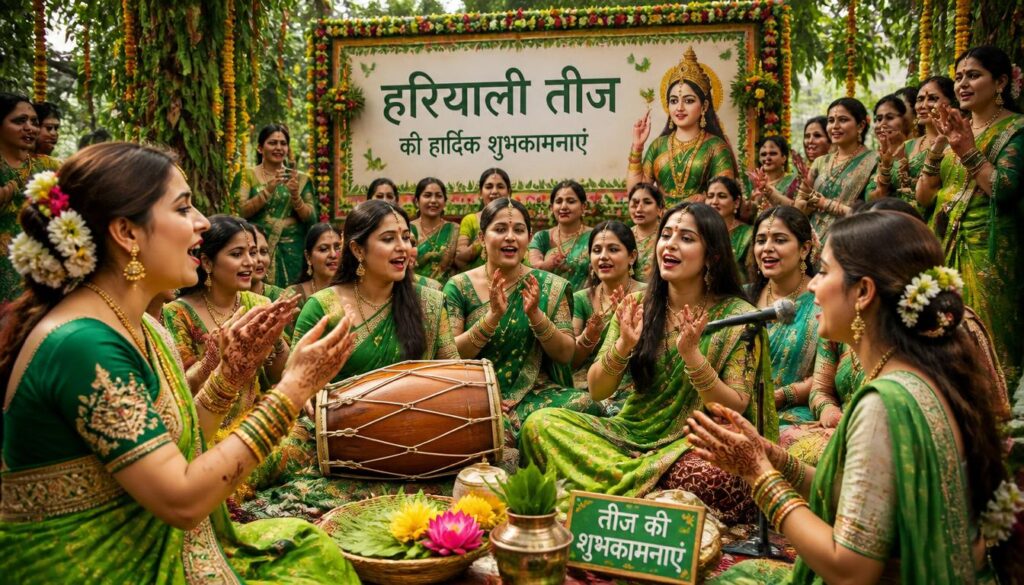
Music gives Teej a personality of its own.
Traditional Hariyali Teej songs often describe love, separation, marriage, the monsoon, family relationships and the emotions associated with returning to one’s parental home.
In communities where the tradition remains strong, women may gather for community singing. The songs can be playful one moment and deeply emotional the next.
This is one reason Teej is not simply a private religious observance. It has a social dimension too. Friends and relatives meet, women share food and gifts, children watch the preparations, and older family members pass down stories.
The festival becomes a living memory rather than merely a calendar entry.
The story of Shiva-Parvati is central to the spiritual understanding of Teej. Parvati’s devotion to Shiva is traditionally presented as an example of determination and unwavering spiritual commitment.
Because of this association, devotees connect the festival with Goddess Parvati blessings, Lord Shiva blessings, harmonious relationships and family well-being.
Some traditional interpretations also associate sincere religious observance with spiritual merit, purification and the seeking of divine grace. Beliefs concerning karmic debts, cleansing of sins and spiritual benefits vary among traditions and should be understood as religious beliefs rather than scientifically established effects.
The deeper message can still be quite simple: take a day to pray, reflect, appreciate relationships and remember what matters.
Many devotees choose to visit temples during the festival season for darshan and special puja.
In areas where Shiva temples are especially important, families may include a temple visit as part of their Hariyali Teej celebration. Some devotees may also visit major pilgrimage temples associated with Shiva, including Kashi Vishwanath Jyotirlinga, Kedarnath Jyotirlinga or Trimbakeshwar Jyotirlinga, depending on their travel plans and religious tradition.
However, traveling to a famous temple is not necessary to observe the festival meaningfully. A simple home puja can also become a deeply personal spiritual moment.
The sacredness of the day does not depend on how expensive the celebration looks.
The festival is especially prominent across North India, but the style of celebration changes from place to place.
In Rajasthan, Teej has a particularly strong cultural presence, with decorated streets, traditional clothing, songs and public celebrations in some areas.
In Uttar Pradesh, family gatherings, swings, devotional activities and traditional foods can form part of the celebration.
In Bihar, Jharkhand and Madhya Pradesh, local customs add their own flavor to the festival.
Punjab and Haryana also have traditions connected with monsoon festivals and women’s gatherings, although specific Hariyali Teej practices can differ between communities.
This regional variety is worth appreciating. There isn’t one “correct-looking” Teej celebration; traditions are often shaped by generations of local culture.
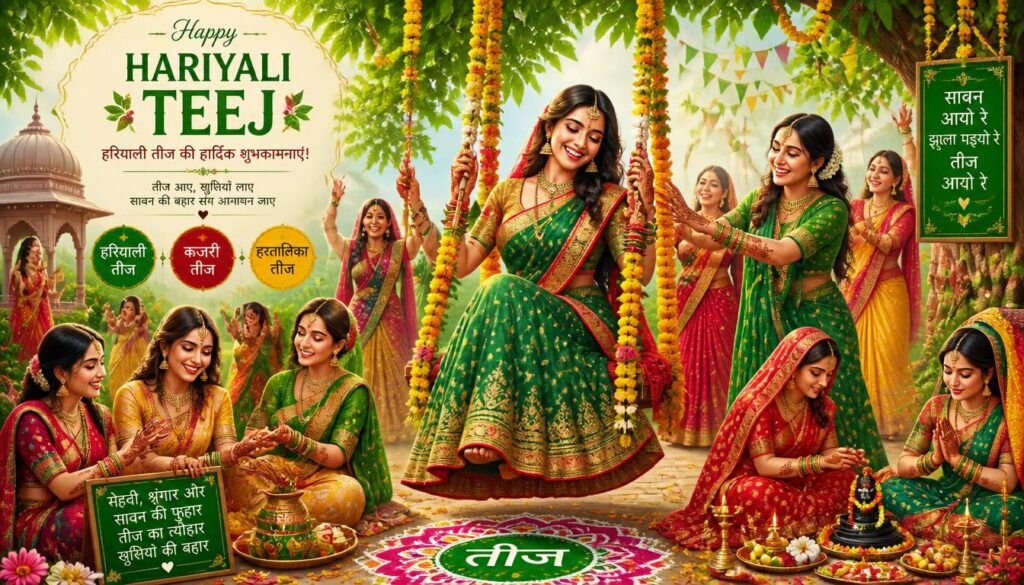
It is easy to mix up the names because several festivals contain the word Teej.
Hariyali Teej is associated with Shravana and the monsoon season.
Kajari Teej is another important Teej observance and occurs later in the season.
Hartalika Teej is also dedicated to Shiva and Parvati but is a separate festival with its own traditions and timing.
Akha Teej, commonly known as Akshaya Tritiya, is different again and should not be treated as another name for Hariyali Teej. Gangaur Tritiya is also a separate observance.
Keeping these distinctions clear is useful when researching festival dates, vrat procedures or regional customs.
Food is naturally part of a festival, even when fasting is involved.
One traditional sweet strongly associated with Hariyali Teej is Ghewar, a disc-shaped Rajasthani sweet that is especially popular during the monsoon festival season.
Families may also prepare other regional sweets, fruits and festive foods. What appears on the table depends greatly on local cuisine and whether family members are observing a strict or modified vrat.
The food itself often carries memory. A particular sweet can remind someone of their mother’s kitchen, a grandmother’s recipe, or a childhood Teej when the rain arrived exactly at the wrong time.
Read more: https://templetimingsdaily.com/sigandur-chowdeshwari-temple/
You do not need a huge gathering to create a meaningful Hariyali Teej celebration.
Start with a clean puja space. Place Shiva and Parvati images respectfully, prepare flowers and traditional offerings, and keep the atmosphere peaceful.
Wear green if that is part of your family custom. Put on bangles, apply mehndi, prepare a favorite sweet and play traditional Teej songs.
If possible, create a small swing area where family members can sit together. Even without an elaborate decoration, a few flowers and some greenery can make the setting feel festive.
Most importantly, allow time for conversation. Festivals become memorable because people remember how they felt, not because every decoration was perfect.
Devotees may choose prayers according to their own spiritual tradition.
Commonly associated devotional practices can include recitation of:
Other devotional texts, including Dakshinamurthy Stotram, Kanakadhara Stotram and Durga Kavacham, may also be used according to individual family and religious practice.
There is no need to rush through a prayer simply to complete a checklist. Reading fewer verses with attention may make the experience more reflective.
A festival greeting becomes much warmer when it sounds like it came from a real person.
Instead of writing only “Happy Hariyali Teej,” mention something specific. You could refer to someone’s family, their traditional green outfit, the gathering at their parents’ home or the prayers they value.
For example, a message to your mother can mention her childhood Teej memories. A message to your wife can focus on companionship and family happiness. A message to a friend can be lighter and include the monsoon, bangles and swings.
The best greeting doesn’t need fancy vocabulary. Sometimes, “May your home stay as peaceful as this rainy morning” is enough.
Hariyali Teej 2026 falls on Saturday, August 15, 2026. It is observed on Shravana Shukla Tritiya. Exact tithi timings can vary by location.
The festival is associated with Goddess Parvati, Lord Shiva and their sacred union. Devotees traditionally pray for marital happiness, family harmony and well-being.
Common practices include Teej vrat, puja, prayers, wearing green clothing, applying mehndi, wearing bangles, enjoying swings and singing traditional Teej songs. Customs differ by region and family.
The Hariyali Teej vrat vidhi generally involves preparation, worship of Shiva and Parvati, offerings, prayers and observance of a fast according to one’s family tradition. Specific procedures vary by community.
They are separate festivals associated with Shiva and Parvati. Hariyali Teej occurs during Shravana and the monsoon season, while Hartalika Teej has a different date and its own regional rituals.
Green is strongly associated with monsoon greenery, freshness, growth and renewal. This makes green attire, green saris and green bangles especially popular during the celebration.
Ghewar is one of the sweets strongly associated with Hariyali Teej, particularly in Rajasthan and surrounding North Indian traditions. Other regional sweets may also be prepared.
Fasting is an important traditional practice for many devotees, but observance varies by family and individual tradition. People should consider their health and personal circumstances rather than treating fasting as something that must override medical or nutritional needs.
Hariyali Teej 2026 arrives with the familiar gifts of Sawan: green leaves, rain-filled skies, devotional songs and gatherings that bring people a little closer.
Its beauty is found not only in the Teej vrat, puja or green sarees, but also in the quiet relationships around them. A daughter returning to her parents’ home, sisters laughing beside a swing, a mother preparing sweets, or a family praying together can all become part of the day’s memory.
On Saturday, August 15, 2026, devotees observing the festival can welcome the occasion through prayer, tradition and togetherness.
Whether your celebration is elaborate or wonderfully simple, may the spirit of Teej Mata, Goddess Parvati and Lord Shiva bring peace, devotion, love and harmony into your home. And perhaps, when the first monsoon breeze moves through the trees, pause for a moment—some festivals are meant to be felt as much as they are celebrated.