Physical Address
304 North Cardinal St.
Dorchester Center, MA 02124
Physical Address
304 North Cardinal St.
Dorchester Center, MA 02124

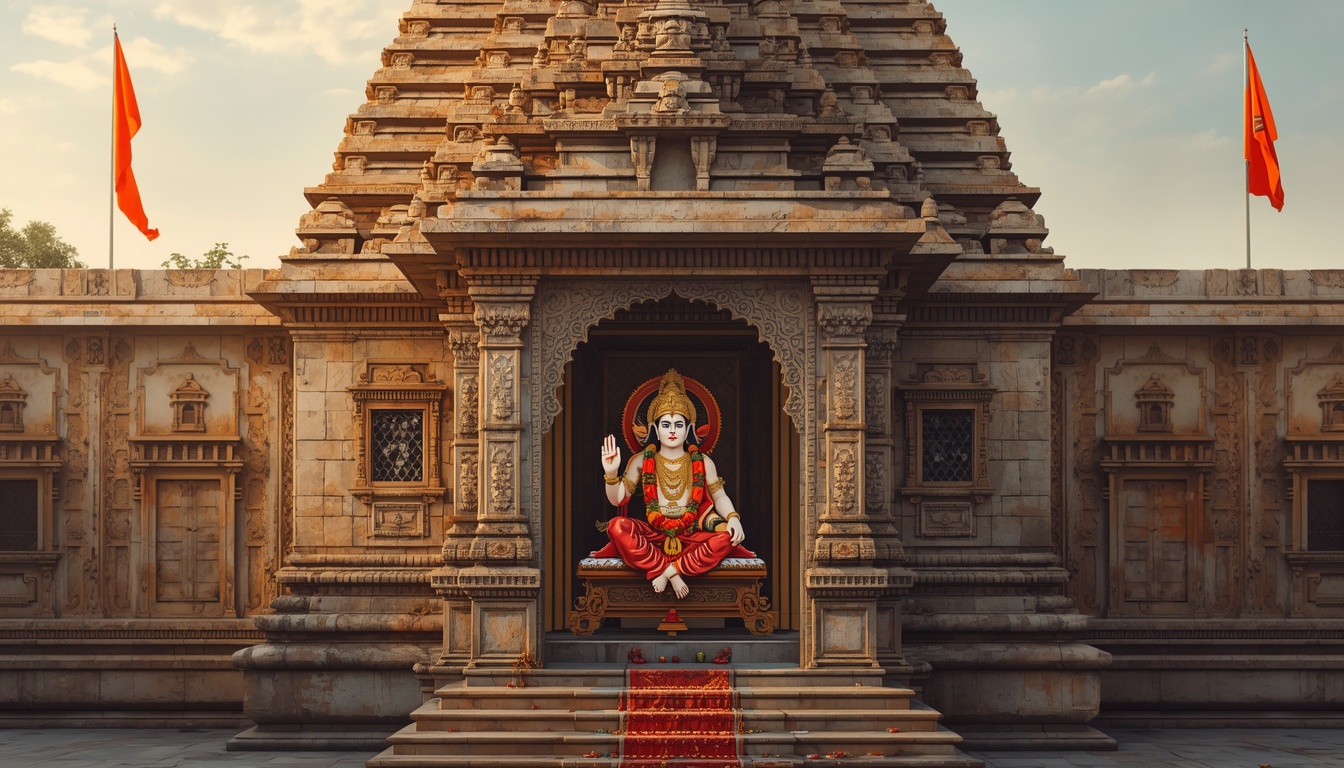
There are some temples where the first thing you notice is the architecture, and then there are places where the deity itself makes you stop for a moment. Bhadra Maruti Temple in Khuldabad belongs to the second kind. Here, Lord Hanuman is not shown in his familiar standing, flying, or heroic posture. Instead, devotees find a remarkably peaceful reclining Hanuman idol, resting in what is traditionally described as Bhava Samadhi.
Located in Khuldabad, Maharashtra, near the historic city of Chhatrapati Sambhajinagar (Aurangabad), the temple has become an important pilgrimage destination as well as a stop for travellers visiting the Ellora Caves. The unusual sleeping posture of Hanuman gives the shrine a character that is hard to forget, honestly, even after you have left the temple premises.
The temple is surrounded by stories, devotion, local folklore and centuries of regional religious tradition. So, if you are wondering about the Bhadra Maruti Temple history, its famous legend, timings, location, festivals, or how to reach it, this guide brings the important pieces together without making the journey feel like a dry history lesson.
The Bhadra Maruti Temple Khuldabad is dedicated to Lord Hanuman, who is worshipped here in a reclining or sleeping posture. The temple is particularly known for this unusual representation, which is traditionally associated with Bhava Samadhi, a state of deep devotional absorption.
Because festival schedules and special darshan arrangements can change, pilgrims should verify the day’s schedule locally before travelling, especially on major festival dates.
The Bhadra Maruti Temple location is Khuldabad, a historic town in Maharashtra’s Chhatrapati Sambhajinagar region. It sits close to the famous Ellora Caves, making it particularly convenient for people who want to combine spiritual and heritage sightseeing in one trip.
Older references commonly call the nearby city Aurangabad, while the current official name is Chhatrapati Sambhajinagar. You may therefore see both names while searching for directions, railway connections, hotels or transport. It can be a little confusing at first, but they refer to the same modern city.
The temple’s location is one of its biggest practical advantages. A visitor can plan a pilgrimage around Khuldabad, Ellora and other nearby heritage attractions instead of treating the temple as a completely separate journey.
This is probably the question that enters almost every first-time visitor’s mind: Why is Hanuman lying down at Bhadra Maruti Temple?
The answer comes mainly through local religious tradition and folklore rather than a single historically documented account. According to the best-known story, Khuldabad was once known as Bhadravati, and its ruler was King Bhadrasena, a devoted follower of Lord Rama.
Bhadrasena is said to have spent time singing devotional hymns in praise of Rama. One day, Hanuman heard those songs and came to the place. The devotion affected him so deeply that he entered a peaceful reclining state described as Bhava Samadhi.
The king, according to the legend, was astonished to discover Hanuman in this state. He prayed that Hanuman would remain there and bless devotees of Rama.
And this is where the story becomes rather beautiful: the reclining form is not traditionally understood as weakness or ordinary sleep. Instead, it represents deep absorption in devotion.
The Bhadra Maruti Temple legend connects the shrine strongly with King Bhadrasena and his devotion to Lord Rama. In the traditional account, his devotional singing was so heartfelt that it attracted Hanuman himself.
Imagine the scene for a second — a quiet place, devotional singing in the background, and Hanuman arriving not because someone called him through a ritual, but because the love in a devotee’s prayer reached him. That’s the emotional heart of the story.
After listening to the hymns, Hanuman is believed to have assumed a reclining posture. Bhadrasena then requested that the deity remain there permanently, protecting and blessing those who came with devotion.
Whether a visitor approaches the story as sacred tradition, folklore or cultural heritage, it explains why the temple’s central image feels so different from many other Hanuman temples in India.
Another tradition associated with the temple involves Sant Shri Swami Samarth Ramdas, a prominent saint and devotee of Rama. Local accounts connect him with the rediscovery of the reclining form of Hanuman at this sacred site.
This part of the temple’s story should be understood as religious tradition rather than a firmly established archaeological fact. Different accounts preserve slightly different versions of the temple’s past, and that mixture of history and folklore is itself part of the shrine’s cultural identity.
The name also carries symbolic meaning. Maruti is another traditional name for Hanuman, while Bhadra is associated with auspiciousness. Together, Bhadra Maruti is commonly understood as an auspicious form of Hanuman.
The Bhadra Maruti Temple history includes both religious tradition and a more recent phase of reconstruction. Historical accounts associated with the shrine say that the original temple was damaged or destroyed during the medieval period, while the sacred idol was preserved and kept hidden.
Later, efforts were made to restore the shrine at its traditional location. Accounts place significant reconstruction activity in the 1960s, when a marble temple was established around the preserved deity.
Because some details of the earlier history are preserved mainly through local accounts and folklore, it is better not to treat every traditional story as an independently verified historical event. The important point is that the present shrine represents a continuing religious tradition rather than simply a newly created tourist attraction.
That continuity is what gives the temple its atmosphere. People don’t just arrive, click a photograph, and leave; many come specifically for darshan, prayer and a sense of spiritual connection.
The most distinctive feature of the shrine is the sleeping Hanuman or reclining Hanuman.
The posture is commonly described as Bhava Samadhi, suggesting a state in which profound devotional emotion leads to complete spiritual absorption. This interpretation makes the idol very different from the energetic imagery usually associated with Hanuman carrying the Sanjeevani mountain or leaping across the sea.
Here, the message feels quieter.
Hanuman is still powerful, but the power is shown through stillness rather than movement. The reclining posture can therefore be experienced symbolically as peace, devotion, surrender and spiritual concentration.
The temple is traditionally counted among the rare places where Hanuman is represented in a reclining form. Sources commonly identify three such important locations, including this shrine in Khuldabad, a temple at Jam Sawali in Madhya Pradesh, and one associated with Prayagraj in Uttar Pradesh.
The Bhadra Maruti Temple architecture adds another interesting layer to the visit. Descriptions of the shrine note a blend of architectural influences, with elements associated with both North Indian and South Indian traditions.
Marble is an important visual feature of the present temple, giving the interior a bright and clean appearance. Floral motifs and devotional detailing contribute to the sacred atmosphere, while the main sanctum naturally draws most visitors toward the reclining deity.
There are also traditions and descriptions mentioning shrines connected with Lord Rama, Goddess Sita and Lord Lakshmana, creating a devotional connection with the Ram Parivar around Hanuman’s central presence.
It is an interesting combination: the architecture invites the eyes to explore, while the reclining idol almost tells the mind to slow down.
For travellers planning their visit, Bhadra Maruti Temple timings are particularly important because the temple follows a morning-and-evening schedule according to commonly published information.
The frequently listed schedule is:
The Incredible India tourism listing gives a broader visitor schedule of 6:00 AM to 8:00 PM, while local and travel references commonly list the split 5:00 AM–12:00 PM and 4:00 PM–9:00 PM schedule. Because timings may vary for rituals, festivals or special arrangements, checking locally before setting out is sensible.
For a peaceful experience, morning darshan is generally preferable, particularly if you want to spend a few quiet minutes in prayer rather than arriving during a large devotional gathering.
The Bhadra Maruti Temple aarti is an important part of the devotional experience. Tourism information describes morning and evening aarti ceremonies, while detailed daily ritual schedules may vary according to the temple’s arrangements.
Rather than treating aarti as something to tick off a sightseeing list, it can be worth arriving a little early, finding a comfortable place and simply observing how devotees participate.
On ordinary days, the atmosphere can feel calm and devotional. During major festivals, however, the same courtyard can become dramatically more energetic, with larger crowds, prayers and longer queues.
The best time to visit Bhadra Maruti Temple depends on what kind of experience you want.
For a quieter visit, an early morning darshan is usually a sensible choice. Saturdays and Tuesdays can attract more devotees because of Hanuman worship traditions, and Saturdays during Shravana are particularly associated with large pilgrim gatherings.
If you want the festival atmosphere, Hanuman Jayanti and Ram Navami can be spiritually vibrant times to visit. The trade-off is crowding, queues and less personal space. Sometimes the quiet Tuesday morning is more memorable than the grand festival day, strangely enough.
Hanuman Jayanti is among the significant occasions for devotees visiting the shrine. Special prayers, devotional activities and a festive atmosphere can make the temple much busier than on ordinary days.
Ram Navami is equally meaningful because the identity of Hanuman is deeply connected with his devotion to Lord Rama. The temple’s traditional story itself revolves around Hanuman hearing the devotional songs of Rama sung by King Bhadrasena.
During these occasions, visitors should expect larger crowds and should plan transportation and darshan with extra time. A pilgrimage day isn’t really a day for rushing anyway.
The month of Shravana has a particularly strong devotional association with the temple. Tourism and local sources note that Saturdays during this period attract substantial numbers of devotees, with some pilgrims travelling on foot as part of their religious observance.
This tradition gives the temple a completely different atmosphere from an ordinary weekday visit. The roads become part of the pilgrimage experience, not merely a way of getting there.
If you prefer solitude, avoid peak festival Saturdays. If you want to witness the living devotional culture around Bhadra Maruti, however, experiencing one of these busy days can be meaningful.
One of the easiest combinations for visitors is Bhadra Maruti Temple and Ellora Caves.
The temple is approximately 4 km from the Ellora Caves, according to tourism sources.
This makes it easy to include the temple in a wider heritage-and-pilgrimage itinerary. After exploring the remarkable rock-cut architecture of Ellora, travelling a short distance to a quiet Hanuman shrine creates a striking change in atmosphere.
The two places are different in character, but they complement each other beautifully within the broader cultural landscape of the region.
The Bhadra Maruti Temple distance from Aurangabad is commonly given as around 22–26 km, depending on the exact starting point and route used.
Today, searches may show Chhatrapati Sambhajinagar instead of Aurangabad because of the city’s current official name. Travellers should use both terms when checking maps, transport information or hotel directions.
By road, the journey is straightforward enough for taxis, private vehicles and local transport options, making the temple a practical half-day or combined sightseeing stop.
If you are wondering how to reach Bhadra Maruti Temple, the simplest approach for many visitors is to travel first to Chhatrapati Sambhajinagar and then continue by road toward Khuldabad.
Road travel is convenient from Chhatrapati Sambhajinagar/Aurangabad. Visitors can use taxis, private cars, buses or other local transport to reach Khuldabad. The temple is also well positioned along a route used by travellers visiting Ellora and nearby religious attractions.
The commonly listed nearest railway station is Aurangabad Railway Station, now associated with Chhatrapati Sambhajinagar. From the station, visitors can continue by taxi or road transport toward Khuldabad.
The nearest airport is Chhatrapati Sambhajinagar Airport, also historically referred to as Aurangabad Airport or Chikkalthana Airport. From the airport, the remaining journey can be completed by road.
Travellers arriving from cities such as Mumbai, Pune, Delhi or Hyderabad can therefore plan the temple as part of a wider Chhatrapati Sambhajinagar trip rather than making it a stand-alone journey.
The spiritual importance of the shrine is not simply that it contains an unusual idol. For devotees, the reclining Hanuman idol represents a distinctive expression of devotion.
Hanuman is usually remembered for extraordinary physical strength, courage and service to Rama. At Bhadra Maruti, the emphasis shifts toward the inward side of devotion — listening, absorption, peace and surrender.
That symbolism can feel surprisingly modern, actually. Life is noisy, everybody is rushing somewhere, and this deity is traditionally represented as resting in complete devotional absorption.
For many devotees, the temple therefore becomes a place to seek peace, protection, blessings and spiritual strength.
The temple occupies an unusual position within Maharashtra’s tourism landscape because it connects several kinds of travel.
It is first a Hindu pilgrimage site, drawing devotees for worship and darshan. At the same time, its proximity to the Ellora Caves, a UNESCO World Heritage Site, places it naturally within a major heritage circuit.
A traveller might begin the day with Hanuman darshan, continue toward Ellora’s monumental caves, and then explore other historical and religious sites around Khuldabad. It becomes less like ticking places off a list and more like walking through different layers of the same region.
A little preparation can make the visit much smoother, especially during busy religious periods.
Many Hanuman temples celebrate movement: Hanuman flying through the sky, carrying the mountain, standing with immense strength or raising his weapon.
Bhadra Maruti Temple offers something almost opposite.
Here is Hanuman resting.
That simple visual difference changes the emotional tone of the entire shrine. The deity associated with speed and heroic action is represented through stillness. The warrior becomes the devotee absorbed in Rama’s name.
That is perhaps why the temple remains memorable to people who visit. You don’t just remember a building; you remember the strange, peaceful sight of sleeping Hanuman in Bhava Samadhi.
Bhadra Maruti Temple is famous for its reclining or sleeping Lord Hanuman idol, traditionally described as being in Bhava Samadhi. It is located in Khuldabad near Ellora Caves.
The temple is located in Khuldabad, Maharashtra, in the Chhatrapati Sambhajinagar region, near the Ellora Caves.
According to local legend, Hanuman heard King Bhadrasena singing devotional hymns to Lord Rama and became absorbed in the devotion, entering a reclining Bhava Samadhi state.
Commonly published timings are 5:00 AM to 12:00 PM and 4:00 PM to 9:00 PM. However, visitors should verify the schedule locally because special rituals and festivals can affect timings.
The temple is approximately 4 km from Ellora Caves, making it convenient to visit both on the same trip.
Chhatrapati Sambhajinagar/Aurangabad Railway Station is the commonly listed nearest major railway station.
Read more: https://templetimingsdaily.com/visit-swaminarayan-akshardham-gujarat/
Chhatrapati Sambhajinagar Airport, historically known as Aurangabad Airport or Chikkalthana Airport, is the nearest airport generally listed for the temple.
For a relatively peaceful visit, an ordinary morning is a good choice. If you want to experience major devotional celebrations, Hanuman Jayanti, Ram Navami and Shravana Saturdays are significant but can be crowded.
Yes. The temple is roughly 22–26 km from Chhatrapati Sambhajinagar/Aurangabad, depending on the route and starting point.
Bhadra Maruti is a famous form of Lord Hanuman worshipped in Khultabad, Maharashtra. The temple is especially known for its unique reclining Hanuman idol.
Bhadra Maruti Temple is a popular Hindu pilgrimage site near Chhatrapati Sambhajinagar and Ellora Caves. Devotees visit the temple to seek Hanuman’s blessings, peace, and protection.
Bhadra Maruti Aurangabad refers to the famous Hanuman temple located near the city formerly known as Aurangabad, now Chhatrapati Sambhajinagar. It is a popular stop for pilgrims and tourists exploring the region.
Bhadra Maroti is another spelling commonly used for Bhadra Maruti, the revered reclining form of Lord Hanuman at Khultabad. The shrine is known for its peaceful spiritual atmosphere.
Khultabad Bhadra Maruti refers to Bhadra Maruti Temple in Khultabad, Maharashtra. It is famous for its sleeping Hanuman idol and its close location to the Ellora Caves.
The real charm of Bhadra Maruti Temple is not something that can be measured only in kilometres, opening hours or architectural details. Those facts help you reach the place, sure, but the meaning of the shrine comes from the unusual image at its heart.
A reclining Lord Hanuman, traditionally absorbed in devotion to Lord Rama, creates a quiet lesson without saying much at all. Strength does not always have to look like action. Sometimes devotion looks like stillness.
Whether you arrive as a pilgrim seeking darshan, a traveller exploring Khuldabad and Ellora, or simply someone curious about one of Maharashtra’s most unusual Hanuman shrines, the temple offers something worth pausing for.
And perhaps that is the sweetest part of the journey: after travelling all that distance to see a famous sleeping Hanuman, you may find yourself slowing down too.