Physical Address
304 North Cardinal St.
Dorchester Center, MA 02124
Physical Address
304 North Cardinal St.
Dorchester Center, MA 02124

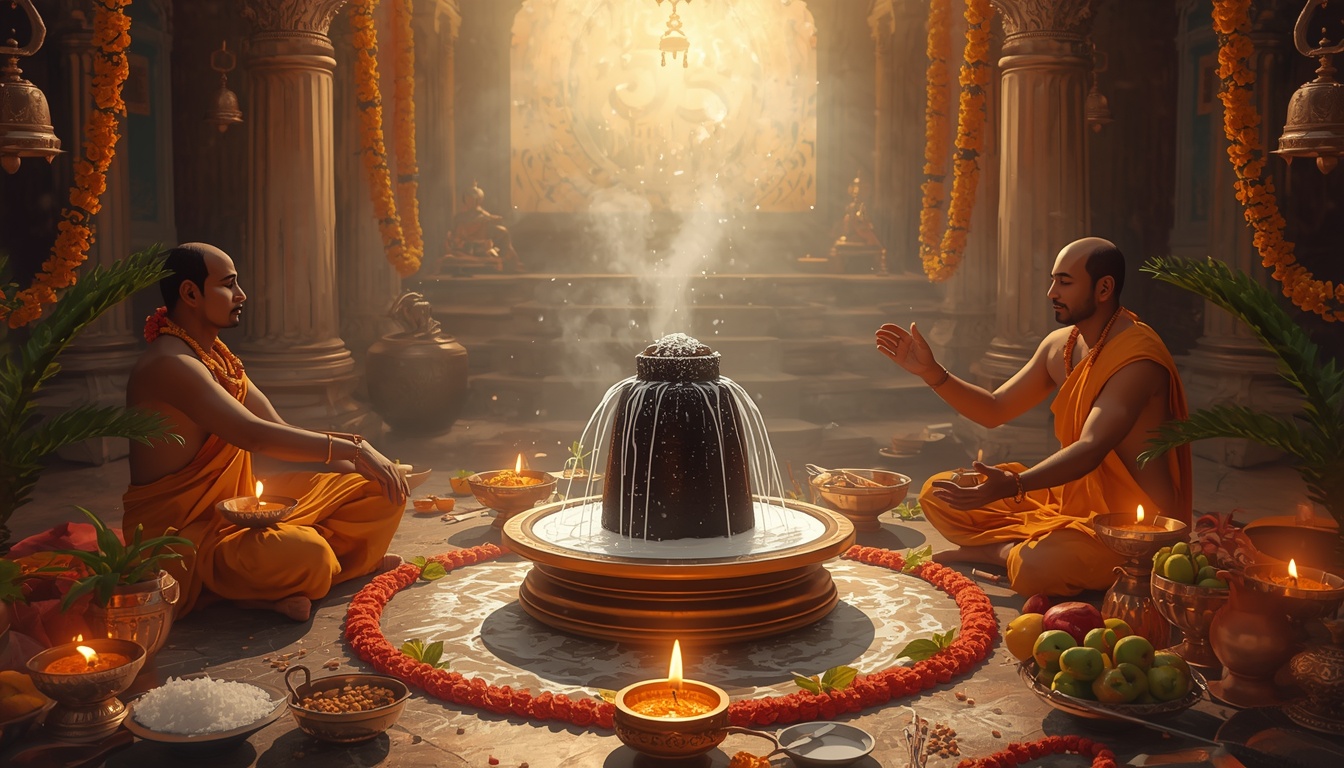
There are moments when a person does not really know what to ask from God. Maybe the mind is tired, a family problem has been hanging around for too long, or life simply feels a little stuck. In such moments, sitting before a Shiva Linga and hearing the steady sound of Rudra Mantra can feel deeply calming.
Laghu Rudrabhishek Puja is a sacred form of Rudrabhishek Puja dedicated to Lord Shiva. The word Abhishek refers to the ceremonial bathing of the Shiva Linga with sacred offerings while Vedic mantras are recited. It is not merely about pouring water or milk over the Shivling; the ritual combines prayer, Sankalp, mantra chanting, devotion and traditional Vedic practices.
For many devotees, a Laghu Rudrabhishek is a simple yet meaningful way to seek Lord Shiva’s blessings, inner peace, spiritual cleansing and strength during difficult phases of life. The experience can be especially powerful when performed with sincere devotion rather than treating the puja like a hurried checklist.
Laghu Rudrabhishek Puja is a comparatively concise form of Rudra worship in which the Shiva Linga Abhishek is performed according to Vedic traditions. The ritual generally includes prayers, offerings and recitation of sacred portions associated with Rudram and the Rudra Sukta.
The practice has roots in Yajurveda, particularly the traditions surrounding the recitation of Shri Rudram. While exact procedures can vary between temples, priests and regional traditions, the central idea remains the same: worship Lord Shiva through Abhishekam and sacred chanting.
The word “Laghu” means shorter or more concise. So, compared with more elaborate forms such as Maha Rudrabhishek, the ritual is generally designed to be completed in a shorter period while retaining important elements of Shiva worship.
It is sometimes also called Laghurudra Abhishek Puja, although the exact terminology and ritual structure can differ according to the tradition being followed.
The significance of Laghu Rudrabhishek goes beyond the physical offerings made during the ceremony. Devotees traditionally approach this puja with prayers for peace, protection, health, family well-being and spiritual progress.
The continuous chanting of Shiva Mantras creates a devotional atmosphere in which the mind can slow down. There is something unusual about that rhythm; after a while, even a restless mind starts listening.
The central deity is Lord Shiva, who is worshipped through the Shiva Linga. Water, milk and other traditional substances are offered while mantras are recited. Each offering represents devotion and surrender, rather than simply being an ingredient added to a ritual.
Some devotees also perform Rudrabhishek as part of traditional remedies for Graha Dosha, Kaal Sarp Dosh, Pitru Dosha or difficult karmic patterns. Such religious remedies are matters of faith and tradition, and they should not be understood as guaranteed solutions to personal or astrological problems.
The exact sequence can vary depending on the temple and Authorized Panditji, but a traditional Vedic Rudrabhishek generally follows a recognizable structure.
The ceremony may begin with purification and preparation of the worship space. The devotee then participates in a Sankalp, where the purpose of the puja is stated along with relevant details such as the devotee’s name and Gotra, when applicable.
A Kalash Sthapana may then be performed. The sacred Kalash represents auspiciousness and is an important element in many Vedic rituals.
The main Abhishekam follows. The Shiva Linga may be bathed with water and other traditional offerings while Rudram, Rudra Sukta, Shiva Mantras or other prescribed prayers are chanted.
Not every temple uses exactly the same sequence or ingredients. That small difference is normal in Hindu worship, where regional traditions and temple-specific procedures have their own character.
Devotees associate Laghu Rudrabhishek benefits with several areas of spiritual and personal well-being. These beliefs come from Hindu religious traditions and should be understood as devotional benefits rather than medical or financial guarantees.
One of the most commonly mentioned benefits is mental peace. Sitting quietly during mantra chanting can provide a valuable pause from everyday noise.
Another traditional purpose is spiritual cleansing. Devotees may see the Abhishekam as a symbolic way of releasing negativity and beginning again with a clearer heart.
Other commonly associated benefits include:
The most meaningful benefit may simply be the opportunity to stop for a while. Life keeps asking for attention; puja gives the mind somewhere else to rest.
For devotees interested in performing Laghu Rudrabhishek at Grishneshwar, the experience carries special religious significance because Grishneshwar Jyotirlinga is one of the revered 12 Jyotirlingas associated with Lord Shiva.
The temple is located at Verul in Maharashtra, close to the famous Ellora Caves. The combination of an important Shiva pilgrimage site and the historic surroundings makes the area particularly significant for devotees visiting Maharashtra.
A Grishneshwar Temple puja may be performed according to the temple’s prevailing rules and available services. Devotees considering Rudrabhishek at Grishneshwar Temple should confirm the current procedure, permitted offerings, timings and booking arrangements directly through the authorized temple or service provider.
This matters because temple rituals can have specific rules. A puja available at one Shiva temple may not be conducted in exactly the same way at another.
A Grishneshwar Jyotirlinga Puja can be especially meaningful for someone who wants to combine personal prayer with a pilgrimage to a Jyotirlinga.
The atmosphere around an ancient Shiva temple is quite different from performing a small home puja. There are pilgrims arriving from different places, bells ringing, priests reciting mantras and devotees quietly waiting for darshan. Somehow, everybody is carrying a different story but standing before the same deity.
Those planning Laghu Rudrabhishek Puja at Grishneshwar should check whether the desired puja is currently offered, whether advance booking is necessary and whether the ceremony takes place inside a particular temple area.
The Garbhagriha and Sabhamandap may have access restrictions, and temple authorities can change arrangements during festivals, special occasions or periods of heavy pilgrimage.
There is no single day that every devotee must choose for Laghu Rudrabhishek Puja. Shiva worship is traditionally performed throughout the year, and devotees may select a day based on their personal intention, family tradition or guidance from a knowledgeable priest.
Somvar, or Monday, is traditionally associated with Lord Shiva and is therefore a popular choice for Shiva puja.
Maha Shivratri is another major occasion for Shiva worship. Similarly, the Shravan Month is considered highly significant for devotees of Lord Shiva, and temples often experience increased devotional activity during this period.
If the puja is being performed for a specific traditional astrological remedy, the timing may be selected according to the guidance of a qualified Purohit or Panditji.
Laghu Rudrabhishek puja timings depend heavily on the temple or priest conducting the ceremony. There is no universal timing that applies to every location.
At a temple such as Grishneshwar, devotees should check the current schedule before travelling. Festival days, special religious occasions and temple crowd levels can affect available slots.
If arranging the ceremony privately, an experienced Panditji can explain the appropriate time based on the family’s tradition and purpose of the puja.
For this reason, it is better not to rely on an old online timing when planning a pilgrimage. A quick confirmation before travelling can save a surprising amount of trouble.
People searching for Laghu Rudrabhishek puja cost or Laghu Rudrabhishek price will often find different amounts quoted by different temples and service providers.
The price can depend on several things, including the location, type of puja, number of devotees, required Puja Samagri, priest’s services and whether additional offerings are included.
A basic ritual and an elaborate package should not automatically be compared as if they are identical. One may include only the ceremony, while another could include materials, Prasad, Pandit Dakshina, photographs or additional religious services.
Before making a payment, ask clearly what is included. A trustworthy provider should be able to explain the ceremony, duration, materials and any additional charges without making the devotee guess.
Devotees looking for Laghu Rudrabhishek Puja booking usually have two broad options: online and offline arrangements.
Laghu Rudrabhishek online booking can be convenient for devotees who cannot travel immediately or who want to arrange a ceremony at a particular temple through an authorized service.
Before booking an Online Laghu Rudrabhishek, verify who is conducting the puja, where it will be performed, what the package includes and whether the service is actually connected with the stated temple.
Be especially careful with websites that make dramatic promises about guaranteed removal of every problem. Authentic religious services should explain the ritual honestly rather than turning devotion into fear.
For Laghu Rudrabhishek offline booking, devotees can enquire at the temple counter or through an authorized temple representative where such arrangements are available.
Offline booking has one simple advantage: you can often ask questions directly. If you are visiting Grishneshwar Temple, enquire about the current puja procedure, available slots, identification requirements and permitted offerings before finalizing anything.
The exact Puja Samagri can differ, but traditional Rudrabhishek commonly involves several sacred offerings.
These may include:
The ingredients are not the entire meaning of the puja. A person could have a room full of offerings and still perform worship without attention, while another devotee may offer very simply but with complete sincerity. In Shiva worship, that distinction feels important.
Mantra chanting is one of the central elements of Rudrabhishek Puja. Among the best-known Shiva mantras is Om Namah Shivaya, a simple phrase that many devotees repeat as part of their regular worship.
The recitation of Rudram, particularly Shri Rudram associated with the Yajurveda, is also an important feature of traditional Rudra worship.
The pronunciation of Vedic mantras can be significant within formal Vedic practice. Therefore, when arranging an elaborate ceremony, choosing an experienced Pandit who knows the prescribed chanting tradition is preferable.
A devotee does not need to understand every Sanskrit word to participate respectfully. Listening, repeating permitted mantras and maintaining a sincere Sankalp can itself become a deeply personal experience.
There is no need to think that Rudrabhishek belongs only to people facing serious difficulties. Devotees may perform Shiva puja as an expression of gratitude, devotion, prayer or a desire for spiritual growth.
It may be considered by people seeking traditional prayers for:
If someone is specifically performing the ceremony as an astrological remedy for Kaal Sarp Dosh, Pitru Dosha or another condition, it is sensible to consult a knowledgeable and trustworthy priest rather than following random internet instructions.
Choosing the Best Panditji for Rudrabhishek is less about an impressive title and more about knowledge, transparency and proper conduct.
An Authorized Panditji, temple priest or experienced Purohit should be able to explain what will happen during the ceremony. They should also be comfortable telling you which parts are traditional requirements and which are optional additions.
Look for an experienced Pandit, clear communication about the puja cost, transparency regarding Puja Samagri, and genuine knowledge of the ritual.
If booking online, check whether the service offers reasonable proof of the ceremony, such as puja photos and video, when those are part of the package. But remember, photographs are evidence that an event occurred; they aren’t by themselves proof of spiritual results.
Many devotees approach Shiva worship during emotionally difficult periods. They may describe the experience as spiritual healing, aura cleansing, or a way of releasing a heavy feeling that has been sitting inside them.
These expressions belong largely to spiritual and devotional traditions rather than established medical science. Still, rituals can provide a meaningful structure for reflection, prayer and emotional comfort.
The slow sound of chanting, the scent of flowers, the movement of water over the Shivling and the final Aarti can create a peaceful environment. Sometimes a person does not need a complicated answer; they need a quiet place to breathe and begin again.
The Shravan Month holds a special place in Shiva devotion. During this period, many devotees visit Shiva temples, offer water and milk, chant Om Namah Shivaya, observe fasting traditions and participate in special pujas.
Maha Shivratri is another major occasion for Shiva worship. Temples may remain active for extended periods, with devotees participating in night-long prayers, Abhishekam and Shiva Stotras.
If you plan to arrange a Laghu Rudrabhishek during these periods, advance planning becomes more important. Popular temples can become extremely crowded, and available puja slots may fill quickly.
A Sankalp should not become a long speech filled with complicated wishes. It can be sincere and simple.
A devotee may pray for peace in the family, strength during a difficult period, wisdom to make better decisions, good health, spiritual progress or gratitude for something already received.
Instead of asking only, “What will Shiva give me?” the prayer can also become, “Give me the strength to handle what comes next.”
That little change in attitude can make the ceremony feel less like a transaction and more like worship.
Read more: https://templetimingsdaily.com/bhadra-maruti-temple/
Before confirming a Laghu Rudrabhishek booking, keep a few practical points in mind.
These questions sound ordinary, but they can prevent confusion later. Religious devotion deserves sincerity, and the practical arrangements deserve clarity too.
Laghu Rudrabhishek is a sacred Hindu ritual performed to worship Lord Shiva by offering water, milk, and other items to the Shiva Lingam.
Laghu Rudrabhishek is believed to bring peace, remove negativity, and seek Lord Shiva’s blessings for health, prosperity, and spiritual well-being.
Laghu Rudra Pooja is a special Shiva worship ritual that includes chanting sacred mantras and performing offerings to Lord Shiva with devotion.
Laghu Rudra Puja is performed to honor Lord Shiva and is traditionally associated with purification, protection, peace, and fulfillment of sincere prayers.
The cost of Laghu Rudra Puja varies by temple, location, priest, and the materials included in the ritual, so prices can differ significantly.
Laghu Rudrabhishek Puja is a beautiful form of Shiva worship that brings together Abhishekam, mantra chanting, Sankalp, Archana and Aarti in a focused devotional ceremony.
Whether performed at home, through an authorized priest or as part of a pilgrimage to Grishneshwar Jyotirlinga, its deeper meaning lies in devotion and surrender. The milk, water, honey and flowers are visible offerings; the quieter offering is the devotee’s attention.
For those visiting Grishneshwar Temple, the presence of one of the revered 12 Jyotirlingas, the surroundings of Verul and the nearby Ellora Caves can make the pilgrimage especially memorable. For others, a simple Shiva puja at home may hold just as much personal meaning.
Choose a trustworthy Panditji, understand the procedure, confirm the booking details and approach the ceremony with a calm heart. No ritual needs to be turned into fear or a promise of guaranteed worldly results.
At its gentlest, Rudrabhishek reminds us of something very human: life will always have noisy days, uncertain days and days when answers refuse to arrive. Sitting before Lord Shiva, listening to Rudram and repeating Om Namah Shivaya gives the mind a small, sacred pause.
And sometimes, that pause is where peace quietly begins.