Physical Address
304 North Cardinal St.
Dorchester Center, MA 02124
Physical Address
304 North Cardinal St.
Dorchester Center, MA 02124

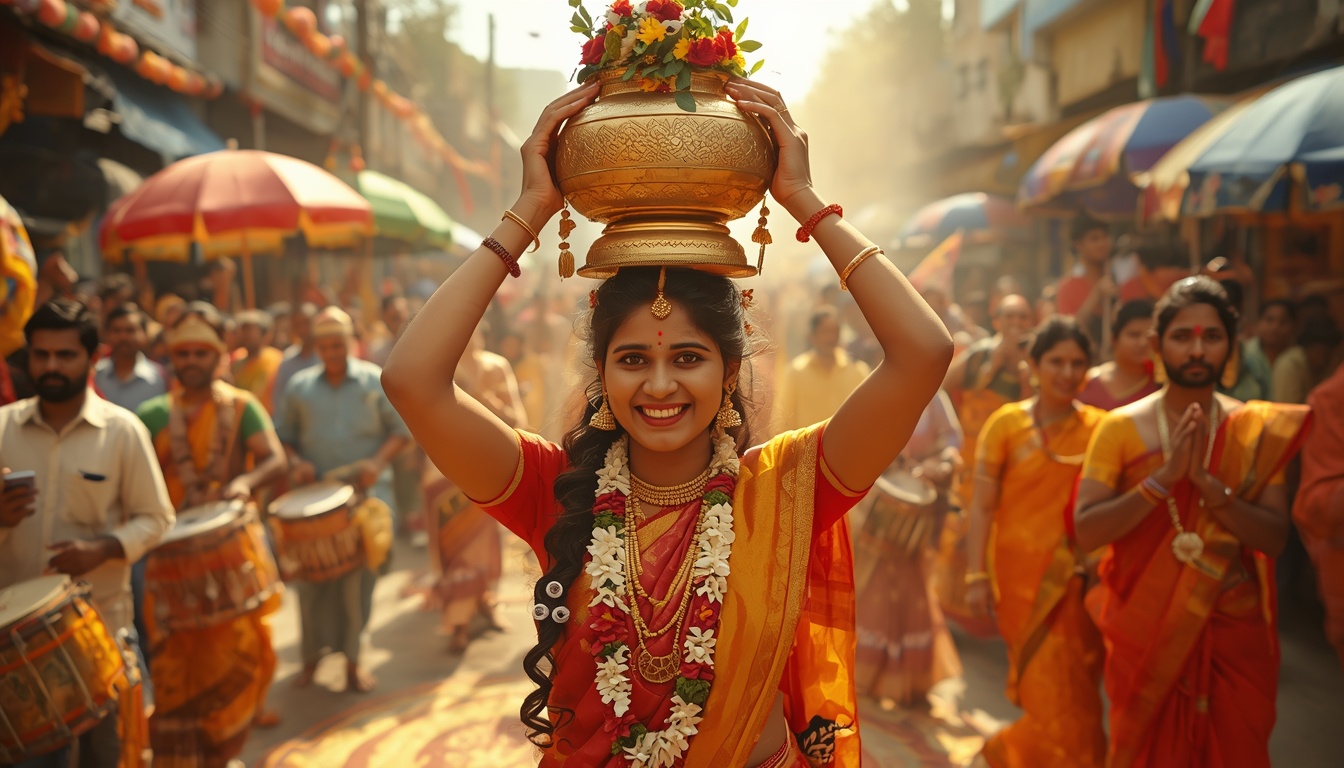
Bonalu is one of those festivals where devotion can be felt in every corner of a neighbourhood. The sound of traditional drums, women carrying beautifully decorated pots on their heads, colourful processions, and prayers dedicated to the Mother Goddess create an atmosphere that is deeply connected with the cultural identity of Telangana. It is not simply a religious occasion; it is a celebration of faith, gratitude, community, and centuries-old traditions.
Bonalu 2026 brings another opportunity for devotees to honour Goddess Mahankali and seek her blessings for family happiness, good health, protection, and prosperity. Celebrated with particular enthusiasm in Hyderabad, Secunderabad, and other parts of Telangana, this traditional festival combines sacred offerings with lively folk performances and temple ceremonies.
From preparing a traditional Bonam to witnessing the energetic Pothuraju dance, every part of the celebration carries a special meaning. Whether you are discovering this festival for the first time or following its traditions every year, understanding its history and rituals makes the experience even more meaningful.
One of the most common questions devotees ask is, when is Bonalu 2026? The festival traditionally takes place during Ashada Masam, the Telugu lunar month generally associated with June, July, and August, depending on the calendar.
According to the Government of India’s Incredible India festival listing, the 2026 Bonalu celebration in Hyderabad is scheduled from July 16 to August 10, 2026. August 10 is also listed as Bonalu in the Telangana government’s 2026 holiday calendar.
Here are the important date details:
The date of individual temple celebrations can vary because different temples observe their special Bonalu occasions on different Sundays. Devotees should check the announcements of their preferred temples for specific puja and procession timings.
The wider celebration period is important because Bonalu is not limited to one day. It unfolds across several temple events, allowing different communities to participate in their own traditional ways.
Bonalu festival is a traditional Hindu folk festival dedicated to Goddess Mahankali, a powerful form of the Mother Goddess. It is celebrated mainly in Telangana, particularly in the twin cities of Hyderabad and Secunderabad.
The word Bonalu comes from Bonam, which is connected to the Telugu word Bhojanam, meaning food or meal. During the festival, devotees prepare a special food offering and present it to the Goddess as an expression of gratitude and devotion.
The celebration is traditionally associated with thanksgiving after the fulfilment of wishes and prayers. Families visit temples to seek divine protection, good health, prosperity, and wellbeing for their loved ones.
For many devotees, Bonalu also represents a prayer for protection from diseases, epidemics, negative energies, and difficulties. The festival reflects the belief that the Mother Goddess watches over her devotees and protects their communities.
Unlike festivals that are primarily celebrated through private prayers at home, Bonalu brings entire neighbourhoods together. People decorate streets, organize processions, prepare offerings, and participate in traditional ceremonies.
The history of Bonalu in Telangana is closely associated with Hyderabad and Secunderabad during the nineteenth century.
According to a widely shared traditional account, a serious plague outbreak affected the twin cities around 1813. Thousands of people reportedly lost their lives, creating fear and uncertainty among local communities.
At that time, a military battalion from Hyderabad was stationed in Ujjain. Concerned about the situation back home, members of the battalion prayed to Goddess Mahankali at a temple there.
They reportedly made a vow that if the Goddess protected Hyderabad from the epidemic, they would install her idol in the city upon their return.
According to the traditional belief, the epidemic subsided, and the returning soldiers fulfilled their promise by installing an idol of Mahankali and offering prayers. This account is remembered as an important part of the festival’s origin story.
Over the years, the celebration became deeply rooted in Telangana’s religious and cultural life. It developed into a major annual tradition involving numerous temples, neighbourhoods, and local communities.
Following the formation of Telangana state in 2014, Bonalu was recognized as the state’s official festival, further highlighting its cultural importance.
The central deity of Bonalu is Goddess Mahankali, also widely known as Goddess Mahakali. She represents divine feminine power, strength, protection, and the destruction of negative forces.
Devotees worship her with immense faith, believing that the Mother Goddess protects families and communities from hardships.
Different regions and temples also worship various local forms of the Mother Goddess, including:
Although these names represent different forms and local traditions, the central theme remains the worship of Shakti, or the divine feminine energy.
For devotees, the festival is an expression of their relationship with the Mother Goddess, built through prayers, promises, offerings, and gratitude.
The beauty of Bonalu celebrations comes from the many rituals performed throughout the festival. Each ceremony has its own purpose and cultural significance.
Some traditions take place inside temples, while others bring the entire neighbourhood into the streets. The combination of devotional music, colourful decorations, sacred offerings, and energetic performances makes the festival unforgettable.
The most recognizable tradition is the preparation of Bonam.
Women prepare cooked rice with milk and jaggery in a new earthen or brass pot. The pot is decorated with neem leaves, turmeric, kumkum, and flowers. A small sacred lamp may also be placed on top.
The prepared offering is carefully carried on the woman’s head as she walks towards the temple.
Devotees present the Bonam to Goddess Mahankali along with traditional offerings such as bangles and sarees. The act represents gratitude, faith, and a prayer for the wellbeing of the family.
The ingredients may vary slightly between households and local traditions, but the meaning of the offering remains deeply respected.
Neem leaves have a special place in Bonalu traditions. They are commonly used to decorate the offering pots and are also associated with purification and protection.
Turmeric and kumkum are considered auspicious elements in Hindu worship. They are used to decorate the Bonam pot and participate in different devotional ceremonies.
These familiar materials connect the celebration with traditional beliefs about protection, purity, and the blessings of the Mother Goddess.
Devotees gather at temples to offer prayers, light lamps, and participate in aarti ceremonies.
The temple atmosphere becomes especially vibrant during the main celebration days. Traditional devotional songs, bells, drums, and prayers create a memorable spiritual experience.
Families often visit together, seeking blessings for children, elders, and other loved ones.
One of the most exciting attractions of the festival is Pothuraju, a traditional figure closely associated with the Mother Goddess.
In local beliefs, Pothuraju is regarded as the brother of the Goddess and a protective figure who leads or accompanies important processions.
He is usually portrayed as a strong performer wearing a red dhoti, ankle bells, and turmeric on his body, with vermilion on his forehead.
His energetic movements and powerful dancing become particularly striking when accompanied by traditional drums.
Pothuraju often dances near the procession’s ceremonial structures, helping create an atmosphere filled with excitement and devotion.
Children and adults gather along the streets to watch the performances. For local communities, this tradition is not just entertainment; it is an important expression of Telangana’s folk heritage.
The Rangam ceremony is another significant part of Bonalu celebrations.
Rangam is traditionally performed on the morning following a major temple celebration. During this ritual, a woman believed to enter a divine trance invokes Goddess Mahankali and acts as an oracle.
Devotees gather to ask questions about the coming year, including concerns related to rainfall, agriculture, community wellbeing, and other matters.
The woman delivers responses that devotees traditionally regard as messages from the Goddess.
This ceremony is also known as the prophecy ritual or oracle tradition. It reflects the connection between local religious practices and the community’s hopes for the future.
For many visitors, Rangam is one of the most distinctive aspects of Bonalu because it preserves a traditional form of folk spirituality that has been passed down through generations.
The Ghatam ritual is an important tradition that continues throughout the festival.
A Ghatam is generally a copper pot decorated to represent the Mother Goddess. It is carried by a priest dressed in traditional attire, often with turmeric applied to his body.
The ceremonial pot accompanies important celebrations and processions from the beginning of the festival until its conclusion.
One of the most prominent traditions involves the Ghatam associated with the Akkanna-Madanna Temple in Haribowli. The final procession is particularly famous for its elaborate decorations, traditional performances, and large gatherings.
Ghatams from different temples come together during the concluding celebrations, and the procession traditionally ends with immersion at Nayapul.
The ceremony represents the completion of the festival and the return of the sacred representation to water.
Bonalu in Hyderabad is especially famous for its grand temple celebrations and colourful street processions.
Different areas observe the festival according to their local temple traditions. As a result, the celebrations continue across several Sundays rather than taking place at a single location.
Some of the most popular places associated with the festival include:
Golconda is traditionally associated with the beginning of Hyderabad’s major Bonalu celebrations.
Devotees visit the temple to offer Bonam, perform prayers, and participate in the opening celebrations. The historic surroundings add a distinctive cultural atmosphere to the occasion.
The Ujjaini Mahankali Temple is one of the most important religious centres associated with Bonalu.
The temple attracts large numbers of devotees, particularly during its special festival celebrations. The atmosphere is filled with traditional music, prayers, and colourful offerings.
Balkampet Yellamma Temple is another popular destination during the festival.
Devotees visit Goddess Yellamma to seek blessings and participate in special worship ceremonies. The temple is especially significant for people who follow its traditional religious practices.
Located in the Haribowli area, the Akkanna-Madanna Temple is closely associated with the famous Ghatam procession.
Its traditional ceremonies contribute significantly to the cultural identity of Old City Hyderabad.
The Lal Darwaza area is known for its lively Bonalu celebrations and traditional processions.
Devotees gather in large numbers, carrying decorated Bonam pots and participating in prayers dedicated to the Mother Goddess.
Other important temples and local worship centres include Muthyalamma temples and various Maisamma and Pochamma shrines across the region.
Bonalu is also a wonderful celebration of Telangana’s cultural identity.
Women traditionally wear beautiful silk sarees, cotton sarees, and traditional jewellery while carrying Bonam offerings. Younger girls may wear half-sarees and other traditional outfits.
Men often wear traditional dhotis and other regional clothing during religious ceremonies.
The streets become lively with devotional music, folk songs, drum performances, and colourful decorations. Traditional dances, especially Pothuraju performances, bring an energetic touch to the celebrations.
Food is another important part of the occasion. After making the sacred offering, families may share meals with relatives, neighbours, and guests.
These community gatherings reflect the spirit of togetherness that makes the festival so special.
For many families, preparing the food and decorating the offering pot is itself a cherished tradition. It is something passed from one generation to another, keeping cultural memories alive.
The Bonalu festival significance goes beyond the visible celebrations. Its deeper meaning is connected with gratitude, protection, faith, and community unity.
Devotees believe that worshipping Goddess Mahankali brings blessings and protection to their households.
Some of the important spiritual themes include:
These beliefs make Bonalu a meaningful occasion for people who consider the Mother Goddess an important part of their daily spiritual lives.
During Bonalu, devotees offer prayers to Goddess Mahankali according to their family and temple traditions.
There is no single universal mantra that every Bonalu temple must follow. The prayers and devotional practices can differ between communities.
Some devotees recite traditional names and invocations of the Goddess, while others participate in aarti and listen to devotional songs.
Commonly associated devotional practices include:
Other Hindu devotional texts, such as Durga Kavacham and Shiva-related stotras, may be recited by individual devotees according to their personal traditions. However, these are not compulsory Bonalu rituals.
The most important element is sincere devotion rather than the number of prayers performed.
If you are planning to participate in the festival, a little preparation can make your visit more comfortable and meaningful.
Here are some simple suggestions:
If you are visiting a popular temple in Hyderabad or Secunderabad, expect large crowds during major celebrations. Planning your journey in advance can help you enjoy the occasion without unnecessary stress.
According to the Incredible India festival listing, Bonalu celebrations in Hyderabad are scheduled from July 16 to August 10, 2026. August 10 is also included as Bonalu in the Telangana state holiday calendar.
Bonalu is a traditional Hindu festival celebrated mainly in Telangana to worship Goddess Mahankali. It is a thanksgiving celebration involving food offerings, temple prayers, traditional dances, and processions.
Goddess Mahankali, also known as Mahakali, is the principal deity worshipped during Bonalu. Different temples also honour local forms of the Mother Goddess, including Yellamma, Pochamma, and Maisamma.
Bonam is a traditional food offering prepared using cooked rice, milk, and jaggery. It is placed in a decorated earthen or brass pot and carried by women to the temple as an offering to the Goddess.
Neem leaves are traditionally associated with purification and protection. They are used to decorate Bonam pots and form an important part of the festival’s traditional appearance.
Pothuraju is traditionally regarded as the brother and protector of the Mother Goddess. He is represented by a dancer wearing a red dhoti and ankle bells who performs energetic movements during processions.
Next ARticul: https://templetimingsdaily.com/hartalika-teej/
Rangam is a traditional oracle ceremony performed after a major festival celebration. A woman believed to invoke Goddess Mahankali enters a divine trance and responds to questions from devotees.
Ghatam is a decorated copper pot representing the Mother Goddess. It is carried in ceremonial processions throughout the festival and traditionally immersed in water during the concluding celebrations.
Bonalu is celebrated in Hyderabad as an expression of devotion and thanksgiving to Goddess Mahankali. Its traditional origin story is associated with prayers during the plague outbreak of 1813.
Bonalu is observed through a series of temple celebrations over several weeks during Ashada Masam. The exact schedule varies between temples and local communities.
Bonalu 2026 is a traditional Telangana festival dedicated to Goddess Mahankali, celebrated with special food offerings, temple prayers, colourful processions, and cultural rituals.
Secunderabad Bonalu 2026 is celebrated with great devotion at Ujjaini Mahankali Temple, featuring traditional Bonam offerings, Pothuraju performances, and grand religious processions.
Secunderabad Bonalu 2026 is scheduled for July 19, 2026, with celebrations at Ujjaini Mahankali Temple and surrounding areas.
Bonalu celebrations in Hyderabad are scheduled from July 16 to August 10, 2026, with different temples observing their special festival days.
Bonalu 2026 celebrations in Telangana take place during Ashada Masam, with the wider Hyderabad festival period listed as July 16 to August 10, 2026.
Bonalu 2026 is a beautiful reminder of how religious faith, cultural identity, and community traditions can come together in one meaningful celebration. From the sacred Bonam offerings to the energetic Pothuraju performances, every tradition reflects the devotion people have carried through generations.
The festival also keeps Telangana’s folk heritage alive. Families gather, neighbourhoods become colourful, temples welcome devotees, and traditional ceremonies bring people closer to their cultural roots.
Whether you participate in the celebrations at Golconda, visit Ujjaini Mahankali Temple in Secunderabad, or offer prayers at a neighbourhood shrine, the heart of Bonalu remains the same: gratitude and devotion to the Mother Goddess.
May Goddess Mahankali bless every family with happiness, good health, courage, prosperity, and peace. May the spirit of this beautiful Telangana festival continue to bring communities together and preserve its sacred traditions for generations to come.
If you have celebrated Bonalu with your family or visited one of its famous temples, share your favourite memory and experience in the comments. Your story may help someone else discover the beauty of this remarkable festival.