Physical Address
304 North Cardinal St.
Dorchester Center, MA 02124
Physical Address
304 North Cardinal St.
Dorchester Center, MA 02124

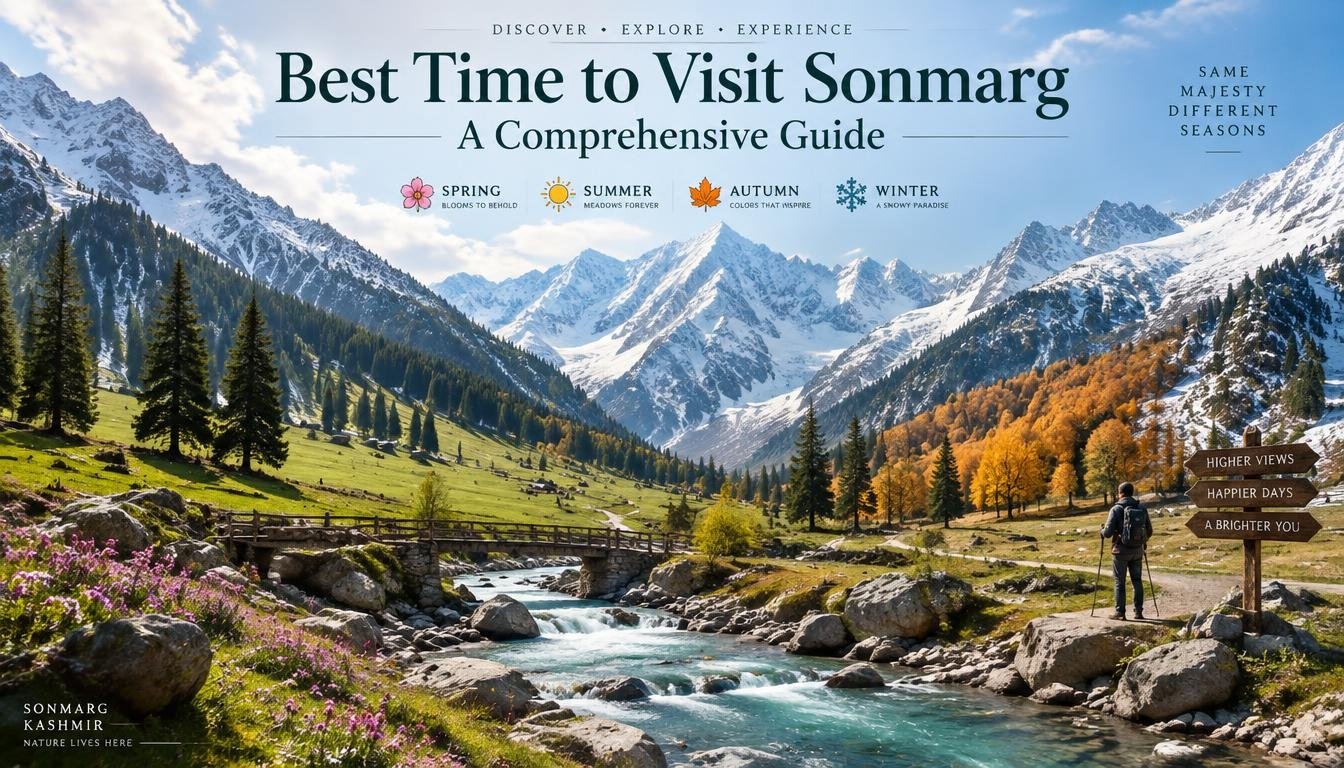
There are places that look beautiful in photographs, and then there are places that make you forget to take photographs because you’re too busy admiring what’s in front of you. Sonmarg, fondly known as the Meadow of Gold, belongs to the second category. Tucked away in the breathtaking Kashmir Valley, this charming mountain destination has a way of making ordinary travel moments feel rather extraordinary.
Imagine waking up to snow-covered mountains, listening to the gentle sound of the Sindh River, walking through meadows filled with wildflowers, or watching clouds slowly drift across the Himalayan peaks. Sounds lovely, doesn’t it? That’s Sonmarg for you.
But here’s something worth knowing before packing your bags: Sonmarg doesn’t look the same throughout the year. Summer brings colourful meadows and outdoor adventures, monsoon paints the landscape in refreshing shades of green, while winter transforms the entire destination into a snowy wonderland.
So, what is the best time to visit Sonmarg? Well, the answer depends on what you want from your journey. Whether you’re planning a family holiday, a romantic escape, a photography trip, or an adventure-filled vacation, understanding the seasons will help you make a better choice.
Let’s explore Sonmarg weather, seasonal activities, temperatures, travel precautions, and everything else you should know before planning your visit.
Situated in the northeastern part of the Kashmir Valley, Sonmarg is a spectacular mountain destination surrounded by towering peaks, alpine meadows, pristine lakes, and magnificent glaciers. Located at approximately 2,740 metres above sea level, it offers a refreshing escape from crowded cities and everyday routines.
The name Sonmarg translates to Meadow of Gold, a reference to the golden appearance of its meadows during certain seasons. During summer, colourful wildflowers cover the landscape, while the surrounding mountains create a beautiful natural backdrop.
The destination is also closely associated with the Nallah Sindh River, which flows through the region, adding another layer of charm to its scenery. The famous Zojila Pass connects this region with Ladakh and makes Sonmarg an important stop for travellers exploring the wider Himalayan landscape.
Some popular attractions include:
These attractions make Sonmarg tourism appealing to nature lovers, photographers, families, and adventure enthusiasts alike.
The best time to visit Sonmarg generally depends on the kind of weather and activities you prefer. For comfortable sightseeing, outdoor exploration, and access to many popular attractions, April to June is a popular travel period.
However, that doesn’t mean other seasons are less interesting. Monsoon has its own peaceful atmosphere, and winter offers the kind of snowy scenery many travellers dream about.
Here’s a quick seasonal overview:
Keep in mind that mountain weather can change quickly. Actual conditions, road accessibility, and snowfall patterns may vary from year to year.
If you enjoy pleasant weather, open landscapes, and long days outdoors, summer might be exactly what you’re looking for. Between April and June, Sonmarg gradually shakes off its winter appearance and welcomes visitors with greener surroundings and beautiful mountain views.
The Sonmarg summer weather is generally comfortable, with temperatures often ranging from approximately 10°C to 20°C, although conditions vary with altitude and the month of travel.
April can still feel quite chilly, particularly during mornings and evenings. By May and June, the landscape usually becomes more inviting for sightseeing and outdoor exploration.
One of the loveliest things about summer in Sonmarg is the transformation of its surroundings. Snow begins melting across the mountains, streams become more active, and meadows gradually turn green.
Wildflowers add colour to the landscape, while the clear skies make mountain views even more impressive. It’s the kind of scenery that makes you stop walking just to enjoy the moment.
1. Explore Thajiwas Glacier
A visit to Thajiwas Glacier is among the memorable experiences of a summer trip. Depending on snow conditions and accessibility, visitors can enjoy beautiful snowy scenery without necessarily travelling during the coldest months.
The surrounding mountains, fresh air, and picturesque landscape make it a wonderful place for photography.
2. Enjoy Hiking and Trekking
Summer opens up opportunities for exploring mountain trails and alpine landscapes. Treks towards Vishansar Lake and Krishnasar Lake are particularly appealing to experienced hikers and organised trekking groups.
These routes offer beautiful Himalayan scenery, although proper preparation and local guidance are important.
3. Experience River Rafting
For adventure lovers, the Sindh River offers opportunities for water-based activities, including rafting where conditions and authorised operators permit.
The rushing water, surrounding mountains, and excitement of navigating rapids create an unforgettable experience. Always follow local safety instructions because river conditions can change.
4. Go Camping in the Meadows
Imagine spending an evening surrounded by mountains, enjoying a warm cup of tea while the sky slowly changes colour. Camping around designated campsites can make your Sonmarg holiday feel wonderfully different.
Choose authorised camping areas and check local restrictions before setting up your tent.
5. Enjoy Angling and Trout Fishing
The rivers and streams of Kashmir are associated with trout fishing, making angling an interesting activity for visitors who prefer quieter experiences.
Fishing regulations and permits may apply, so check local requirements before planning a fishing session.
6. Take Beautiful Nature Walks
Not every memorable travel experience needs an adventure activity. Sometimes a peaceful walk through green meadows, with the sound of flowing water nearby, is enough.
Summer is particularly pleasant for leisurely walks and sightseeing around accessible areas.
7. Discover Local Culture
Summer is also a good opportunity to explore nearby villages, interact respectfully with residents, and experience regional traditions.
Local food, traditional hospitality, and everyday village life can add a meaningful cultural dimension to your holiday.
For travellers interested in outdoor activities and comfortable sightseeing, summer is often the most convenient season.
Monsoon brings a different personality to Sonmarg. The golden and green landscape becomes even more vibrant, mountain slopes appear mistier, and waterfalls gain additional strength after rainfall.
If you enjoy peaceful surroundings rather than busy tourist spots, Sonmarg in monsoon can be an appealing experience.
Temperatures during this period are often around 12°C to 20°C, although rainfall and local weather conditions can influence how warm or cold the day feels.
The most noticeable attraction is the greenery. Meadows, mountain slopes, and surrounding forests appear refreshed, creating a wonderful setting for nature lovers.
Clouds drifting around the mountains can make the landscape look almost dreamlike. Photographers especially enjoy these changing conditions because the scenery rarely looks exactly the same from one hour to another.
1. Enjoy the Beauty of Rain
There is something calming about watching rain fall over a mountain landscape. The gentle sound of rainfall, fresh air, and misty surroundings create an atmosphere that’s difficult to recreate elsewhere.
Enjoy the scenery from safe, sheltered locations rather than venturing onto exposed trails during heavy rain.
2. Explore Photography Opportunities
Monsoon offers wonderful opportunities for Sonmarg photography. Mist-covered mountains, flowing waterfalls, cloudy skies, and vibrant green meadows create naturally beautiful compositions.
Early mornings can be particularly atmospheric when clouds settle around the surrounding peaks.
3. Experience a Peaceful Retreat
One advantage of travelling during quieter periods is the opportunity to enjoy popular viewpoints without the same level of tourist activity.
You can take your time, enjoy a relaxed meal, or simply sit somewhere scenic and admire the surroundings.
4. Discover Nearby Villages
Exploring local villages can offer a glimpse into Kashmiri culture and everyday life.
Take an interest in local food, traditional homes, and regional customs. A friendly conversation with residents can sometimes become one of the nicest memories of a journey.
5. Enjoy Scenic Drives
When roads are open and conditions are safe, scenic drives around the region can be enjoyable.
The combination of green valleys, flowing streams, and clouds moving across the mountains makes even a simple journey feel special.
6. Visit Waterfalls and Streams
Rainfall can make waterfalls and streams appear more dramatic. However, avoid approaching swollen rivers or unstable slopes simply for a better photograph.
7. Enjoy Local Food
A rainy afternoon is a lovely excuse to try traditional Kashmiri dishes and warm beverages. Exploring local cuisine is an enjoyable way to understand the region beyond its famous landscapes.
Monsoon travel requires a little more attention than summer sightseeing.
Heavy rainfall may also trigger landslides or temporary road closures. Therefore, a flexible itinerary is especially important.
If you enjoy greenery, photography, and peaceful surroundings, monsoon could be an interesting season, provided travel conditions are suitable.
For some people, a holiday isn’t complete without snowfall. If you’re one of those travellers who dreams of waking up to white mountains and watching snowflakes settle on rooftops, winter might be your favourite season.
Sonmarg in winter looks dramatically different from its summer appearance. The green meadows become snow-covered landscapes, mountain streams may freeze in colder conditions, and the entire region develops a quiet, magical atmosphere.
Temperatures can fall below freezing, particularly during December, January, and February. The minimum may reach approximately -8°C or lower during particularly cold periods.
October and November are transitional months, so don’t assume that heavy snowfall will be present throughout the entire winter season.
Winter is especially attractive to travellers interested in Sonmarg snowfall, mountain photography, and snowy scenery.
The mountains appear more dramatic beneath a blanket of snow, and familiar attractions take on a completely different character.
However, winter accessibility can be limited. Some roads and attractions may become inaccessible because of heavy snowfall, so always confirm local conditions before travelling.
1. Enjoy Snow-Covered Landscapes
The first sight of snow-covered mountains is often enough to make a winter holiday memorable.
Take photographs, enjoy the scenery from safe viewpoints, and appreciate the peaceful atmosphere surrounding the valley.
2. Experience Snow Activities
Depending on local snow conditions and available facilities, visitors may enjoy activities such as skiing and sledding.
Beginners should choose authorised operators and suitable supervised areas rather than attempting unfamiliar slopes independently.
3. Explore Winter Photography
Snow-covered trees, frozen streams, mountain peaks, and rooftops create beautiful photography opportunities.
Even simple photographs can look extraordinary when the landscape is covered in fresh snow.
4. Enjoy Snow Trekking Where Permitted
Winter trekking offers a different experience from summer hiking. Trails may become difficult or dangerous, however, so guided excursions and appropriate equipment are essential.
Never attempt a snow-covered mountain route without checking its current accessibility.
5. Experience Local Winter Traditions
Winter can also be a wonderful time to learn about regional traditions and seasonal celebrations.
Travellers may encounter celebrations such as Diwali or the Losar Festival, depending on the dates, communities, and local event schedules.
Losar marks the Tibetan New Year and is associated with cultural celebrations and traditional customs.
6. Enjoy Warm Kashmiri Food
After spending time in the cold, enjoying a warm local meal feels particularly satisfying.
Explore traditional Kashmiri cuisine and warm beverages while learning about the region’s culinary heritage.
7. Enjoy a Relaxed Winter Holiday
Not everyone wants an activity-packed vacation. Sometimes staying in comfortable accommodation, enjoying mountain views, and watching snowfall is more than enough.
A relaxed winter holiday can be especially appealing for couples and travellers who enjoy peaceful mountain surroundings.
Winter can be breathtaking, but preparation makes all the difference.
Understanding seasonal weather is one of the easiest ways to decide which month is best to visit Sonmarg.
The following overview provides a general seasonal guide. These are approximate expectations rather than guaranteed monthly temperature readings.
| Month | General conditions | Travel experience |
|---|---|---|
| January | Very cold, snow possible | Winter scenery |
| February | Cold, snow may remain | Snow experiences |
| March | Transitional weather | Early spring conditions |
| April | Cool, some snow remains | Early sightseeing |
| May | Pleasant and gradually greener | Outdoor exploration |
| June | Generally comfortable | Trekking and sightseeing |
| July | Rainfall and greenery | Monsoon scenery |
| August | Rainy and refreshing | Photography |
| September | Transitional conditions | Quieter travel |
| October | Cooling temperatures | Autumn scenery |
| November | Increasingly cold | Early winter atmosphere |
| December | Freezing conditions, snow possible | Winter experiences |
A few things are worth remembering. Snowfall doesn’t follow a fixed calendar, and temperatures can differ considerably between the town, higher-altitude trails, and surrounding mountain areas.
Before booking your Kashmir trip, check the latest weather forecast and local accessibility information.
Not every traveller has the same idea of a perfect holiday. Some want adventurous days, while others would happily spend an entire afternoon admiring a mountain view.
Here’s how different seasons may suit different travel preferences.
April to June is a wonderful period for enjoying green meadows, flowing rivers, and wildflowers.
September can also appeal to visitors seeking a quieter landscape, depending on weather conditions.
Summer is generally more suitable for trekking, hiking, cycling, camping, and permitted river activities.
Winter offers snow-related experiences, although availability depends on weather and local facilities.
December to February is the period many travellers consider when planning a snowy holiday.
Still, snowfall timing varies every year, so check current conditions rather than relying entirely on previous travel photographs.
Every season offers a different photographic experience.
April to June is often convenient for families who want comfortable sightseeing and outdoor exploration.
Winter can also be enjoyable, provided the family is comfortable with cold weather and potential travel restrictions.
Quieter travel periods may offer different accommodation options, but actual prices depend on demand, availability, and local conditions.
Compare hotel rates, transport arrangements, and seasonal travel packages before making a booking.
While choosing the best time to visit Sonmarg, it’s equally important to understand what you can explore once you arrive.
The destination has several natural attractions worth including in your travel plans.
<em>Thajiwas Glacier</em> is one of the best-known attractions in the region. Its snowy surroundings and impressive mountain views make it a popular excursion for visitors.
Accessibility depends on the season, snow conditions, and local arrangements.
<em>Vishansar Lake</em> is a beautiful alpine lake known for its peaceful surroundings and mountain scenery.
It is particularly appealing to trekking enthusiasts, although reaching it requires suitable preparation and attention to trail conditions.
<em>Krishnasar Lake</em> is another picturesque high-altitude attraction. Its clear waters and surrounding mountains create a spectacular Himalayan setting.
Visitors generally explore this area as part of organised trekking itineraries.
The <em>Sindh River</em> adds tremendous beauty to Sonmarg’s landscape.
Visitors can enjoy riverside scenery, photography, and authorised recreational activities depending on the season and river conditions.
<em>Zojila Pass</em> is an important mountain route connecting Kashmir with Ladakh.
The surrounding scenery is impressive, but accessibility is highly dependent on weather, road conditions, and official traffic regulations.
A beautiful destination deserves a little thoughtful planning. Before setting off, consider a few practical details that can make your experience smoother.
There are different Sonmarg accommodation options, including hotels, guesthouses, and seasonal campsites.
During busy travel periods, booking ahead is sensible. In winter, confirm heating facilities, road accessibility, and whether your chosen property is operating.
Even during summer, evenings can become chilly. Mountain weather is known for changing unexpectedly, so carrying an additional warm layer is always useful.
Road accessibility is one of the most important parts of Sonmarg trip planning.
Heavy rainfall, snowfall, and landslides can affect travel routes. Check official advisories before setting out, particularly when travelling towards Zojila Pass.
For trekking and unfamiliar mountain excursions, an experienced local guide can make the experience safer and more informative.
Always choose reputable operators and confirm the difficulty level before booking.
Don’t fill every hour of your holiday with activities. Leave room for weather changes, unexpected delays, and spontaneous sightseeing.
Sometimes the best travel memory comes from an unplanned stop beside a beautiful river.
For a general sightseeing holiday, two to three days can provide a comfortable introduction to Sonmarg and its surrounding attractions.
A possible itinerary could look like this:
Day 1: Arrival and Local Exploration
Arrive, settle into your accommodation, explore accessible viewpoints, and enjoy the surrounding scenery.
Day 2: Thajiwas Glacier and Outdoor Activities
Depending on seasonal accessibility, explore Thajiwas Glacier, enjoy nature walks, and consider locally available recreational activities.
Day 3: Scenic Exploration and Departure
Enjoy a relaxed morning, explore nearby attractions if conditions permit, and begin your onward journey.
Travellers interested in longer Himalayan treks may need additional days. Always account for weather conditions and the time required to reach high-altitude attractions.
April to June is generally a popular period for sightseeing, outdoor exploration, and enjoying green landscapes. However, winter is more suitable for travellers seeking snow-covered scenery.
May and June are often convenient for pleasant weather and outdoor activities. The ideal month depends on the experience you’re looking for.
Yes, Sonmarg experiences snowfall during winter, although its timing and intensity vary each year.
Yes, it can be beautiful during monsoon because of its greenery, waterfalls, and misty landscapes. However, heavy rain may affect road accessibility and outdoor activities.
Summer temperatures are generally around 10°C to 20°C, depending on the month, altitude, and local weather.
Accessibility can be restricted by snowfall and road closures. Check current official road advisories before travelling.
Carry layered clothing, comfortable walking shoes, and a warm jacket. During winter, thermal wear, gloves, waterproof footwear, and heavy outerwear are essential.
Yes, Sonmarg can be a lovely family holiday destination. Families should select activities according to children’s ages, weather conditions, and travel accessibility.
Read ARticul: https://templetimingsdaily.com/kashi-vishwanath-temple/
Popular activities include sightseeing, nature walks, visiting Thajiwas Glacier, photography, camping, trekking, and seasonal adventure activities.
So, when is the best time to visit Sonmarg? The honest answer is that every season has something beautiful to offer.
Summer welcomes you with green meadows, pleasant weather, and opportunities for outdoor adventures. Monsoon introduces misty mountains, refreshing rainfall, and a quieter atmosphere. Winter, meanwhile, transforms the destination into a snowy paradise filled with breathtaking mountain scenery.
For comfortable sightseeing and outdoor exploration, April to June is generally a popular choice. If you prefer greenery and peaceful surroundings, consider the monsoon months while keeping an eye on rainfall and road conditions. And if snowfall is what you’ve been dreaming about, plan a winter visit after checking the latest weather updates.
Ultimately, your ideal Sonmarg travel guide should reflect your interests, budget, available time, and comfort with mountain weather.
Don’t forget to plan responsibly, respect local traditions, support local businesses, and leave the natural surroundings as beautiful as you found them.
Sonmarg isn’t simply a destination to tick off your travel list. It’s a place to slow down, breathe deeply, enjoy the mountains, and collect moments that stay with you long after the journey ends.
And perhaps that’s the real magic of the Meadow of Gold: no matter when you arrive, it always finds a different way to welcome you.