Physical Address
304 North Cardinal St.
Dorchester Center, MA 02124
Physical Address
304 North Cardinal St.
Dorchester Center, MA 02124

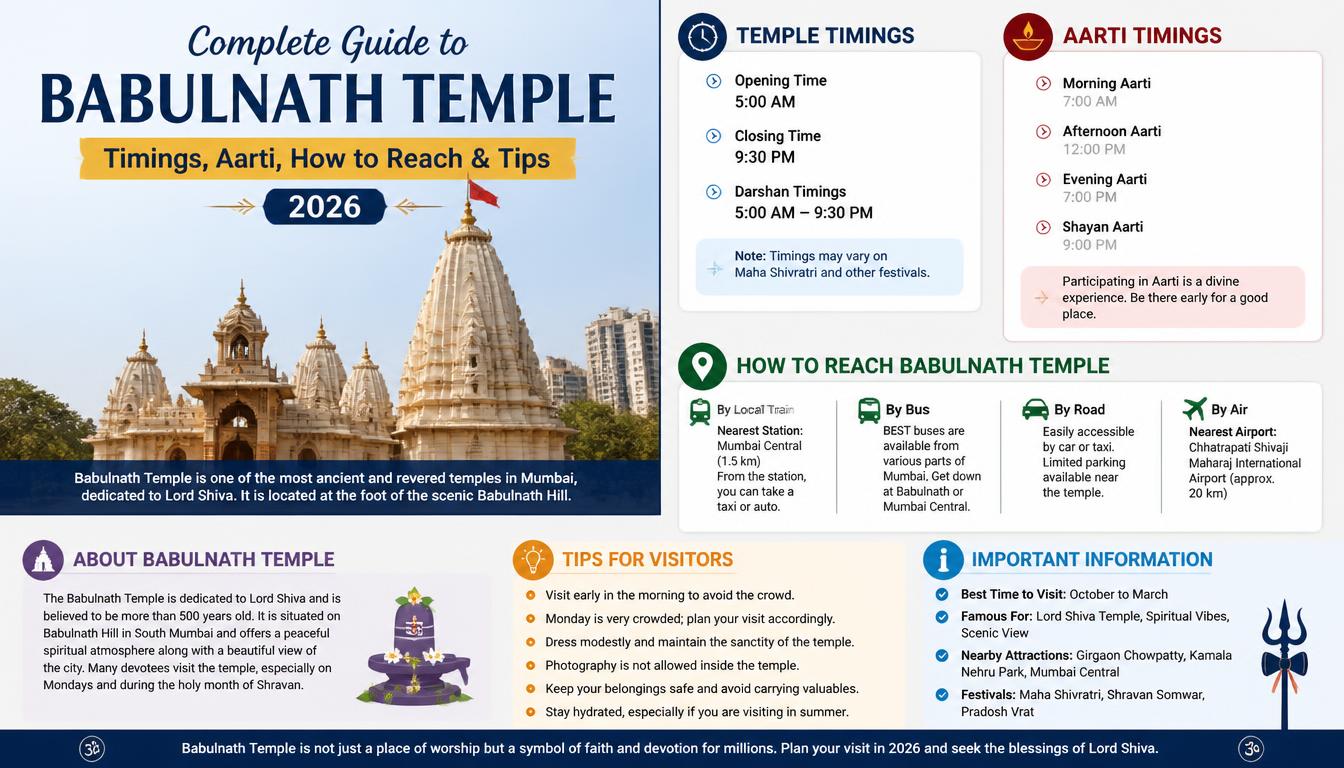
Nestled in the heart of South Mumbai, Babulnath Temple is one of the city’s oldest and most sacred Lord Shiva temples. Whether you’re planning your first visit or returning for another peaceful darshan,
knowing the Babulnath Temple timings, aarti schedule, how to reach, entry rules, and visitor tips can make your journey much smoother.
This complete guide covers everything you need to know for 2026, along with the temple’s fascinating history, architecture, nearby attractions, and practical travel advice.
Babulnath Temple is dedicated to Lord Shiva and stands on Babulnath Hill, close to the famous Girgaum Chowpatty in Mumbai. Despite being surrounded by the busy city, the temple offers a calm and spiritual atmosphere that attracts thousands of devotees and tourists every year.
Some quick facts:
| Details | Information |
|---|---|
| Temple Name | Babulnath Temple |
| Dedicated To | Lord Shiva |
| Location | Babulnath Hill, Mumbai |
| Nearest Railway Station | Charni Road |
| Entry Fee | Free |
| Best Time to Visit | November to March |
| Famous Festivals | Mahashivratri, Shravan Mondays |
The temple is especially popular during Mahashivratri and the holy month of Shravan, when devotees gather in large numbers to perform prayers and seek blessings.
The history of Babulnath Temple dates back nearly two centuries, although local legends suggest the sacred site is much older.
According to a well-known legend, villagers noticed that a cow regularly poured milk on a particular spot. Curious about this unusual event, they dug the ground and discovered a self-manifested Shivling (Swayambhu Shivling). This miraculous discovery inspired the construction of the temple dedicated to Lord Shiva.
Over the years, the temple has undergone several renovations while preserving its traditional Hindu architectural style. Today, it remains one of Mumbai’s most respected spiritual landmarks.
The temple is not just another religious destination. For many devotees, it represents a place where faith, meditation, and devotion come together.
Many people believe that offering prayers here during Shravan or Mahashivratri brings prosperity, peace, and spiritual growth. Mondays are especially considered auspicious because they are dedicated to Lord Shiva.
The relationship is simple:
Babulnath Temple → is dedicated to → Lord Shiva
This makes it one of Mumbai’s most important Shiva temples.
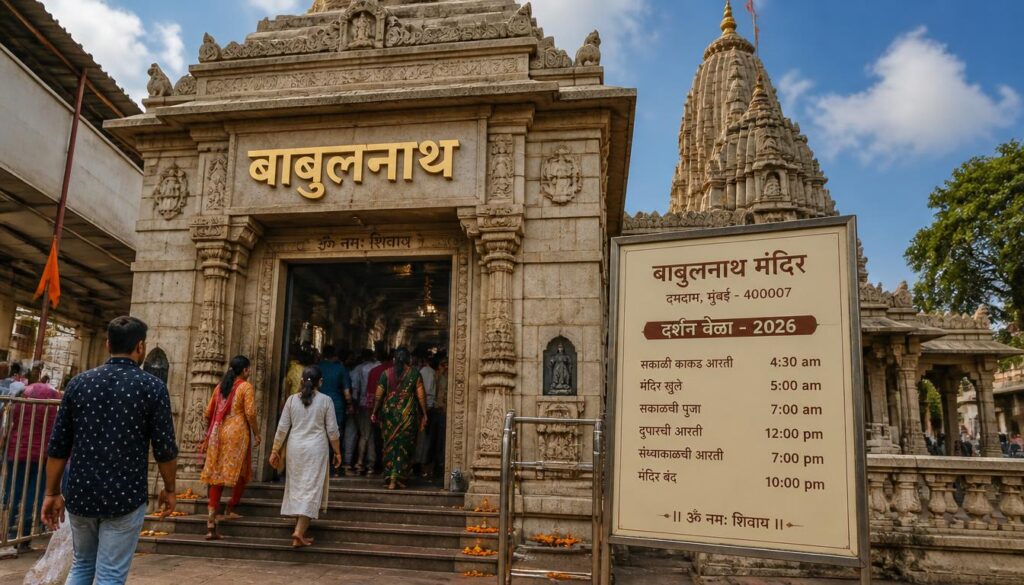
Visitors can enter the temple throughout the week. It generally opens early in the morning and remains open until late evening.
| Day | Opening Hours |
|---|---|
| Monday to Sunday | 5:30 AM – 10:00 PM |
Monday usually attracts the highest number of devotees because it holds special religious significance in Shiva worship.
During major festivals, the temple may remain open for extended hours.
Participating in an Aarti is one of the most memorable experiences during a temple visit. The chanting of mantras, ringing bells, and devotional music create an atmosphere that’s difficult to describe unless you’ve experienced it yourself.
The daily Aarti schedule generally includes:
Morning and evening Aartis are usually the most attended.
The holy month of Shravan is among the busiest periods at the temple.
During this month:
The semantic relationship is clear:
Shravan Month → includes → Extended temple timings and special Aartis
If you’re planning to visit during Shravan, arriving before sunrise is generally the best option.
Among all festivals, Mahashivratri is undoubtedly the biggest celebration at Babulnath Temple.
Thousands of devotees queue throughout the night to perform:
On Mahashivratri:
Another important semantic relationship:
Mahashivratri → brings → Thousands of devotees to Babulnath Temple
Visitors can choose different types of darshan depending on their preference.
Common options include:
General Darshan is sufficient for most visitors, while VIP Darshan can save considerable waiting time during festivals.
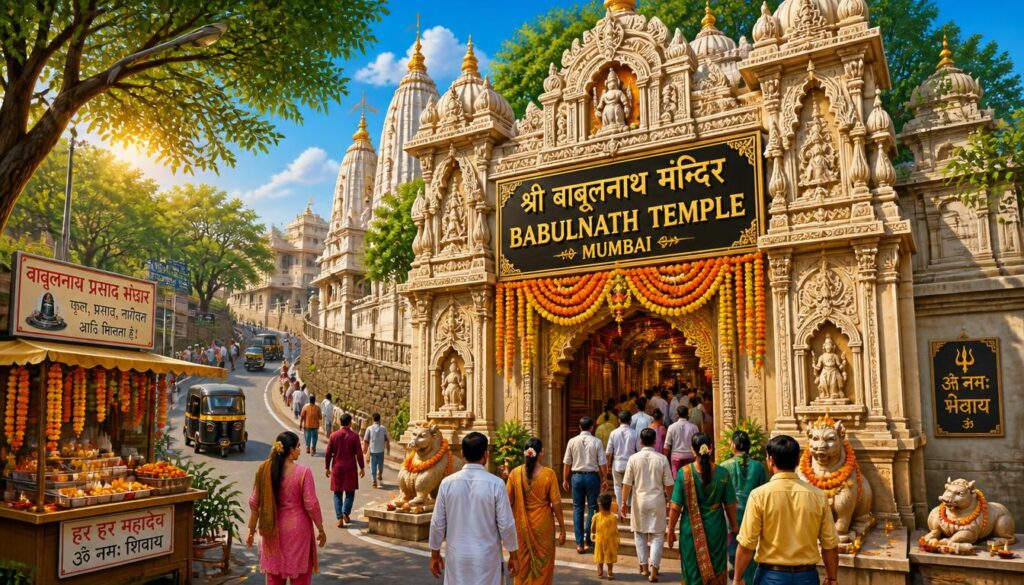
Reaching Babulnath Temple is fairly convenient because of its central Mumbai location.
The nearest station is Charni Road Railway Station, located approximately 1 km from the temple.
Visitors can:
Semantic relationship:
Charni Road Railway Station → is the nearest station to → Babulnath Temple
Several BEST buses stop near Girgaum Chowpatty.
From there, the temple is a short uphill walk.
Uber, Ola, and regular Mumbai taxis can drop visitors near the temple entrance.
This is often the easiest option for elderly visitors.
Private vehicles are allowed, but parking spaces are limited.
During weekends and festivals, public transport is generally a better choice.
One feature that makes Babulnath Temple unique is its affordable lift facility.
Instead of climbing approximately 110 steps, visitors can use the lift by paying a nominal fee.
This is especially useful for:
Even after using the lift, only a few steps remain before reaching the main shrine.
While many visitors focus only on darshan, the temple’s architecture deserves equal attention.
The temple reflects the Nagara style of Hindu architecture, characterized by its elegant shikhara (tower), beautifully carved pillars, and ornamental stonework. The white marble exterior gives the temple a serene appearance, while intricate carvings depict various motifs associated with Lord Shiva and Hindu mythology.
The Garbhagriha (sanctum sanctorum) houses the sacred Swayambhu Shivling, which is considered the spiritual heart of the temple. Above it rises the towering shikhara, symbolizing the connection between earth and the divine. Visitors often spend a few moments observing these architectural details, and honestly, they’re easy to overlook if you’re only focused on the queue.
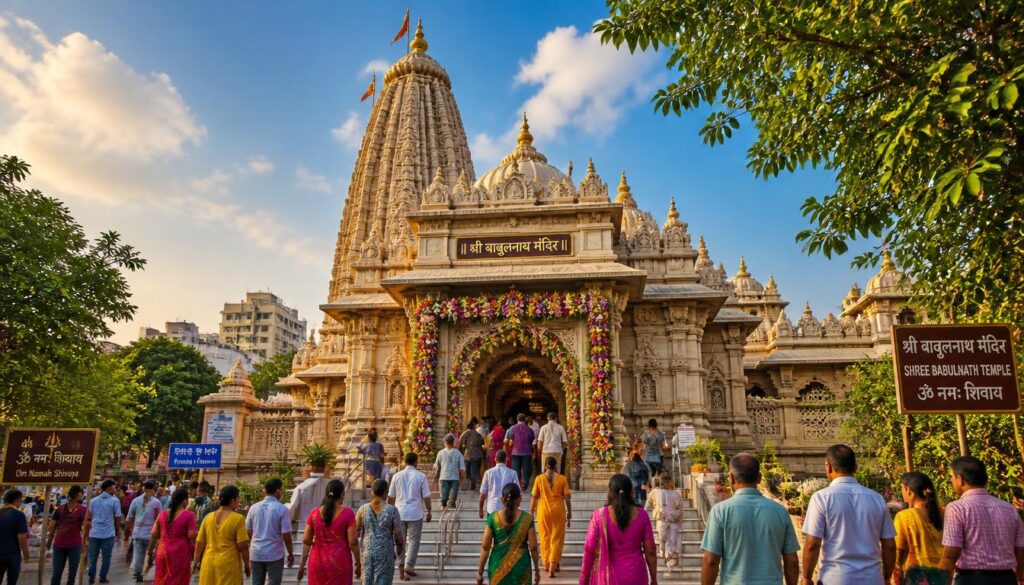
For a comfortable experience, timing your visit makes a noticeable difference.
The ideal months are November to March, when Mumbai’s weather is relatively pleasant and climbing to the temple is easier. Early mornings offer a peaceful atmosphere with shorter queues, while evenings allow visitors to witness the beautiful aarti.
If your primary goal is spiritual immersion, visiting during Shravan Mondays or Mahashivratri provides a unique experience, though you should expect heavy crowds and longer waiting times.
A little planning can make your visit much more enjoyable.
The temple offers several amenities for devotees.
These include footwear stands, clean seating areas, drinking water, restrooms, and the inexpensive lift service. During major festivals, additional volunteers are usually present to guide visitors and manage queues.
Photography inside the sanctum may be restricted, so it’s best to check the latest guidelines before taking pictures.
One advantage of visiting Babulnath Temple is that several iconic Mumbai attractions are just a short distance away.
After your darshan, you can explore Girgaum Chowpatty, known for its beach, local snacks, and sunset views. A little farther away is Marine Drive, where visitors enjoy leisurely walks along the Arabian Sea. Art enthusiasts can also visit the Kala Ghoda Arts District, home to galleries, museums, heritage buildings, and cultural events.
Combining these places with your temple visit makes for a fulfilling day in South Mumbai.
Babulnath Temple is generally open every day from 5:30 AM to 10:00 PM. During festivals such as Mahashivratri and the month of Shravan, the timings may be extended to accommodate the larger number of devotees.
No. Entry to Babulnath Temple is completely free for all visitors. However, a nominal charge is collected if you choose to use the lift facility to reach the upper level of the temple.
The nearest railway station is Charni Road Railway Station on Mumbai’s Western Line. It is about one kilometre away, and visitors can either walk uphill for around 15–20 minutes or take a short taxi ride.
The best time is between November and March because of the pleasant weather. For fewer crowds, visit early in the morning. Those wishing to experience grand celebrations can visit during Shravan or Mahashivratri, keeping in mind that waiting times will be much longer.