Physical Address
304 North Cardinal St.
Dorchester Center, MA 02124
Physical Address
304 North Cardinal St.
Dorchester Center, MA 02124

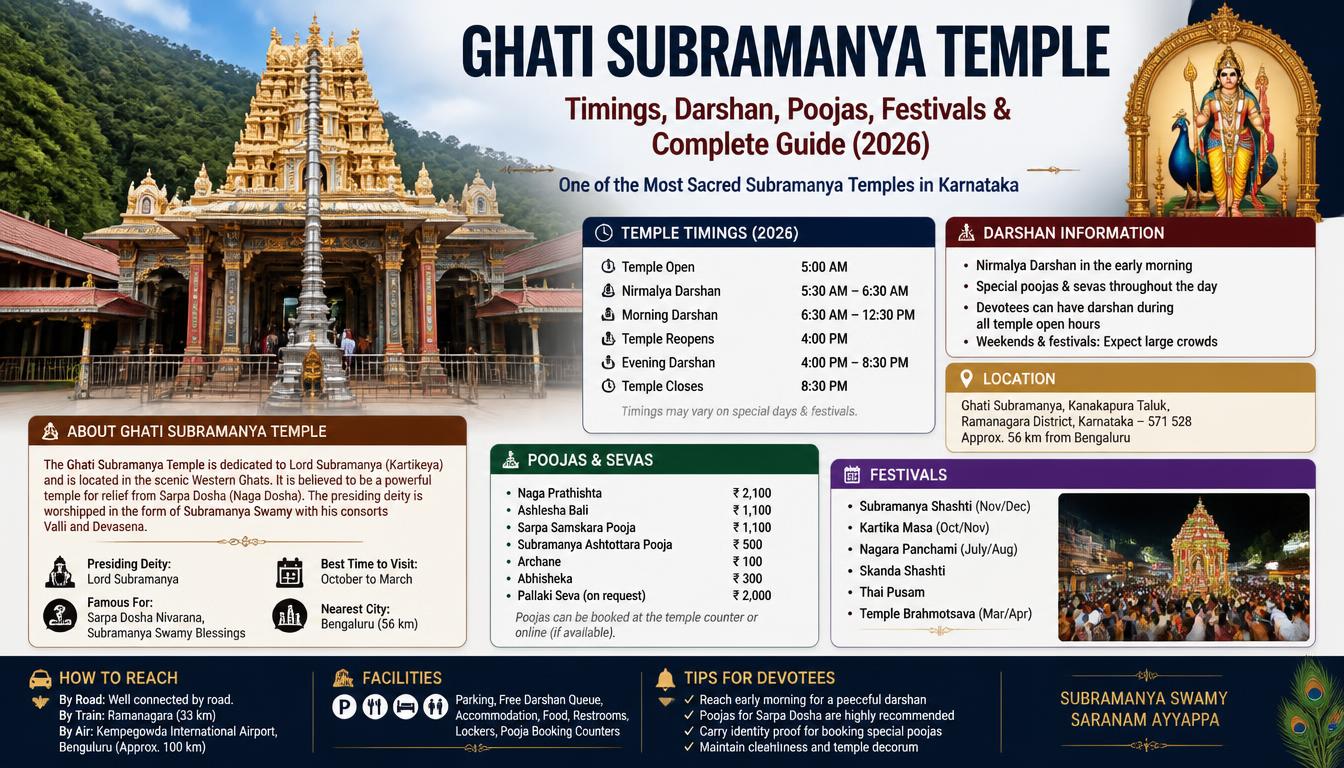
If you’re planning a spiritual trip near Bengaluru, Ghati Subramanya Temple is one of the most sacred pilgrimage destinations in Karnataka. Famous for its unique worship of Lord Subramanya (Kartikeya)
and Lord Narasimha, this ancient temple attracts thousands of devotees every year seeking blessings for health, prosperity, family harmony, and relief from Sarpa Dosha (Naga Dosha).
Whether you’re visiting for darshan, Abhishekam, special poojas, or major festivals like Brahma Rathotsav and Skanda Shashti, knowing the temple timings, rituals, and travel details can make your visit much smoother.
This complete guide covers everything you need to know, including Ghati Subramanya Temple timings, darshan schedule, pooja prices, history, festivals, travel tips, and much more.
Ghati Subramanya Temple is one of Karnataka’s most respected Naga Kshetras. The temple is believed to possess powerful spiritual energy, and devotees visit throughout the year to seek divine blessings.
Many pilgrims come here to:
The peaceful hills surrounding the temple create a calm atmosphere, making every visit feel spiritually refreshing.
Located in Doddaballapur Taluk of Bengaluru Rural District, the temple lies around 60 km from Bengaluru. It is considered one of the three important Subramanya Kshetras in Karnataka.
The three sacred Subramanya temples are:
| Temple | Location | Significance |
|---|---|---|
| Kukke Subramanya (Aadi Subramanya) | Dakshina Kannada | Beginning of the sacred Subramanya tradition |
| Ghati Subramanya (Madya Subramanya) | Doddaballapur | Middle Subramanya Kshetra |
| Nagalamadike Subramanya (Anthya Subramanya) | Pavagada | Final Subramanya Kshetra |
Because of this spiritual connection, many devotees try to visit all three temples during their pilgrimage.
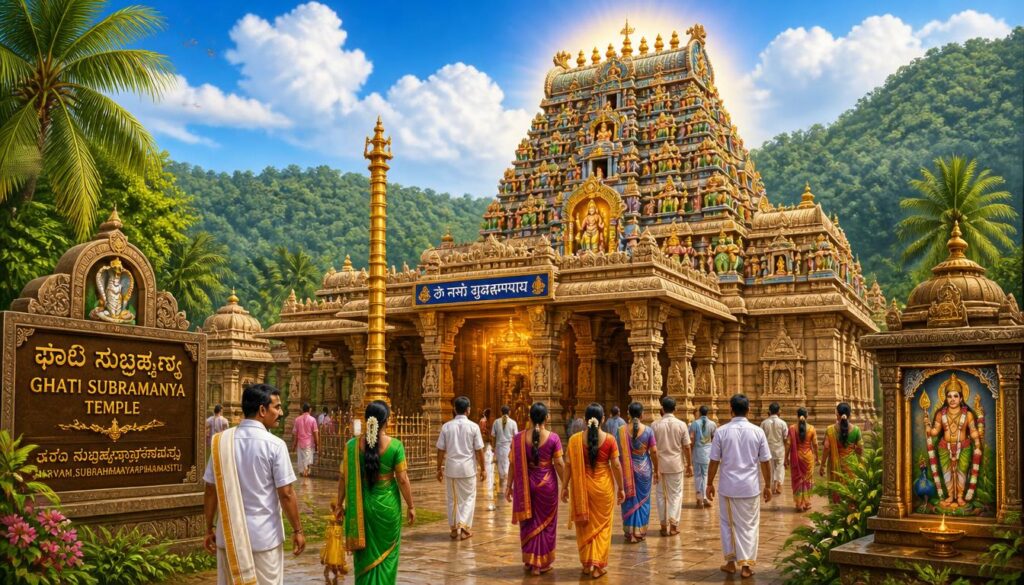
The history of the temple dates back more than 800 years. Historical records suggest that the Garbhagudi (sanctum sanctorum) was constructed around six centuries ago by Maharaja Srimanth Ghorpade of the Sandur dynasty.
According to temple tradition, the king received a divine vision in his dream. Following this vision, he discovered the sacred idol of Lord Subramanya and built the temple to honor the deity. Even today, this story is deeply respected by devotees.
The temple has remained an important spiritual center through generations and continues to attract pilgrims from across India.
One of the biggest reasons this temple is unique is the presence of both Lord Subramanya and Lord Narasimha in the same sanctum.
According to mythology:
Temple belief says that Lord Subramanya descended to destroy the demon Ghatikesura, while Lord Narasimha guarded him throughout the battle. Because of this divine event, the place became known as Ghati Subramanya.
This rare combination of deities makes the temple unlike most Subramanya temples in India.
The temple is especially famous among devotees seeking relief from:
Many believe that sincere worship at the temple brings peace, success, and protection from negative influences.
The temple is open daily from 6:00 AM to 9:00 PM. Morning hours are usually less crowded and are considered ideal for peaceful darshan.
| Activity | Timing |
|---|---|
| Temple Opens | 6:00 AM |
| Morning Darshan | 6:00 AM – 12:00 PM |
| Midday Break | 12:00 PM – 4:00 PM |
| Evening Darshan | 4:00 PM – 9:00 PM |
| Temple Closes | 9:00 PM |
| Abhishekam | Around 8:30 AM |
| Mahamangalarathi | 10:30 AM & 8:30 PM |
For the best experience, many devotees arrive before 7:00 AM to avoid long queues.
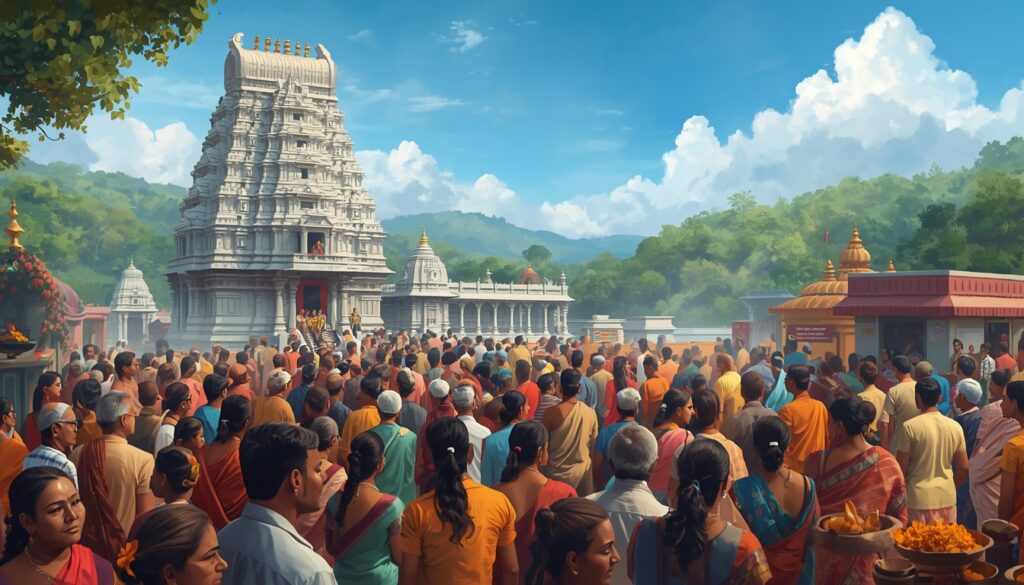
General darshan is free and available for all devotees.
Those who wish to avoid waiting in long lines can choose Special Darshan, which usually provides quicker access to the sanctum.
The temple becomes especially crowded on:
Arriving early helps save considerable waiting time, specially during festival seasons.
The temple offers several religious rituals that devotees can participate in depending on their spiritual needs.
Popular sevas include:
Each ritual carries its own religious significance and is performed by trained temple priests according to traditional Vedic practices.
Among these, Sarpa Seva and Ashlesha Bali are particularly popular among devotees seeking remedies for Naga Dosha.
One of the biggest reasons people visit Ghati Subramanya Temple is to perform Sarpa Seva.
According to Hindu belief, this ritual helps devotees:
The rituals are performed under the guidance of temple priests, following age-old traditions.
The architecture of Ghati Subramanya Temple is another fascinating aspect that many visitors admire. Built in the traditional Dravidian style, the temple features beautifully carved stone pillars, ancient sculptures, and a peaceful sanctum that reflects centuries of devotion.
The most remarkable feature is the dual-faced idol.
From the front, devotees have darshan of Lord Subramanya in the form of a seven-headed serpent. From the rear side, the same idol reveals Lord Narasimha. This symbolic representation reflects the unity of divine protection and courage.
Few temples in India display such a unique religious concept, making Ghati Subramanya a truly special pilgrimage destination.
Although the temple remains open throughout the year, the most pleasant months for visiting are from October to February, when the weather is cooler.
If you wish to witness grand celebrations, consider visiting during:
Festival days offer vibrant processions, devotional music, and elaborate rituals, though they also attract large crowds.

Ghati Subramanya Temple festivals are celebrated with great devotion and enthusiasm. During these occasions, thousands of devotees visit the temple to participate in special poojas, processions, Abhishekam rituals, and traditional ceremonies.
The major festivals connected with Lord Subramanya and Lord Narasimha are celebrated according to the Hindu lunar calendar.
| Festival | Approximate Period | Significance |
|---|---|---|
| Brahma Rathotsav | December/January | Grand chariot festival with special rituals and celebrations |
| Nagara Panchami | July/August | Worship of serpent deities and important day for Naga-related prayers |
| Narasimha Jayanti | April/May | Celebration of Lord Narasimha’s divine appearance |
| Theppotsava | January/February | Traditional float festival with special poojas |
| Champa Shashti | November/December | Festival dedicated to Lord Subramanya |
| Skanda Shashti / Kumara Sashti | January/February | Auspicious period for Subramanya worship |
Certain days are considered highly beneficial for performing Sarpa Dosha Pooja, Ashlesha Bali, and other Naga-related rituals.
The most important days include:
Devotees planning special sevas should reach early, as ritual slots can become limited during auspicious days.
Special Darshan and seva bookings are generally done directly at the temple counter.
Devotees should note:
For a smoother experience, reach the temple early in the morning, especially during weekends and festivals.
The entry details are simple:
The temple administration periodically updates seva charges, so devotees should confirm the latest rates at the counter before booking.
Ghati Subramanya Temple is located approximately 60 km from Bengaluru and around 12 km from Doddaballapur.
The temple can be reached by bus, private vehicle, taxi, or auto-rickshaw.
Visitors can travel through BMTC or KSRTC services.
Common options include:
Driving is the most convenient option, especially for families and elderly devotees.
Approximate distances:
The roads are suitable for cars and two-wheelers, and many visitors prefer starting early morning to avoid city traffic.
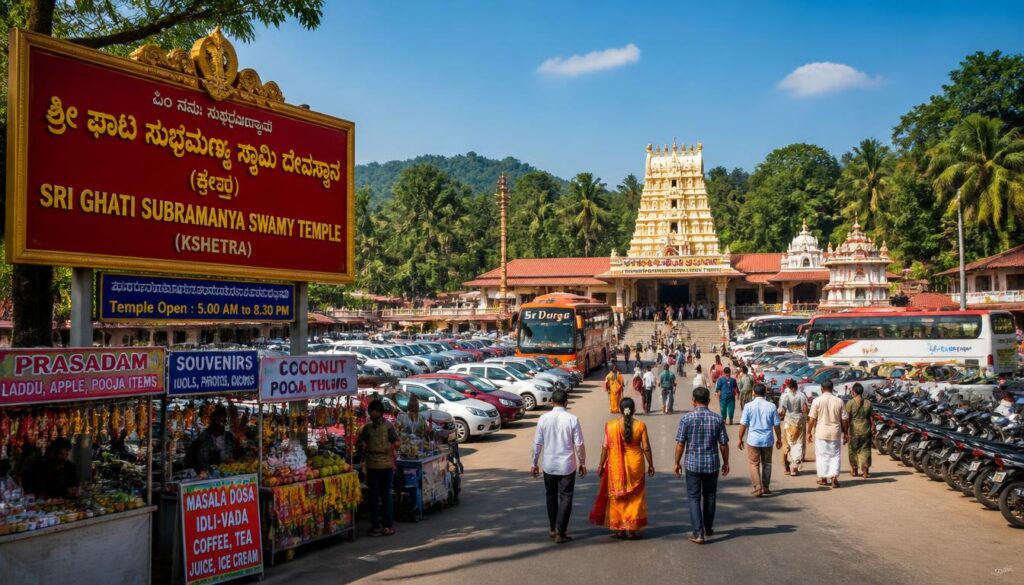
Free parking facilities are available near the temple entrance.
Parking is generally available for:
During major festivals, parking areas can become crowded, so arriving early is recommended.
The temple does not have large accommodation facilities inside the premises, but devotees can find several nearby options.
Popular stay choices include:
For more hotel choices, visitors can stay in Doddaballapur town, which is about 12 km away.
Before visiting, devotees should know about basic facilities:
During crowded festival days, facilities may experience higher demand, so carrying basic necessities is recommended.
A Ghati Subramanya visit can easily be planned as a one-day spiritual trip from Bengaluru.
6:00 AM – Start from Bengaluru
Leave early to avoid traffic and reach the temple comfortably.
8:00 AM – Temple arrival
Complete darshan and participate in morning rituals.
8:30 AM – Abhishekam participation
Visitors interested in Abhishekam can plan around the morning schedule.
10:00 AM – Explore temple surroundings
Spend time experiencing the peaceful atmosphere and architecture.
12:00 PM – Lunch and nearby exploration
Have food near the temple or return towards Doddaballapur.
Evening – Return to Bengaluru
This schedule allows devotees to complete darshan comfortably without rushing.
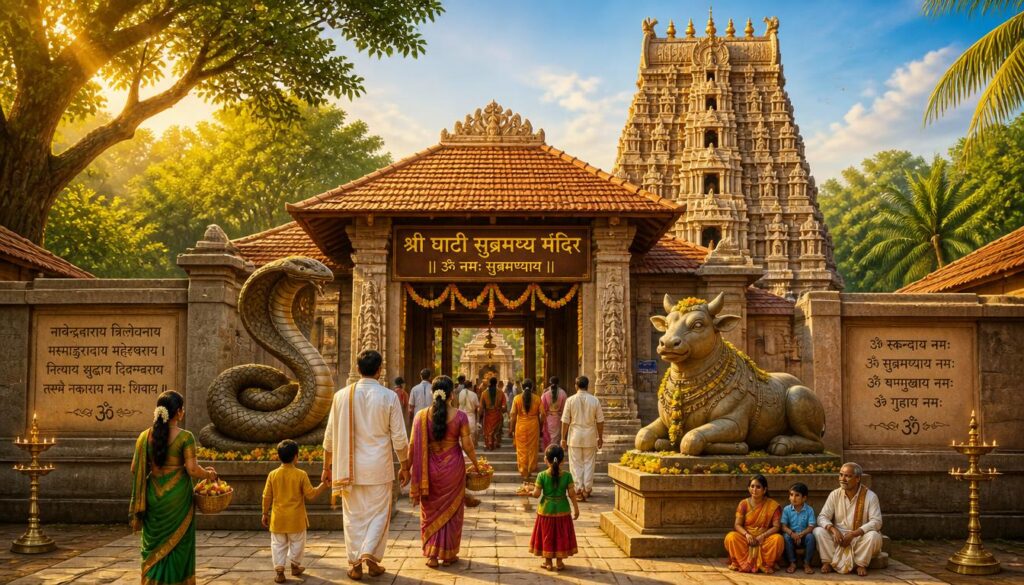
Follow these simple tips for a peaceful pilgrimage:
While there is no strict dress code publicly enforced, devotees are advised to wear modest traditional clothing suitable for a temple environment.
Recommended clothing:
Visitors should maintain silence near the sanctum and respect ongoing rituals.
Visitors interested in exploring more places around the region can consider:
A temple visit combined with nearby sightseeing can make a fulfilling weekend plan.
Ghati Subramanya Temple is open from 6:00 AM to 9:00 PM every day. Morning darshan is available from 6:00 AM to 12:00 PM, followed by a midday break. Evening darshan resumes from 4:00 PM to 9:00 PM.
Currently, devotees generally need to book Special Darshan and seva tickets directly at the temple counter. Visitors should verify booking procedures with temple authorities before planning special rituals.
The temple is famous because it worships both Lord Subramanya and Lord Narasimha together. It is also one of Karnataka’s important Naga Kshetras, attracting devotees for Sarpa Dosha remedies, Abhishekam, and special poojas.
Ghati Subramanya Temple is approximately 60 km from Bengaluru city. The temple can be reached by private vehicle, taxi, BMTC, KSRTC buses, and local transport from Doddaballapur.