Physical Address
304 North Cardinal St.
Dorchester Center, MA 02124
Physical Address
304 North Cardinal St.
Dorchester Center, MA 02124

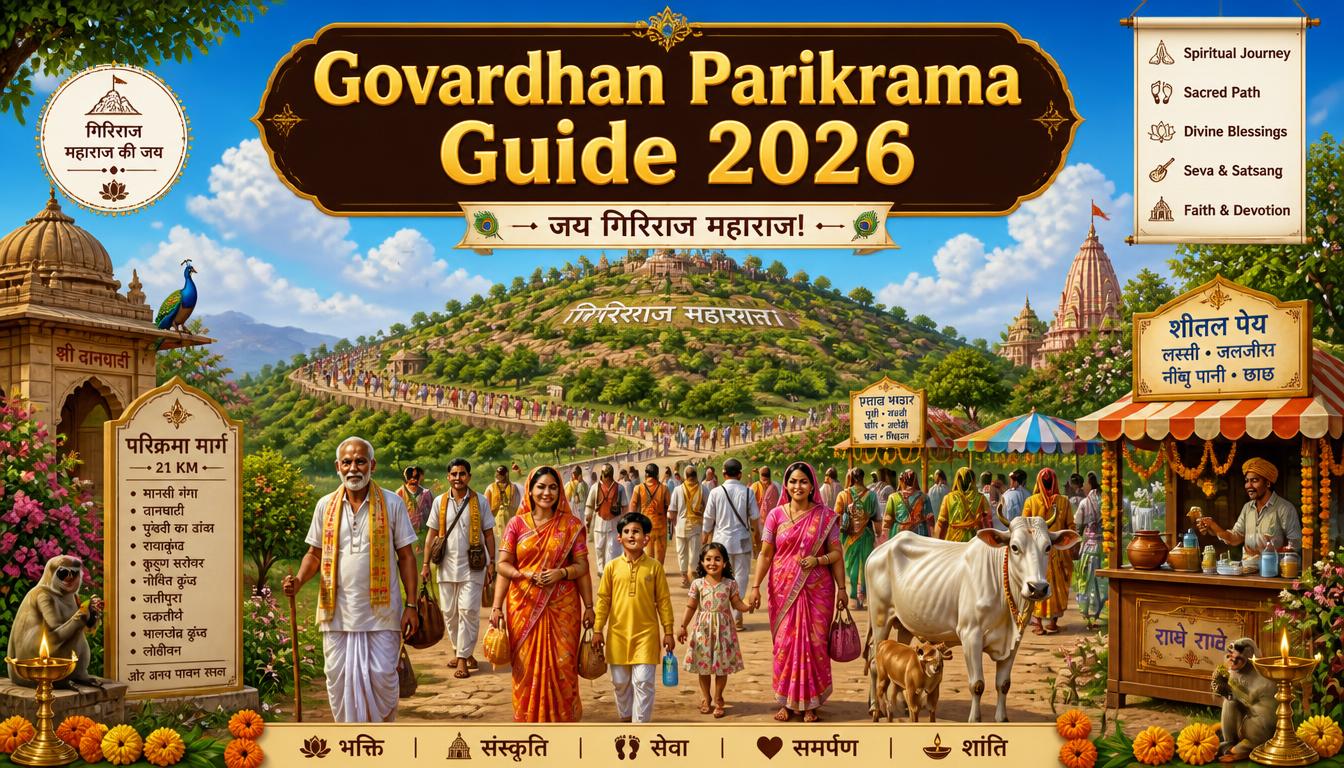
Walking around Govardhan Parvat is not just a pilgrimage; it is a journey where faith, devotion, and the sacred energy of Braj Bhoomi come together.
The Govardhan Parikrama Guide 2026: Distance, Route, Timings, History, Rituals & Best Time helps devotees and travelers understand every important detail before starting this divine walk around Giriraj Maharaj.
Every year, millions of devotees visit Govardhan in the Mathura district of Uttar Pradesh to complete the holy circumambulation.
With folded hands, chanting “Radhe Radhe” and “Jai Giriraj Maharaj,” pilgrims walk around the hill that is believed to be a living form of Lord Krishna himself.
The complete Govardhan Parikrama distance is approximately 21 km, covering sacred temples, kunds, villages, and spiritual landmarks connected with Krishna’s divine pastimes.
Whether you are visiting during Kartik month, Govardhan Puja, or planning a peaceful pilgrimage in 2026, knowing the route, timings, rituals, and practical tips can make your experience much more meaningful.
Govardhan Parikrama is the sacred practice of walking clockwise around Govardhan Hill, which devotees worship as Giriraj Maharaj. In Vaishnav tradition, this parikrama is considered equal to worshipping Lord Krishna, because Govardhan Parvat is believed to be a divine manifestation of Krishna.
The word Parikrama means circumambulation, where devotees walk around a sacred object as an expression of respect, surrender, and devotion. Unlike an ordinary walk, every step of Govardhan Parikrama carries spiritual importance.
The pilgrimage is performed throughout the year, but it becomes especially significant during:
During these occasions, the entire route becomes filled with devotees, devotional chanting, temple bells, and spiritual activities.
Govardhan Parvat is worshipped as Giriraj Maharaj, a divine form of Lord Krishna. Devotees believe that walking around Govardhan Hill with devotion brings blessings, peace, and spiritual purification.
According to ancient traditions, the importance of Govardhan began during the famous Govardhan lifting leela. When Lord Indra became proud and sent destructive rains toward Braj, Krishna lifted Govardhan Hill on his little finger and protected the villagers, cows, and entire region for seven days.
This event established Govardhan as a symbol of protection, compassion, and divine shelter.
Many devotees believe that performing Govardhan Parikrama helps:
For many pilgrims, the journey is less about completing 21 kilometers and more about experiencing a connection with Krishna, Radha Rani, and Giriraj Maharaj.
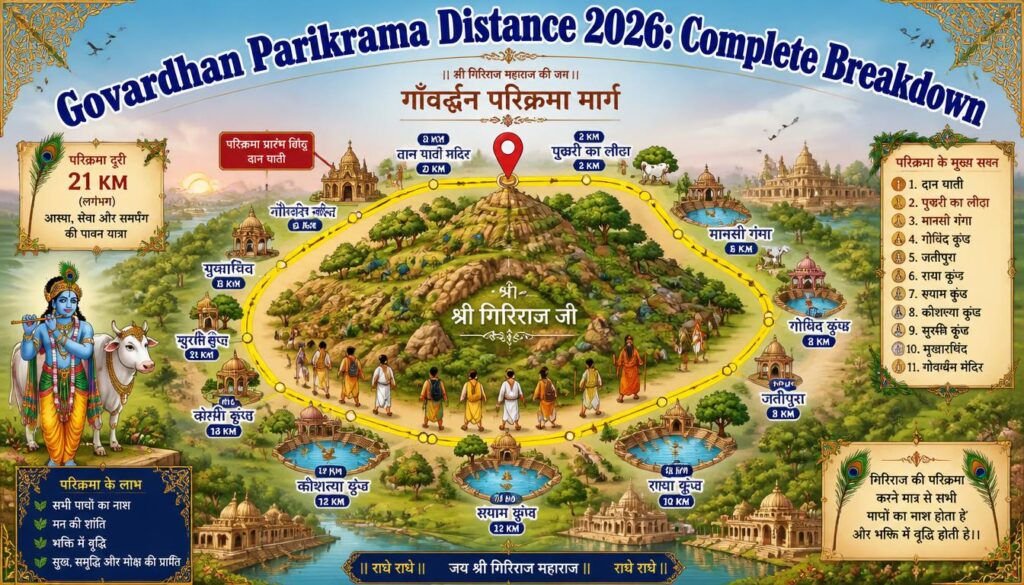
The total Govardhan Parikrama distance is around 21 km. Traditionally, the route is divided into two sections: Badi Parikrama and Chhoti Parikrama.
| Parikrama Type | Approximate Distance | Description |
|---|---|---|
| Badi Parikrama | 12 km | Outer route covering major villages and sacred locations |
| Chhoti Parikrama | 9 km | Inner route covering important kunds and temples |
| Complete Parikrama | 21 km | Full circumambulation around Govardhan Hill |
Badi Parikrama is the longer outer route around Govardhan. It includes several important spiritual locations and gives devotees a complete experience of the sacred landscape.
Major stops include:
The shorter inner route focuses on some of the most spiritually powerful locations of Braj.
Important places include:
Most devotees prefer completing both routes together to experience the complete spiritual circuit.
A normal Govardhan Parikrama takes around 5 to 6 hours if completed continuously. However, many devotees take longer because they stop for prayers, darshan, meditation, and offerings.
The duration depends on:
During major festivals, the crowd can become very large, and the journey may take more time. Elderly devotees and first-time pilgrims should keep enough time for breaks.
Dandavat Parikrama is a special devotional practice where devotees perform full-body prostration after every step. Because of this physically demanding method, completing the full route may take several days or even weeks.
It represents complete surrender to Giriraj Maharaj.
The traditional route follows a clockwise direction. Most pilgrims start and finish at Daan Ghati Mandir, which is considered an important entry point for the pilgrimage.
Daan Ghati Mandir is one of the most popular starting points of Govardhan Parikrama.
This place is connected with Krishna’s playful daan leela, where Krishna asked the Gopis for offerings. Devotees begin their journey here by seeking blessings before walking around Govardhan.
This sacred kund is associated with Lord Balaram (Sankarshan). It holds importance among Krishna-Balaram devotees and is considered a peaceful spiritual stop.
Located near the southern side of Govardhan, Poonchhri Ka Lautha is connected with Krishna’s childhood companions. Many devotees believe visiting this place completes an important part of the parikrama.
This temple reflects the deep connection between Radha Krishna devotion and Govardhan Hill. Devotees stop here for prayer and meditation.
Jatipura Temple is one of the major stops on the route. Pilgrims offer Chhappan Bhog and seek blessings from the Mukharvind of Giriraj Maharaj.
Radha Kund and Shyam Kund are among the most sacred places in Braj.
Radha Kund is associated with Radha Rani, while Shyam Kund is connected with Krishna’s divine pastimes. Devotees consider these kunds extremely powerful places for prayer and meditation.
Kusum Sarovar is famous for its peaceful surroundings and connection with Radha Krishna’s flower pastimes. Many pilgrims spend time here for reflection and devotion.
Mansi Ganga is considered the spiritual heart of Govardhan. According to tradition, Mother Ganga appeared here through Krishna’s divine will.
Many devotees take a holy bath here before beginning their parikrama.
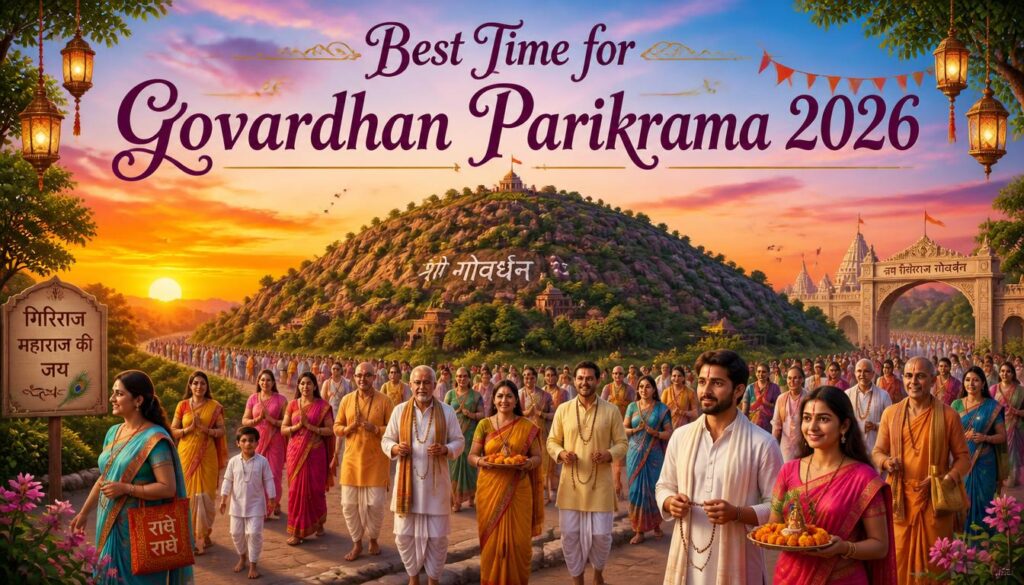
The best time for Govardhan Parikrama depends on weather conditions and personal preference.
October to March is considered the most comfortable period because the weather is cooler and walking becomes easier.
The most preferred timings are:
The Kartik month is considered one of the most auspicious periods for Govardhan Parikrama. Thousands of devotees participate in daily prayers and spiritual activities during this time.
The sacred walk is performed with discipline and devotion. Common traditions include:
Many devotees walk barefoot as a symbol of humility and respect toward Giriraj Maharaj. However, people with health concerns can choose comfortable footwear.
Devotees commonly chant:
These chants help maintain focus and devotion during the journey.
Pilgrims offer:
These offerings express gratitude and devotion.
Some devotees observe Vrat (fasting) and consume simple satvik food during the pilgrimage.
Govardhan is located about 22 km from Mathura and can be reached easily through road transport.
Options include:
Travelers can reach Mathura by train and continue toward Govardhan by road.
Agra is another nearby city with road connectivity to Govardhan.
The nearest airports commonly used by visitors are:
A little preparation can make your Govardhan journey smoother.
Carry:
Important precautions:
Remember, Govardhan Parikrama is a spiritual journey, not a race. Walking slowly and mindfully allows you to experience the atmosphere of Braj better.
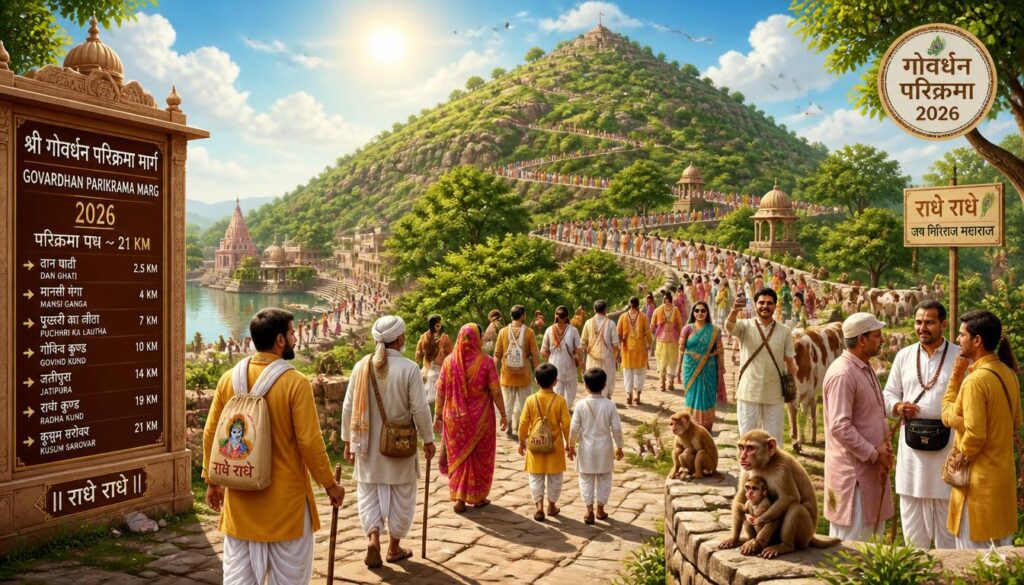
Many guides mention the route but do not explain how pilgrims actually experience the journey. For first-time visitors, planning matters.
A practical one-day plan can look like this:
Facilities available along the route generally include:
Elderly devotees may prefer dividing the journey or choosing only selected sections according to their physical ability.
The Govardhan Parikrama map follows a circular clockwise route around Govardhan Hill. The traditional circuit begins and ends near Daan Ghati Mandir.
The route connects:
Understanding the sequence before starting helps avoid confusion and ensures devotees can visit the important sacred points.
The complete Govardhan Parikrama distance is approximately 21 km. It includes the 12 km Badi Parikrama and 9 km Chhoti Parikrama. Most devotees complete it in one day, depending on walking speed, prayers, and stops.
The best time is generally from October to March because of pleasant weather. Early morning between 4 AM and 6 AM is considered ideal. Kartik month and festival days are spiritually important but usually have larger crowds.
Most devotees begin and end their journey at Daan Ghati Mandir. The route is traditionally completed in a clockwise direction around Govardhan Hill while visiting important temples, kunds, and sacred locations.
Yes, elderly devotees can perform Govardhan Parikrama according to their comfort and health. They may take more breaks, use support, choose shorter sections, or complete the journey slowly while maintaining devotion and safety.