Physical Address
304 North Cardinal St.
Dorchester Center, MA 02124
Physical Address
304 North Cardinal St.
Dorchester Center, MA 02124

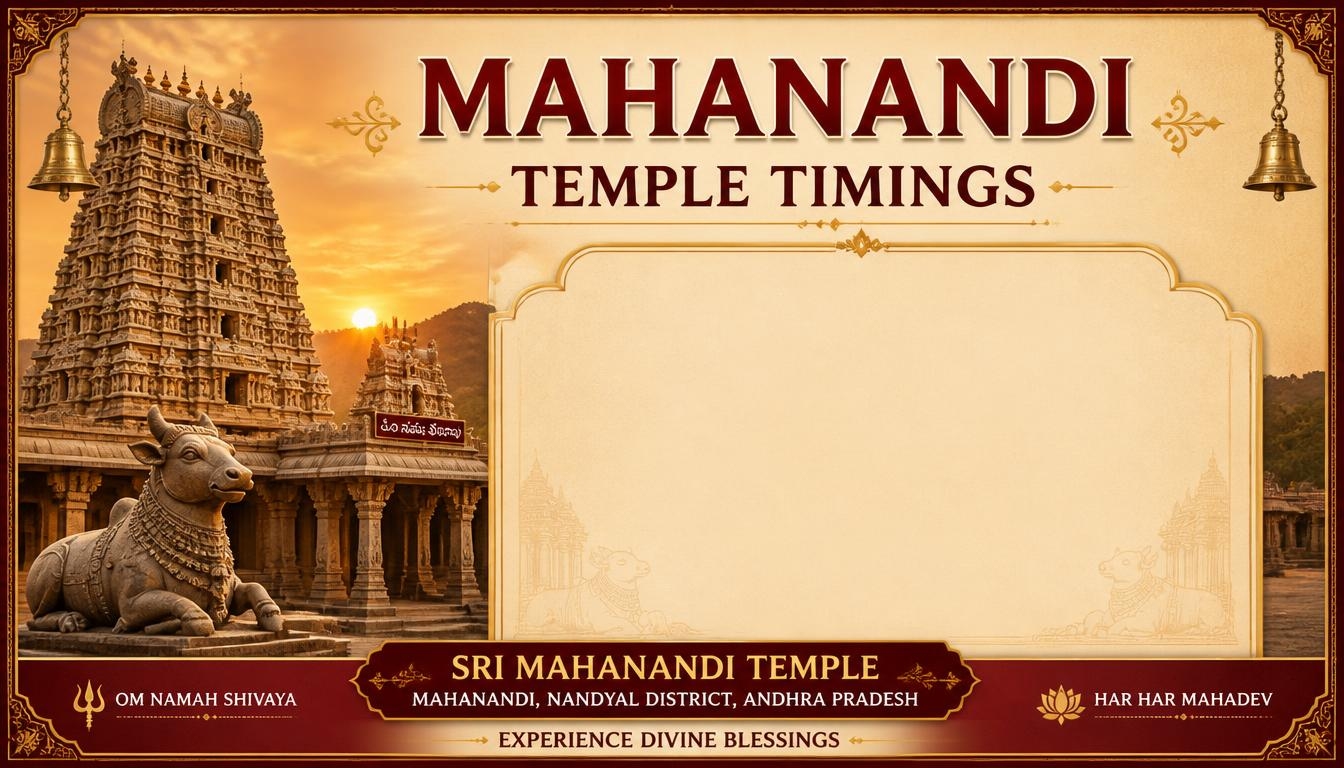
A temple morning has a different sort of silence. Bells are ringing, people are walking, priests are preparing for rituals, yet somehow the mind feels quieter than it did outside. A visit to Mahanandi Temple in Andhra Pradesh can feel exactly like this, especially when you reach during the calm morning hours.
But a peaceful pilgrimage needs a little practical planning too. Arriving during a break, missing a seva, or discovering that a particular darshan requires a ticket can turn a simple spiritual trip into unnecessary waiting. Knowing the Mahanandi Temple Timings, darshan periods, pooja schedule, seva options, and ticket information before leaving can make things much smoother.
This guide covers Mahanandi Temple Darshan, opening and closing hours, important poojas, sevas, ticket prices, break time, accommodation, dress expectations, and other useful details for devotees planning a family or individual visit.
The commonly followed Mahanandi Temple opening time begins very early in the morning, with temple activities starting around 4:30 am. Different rituals and forms of darshan are conducted throughout the day, so the exact time when you should arrive depends on what you wish to attend.
A practical overview of the daily temple schedule is:
These timings should be treated as a planning guide rather than an unchangeable clock. Festival days, special occasions, temple administration decisions, and ritual requirements can affect darshan availability.
If you are checking Mahanandi Temple timings today, especially before travelling a long distance, confirming the latest schedule with official temple sources or the temple counter is sensible.
For many visitors, Mahanandi Temple Darshan Timings matter more than the general opening hours. A temple can technically be open while a particular darshan is temporarily unavailable because a pooja or abhishekam is happening inside.
The regular Mahanandi Temple Darshan schedule broadly includes morning, afternoon, and evening periods. After early rituals, general darshan usually becomes available around 6:30 am.
The daytime schedule normally includes a pause around 1:00 pm, when there may be no darshan for a short period. Afternoon darshan commonly resumes around 2:00 pm, followed by evening worship.
Devotees should therefore distinguish between temple opening hours and actual darshan hours. Reaching at 4:30 am does not necessarily mean every type of darshan is immediately available, which catches first-time visitors by surprise sometimes.
The commonly referenced daily pattern is:
For families, elderly devotees, or visitors travelling with children, arriving comfortably before the afternoon break can be easier than trying to squeeze a visit into the last evening period.
The Mahanandi Temple opening time is commonly listed as approximately 4:30 am. Early opening allows priests to conduct morning rituals before the larger flow of devotees enters for regular darshan.
The commonly stated Mahanandi Temple closing time is around 9:00 pm, although concluding services can extend beyond the ordinary public darshan period. Ekantha Seva, for example, is connected with the final devotional activities of the day.
This creates an important distinction for travellers. The last darshan time can be earlier than the final ritual or administrative closing of the temple.
Anyone specifically searching for Mahanandi temple closing time today should verify locally before making a late-evening trip. Religious schedules can shift on festival days, auspicious occasions, and days with particularly heavy crowds.
The rhythm of a Hindu temple is created not only by visitors entering for darshan but also by the rituals happening throughout the day. At Mahanandi, the daily pooja schedule includes several devotional services connected with worship of the deity.
Among the commonly associated rituals and services are Suprabhatha Seva, Sthanika Abhishekam, Bindhe Seva, Astavidha Maha Mangala Harathi, Rudrabhishekam, Ksheerabhishekam, Nithya Kalyanam, Maha Nivedana, Mangala Harathi, and Ekantha Seva.
Morning is particularly meaningful for devotees interested in abhishekam timings. The atmosphere during an early morning pooja feels noticeably different from a busy midday visit; even footsteps seem quieter somehow.
The pooja timings and availability of particular rituals can change according to temple requirements. Devotees interested in a specific pooja should check the current schedule before purchasing tickets or arranging their travel.
Different Mahanandi Temple Seva options give devotees ways to participate more closely in the temple’s devotional services. Some are conducted early in the morning, while others correspond with specific stages of daily worship.
Suprabhatha Seva belongs to the early-morning devotional schedule and symbolically begins the temple’s worshipful day. Mangala Harathi and Astavidha Maha Mangala Harathi are connected with offering light before the deity, creating one of those moments where a crowded shrine suddenly feels deeply personal.
Nithya Kalyanam is another important service, while Rudrabhishekam and Ksheerabhishekam attract devotees wishing to participate in abhishekam-related worship.
The precise seva schedule should always be checked before the visit because reporting times, ticket availability, and ritual arrangements may differ from ordinary darshan timings.
For popular services, arriving early at the temple counter is usually wiser than waiting until the intended seva is about to start.
Not every devotee wants the same kind of darshan. Some prefer ordinary free darshan, while others choose a paid or special darshan option to suit their schedule or devotional preference.
Sarva Darshan is generally the free darshan option. It allows devotees to visit the holy shrine without purchasing a regular entry ticket, although queue times naturally depend on crowd levels.
Seeghra Darshan is intended as a quicker darshan option and has commonly been associated with a Rs.20 Seeghra Darshan ticket.
Another devotional option is Sparsha Darshan, also written as Sparsa Darshan. The idea is particularly meaningful because it is associated with closer access or deity touch darshan, subject always to the temple’s current rules.
Nijaroopa Darshan is another named darshan service available according to the temple’s ritual schedule.
Availability can differ by time and day, so devotees shouldn’t assume that every form of paid darshan operates continuously from opening until closing.
Budgeting for a temple visit is usually simple, but knowing the approximate Mahanandi Temple ticket price beforehand is helpful, especially when a family plans to participate in multiple sevas.
Commonly referenced seva ticket prices and darshan charges include:
These figures are useful for estimating expenses, but devotees should verify the current temple tickets and fees at the official ticket counter before payment. Temple authorities can revise service charges, eligibility rules, and schedules.
The distinction between Mahanandi Temple entry fee and paid devotional services also matters. Ordinary Mahanandi Temple free darshan may be available even though particular sevas or faster darshan categories require separate tickets.
Mahanandi Rudrabhishekam is one of the important devotional services associated with Shiva worship at the temple. Many pilgrims specifically arrange their visit around this ritual rather than simply arriving for general darshan.
The commonly referenced Mahanandi Rudrabhishekam ticket price is around Rs.1,000, although current charges should be confirmed before the visit.
There may also be arrangements connected with couples Rudrabhishekam, depending on the temple’s current seva rules. Participants should ask whether specific reporting requirements, dress expectations, or materials apply.
Because Mahanandi Rudrabhishekam timings may depend upon the daily ritual programme, devotees should not rely only on the general opening time when planning this seva.
Ksheerabhishekam is another important form of abhishekam. Its commonly cited ticket amount is around Rs.200, though current pricing and participation conditions need confirmation at the temple.
Some pilgrims also look for Ksheerabhishekam for couples, particularly when visiting together for a devotional occasion.
The broader worship schedule can include Sthanika Abhishekam, Rudrabhisekam, and other temple rituals. Spellings can differ online—such as Rudrabhishekam and Rudrabhisekam—but visitors should focus on the actual service offered at the temple counter.
For any abhishekam, reach ahead of the reporting time. Arriving five minutes after a ritual starts is one of those tiny travel mistakes that can feel much bigger after coming hundreds of kilometres.
Mahanandi Suprabhatha Seva timings fall within the early part of the temple’s devotional day. This service is ideal for visitors who enjoy experiencing a holy shrine before daytime crowds become heavier.
Nithya Kalyanam is another prominent service, commonly associated with a ticket price of approximately Rs.1,116. Visitors specifically searching for Mahanandi Nithya Kalyanam timings should confirm both reporting and commencement time at the counter.
The temple schedule also includes forms of harathi, including Mangala Harathi and Astavidha Maha Mangala Harathi. Harathi can be one of the most memorable moments of a temple visit; flame, bells, chants and that sudden gathering of attention happen all at once.
Mahanandi Maha Mangala Harathi timings should likewise be confirmed on the day because ritual schedules can occasionally move.
Visitors often search separately for Mahanandi Sparsha Darshan timings, Mahanandi Nijaroopa Darshan timings, and Mahanandi Seeghra Darshan timings because these services do not necessarily follow exactly the same schedule as ordinary Sarva Darshan.
Sparsha Darshan has traditionally attracted devotees interested in a closer form of worship. Access remains subject to whatever rules the temple administration currently applies, so never assume that physical contact with the deity will automatically be permitted.
Nijaroopa Darshan is another distinct darshan category and has commonly been associated with a Rs.50 ticket.
Meanwhile, Seeghra Darshan serves pilgrims looking for a faster queue option. Its commonly referenced Rs.20 ticket makes it an affordable alternative during busier periods, though actual waiting time will still depend on crowds.
Mahanandi Sarva Darshan is especially useful for pilgrims who simply want traditional deity darshan without purchasing a special ticket.
Because it is generally free Sarva Darshan, queues can become longer during Sundays, festivals, public holidays, and auspicious religious dates. A free ticket does not mean instant entry, of course; temples have their own rhythm and queues politely teach patience.
The Mahanandi Sarva Darshan timings broadly follow the regular public darshan periods, including morning and post-break sessions. Visitors should watch for interruptions caused by scheduled poojas or sevas.
If your itinerary is flexible, an earlier arrival usually gives you more breathing room than arriving close to the afternoon break or evening closing period.
The Mahanandi Temple Sunday timings generally follow the temple’s regular daily framework, but Sundays can bring noticeably larger crowds.
For a family visit, reaching early can reduce waiting and make the overall experience easier for children and older relatives. Keep some extra time in your itinerary rather than scheduling onward travel immediately after your expected darshan.
Festival periods deserve even more flexibility. Queue arrangements, special darshan ticket availability, pooja access, and crowd-control procedures may temporarily change.
So while published Sunday temple timings provide a useful framework, the actual time required for your visit depends heavily on crowd conditions.
One detail worth remembering is the approximate Mahanandi Temple break time around 1:00 pm.
Visitors arriving close to this period may find regular darshan temporarily unavailable. Darshan reopening is generally around 2:00 pm, after which afternoon and evening visits continue.
This one-hour window can actually be useful rather than inconvenient if you plan around it. Travellers can use the time for lunch, rest, checking accommodation, or simply sitting away from the queue for awhile.
If your primary goal is darshan, though, don’t intentionally arrive at 12:55 pm expecting to finish quickly. Temple clocks have never promised to negotiate with travel itineraries.
A respectful Mahanandi Temple dress code is less about fashion and more about recognising that you are entering a sacred place.
A clean, modest, and decent outfit is the safest choice. Traditional Indian clothing is naturally suitable, although devotees should follow whatever current instructions are displayed or communicated by temple authorities.
Clothing that is overly revealing or inappropriate for a religious setting is best avoided. For special poojas or sevas, stricter clothing requirements may sometimes apply.
If participating in Rudrabhishekam, Kalyanam, or another ritual, ask the counter beforehand whether participants need traditional attire. It saves an awkward surprise later.
Mahanandi is particularly known for its sacred water setting, which adds another layer to the pilgrimage experience.
Visitors may encounter a bathing facility associated with the temple environment. Those planning to use such facilities should carry suitable spare clothing and follow the rules regarding cleanliness, changing areas, and access.
For many pilgrims, bathing before entering for darshan forms part of the devotional experience. Others simply visit the shrine directly.
Either way, maintaining cleanliness around sacred water and respecting instructions from temple staff matters more than rushing through a ritual for the sake of saying you did it.
The Garbhalayam is spiritually the heart of the temple experience. As devotees move closer, conversations tend to disappear almost automatically and attention settles on the deity.
Different darshan categories may determine how visitors approach or view the sanctum. Sparsha Darshan, Sarva Darshan, and other special arrangements can have different access procedures.
Follow queue barriers and instructions rather than trying to imitate what another group is doing. They may have a different seva ticket or permission.
A meaningful holy shrine visit isn’t measured by how many minutes you spend nearest the sanctum. Sometimes a few seconds of calm darshan stays in memory far longer than an hour of waiting.
The spiritual geography around Mahanandi extends beyond a single shrine. Pilgrims may hear about Navnandulu, referring to the group of sacred Nandi shrines traditionally associated with the region.
Visitors with sufficient time sometimes include these sacred places in a broader parikrama or pilgrimage journey.
This can turn a straightforward Mahanandi visit into a fuller religious experience, but it requires more time and local travel planning. Trying to cover every shrine hurriedly can take away the very calm you travelled there to find.
If Navnandulu is part of your plan, keep enough daylight and transport flexibility rather than treating every stop like a checklist.
Visitors frequently search for Mahanandi Temple online booking, particularly for paid sevas and accommodation.
Availability of online seva booking should always be verified through an official government or Devasthanam channel before making payment. Avoid transferring money through unofficial pages merely because they use temple photographs or words such as “official booking.”
Depending on the current arrangements, darshan tickets and seva tickets may also be obtained from the ticket counter.
For a particular ritual, counter staff can provide valuable devotee information about reporting time, eligibility, dress requirements, and whether the ticket covers one person or a couple.
Keep payment receipts or tickets safely until the seva or darshan has been completed. Tiny paper slips become surprisingly important once you’re standing at an entry gate.
Pilgrims staying overnight can explore Mahanandi Temple accommodation, Devasthanam accommodation, and private lodging around the temple area.
The availability of rooms can vary dramatically between an ordinary weekday and a festival weekend. Booking ahead is particularly useful for families and travellers arriving from Hyderabad or other distant cities.
For Mahanandi Temple room booking, verify whether an official booking channel currently supports advance reservations. Where online availability is unclear, direct confirmation through authorised temple accommodation facilities is safer.
There are also hotels near Mahanandi Temple for travellers who prefer private accommodation. Compare distance, check-in timing, family-room availability, parking, and recent guest feedback before booking.
During peak pilgrimage periods, don’t arrive late at night assuming a room will definitely be waiting. Temples may welcome everyone spiritually, but guest rooms still have a limited number of keys.
Mahanandi is located in Andhra Pradesh, and road transport is commonly used by pilgrims visiting the area.
APSRTC services can be useful for planning regional travel. Depending on your starting point and current route availability, an APSRTC bus or connecting bus service may form part of the journey.
Travellers coming from farther away may search routes such as Hyderabad to Srisailam or Srisailam to Mahanandi bus connections while building a wider pilgrimage itinerary.
Because bus timings and routes are operational details that can change, verify them through APSRTC before departure rather than relying on an old travel blog.
For intercity travel, online ticket booking can save time, particularly around weekends and religious holidays when seats may fill earlier than expected.
A successful temple visit planning strategy doesn’t need to be complicated.
For families, begin by deciding whether you want ordinary free darshan timings or a particular seva. That single choice determines what time you should arrive and whether tickets need to be arranged.
Carry drinking water where permitted, keep footwear arrangements in mind, and dress comfortably but respectfully. Older devotees may benefit from avoiding the hottest afternoon hours when possible.
If children are travelling, explain beforehand that there may be queues and quiet areas. A temple visit becomes much easier when nobody is discovering the concept of waiting for the first time while already standing in a long line.
Keep enough buffer time for parking, bathing if desired, ticket collection, security checks, and queues.
Early morning is generally one of the most appealing periods for a pilgrimage to Mahanandi.
The temperature can be more comfortable, the spiritual atmosphere feels fresh, and reaching early leaves plenty of time if your preferred seva or darshan takes longer than expected.
Evening can be beautiful too, particularly around evening pooja and harathi. However, travellers planning an evening-only visit should pay closer attention to temple closing hours and the final public darshan period.
If you dislike heavy crowds, ordinary weekdays outside major festival periods can be easier than Sundays and holidays.
There is no universally perfect time, though. The best time is the one that matches your chosen temple worship, travel arrangements, and comfort.
A little preparation can protect a pilgrimage from small avoidable problems.
Check the current Mahanandi Temple Timings Today before leaving, especially if you are travelling several hours. Confirm any special seva separately because general temple timings don’t guarantee that every ritual will be conducted at every hour.
Carry enough cash or supported payment options for temple counter tickets, and verify current prices instead of assuming an older online figure remains valid.
Wear a decent outfit, keep valuables secure, and follow photography restrictions near sacred areas. Respect queues even when the shrine looks close enough to reach in ten steps; those ten steps may have a system attached to them.
Most importantly, allow time. A temple trip becomes considerably nicer when you’re not repeatedly looking at a phone clock wondering whether you’ll catch the next bus.
The commonly referenced Mahanandi Temple Opening Time is around 4:30 am, when early temple rituals begin. Regular public darshan generally starts later.
Regular Mahanandi Temple Darshan Timings generally include a morning session from around 6:30 am, a break around 1:00 pm, and reopening around 2:00 pm for afternoon and evening darshan.
The commonly stated Mahanandi Temple Closing Time is around 9:00 pm, although ordinary darshan may conclude earlier and concluding rituals can follow.
Yes. A temple break hours period is generally observed around 1:00 pm to 2:00 pm, during which regular darshan may not be available.
Yes, Mahanandi Sarva Darshan is commonly available as free darshan. Waiting times can increase on Sundays, festivals, and other crowded days.
The commonly referenced Rs.20 Seeghra Darshan ticket provides a faster darshan category, subject to current temple arrangements.
Sparsha Darshan has commonly been associated with a ticket cost of around Rs.100. Current availability and rules should be verified at the temple.
The commonly referenced cost for Mahanandi Rudrabhishekam is approximately Rs.1,000, though devotees should confirm the latest rate and schedule before participating.
Availability of Mahanandi Temple Seva Booking and other online services can change. Use only verified official channels for online temple booking and confirm current availability before payment.
Yes. Visitors can explore temple accommodation, Devasthanam facilities, and private hotels near Mahanandi Temple. Advance planning is advisable during weekends and festivals.
Read more: https://templetimingsdaily.com/mangalagiri-temple-timings/
A modest and respectful Mahanandi Temple dress code is recommended. Traditional or otherwise decent clothing is suitable, while individual sevas may have additional requirements.
The normal daily schedule generally provides the basic framework for Mahanandi Temple Sunday Timings, but crowd levels and special arrangements can affect actual darshan waiting times.
Mahanandi Temple opens early in the morning and follows a scheduled timetable for darshan, pooja, and seva throughout the day.
Mahanandi darshan is generally available from 6:30 AM to 1:00 PM and again from 2:00 PM to 8:00 PM.
Mahanandi Temple timings today generally follow the regular daily schedule, including morning darshan, afternoon services, and evening darshan.
Mahanandi timings include different slots for darshan, pooja, abhishekam, and other temple sevas during the day.
Mahanandi Temple darshan timings usually run from 6:30 AM to 1:00 PM and from 2:00 PM to 8:00 PM.
Knowing the Mahanandi Temple Timings before beginning your journey makes it much easier to focus on what brought you there in the first place. The temple generally begins its devotional day early, regular darshan follows in the morning, an afternoon break divides the schedule, and worship continues again through the evening.
Whether your purpose is Mahanandi Sarva Darshan, Mahanandi Seeghra Darshan, Mahanandi Sparsha Darshan, Rudrabhishekam, Ksheerabhishekam, Nithya Kalyanam, or simply a quiet family visit, plan around the relevant darshan schedule rather than only the temple gate’s opening time.
Confirm current Mahanandi Temple Pooja Timings, Mahanandi Temple Seva Timings, ticket costs, and booking arrangements before a long journey because religious schedules can change during festivals and special occasions.
And once the practical things are handled—tickets collected, shoes left behind, phone tucked away, queue finally moving—give the visit a little space to be what it is. Some places are reached by kilometres; a holy shrine, strangely enough, is sometimes reached in the few quiet seconds after you stop counting them.
I kept the supplied timing and price figures framed as commonly referenced rather than guaranteed current rates, since temple schedules and seva charges can change.