Physical Address
304 North Cardinal St.
Dorchester Center, MA 02124
Physical Address
304 North Cardinal St.
Dorchester Center, MA 02124

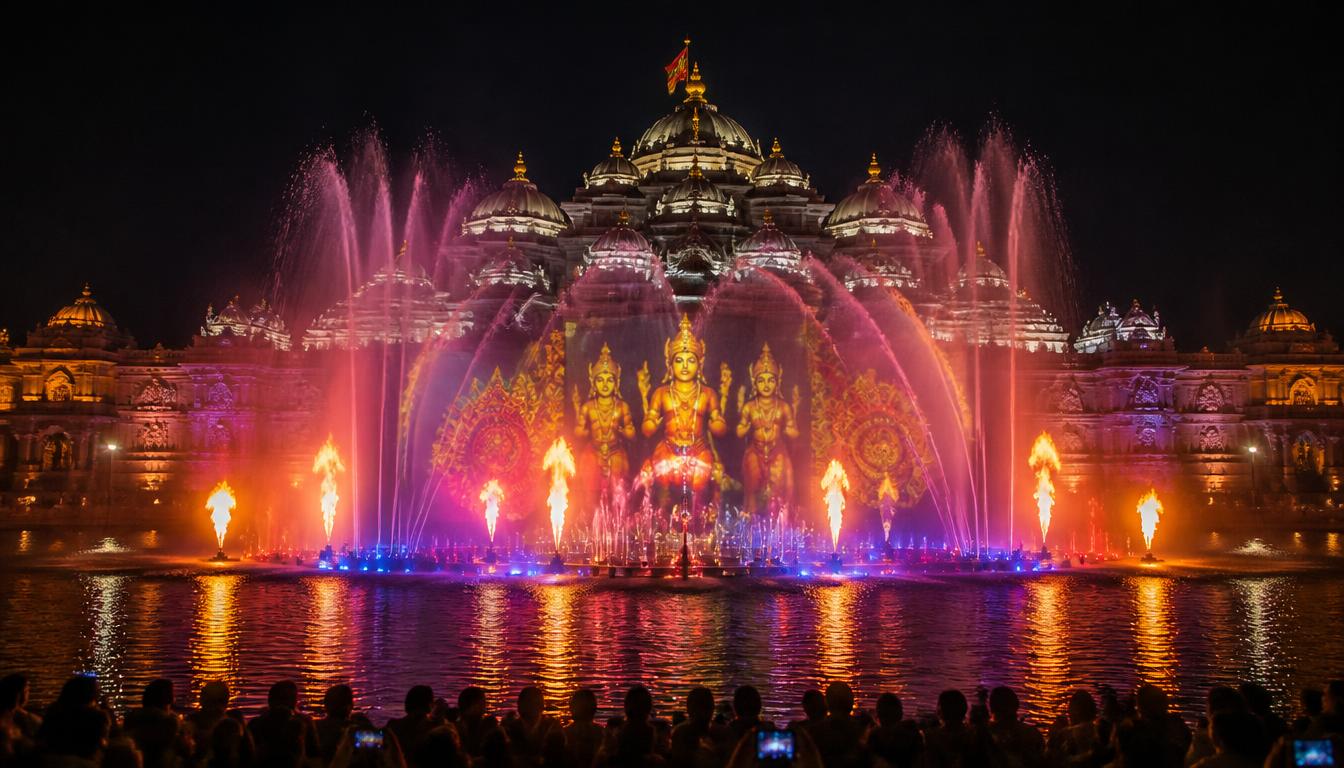
There are some evenings in Delhi that feel less like an ordinary outing and more like a little journey into another world. The Sahaj Anand Water Show at Swaminarayan Akshardham New Delhi is one of those experiences, where water, light, music and an ancient spiritual story come together under the open evening sky. You arrive as a visitor, but for the next few minutes, the atmosphere makes you feel like a part of the story itself.
Set inside the magnificent Yagnapurush Kund, the show uses fountains, projections, lasers, sound and live performance to present a story inspired by the Kena Upanishad. It is not simply an Akshardham fountain show made for visual entertainment. There is a philosophical idea sitting quietly underneath all those lights: human pride and worldly power are not greater than the deeper truth of existence.
For families, children, devotees and even first-time visitors to Delhi, this makes the Akshardham water show rather special. The spectacle is colourful and dramatic, yes, but it also leaves you with something to think about after the final fountain falls silent.
The Sahaj Anand Water Show is a multimedia theatrical presentation held at Yagnapurush Kund, the impressive step-well complex at Swaminarayan Akshardham in New Delhi. The performance combines ancient Indian storytelling with modern technology in a surprisingly graceful way.
The central story comes from the Kena Upanishad, one of the ancient Upanishads. It explores the difference between outward power and true knowledge, using devas, gods and a mysterious divine presence to communicate its message.
Rather than explaining the philosophy like a classroom lecture, the show turns it into a living performance. Water becomes part of the storytelling, while multi-color lasers, video projections, music, flames and actors make the old story feel almost immediate.
That combination is what makes the Akshardham Delhi water show memorable. It is ancient wisdom wearing the clothes of modern technology, and somehow the two fit together quite nicely.
Before watching the performance, it is worth looking at the venue itself. Yagnapurush Kund is designed as a traditional Indian step-well and forms a striking architectural setting for the presentation.
The enormous structure is associated with thousands of carefully arranged steps, small shrines and geometric patterns. Its design leads the eye towards the central pool, where much of the action of the show takes place.
The architecture isn’t merely a background decoration. It gives the performance a sense of scale that an ordinary stage simply could not provide. When the fountains rise between the ancient-looking steps and the lights illuminate the surrounding structure, the whole place feels transformed.
At the centre is a nine-lotus design, along with the pool and the ritual symbolism incorporated into the architecture. Visitors who enjoy ancient Indian architecture may find the venue almost as fascinating as the performance itself.
One of the most common questions visitors have is about Sahaj Anand Water Show timings. The presentation is an evening attraction, with the show taking place after sunset. A commonly listed show time is around 7:30 pm, although schedules can vary according to the day, season and official programme.
Because the show takes place outdoors, arriving early is a sensible idea. You don’t want to reach the entrance at the last minute, hurry through the venue and then spend the first few minutes trying to find your place. A little extra time makes the visit much more relaxed.
The Akshardham water show duration is about 24 minutes. It may sound short when written on a page, but the performance packs quite a lot into those minutes. Storytelling, dance, sound, projections, fountains and special effects move quickly from one scene to another.
Visitors planning an evening around the show should always check the latest official schedule before travelling, especially on weekends, public holidays or during seasonal changes.

Another important question is the Sahaj Anand Water Show ticket price. The show generally requires a separate ticket from general access to the monument complex, so visitors should not assume that visiting Akshardham automatically includes the water presentation.
The Sahaj Anand Water Show tickets may have different categories or rates depending on the current booking policy. Adult, child and other visitor categories can be subject to the rules in effect at the time of your visit.
Children below a certain age may have different admission rules, but these conditions can change. So, instead of relying on an old social media post or a random travel page, check the current information from the official Akshardham channels before making your plans.
This is particularly useful for families. Knowing the Akshardham water show ticket price beforehand means you can plan your complete evening without an awkward surprise at the ticket counter.
The real heart of the performance is its story. The presentation draws inspiration from the Kena Upanishad, using a fascinating episode involving the devas and an unknown divine power.
The story begins with the devas celebrating victory. They are powerful, proud and pleased with themselves. Victory, however, has quietly created something dangerous: ego.
Then an extraordinary presence appears before them.
The gods are unable to understand who or what this mysterious being is. Their confidence begins to shake when their own powers are tested. What looked like absolute strength suddenly seems rather small.
A simple flower and a seemingly impossible challenge become part of the storytelling. The episode reminds viewers that power without understanding can become arrogance, while true knowledge begins with humility.
The story is old, but the message isn’t old-fashioned. People still celebrate success, become proud of their achievements and sometimes forget how much they do not know. That is probably why the story continues to connect with audiences today.
The wider Akshardham complex also celebrates the life and spiritual journey of Neelkanth Varni, an important figure in the Swaminarayan tradition. His presence within the monument’s broader storytelling gives visitors another connection to Indian spiritual history.
Within the water-show setting, however, the focus remains on the Kena Upanishad story and its lesson about divine knowledge and humility.
For devotees, this can make the evening feel like more than entertainment. For tourists, it offers a glimpse into India’s tradition of combining philosophy, architecture, music and religious storytelling.
You don’t have to know every detail of Hindu philosophy before watching it. In fact, the visual storytelling helps make the central idea understandable even for someone encountering the story for the first time.
What makes the Sahajanand Water Show unusual is the way traditional storytelling is combined with advanced stage technology.
The performance uses powerful water jets that rise and move with the story. At certain moments, the fountains become almost like characters themselves, changing the mood of the scene without anyone needing to explain what is happening.
Then come the multi-color lasers and video projections. Images can appear across the water and surrounding surfaces, creating an immersive visual environment. The old step-well suddenly looks like a giant theatre.
There are also underwater flames, carefully integrated into the production, along with dramatic lighting and surround sound. The result is much bigger than a simple fountain display.
The involvement of live actors adds another layer. Instead of relying entirely on recorded animation, the presentation uses theatrical performance, movement, dance and song to keep the story human.
A good evening show should make you forget your phone for a little while. The Akshardham evening water show does that quite effectively.
The first thing you notice is the scale. The huge step-well surrounds the audience, while water and light occupy the centre. Then the sound begins, the fountains rise and the story starts unfolding.
For children, the visual effects can be the biggest attraction. They see fountains jumping, colourful lights moving and flames appearing from the water, and honestly, that is hard to ignore.
For adults, the philosophical message may become more interesting. The performance quietly asks a serious question: what happens when people become too proud of their own abilities?
That mixture of wonder and reflection is perhaps the show’s strongest quality.
The Akshardham water show for families works particularly well because different age groups can enjoy different parts of it.
Children may focus on the fountains, actors, music and visual effects. Teenagers might enjoy the technology and dramatic presentation. Parents and grandparents can pay more attention to the story and its spiritual meaning.
It also gives families something to discuss afterwards. A child might ask why the devas could not identify the mysterious presence, while an adult may connect the story with everyday experiences of pride and humility.
That little conversation on the way home can sometimes be more valuable than the spectacle itself.
The presentation draws upon Hindu mythology, but its deeper foundation is Vedic wisdom and the philosophical tradition represented by the Upanishads.
This distinction matters because the show is not simply presenting gods and demons as characters in a fantasy story. The characters are used to explore ideas such as knowledge, ego, divine power and spiritual enlightenment.
The story’s lesson can be understood in a simple way: having strength does not mean having complete knowledge.
That message fits beautifully with the setting. The elaborate architecture demonstrates human skill, while the story reminds us that even impressive human achievements exist within a much larger reality.
The 24-minute water show is structured more like a compact theatrical performance than an ordinary fountain attraction.
You can expect a mixture of storytelling, music, dance, acting and visual effects. The water jets change with the performance, while lights and projections expand the story beyond the physical stage.
The video projection, sound and underwater effects are especially useful during dramatic moments. Instead of watching one fixed fountain display, the audience is constantly given something different to look at.
Because the performance is relatively short, there is very little feeling of dragging or unnecessary repetition. One scene gives way to another before the atmosphere has time to become dull.
The Akshardham fountain show is a good choice for families visiting Delhi, especially those already planning to explore the Swaminarayan Akshardham complex.
It can also appeal to visitors interested in Indian architecture, Hindu traditions, cultural performances, mythology or modern multimedia theatre.
Photographers and architecture enthusiasts may particularly enjoy the venue before the show begins. Once the performance starts, however, it is better to put the camera away for a while and actually watch. Some moments are easier to remember than to photograph.
International visitors can also appreciate it because the basic story is communicated visually rather than through complicated explanations.
Read more: https://templetimingsdaily.com/visit-swaminarayan-akshardham-new-delhi/
Arrive early enough to move through the entrance procedures without rushing. Evening crowds can become busy, and nobody wants to begin a beautiful experience already feeling stressed.
Keep your ticket information ready and check the current Akshardham show timings before leaving for the venue. Schedules are not something worth guessing about when you are travelling across Delhi.
Dress comfortably and remember that the performance is associated with a religious and cultural complex. Respectful behaviour and clothing are appropriate.
If you are travelling with children, explain beforehand that the show is a story as well as a visual spectacle. They may understand and enjoy the philosophical part more than you expect.
Most importantly, don’t judge the show only as a fountain performance. Watch how the water jets, actors, music, projections and architecture work together. That is where its real charm lives.
There are plenty of light-and-water attractions around the world, but the Yagnapurush Kund water show has an advantage that many modern venues cannot reproduce: its architecture already carries cultural meaning.
The stepped geometry surrounds the performance space like a giant amphitheatre. The central water area provides the natural stage, while the surrounding shrines and architectural details create a sense of history.
When modern lasers appear across this traditional environment, the contrast is striking. Ancient design and contemporary technology aren’t competing with each other here; they are telling the same story in two different languages.
That is probably the reason the experience feels bigger than a regular Akshardham night show.
The name Sahaj Anand can be understood in relation to natural or spontaneous bliss. The idea points towards an inner state of happiness that is not dependent entirely on external achievements or possessions.
That meaning fits the philosophical direction of the presentation.
The devas in the story have power and victory, yet their pride does not give them complete understanding. The deeper lesson points towards knowledge, humility and a recognition of something greater than the individual self.
So while the audience sees water, fire, colour and light, the underlying theme is much quieter: real understanding can begin when ego becomes less noisy.
For visitors already exploring Swaminarayan Akshardham New Delhi, the answer is generally yes. The show adds another dimension to the visit and provides a very different experience from simply walking through the monument complex.
Its strongest feature is the combination of story and spectacle. If you only wanted a fountain show, you may focus on the lasers and water. If you are interested in culture and spirituality, the Kena Upanishad story gives the performance another layer.
And if you are travelling with family, everyone can take something different from the same 24 minutes. That is not a bad quality for an evening attraction.
The Akshardham water show is held in the evening after sunset. Show timings may vary, so it is best to check the latest schedule before visiting.
Akshardham Temple Delhi looks especially beautiful at night when its architecture is illuminated. The evening atmosphere also makes it a popular time to enjoy the water show.
Swaminarayan Akshardham tickets may be required for specific attractions and experiences within the complex. Check the latest official ticket information before your visit.
Akshardham tickets depend on the attraction or experience you plan to visit. It is recommended to confirm current ticket details and availability before travelling.
The Akshardham water show has a separate ticket or admission requirement from some other attractions. Ticket prices and categories can change, so check the current official rates before booking.
The Sahaj Anand Water Show is a beautiful example of how an ancient story can be presented through modern technology without losing its central meaning. At Swaminarayan Akshardham New Delhi, the traditional Yagnapurush Kund becomes a remarkable stage where water, music, actors, lasers and fire bring the wisdom of the Kena Upanishad into a contemporary setting.
The show may last only around 24 minutes, but the idea behind it lasts a little longer. It asks visitors to look beyond outward power and remember the value of knowledge, humility and inner bliss.
If you are planning to attend, check the latest Sahaj Anand Water Show timings, Sahaj Anand Water Show tickets and current ticket rules before your visit. Then arrive with enough time to enjoy the setting rather than rushing straight into the performance.
And when the final lights disappear and the water settles back into the pool, take a moment before leaving. Sometimes the most memorable part of a show is not the biggest fountain or brightest laser, but the small thought that follows you home.