Physical Address
304 North Cardinal St.
Dorchester Center, MA 02124
Physical Address
304 North Cardinal St.
Dorchester Center, MA 02124

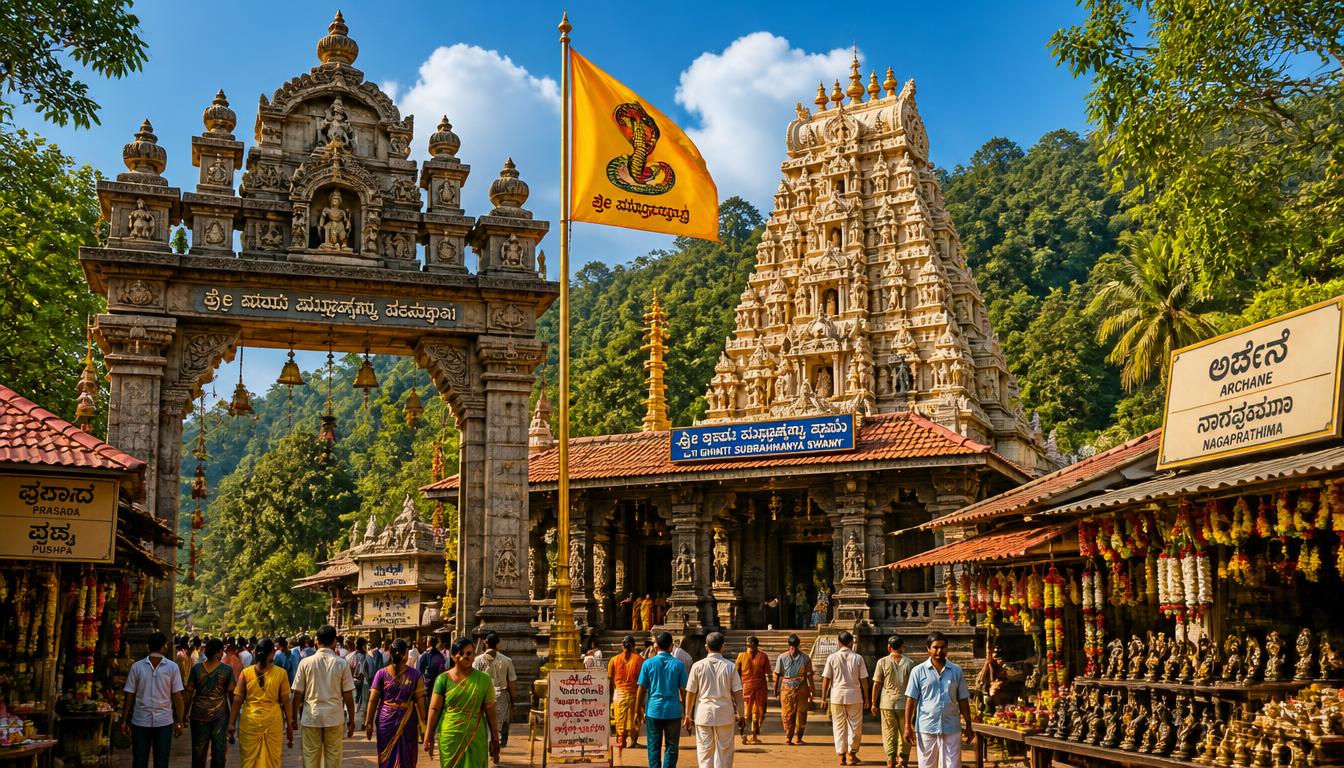
There are some temples you visit because they are famous, and then there are temples where the road itself seems to slow you down a little. Ghati Subramanya Temple near Doddaballapur in Karnataka belongs to the second kind.
The first glimpse may look simple enough a traditional temple, devotees arriving with flowers, families waiting quietly, the occasional sound of bells but once you learn why Lord Subramanya and Lord Narasimha are worshipped here together, the place starts to feel rather special.
Located in Melinajuganhalli village of Doddaballapura Taluk in Bengaluru Rural District, the temple is an important pilgrimage centre and a notable destination for serpent worship in South India.
Karnataka’s district administration describes it as a temple with more than 600 years of history and identifies Lord Karthikeya and Lord Narasimha as its distinctive principal deities.
For somebody visiting for the first time, however, devotion is only one part of the puzzle. You also want to know: What are the Ghati Subramanya Temple timings? Is darshan free?
Which poojas are available? When is Abhishekam? What happens during Brahmarathotsava? How do you reach from Bengaluru? And, importantly, when should you actually go?
This guide brings those practical questions together without making the temple sound like just another item on a weekend itinerary.
The central attraction of Ghati Subramanya is its unusual association with two powerful deities—Lord Subramanya, also known as Kartikeya, and Lord Narasimha. The Karnataka government describes the idols as having emerged from the earth according to temple tradition. Subramanya is associated with a seven-hooded serpent form, while Narasimha is worshipped in the same sacred setting.
The visual arrangement is one of the things devotees remember. Lord Subramanya faces one direction, while the image of Lord Narasimha can be viewed from the rear through a mirror arrangement in the sanctum.
It is a curious experience because you don’t simply walk in, look once, and leave; you are encouraged to notice how the shrine has been arranged.
The temple is therefore not merely a Lord Subramanya temple in the ordinary sense. Its identity is strongly connected with Naga worship, serpent symbolism and devotional traditions associated with Sarpa-related concerns.
People come seeking blessings for family welfare, protection, prosperity and peace, though individual beliefs about Naga Dosha or Sarpa Dosha naturally vary.
The important thing is to approach such rituals as matters of faith rather than treating them as guaranteed solutions to medical, financial or personal problems. A temple can offer prayer, community and spiritual comfort; life, annoyingly, still keeps a few of its own rules.
The temple is believed to have a history of more than 600 years. According to the Bengaluru Rural district administration, its development is associated with the Ghorpade rulers of Sandur.
The temple tradition also connects the sacred location with Lord Subramanya’s penance in serpent form and with the story of Ghatikasura, a demon said to have been defeated by Subramanya.
The legend surrounding the temple gives its serpent-worship tradition a deeper meaning. In the traditional account, Subramanya is connected with the protection of the Naga family from Garuda, the vehicle of Lord Vishnu.
Narasimha, another form of Vishnu, consequently becomes part of the sacred story associated with the shrine.
These are religious traditions and temple legends, so they are best understood in that devotional context rather than as ordinary historical events.
There is something beautiful about such old temple stories, actually. They survive because generations keep telling them not always in exactly the same words, but with the same sense that a place has a memory of its own.
One of the most searched questions is about Ghati Subramanya Temple timings, but visitors should be slightly careful here because published sources do not all give exactly the same daily schedule.
Some current listings give the temple as open approximately 6:30 AM to 1:00 PM and 3:30 PM to 8:30 PM, while other published temple information gives a broader schedule extending from early morning into the evening.
For planning purposes, a commonly reported schedule is:
Because festival days, Shashti days and special rituals can change the schedule, don’t treat an online timing table like it is carved into stone. Check the temple’s latest local information before making a long journey.
For a normal visit, reaching around 7:00 AM to 9:00 AM is a sensible choice. The atmosphere is generally calmer than the heavy festival periods, and you have enough time afterward for breakfast and travel without feeling that the day has already run away.
The Ghati Subramanya darshan experience is fairly straightforward, but crowds can change dramatically depending on the day.
On ordinary days, devotees can proceed for darshan through the regular temple arrangements. During weekends, auspicious days, Shashti observances and major festivals, the queue can become much longer. A quiet weekday morning and a major festival morning are practically two different worlds.
Some online sources also mention a Special Darshan facility and a ₹50 ticket, but because ticket arrangements and charges can change, visitors should confirm the current amount and availability at the temple rather than relying blindly on an old webpage.
If your priority is simply seeing the deity peacefully, arrive early. If your priority is performing a particular seva, arrive earlier still. Temple queues have a strange talent for becoming longest precisely when you thought you had plenty of time.
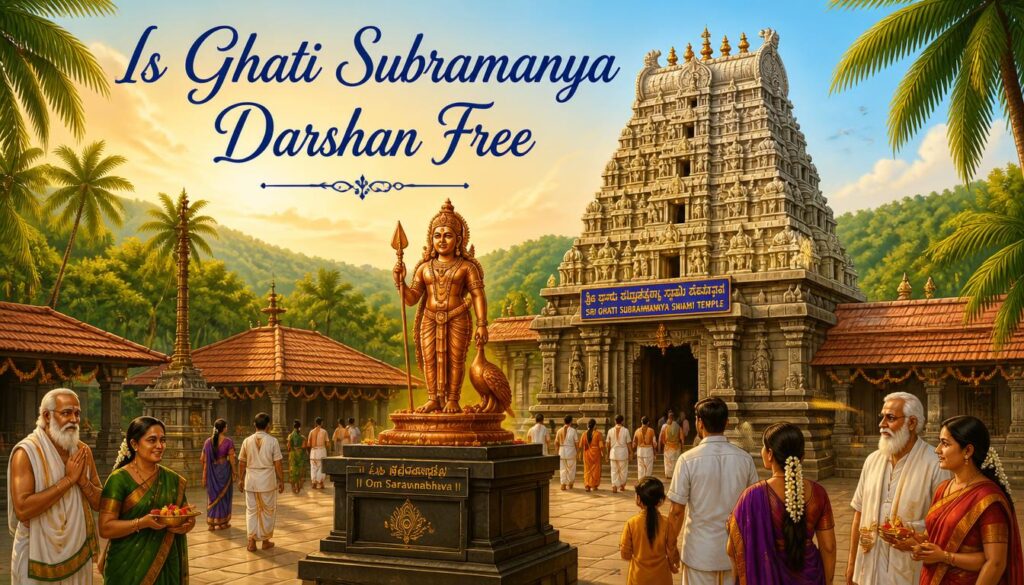
Regular temple darshan is generally available to devotees without a mandatory paid entry ticket, while particular special-darshan or seva arrangements may involve charges.
This distinction matters. Darshan, seva and special darshan are not necessarily the same thing. A devotee may visit simply for worship, while another may purchase a particular ritual offering.
If somebody tells you that every visitor must buy an expensive ticket, pause before paying. Ask at the temple counter about the official arrangement. Avoid unofficial agents or websites promising guaranteed access.
The temple is particularly known among devotees seeking serpent-related worship and offerings. Available services have been published under names such as
Abhishekam, Ksheerabhishekam, Panchamrutha Abhishekam, Rudrabhishekam, Kumkuma Archana, Sahasranama Archana, Sarpa Seva, Ashlesha Bali and Sarpa Samskara.
The choice of ritual should ideally come from your family’s tradition, priestly guidance or your own devotional intentio not simply because an internet article says one particular pooja is “best.”
Among commonly listed services are:
These offerings have different meanings, procedures and costs, so it is worth speaking with the temple office before booking anything.
Published online seva lists give indicative prices ranging from small offerings to considerably larger sponsored sevas.
One published list, for example, gives Kumkuma Archana at ₹10, Mudi at ₹20, Ksheerabhishekam at ₹100, Panchamrutha Abhishekam at ₹200, Rudrabhishekam at ₹300 and Sarpa Seva at ₹750. It also lists higher-value services such as Pratyeka Sarpa Samskara and Kalyanotsavam.
A sample of those published prices is:
| Seva / Pooja | Published indicative amount |
|---|---|
| Kumkuma Archana | ₹10 |
| Mudi | ₹20 |
| Vahana Pooja – Two Wheeler | ₹25 |
| Vahana Pooja – Heavy Vehicle | ₹50 |
| Tulabhara | ₹50 |
| Sahasranama Archana | ₹50 |
| Ksheerabhishekam | ₹100 |
| Panchamrutha Abhishekam | ₹200 |
| Rudrabhishekam | ₹300 |
| Samuhika Ashlesha Bali | ₹500 |
| Sarpa Seva | ₹750 |
| Prakarotsava | ₹1,001 |
| Ekadasha Rudrabhishek | ₹2,001 |
| Abhisheka Shashwatha Seva | ₹2,001 |
| Samuhika Sarpa Samskara | ₹4,000 |
| Annadana | ₹5,001 |
| Pratyeka Sarpa Samskara | ₹10,001 |
| Kalyanotsavam Seva | ₹15,000 |
These are not guaranteed 2026 prices. Published sources can become outdated, and the amounts may be revised. Confirm the current fee and procedure at the temple counter before making payment. That little five-minute check can save a surprisingly large amount of confusion.
The temple’s reputation for serpent worship is a major reason devotees travel here. Sarpa Dosha Pooja, Ashlesha Bali, Sarpa Seva and Sarpa Samskara are among the ritual terms associated with the shrine.
Within Hindu astrological and devotional traditions, Sarpa or Naga-related rituals may be recommended for particular concerns. Some devotees undertake them because of a horoscope interpretation; others do so because of family tradition or personal faith.
It is sensible to distinguish spiritual practice from medical or scientific treatment. If someone is experiencing infertility, illness, anxiety or another serious problem, temple worship may be personally meaningful, but it should not replace appropriate professional care.
The strongest reason to perform a ritual is perhaps the simplest one: prayer, gratitude and devotion. Not fear.
Abhishekam is an important part of temple worship, and published information commonly places the main Abhishekam around 8:30 AM. One published schedule also gives Mahamangalarathi around 10:30 AM in the morning and 8:30 PM in the evening.
These timings can be altered on special occasions, so devotees who specifically want to witness Abhishekam should plan around the ritual rather than arriving whenever convenient.
There is a different feeling to seeing a ritual from beginning to end. The crowd settles, bells and chants become part of the background, and suddenly you realise that you have stopped checking your phone. That, honestly, is becoming a rare luxury.
The temple calendar becomes particularly lively during major festivals. The most important celebration is Brahmarathotsava, associated with Pushya Shuddha Shashti.
The Bengaluru Rural district administration specifically identifies Brahmarathotsava and Narasimha Jayanti as major celebrations at Ghati Subramanya.
Brahma Rathotsav is the grand chariot festival and one of the biggest occasions at the temple. A procession, special rituals and a huge gathering of devotees make the atmosphere much more energetic than an ordinary day.
The Karnataka tourism portal also notes the relationship between the area’s cattle fair and the famous Ghati Subramanya car festival, describing the gathering as a major pastoral and cultural event.
Nagara Panchami, generally observed around July–August, is especially meaningful at a temple strongly associated with Naga worship. Devotees visit for prayers and serpent-related religious observances.
Narasimha Jayanti honours Lord Narasimha, whose presence is central to Ghati Subramanya’s unique identity. The festival brings its own special devotional atmosphere and rituals.
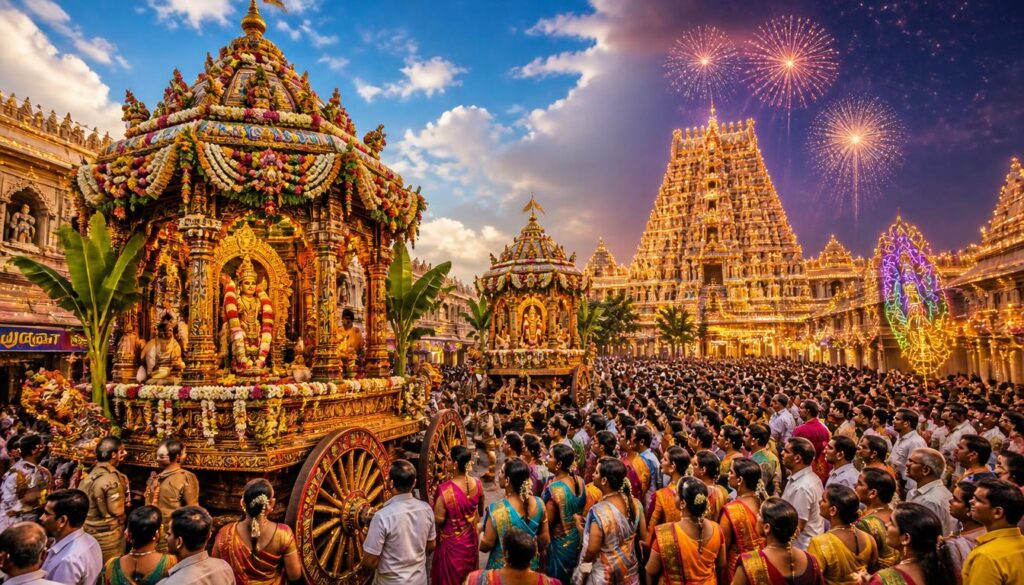
Published temple guides also mention Theppotsava, Kiru Shashti, Champa Shashti, Kumara Shashti and other Subramanya-related observances.
Exact dates move according to the Hindu calendar, so a festival listed as “December/January” or “November” should not be interpreted as a fixed Gregorian date every year.
If you want a quiet spiritual visit, avoid the biggest festival days. If you want to see the temple at its most colourful and energetic, the opposite advice applies.
For a relaxed darshan, weekday mornings are usually the better bet. Arriving early gives you cooler weather, more breathing room and a better chance of completing your visit without spending half the morning in a queue.
Tuesday and Shashti days can be attractive to devotees who specifically follow Subramanya worship traditions, but they may also bring more visitors.
For photographers and casual travellers, the green surroundings after the monsoon can make the journey especially pleasant. Still, remember that this is primarily a sacred site, not a photo studio with bells.
The temple is in Melinajuganhalli village, Doddaballapura Taluk, Bengaluru Rural District, Karnataka.
The distance commonly quoted from Bengaluru is around 60 km, although the exact travel distance depends on your starting point and route.
Driving is probably the easiest choice for families, elderly visitors and people planning to combine the temple with nearby attractions. From Bengaluru, the journey generally takes you toward the Doddaballapur side.
Leave early if travelling on a weekend. Bangalore traffic has never shown much respect for carefully calculated arrival times.
Public transport is possible through Doddaballapur and surrounding routes, with local buses and other services connecting the area.
Because routes and schedules change, check the current BMTC/KSRTC or local transport information on the day of travel rather than depending on an old fare or route number found online.
Doddaballapur is the practical nearby town for transport planning. Local autos and other road connections can take visitors onward to the temple.
If you’re travelling with elders, confirm the return transport before beginning your darshan. Getting to a temple is usually easier than finding a comfortable ride home after everyone has become tired.
read more: https://templetimingsdaily.com/tiruchanur-padmavathi-darshan-2026/
Visitors should dress modestly and respectfully, especially if they intend to participate in pooja or seva. Traditional Indian clothing is a comfortable choice, but simple modest clothing is generally the important point.
A few basic practices make the visit smoother:
Parking availability can also become strained during large festivals. On ordinary days it is usually easier, but festival crowds are another story altogether.
A day trip from Bengaluru is quite practical for many travellers, so staying overnight is not essential. Still, accommodation can make sense if you want early morning darshan, are travelling with children or elders, or plan to attend a festival.
Options mentioned in travel listings around the broader area include temple-area stays and accommodation around Doddaballapur. However, room availability and property operations can change, so confirm directly before depending on a particular hotel or guesthouse.
For festival periods, book early. “We’ll find something when we reach” is a charming philosophy until three thousand other people have had exactly the same idea.

If you’re visiting for the first time, you don’t need an elaborate itinerary.
7:00 AM: Reach the temple area.
7:10 AM: Park, freshen up and purchase any required pooja items.
7:30 AM: Join the regular darshan queue.
8:00 AM: Complete darshan and spend a little quiet time around the temple.
8:30 AM: If you have planned Abhishekam, be ready for the relevant ritual timing.
9:15 AM: Visit other permitted areas, receive prasada and take a short break.
10:00 AM onward: Have breakfast and begin your return journey or continue exploring the surrounding region.
Give yourself roughly 2–3 hours for an ordinary visit. On festival days, give yourself considerably more. The clock behaves differently when thousands of devotees arrive at once.
One of the most important practical points is not to assume that every seva is available through a convenient online booking portal.
For specific pooja, seva or special-darshan tickets, ask the temple authorities about the current booking process. Published sources describe temple-counter arrangements and list multiple services, but online information can become outdated quickly.
A safe approach is:
This is particularly important for expensive rituals such as sponsored sevas. A sacred visit should not begin with the uncomfortable feeling that you’ve accidentally bought something from a stranger at a bus stand.
It is famous for worship of Lord Subramanya/Karthikeya and Lord Narasimha, its distinctive dual-deity tradition, its long history and its importance as a centre of Naga or serpent worship.
The temple is commonly described as being about 60 km from Bengaluru, although actual road distance varies with the starting point and route.
Published sources differ slightly, with schedules generally placing opening in the early morning and closing around the evening. One current listing gives 6:30 AM–1:00 PM and 3:30 PM–8:30 PM, while other published information gives a longer continuous schedule. Verify the day’s timing before travelling.
Regular darshan is generally available without a mandatory paid entry ticket, while special darshan and individual sevas may involve charges. Confirm the current arrangement at the temple counter.
Brahmarathotsava, associated with Pushya Shuddha Shashti, is one of the temple’s major annual celebrations. Narasimha Jayanti is another important festival.
The temple is strongly associated with Naga worship and offers several serpent-related devotional rituals, including services described as Sarpa Seva, Ashlesha Bali and Sarpa Samskara in published seva lists.
Absolutely. Families regularly visit pilgrimage centres like this, though festival days require extra attention to children because queues and crowds can become very dense.
Ghati Subramanya Temple is generally open from 6:00 AM to 9:00 PM, with morning darshan from 6:00 AM to 12:00 PM and evening darshan from 4:00 PM to 9:00 PM.
The temple usually opens at 6:00 AM and closes at 9:00 PM. Devotees can have darshan during the morning and evening sessions.
Today, Ghati Subramanya Temple is expected to follow its regular schedule of 6:00 AM to 9:00 PM, with a midday break from 12:00 PM to 4:00 PM.
For the latest information about temple timings, poojas, sevas, and special events, devotees should check the temple’s official communication channels before visiting.
Ghati Subramanya Temple is one of those places whose significance cannot really be squeezed into a list of timings and ticket prices.
Yes, knowing the opening hours matters. Yes, knowing the pooja charges matters. And yes, figuring out the Bangalore-to-Doddaballapur route before leaving home is a very good idea.
But the deeper character of the temple comes from its unusual sacred identity the worship of Subramanya alongside Narasimha, the ancient stories,
the serpent symbolism, the festivals, the families returning year after year and the quiet personal prayers that never make it into a travel brochure.
The Karnataka government itself describes Ghati Subramanya as an ancient and popular pilgrimage centre with more than six centuries of history.
So visit without rushing. Arrive early if you want peaceful darshan. Ask questions before paying for a seva. Respect the temple’s rules.
And if you happen to stand before the deity for a few extra moments without saying anything at all, don’t feel that you are doing the visit wrong.
Sometimes that silence is the whole point.
Note for travellers: Temple timings, seva prices, festival schedules and booking procedures can change, especially on special days.
The figures above should therefore be treated as practical reference information rather than a guarantee of current temple policy. Confirm important details locally before travelling.