Physical Address
304 North Cardinal St.
Dorchester Center, MA 02124
Physical Address
304 North Cardinal St.
Dorchester Center, MA 02124

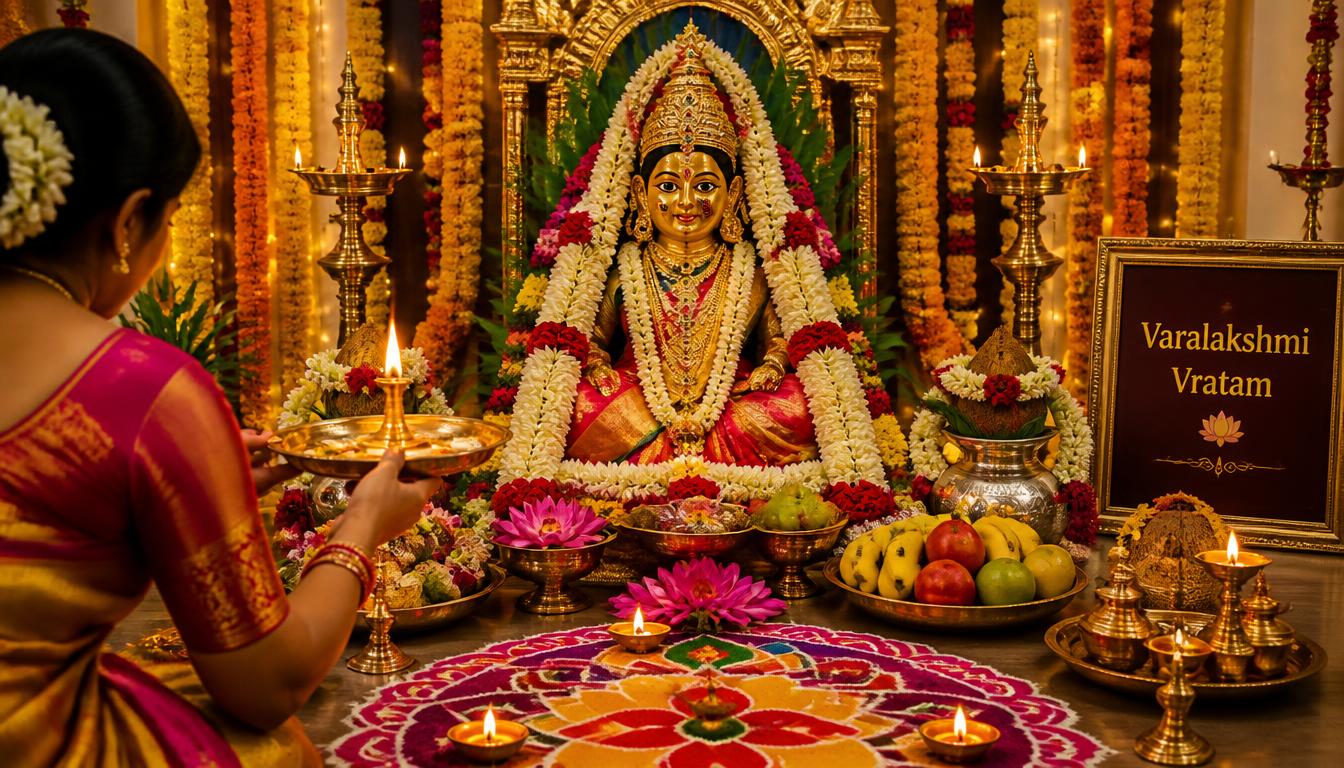
Some festival mornings arrive with noise, music and crowded streets. Varalakshmi Vratam and Puja, however, often begins much more quietly.
A lamp is cleaned, flowers are arranged, turmeric is placed carefully, and somewhere in the kitchen a sweet dish is being prepared while somebody is still looking for the missing puja item. There is a beautiful kind of peace in that little chaos.
In 2026, devotees will observe Varalakshmi Vratam 2026 on Friday, August 28, 2026. The day falls during Shravana and is traditionally associated with the Friday before or around Shravana Purnima, depending on the regional calendar followed. Panchang sources for multiple Indian locations list August 28 as the Varalakshmi Vratam 2026 date.
For many families, this is not simply another religious date on the calendar. It is a day for praying for prosperity, health, family harmony, well-being and divine grace. Women especially may prepare the home with unusual care, but the spirit of the festival can become a family affair, with everyone joining the worship in their own way.
The most important question for devotees is naturally: when is Varalakshmi Vratam 2026?
The Varalakshmi Vratam 2026 date is Friday, August 28, 2026. Several regional Panchang listings identify this day as Varalakshmi Vrat and also associate it with Shravana Purnima.
So, if you have been searching for when is Varalakshmi Vratam 2026, the short answer is:
The exact Varalakshmi Puja date and local muhurat should always be checked according to the Panchang followed by your family or temple because Hindu festival timings can differ according to location. For example, Drik Panchang lists different Lagna-based puja windows for different places.
You may find August 14, 2026 mentioned on some pages while searching for the Varalakshmi Vratam 2026 date. That date should not automatically be treated as correct merely because it appears in an online FAQ or copied article.
Current Panchang references consistently identify Friday, August 28, 2026 as the Varalakshmi Vratam date for several Indian locations.
Varalakshmi Vratam is a Hindu observance dedicated to Goddess Varalakshmi, a form of Goddess Lakshmi associated with prosperity, abundance and auspiciousness.
The word “Vara” carries the sense of a boon or blessing, while Lakshmi represents prosperity and auspiciousness.
Thus, devotees worship Varalakshmi with the hope of receiving divine blessings and positive qualities that make family life more stable and meaningful.
The observance is particularly prominent in South Indian traditions, including communities in Karnataka, Andhra Pradesh, Telangana and Tamil Nadu, though devotees in other parts of India also observe it.
And honestly, the beauty of the vrat is not only in the gold ornaments, flowers or decorated kalash. It is in the intention behind them. A person may have a simple puja setup and still offer an incredibly sincere prayer.
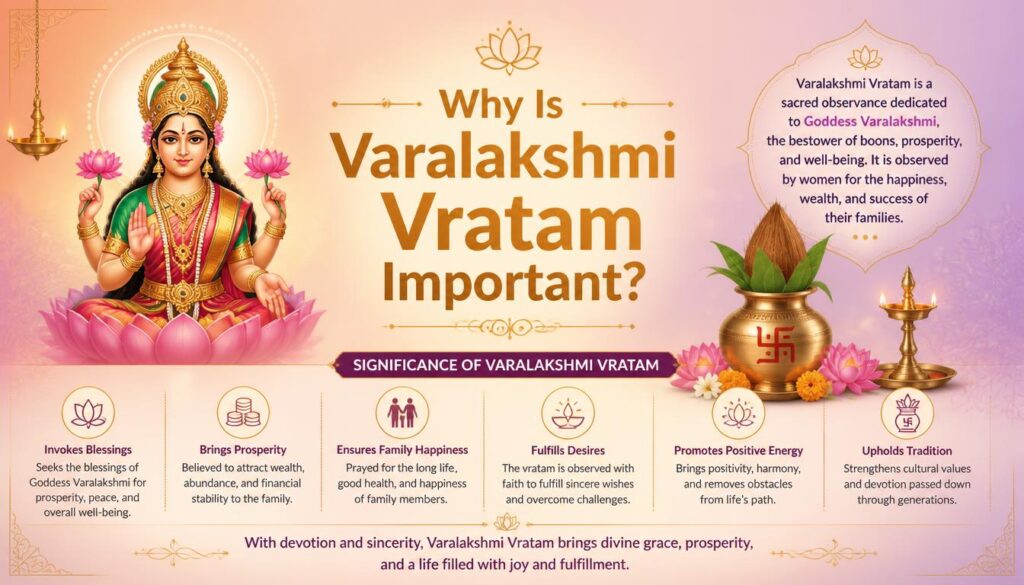
The significance of Varalakshmi Vratam comes from its connection with the worship of Lakshmi in a form believed to grant boons and blessings.
Devotees may pray for:
The observance is therefore broader than simply asking for money. Goddess Mahalakshmi is associated with many forms of abundance, and prosperity can mean peace, knowledge, strength, health and contentment too.
That is probably why the festival continues to feel relevant even in modern homes. Everyone wants wealth, sure, but most people also want a peaceful home where nobody is constantly worried about tomorrow.
One fascinating aspect of the tradition is its association with Ashtalakshmi, the eight forms of Lakshmi.
These forms represent different kinds of abundance and blessings. They are commonly described through qualities such as:
This symbolism makes the festival much richer than the simple idea of “wealth worship.” A prosperous life without peace does not feel very prosperous, does it?
Through Varalakshmi Puja, devotees may therefore seek material and spiritual well-being together.
The traditional story associated with Varalakshmi Vratam tells of a woman named Charumathi, who is described as a devoted and virtuous woman.
According to the popular narrative, Goddess Lakshmi appeared to Charumathi in a dream and instructed her to perform the vrat. Charumathi followed the divine guidance, and the observance became associated with blessings for her household.
The story is traditionally connected with the broader mythology of Goddess Lakshmi and the boon-giving nature of Varalakshmi. Different regional retellings may vary in details, so families often hear the story in slightly different forms.
The heart of the story remains rather lovely: devotion, discipline and sincere prayer are presented as things that can transform an ordinary household into a place of abundance and grace.
You do not necessarily need an enormous decoration setup to perform Varalakshmi Puja at home.
Many households prepare a clean worship space, place a picture or idol of Goddess Varalakshmi or Lakshmi, decorate a kalash, arrange flowers and perform the puja according to their family tradition.
A commonly used setup may include:
The exact Varalakshmi Vratam puja procedure can vary considerably between communities, so following your family priest, temple tradition or regional puja book is often better than blindly copying a random internet checklist.
The general sequence of a Varalakshmi Puja may include cleaning and preparing the puja area, invoking the deity, decorating the kalash or idol, offering flowers and other materials, reciting prayers and mantras, and finally performing aarti.
A simple framework is:
The worship area is cleaned and decorated before the ritual begins. Rangoli or kolam may be drawn near the entrance or altar, depending on regional custom.
A decorated kalash may be filled and placed according to the family’s ritual tradition. Mango leaves and a coconut are commonly used in such arrangements.
Devotees formally invite the presence of the goddess through prayers and invocation. This is where the atmosphere suddenly changes from “preparing stuff” to actual worship.
Flowers, turmeric, kumkum, fruits, sweets, incense and other traditional offerings are presented with devotion.
Devotees may recite the Varalakshmi Mula Mantra, Lakshmi Ashtakam, Maha Lakshmi Ashtakam or other prayers according to their tradition.
The puja concludes with aarti and prayers for the welfare of the family and community.
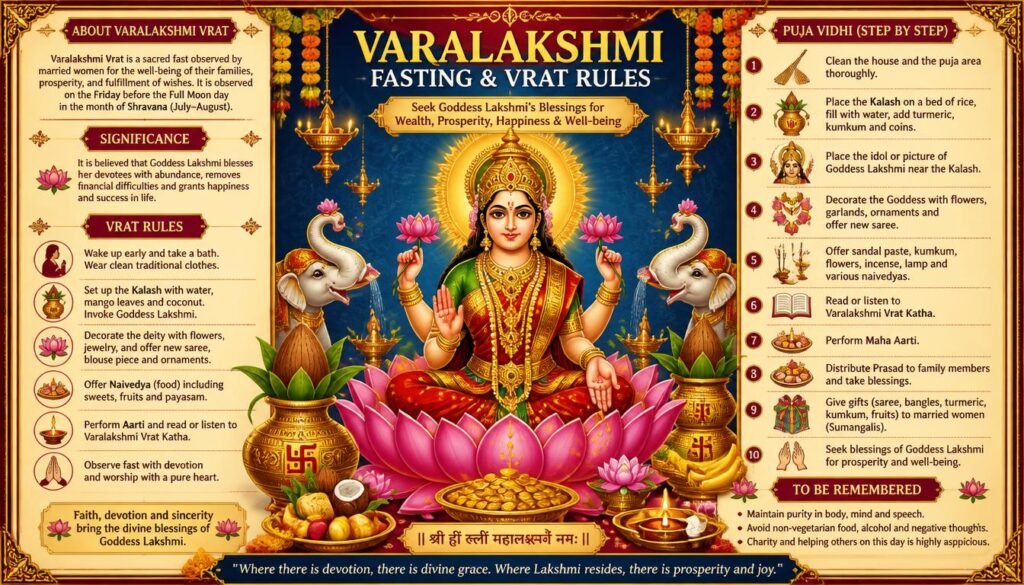
Varalakshmi fasting is traditionally observed by devotees who undertake the vrat, but fasting practices can differ from one household and region to another.
Some devotees observe a strict fast, while others follow a modified fast involving fruits, milk or specific foods. Health, age and personal circumstances should be considered instead of treating fasting like a competition.
A sincere Varalakshmi Vrat is about devotion, discipline and prayer. It is not about proving who can go the longest without eating.
If someone has health concerns, is pregnant, elderly or taking medicines, they should follow appropriate medical advice and their family’s religious guidance rather than forcing a traditional fasting rule.
Mantras add a special rhythm to the puja. The sound of Sanskrit verses, bells and the soft movement of flowers can make even a small room feel strangely peaceful.
A commonly associated Lakshmi mantra is:
“Om Shreem Hreem Kleem Mahalakshmyai Namaha.”
Devotees may also recite the Lakshmi Ashtakam, Ashta Lakshmi Stotram, Varalakshmi Dhyana Shloka and other prayers.
The purpose is not merely to repeat words quickly. Understanding the prayer’s devotional meaning and reciting it respectfully can make the experience much more personal.
Food has always had a warm place in Hindu festivals, and Varalakshmi Vratam prasadam is no exception.
Families may prepare sweets, fruits, rice-based dishes, payasam, kheer or other regional foods as offerings. Recipes vary greatly between Andhra, Telangana, Karnataka, Tamil Nadu, Maharashtra and other communities.
Tamboolam is another important traditional element in many celebrations. Betel leaves, areca nut and other auspicious items may be offered or distributed according to local customs.
The plate does not need to look like something from a wedding hall. Sometimes a small homemade offering carries more emotion than a table full of expensive food.
Traditionally, Varalakshmi Vratam for married women has particular importance in many South Indian communities. Women may perform the vrat for the welfare and prosperity of their families and for the longevity and well-being of their husbands.
However, practices differ by family and region. It is not useful to turn one community’s custom into a universal rule.
Devotees who wish to participate should follow the traditions of their household, community or temple. Family worship can also become a beautiful way for children and other relatives to learn about the festival.
The Varalakshmi festival is particularly prominent in South Indian states.
In Karnataka, Tamil Nadu, Andhra Pradesh and Telangana, homes may be decorated with flowers, mango leaves, rangoli and beautifully dressed representations of the goddess.
In some families, women invite relatives and friends, exchange tamboolam, share prasadam and spend time together after the puja.
In cities such as Chennai and Bengaluru, the celebration may take place inside modern apartments where the traditional rituals continue alongside very modern surroundings. One flat has a decorated doorway, the next has a child running around with a flower, and somebody is always asking where the kumkum went.
That mixture of old tradition and ordinary family life is part of what keeps festivals alive.
Read more: https://templetimingsdaily.com/hartalika-teej-2026/
Many prayers during Varalakshmi Puja for family prosperity focus on more than money.
A family may pray for:
In this sense, Goddess Lakshmi becomes a symbol of balanced abundance. Wealth is useful, but so are wisdom and peace. A person who has everything except contentment is still searching for something.
Festivals also create little bridges between people. A message sent to your mother, sister, wife, friend or relative can make the day feel more connected.
Here are some ready-to-use wishes for Varalakshmi Vratam 2026:
Family messages can be slightly more emotional because these are the people who usually know how much you have struggled, even when you don’t explain it.
For many women, the vrat carries a deeply personal meaning, particularly when it is connected with family welfare and marital bonds.
Not every message needs to sound like a temple announcement. Sometimes simple is much better.
Sometimes nobody wants a paragraph on WhatsApp. A short message does the job perfectly.
A personalized wish does not need complicated Sanskrit words or an enormous paragraph.
Start with the person’s name. Then mention something genuinely meaningful about them. If your mother observes the vrat every year, say that. If your friend recently started a new business, include a prayer for success. If your grandmother taught you the tradition, thank her.
For example, instead of simply writing “Happy Varalakshmi Vratam,” you could write:
“Mom, watching you prepare for Varalakshmi Puja every year reminds me how beautifully traditions can hold a family together. May Goddess Lakshmi bless you with health, peace and many more happy years with us.”
Now that sounds like it came from a real person.
The most meaningful celebration does not have to be the most expensive one.
Clean your worship area. Prepare traditional offerings according to your family custom. Spend some quiet time during the puja instead of treating it like another task to finish. Teach children why the festival is celebrated. Call an elderly relative. Share prasadam with someone who may not have much.
You can also use the day as a reminder to practice generosity. Donate food, help someone quietly, or support a family member who needs encouragement.
That is a different kind of prosperity, but perhaps one of the most valuable forms of it.
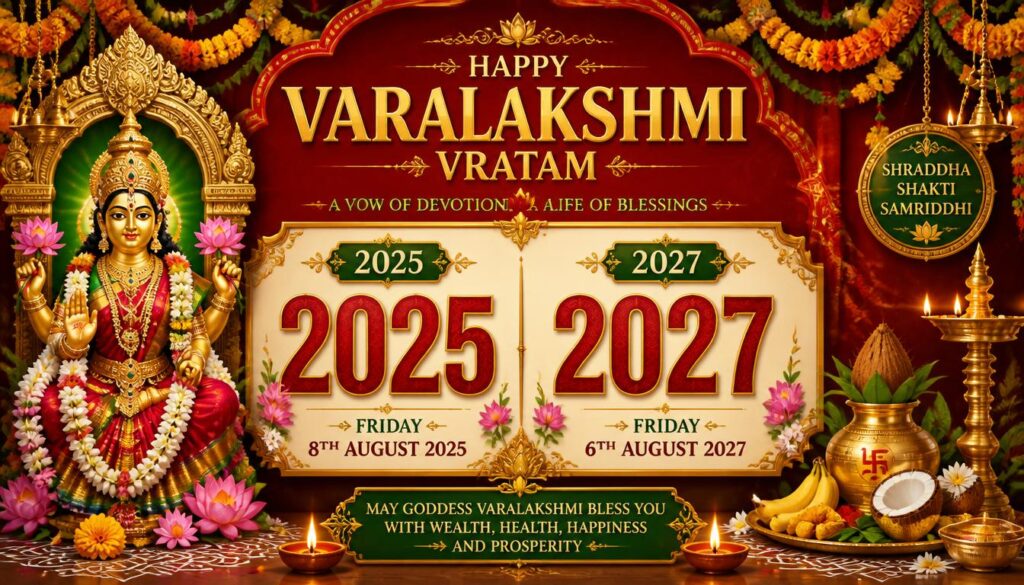
For readers comparing festival calendars, previous and upcoming years can be useful, but dates should always be verified through the relevant year’s Panchang.
Searches may show Varalakshmi Vratam 2025 as September 8, 2025, while the 2027 date is commonly listed as August 17, 2027. Calendar calculations can depend on the regional tradition and location, so these dates are best treated as calendar references rather than universal ritual timings.
For 2026, the current references consulted here clearly place the festival on Friday, August 28, 2026.
Varalakshmi Vratam is a Hindu religious observance dedicated to Goddess Varalakshmi, a form of Goddess Lakshmi associated with prosperity, blessings and family well-being.
The Varalakshmi Vratam 2026 date is Friday, August 28, 2026, according to current Panchang references for multiple locations.
Devotees generally clean and decorate the worship area, prepare a kalash or deity representation, offer traditional items, recite prayers and mantras, perform aarti and conclude with prasadam according to their family tradition.
Married women traditionally have a particularly important role in the observance in many South Indian communities, but customs differ between families and regions. Devotees should follow their own family or community tradition.
Tamboolam generally refers to an auspicious offering involving items such as betel leaves and areca nut, often exchanged or distributed during traditional worship and social customs.
The vrat is important because devotees worship Goddess Varalakshmi while praying for prosperity, health, family harmony, marital well-being, success and divine grace.
The popular vrat story centers on Charumathi, who is said to have received divine instructions from Goddess Lakshmi in a dream and performed the sacred observance with devotion.
Prasadam varies by region and family. Sweets, fruits, payasam, kheer and other traditional homemade foods are commonly prepared as offerings.
Devotees traditionally associate the vrat with prayers for prosperity, good health, family welfare, peace, marital happiness, success and spiritual progress.
Depending on tradition, devotees may recite the Varalakshmi Mula Mantra, Lakshmi Ashtakam, Maha Lakshmi Ashtakam, Ashta Lakshmi Stotram and other devotional prayers.
Varalakshmi Vratham 2026 will be observed on Friday, August 28, 2026. Devotees worship Goddess Varalakshmi for prosperity, family well-being, and happiness.
Varamahalakshmi Festival 2026 is a sacred Hindu festival dedicated to Goddess Lakshmi. It is especially popular among devotees in South Indian states.
Varalakshmi Vratham 2023 was observed on Friday, August 25, 2023. Married women traditionally performed the vrat and puja for family prosperity and well-being.
Varamahalakshmi Festival 2023 in Karnataka was celebrated with special prayers and traditional puja rituals. Women worshipped Goddess Lakshmi and sought blessings for their families.
Varalakshmi Vratam and Puja is ultimately about more than a date, a decorated kalash or a beautifully arranged plate of prasadam. Those things matter, of course, because traditions live through visible actions. But the deeper meaning sits somewhere quieter.
It is in the prayer made for a husband, wife, child, parent or entire family. It is in the grandmother explaining a ritual to a little girl. It is in siblings helping decorate the house, even while arguing about who gets the flowers. It is in the lamp that keeps burning after everyone has finished the formal puja.
On Friday, August 28, 2026, devotees observing Varalakshmi Vratam 2026 can take a moment to remember that prosperity has many faces. Wealth matters, but so do health, wisdom, peace, love, education, strength and contentment.
May Goddess Varalakshmi, Goddess Lakshmi and Goddess Mahalakshmi bless every sincere devotee with abundance that brings peace rather than worry, success that brings humility, and happiness that is shared rather than kept alone.
And perhaps that is the loveliest way to celebrate the festival: pray with a full heart, give with an open hand, eat the prasadam with family, and let a little more kindness leave the house than entered it.