Physical Address
304 North Cardinal St.
Dorchester Center, MA 02124
Physical Address
304 North Cardinal St.
Dorchester Center, MA 02124

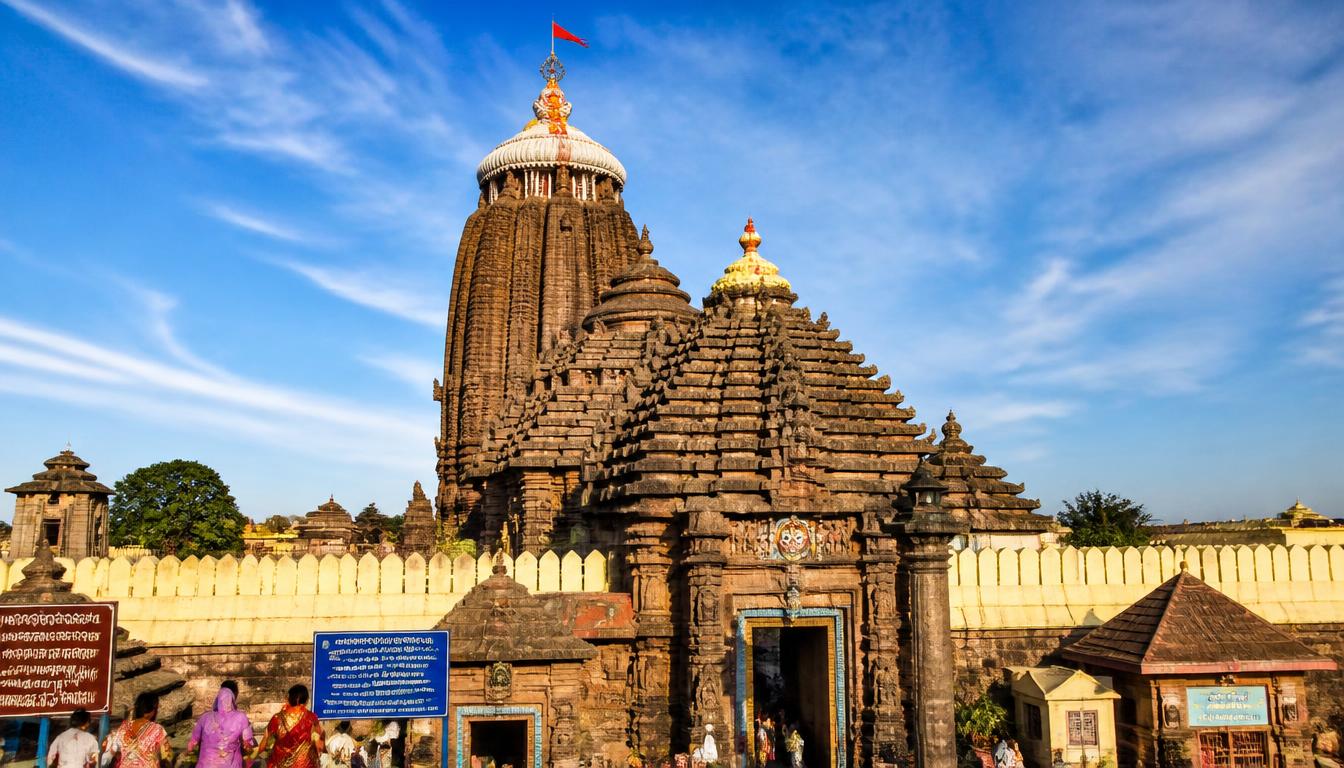
There are some places where a clock feels almost too ordinary. You look at the hands, you count the minutes, you worry about reaching before the gate closesband then you stand before Lord Jagannath, and somehow the whole business of time becomes softer.
That is one of the strange, beautiful feelings associated with a visit to Jagannath Temple Puri, where devotion, ritual and daily life have been moving together for centuries, more or less like an old song everybody already knows.
If you are searching for Jagannath Temple Puri timings today, especially for Tuesday, September 8, 2026, there is one important thing to understand first: the temple does not operate like an ordinary tourist attraction with one simple “open” and “closed” timetable.
The day is organised around nitis, or sacred rituals, and public darshan may pause while particular ceremonies are taking place.
Published schedules also vary slightly between sources, so visitors should treat individual ritual times as approximate and confirm the day’s arrangements with the Shree Jagannath Temple Administration (SJTA) before travelling. templetimings.org+1
For ordinary planning, many current visitor guides describe morning access from roughly 5:30 AM and evening access after the afternoon ritual interval, with the final rituals continuing late into the night.
The temple’s ritual day itself begins earlier, around 5:00 AM, with Dwaraphita and Mangala Alati, while the closing or Pahuda process takes place late at night. Shree Jagannath Puri+1
The short answer is: arrive early if you want the atmosphere of the morning, but don’t assume that arriving at the gate means you will immediately receive uninterrupted darshan.
The Jagannath Temple Puri timings today are shaped by the sequence of worship inside the temple, and those rituals can change the flow of visitors.
It is a little less “museum opening hours” and a lot more “the Lord has His daily routine too,” which is actually a lovely way of looking at it.
A published schedule checked in September 2026 lists the opening ritual, Dwaraphita, around 4:30 AM, followed by Mangala Alati around 5:30 AM, while another established reference based on the temple’s Record of Rights gives Dwaraphita and Mangala Alati at about 5:00 AM.
This difference is precisely why travellers should not build a tight train or flight connection around a single internet-listed minute. templetimings.org+1
For a practical visit, think in broad windows rather than promising yourself, “I must see darshan at exactly 7:13 AM.” Morning is generally the most spiritually energetic period, while evening offers another
beautiful opportunity after the afternoon sequence of rituals. Festival days, special rituals and delays can alter the normal rhythm, sometimes quite a bit.
The Jagannath Temple opening time is commonly described as being around 5:00 AM, although the ceremonial opening of the sanctum may be listed slightly earlier or later depending on the source and the day’s ritual circumstances.
The important distinction is between the opening of the sacred inner areas for ritual purposes and the periods when visitors can actually receive public darshan. templetimings.org+1
Similarly, the Jagannath Temple closing time should not be understood as a rigid tourist-office closing bell. The final nighttime rituals include Badasinghar Dhupa, followed by Khataseja Lagi and Pahuda, when the deities are ceremonially put to rest.
A current published schedule places this final closure around 11:30 PM, although ritual timings can move according to the day’s circumstances. templetimings.org+1
So, if someone asks, “What time does Jagannath Temple Puri close?”, the useful answer is that the temple’s ritual day runs very late, but public access is governed by the nitis happening throughout
the day. Don’t arrive at 10:59 PM expecting a peaceful last-minute darshan; temple timings don’t quite work like a shopping mall, thankfully.
The morning at Shree Jagannath Temple has a character all its own. Before the streets become busy with Hindu pilgrims, the temple’s sacred routine is already underway.
The first major sequence begins with Dwaraphita, the ceremonial opening of the doors, followed by Mangala Alati, when lamps are offered to the deities.
After this comes Mailam, involving the changing of the deities’ previous night’s attire and decorations. Tadapa Lagi, Abakasha, dressing and other preparations follow as the Divine TrinitJagannath, Balabhadra and Subhadra are prepared for the day.
These are not merely events arranged for visitors; they form the living ritual structure of the temple. Shree Jagannath Puri+1
One particularly interesting period is Sahana Mela, traditionally associated with an opportunity for devotees to have closer darshan without touching the deities. Some sources place this around the early morning hours, although the precise timing can change with the day’s ritual sequence.
If this is the particular experience you are travelling for, checking locally on the morning itself is wise, because a beautiful pilgrimage can become a rather stressful one when planned down to the last 5 minutes.
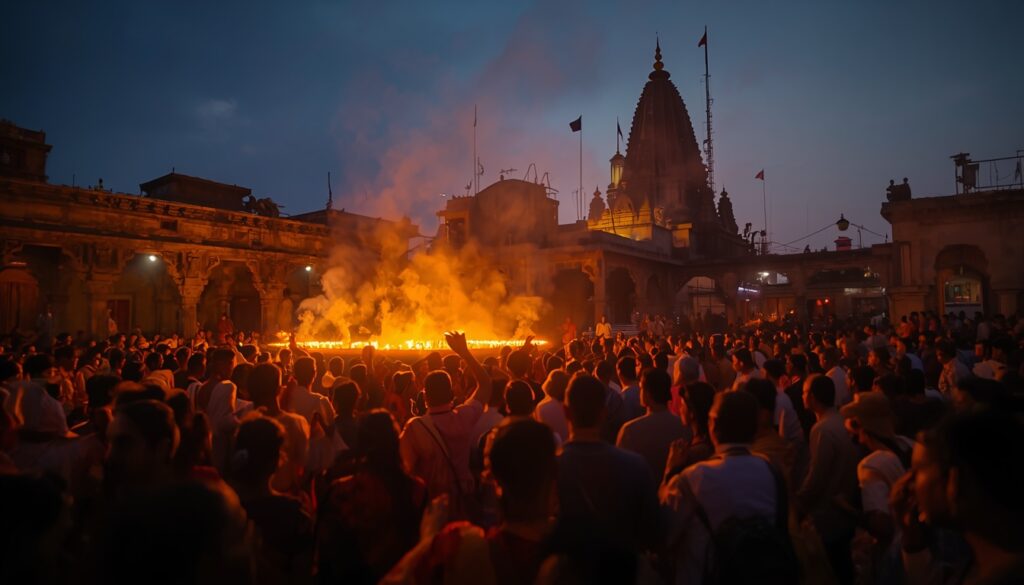
The Jagannath Temple evening darshan carries a different mood. By late afternoon, Puri has developed that particular combination of temple bells, footsteps, roadside conversations, flowers, incense and tired pilgrims who still somehow look happier than when they arrived.
A commonly published ritual sequence places Sandhya Alati around 6:00 PM, followed by Sandhya Dhupa from approximately 6:30 PM to 8:00 PM.
Other guides list slightly different times, which again reflects the fact that the ritual schedule is not simply a public transport timetable. templetimings.org+1
The evening is especially appealing if you have already spent the morning exploring Puri, Odisha and don’t want to rush straight into the temple at dawn.
Still, keep some flexibility. During important occasions or when earlier ceremonies run late, later darshan can shift as well.
Understanding the Jagannath Temple daily schedule makes the visit much more meaningful. Instead of seeing a queue and wondering why everybody has suddenly stopped moving, you begin to recognise that something sacred is happening behind the scenes.
The following is a useful approximate guide compiled from published ritual schedules; it should not be treated as a guaranteed timetable for every date:
Notice the wording “approximately.” It matters here, quite a lot actually.
One of the most common mistakes visitors make is thinking that because the temple is “open,” continuous darshan is guaranteed. It isn’t. The temple’s daily ceremonies take priority, and certain rituals can temporarily interrupt or modify public viewing.
For example, Sakala Dhupa, Madhyanha Dhupa, Sandhya Alati, Badasinghar and other ceremonies involve worship, offerings, dressing or preparation of the deities. During such periods, devotees may have to wait until the relevant ritual is completed. templetimings.org+1
This is also why you may find different websites quoting apparently conflicting Jagannath Temple darshan timings. One source may be describing ritual time, another public access, and another a general tourist window. They’re not always talking about the exact same thing, even though the wording makes it seem so.
The spiritual heart of the temple is the worship of Lord Jagannath together with Balabhadra and Subhadra. Jagannath is widely associated with Krishna and Vishnu, and Puri occupies an extraordinary position in Hindu pilgrimage as one of the Char Dham destinations.
What makes the tradition particularly human is the way the deities are treated through the daily cycle: awakened, dressed, offered food, adorned, and finally prepared for rest.
The temple rituals therefore feel less like a single ceremony and more like an entire day lived in devotion. Historical descriptions of the temple’s nitis similarly explain that these rites continue from early morning toward midnight. Lord Jagannath+1
For many devotees, that is the emotional centre of the visit. You are not merely looking at a deity; you are entering a place where an old sacred rhythm is still being performed, every day, by generations of servitors / sevaits. It can feel very intimate even inside a huge pilgrimage centre.
Visitors should also understand that Jagannath Temple entry rules are different from those of an ordinary monument. Traditional temple-entry regulations apply, and the temple is specifically a Hindu place of worship.
It is therefore essential to respect the current rules concerning who may enter the temple complex and which areas are accessible to visitors.
The SJTA and local authorities are the appropriate sources for current instructions because rules and arrangements can be revised.
Do not rely on a random social-media post from three years ago just because it has a dramatic thumbnail and 47,000 likes. Pilgrimage deserves slightly better research than that.
Inside, expect crowds, queues and periods of waiting. Photography and personal belongings may be subject to restrictions, so avoid assuming that the rules are identical to those at other Indian tourist attractions.
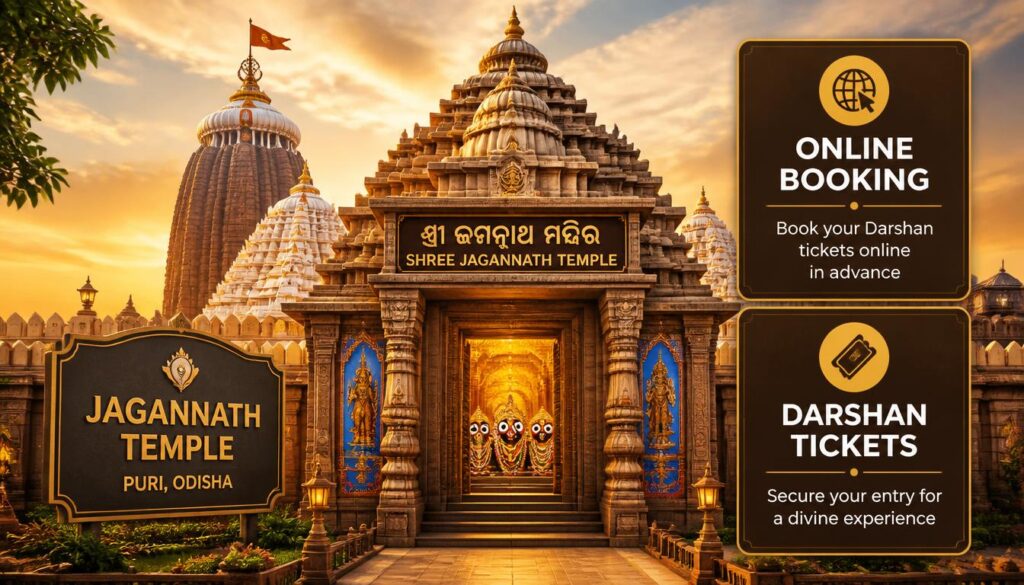
People often search for Jagannath Temple online booking, Jagannath Temple tickets, darshan tickets, or an “online darshan pass.” This can be confusing because not every online service using the temple’s name is an official temple facility.
For current official information, visitors should look for the Shree Jagannath Temple Administration (SJTA) and its authorised channels rather than paying a third-party website that happens to use “Jagannath” in its domain name.
The temple administration’s official portal is commonly identified as shreejagannatha.in, although the site was not reliably accessible during this check, so current booking arrangements should be verified before payment.
Where any authorised service requires pilgrim details, identity verification, mobile OTP or documents such as Aadhaar, Voter ID or Passport, follow the instructions shown on the official platform at the time of booking. Don’t send identity documents to an unverified agent just because somebody promises a “VIP darshan” in ten minutes.
A pilgrimage to Puri has another delicious chapter, and yes, delicious is a perfectly respectable spiritual adjective here. Mahaprasad is one of the most distinctive traditions associated with the temple, and Ananda Bazaar is the famous area where devotees can obtain the sacred food.
Traditional descriptions explain that temple food is prepared in earthen pots and cooked over traditional hearths. Offerings can include rice, dal, vegetables, cakes and sweets. Once the food has undergone the required offering process, it becomes Mahaprasad and is regarded as sacred. Jagannath Temple Puri
The idea of Abadha, or the sacred cooked food associated with Jagannath tradition, has a warmth that goes beyond simply eating after a temple visit.
Families may share it, visitors may carry dry preparations home, and the meal becomes part of the memory of Puri. There is something wonderfully uncomplicated about that: pray, wait, eat, share.
If your main priority is avoiding the biggest crowds, there is no magical hour that guarantees an empty temple. Rath Yatra, major festivals, auspicious Hindu-calendar dates and special rituals can bring enormous numbers of devotees.
On an ordinary day, an early morning visit can be rewarding because the temple day is beginning and the atmosphere has a distinctive devotional intensity.
Evening can also be beautiful, especially around Sandhya Alati, but it may be busy and ritual pauses can affect the pace.
For families, elderly visitors or anyone travelling on a strict itinerary, the best strategy is not simply “go at 5 AM.” Instead, leave generous time for queues and unexpected changes.
The temple’s own rhythm is more important than your Google Maps ETA, and Google Maps has never once had to wait for a sevayat to complete a centuries-old ritual.
The normal schedule can change dramatically during major celebrations. The Rath Yatra, Snana Yatra, Bahuda Yatra, Anasara period and other events follow the Hindu calendar, and their arrangements are not comparable to an ordinary weekday visit.
During Rath Yatra, the famous chariots including Nandighosh, associated with Lord Jagannath transform the experience of Puri itself. Streets fill with devotees, the movement of the deities becomes the centre of public life, and ordinary temple-visit assumptions can become useless very quickly.
Snana Purnima, associated with the ceremonial bathing of the deities, also forms part of this larger annual ritual cycle. Following it, the Anasara period has its own religious significance and changes the normal pattern of public darshan. For festival dates, always consult current official announcements rather than an old calendar page.
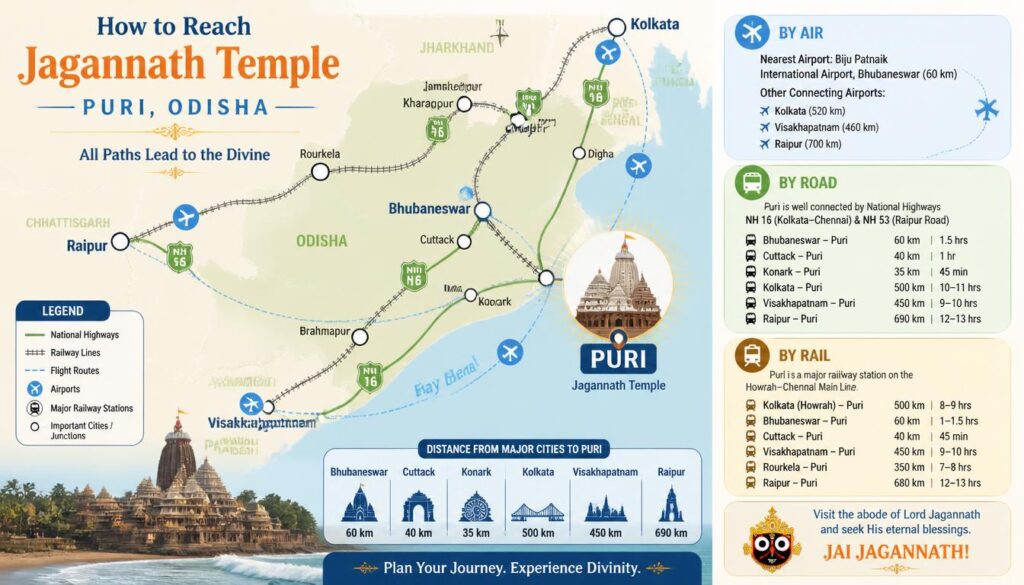
The temple is situated in the heart of Puri on the Grand Road, commonly written as Jagannath Temple, Grand Road, Puri, Odisha 752001. Puri is well connected with other parts of Odisha and eastern India by rail and road, making the pilgrimage relatively straightforward for domestic travellers.
The nearest major airport option is Biju Patnaik International Airport in Bhubaneswar, followed by road or rail travel toward Puri. Puri railway station is an important arrival point for pilgrims, while buses, taxis and local transport connect the railway area with the temple district.
Accommodation ranges from modest pilgrim lodgings to hotels near the temple and along the beach side. During Rath Yatra and other major festivals, rooms can disappear surprisingly fast,
so advance planning isn’t merely a nice idea it is the difference between a peaceful pilgrimage and an afternoon spent asking twelve hotels the same tired question.
A few small preparations can save a surprising amount of stress:
Read more: https://templetimingsdaily.com/dhanteras-2026/
Puri Jagannath Temple generally opens at 5:00 AM and closes around 12:00 AM (midnight). Timings can vary on festival days and during special rituals.
The temple usually remains open from 5:00 AM to midnight, with morning darshan and evening darshan sessions throughout the day.
Puri Jagannath Temple typically opens at 5:00 AM and closes at 12:00 AM. The afternoon period may have a temporary closure for rituals and temple activities.
Tomorrow’s regular schedule is generally 5:00 AM to 12:00 AM, but darshan timings may change due to festivals, special rituals, or temple administration decisions.
The usual closing time of Jagannath Temple Puri is 12:00 AM (midnight). Visitors should confirm the day’s schedule before visiting, especially during festivals.
The most useful way to approach Jagannath Temple Puri timings today is with a little preparation and a little humility. Know the broad schedule.
Check the latest temple instructions. Arrive with enough time. And then, when the crowd moves slowly or a ritual takes longer than expected, resist the urge to think that the day has gone wrong.
Perhaps that pause is part of the pilgrimage.
The Shree Jagannath Temple is not simply a Hindu temple where visitors enter, look around and leave. It is a living centre of worship in Puri, Odisha, connected through Lord
Jagannath, Balabhadra and Subhadra to a vast world of ritual, food, festivals, service and devotion. Its place within the Char Dham tradition gives it immense importance,
but the temple’s deepest charm can be found in smaller moments the sound of a bell, the smell of incense, the patient movement of pilgrims, a serving of Mahaprasad shared between strangers.
And perhaps that is the best travel tip of all: keep your watch, certainly, but don’t let it become the boss of your pilgrimage.
For Tuesday, September 8, 2026, use the published times above only as a planning guide, because daily nitis can shift. For the most dependable same-day information, confirm with the Shree Jagannath Temple Administration (SJTA) or its authorised local channels before setting out. templetimings.org+1
If you have visited Puri yourself, share your favourite darshan experience, the time you found most peaceful, or your Mahaprasad memory. Sometimes the most useful temple guide isn’t a timetable at all it is one pilgrim telling another, “Go early, keep some patience, and let Jagannath’s day unfold.”