Physical Address
304 North Cardinal St.
Dorchester Center, MA 02124
Physical Address
304 North Cardinal St.
Dorchester Center, MA 02124

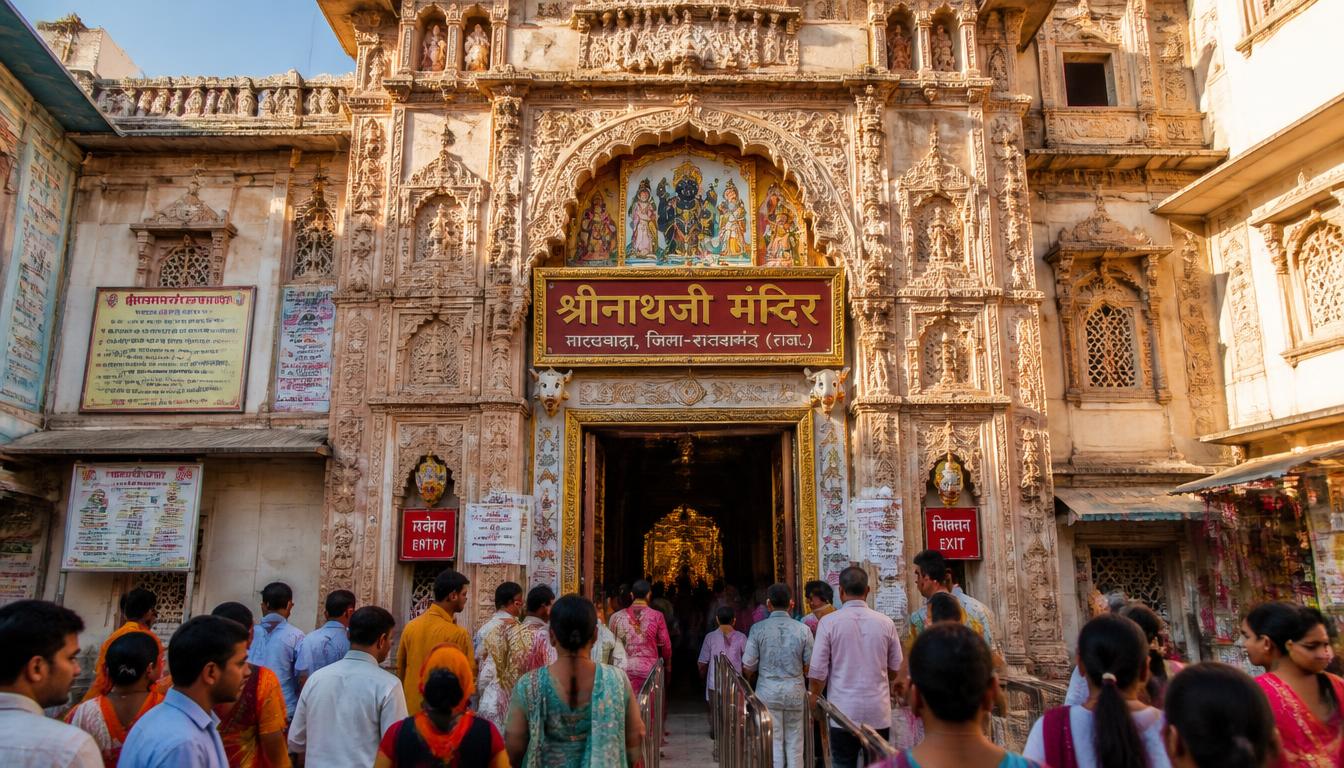
There are some temple visits that feel less like a trip and more like answering a quiet call from somewhere inside. A journey to Shrinathji Temple Nathdwara is often like that.
You may arrive in Nathdwara thinking only about darshan, but once the temple bells, devotional singing, decorated doors, and fragrance of sacred offerings surround you, the clock suddenly feels a little less important.
If you are searching for Shrinathji Temple Nathdwara timings today, there is one important thing to understand first: Shrinathji darshan does not work like a normal temple that simply stays open continuously from morning until night.
The day is divided into different darshan or jhanki sessions, and the schedule can change according to festivals, Pushtimarg traditions, special seva, bhog and temple arrangements.
The official temple website itself publishes changing daily darshan information, so checking the latest schedule before leaving is always a smart idea.
For Wednesday, September 2, 2026, the official website is showing a daily darshan schedule, with Rajbhog darshan listed from 11:15 AM to 11:55 AM at the time of checking.
This is a useful reminder that today’s timings should be checked directly rather than relying blindly on an old timetable.
If you are standing in your hotel room right now, wondering whether to leave immediately or have one more cup of chai, the broad schedule can help you plan.
The temple’s official visitor information gives approximate daily windows such as Mangla around 5:30–6:30 AM, Rajbhog around 11:00 AM–12:00 PM, and Bhog-Aarti around 5:00–6:00 PM. These are approximate timings, not a guarantee for every calendar day.
The official live information is even more useful because it can show the particular day’s active darshan. On September 2, the temple website was displaying Rajbhog from 11:15 AM to 11:55 AM, showing why visitors should verify the day’s schedule before setting out.
Important: The times below should be treated as a planning guide. Festival days, special rituals, bhog, shringar and temple administration decisions can change the actual schedule.
| Darshan | Approximate timing |
|---|---|
| Mangla Darshan | Around 5:30–6:30 AM |
| Shringar Darshan | Morning |
| Gwaal Darshan | Morning |
| Rajbhog Darshan | Around 11:00 AM–12:00 PM |
| Utthapan Darshan | Afternoon |
| Bhog Darshan | Late afternoon/evening |
| Aarti | Evening |
| Shayan Darshan | Night |
The temple’s official material describes these as the eight principal manifestations or daily darshans, while historical administrative information also makes clear that timings are tentative and can shift according to utsava, bhog and shringar arrangements.
The question sounds simple, but Shrinathji Temple opening time needs a slightly different answer because the temple follows scheduled darshan sessions.
The official visitor page gives Mangla approximately from 5:30 AM to 6:30 AM, making the early morning session one of the first opportunities for Lord Shrinathji darshan.
Mangla is especially meaningful in the Pushtimarg tradition because it represents the auspicious beginning of the Lord’s daily routine.
The official temple’s Mangla page calls it the first darshan of the day and explains the significance of beginning the day with the glimpse of the Lord.
So, if your plan is morning darshan, don’t think of 5:30 AM as merely a gate-opening time. It is connected with a particular devotional ritual, and arriving early gives you a better chance of being prepared before the darshan window begins.
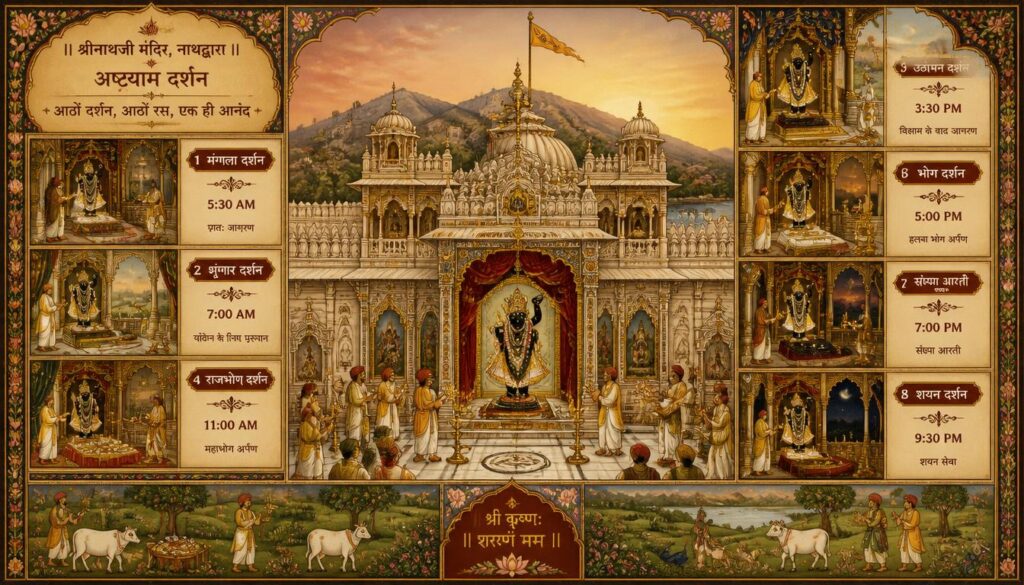
One of the most beautiful things about the Nathdwara tradition is that Ashtayama darshan divides the Lord’s day into eight devotional appearances. Each session has its own character, rather than being simply another opening of the temple doors.
Mangla is the first darshan. The morning atmosphere around Nathdwara can feel almost unreal at this hour, especially when devotees gather quietly before the day’s noise properly begins.
The official visitor page currently gives an approximate Mangla window of 5:30 AM to 6:30 AM, although the exact daily time may vary.
Shringar is associated with the beautiful dressing and adornment of Shrinathji. The deity is prepared in devotional attire, and this darshan carries a different mood from the early Mangla appearance.
Older official schedules have placed Shringar in the morning, but visitors should not assume an identical time throughout the year because seasonal and festival arrangements can affect the schedule.
Gwaal follows the morning devotional routine. Its name and tradition connect with Krishna’s pastoral identity, which is one reason the Nathdwara experience feels deeply connected with the stories of Lord Krishna rather than only formal temple worship.
For visitors, the practical lesson is simple: don’t calculate your arrival using an old internet timetable down to the last minute. Darshan windows are living schedules.
Rajbhog is one of the most significant sessions of the day because it is connected with the principal food offering to the deity. The official Shrinathji Temple website was displaying Rajbhog from 11:15 AM to 11:55 AM on September 2, 2026 when checked.
This is exactly why searches for Shrinathji Temple darshan time sometimes produce conflicting answers. One source may show a general approximate schedule, while the temple’s own daily page may show a particular day’s shorter window.
After the afternoon interval, Utthapan marks the Lord’s reappearance. The word itself relates to awakening or rising, and it gives the daily cycle a sense of continuity.
If you miss the morning sessions, this afternoon darshan can become a practical option, but again, check the day’s live schedule before heading toward the temple.
The Bhog session is another moment connected with sacred food offerings. The temple’s visitor information gives an approximate Bhog-Aarti window of 5:00 PM to 6:00 PM.
For a traveller, evening sessions can also be easier because the harsh afternoon heat has eased a little. But on crowded days, that convenience can disappear quickly.
The evening Aarti is one of those moments when the atmosphere changes almost without warning. Lamps, devotional singing and the gathered devotees create a scene that feels very different from a regular sightseeing stop.
If attending Aarti is important to you, plan to arrive well before the expected session rather than trying to enter exactly at the advertised minute.
Shayan is the final daily darshan and is associated with the Lord’s night rest. It completes the eight-part devotional cycle.
The exact closing time should not be assumed from generic online pages because the temple’s daily schedule can shift. In other words, the Shrinathji Temple closing time is better understood through the final darshan schedule for that particular day.
This is probably the most useful thing to know before visiting. A timetable printed on an old travel blog is not necessarily the timetable you will experience when you reach Nathdwara.
The official temple information explains that daily darshan timings are tentative and are adjusted according to different bhog, shringar, festivals and utsava arrangements.
During major occasions such as Janmashtami, Annakut, Govardhan Puja, Diwali, Holi or Sharad Purnima, the devotional calendar becomes much more elaborate.
Special rituals may change normal darshan windows, and sometimes the atmosphere around the temple becomes extremely crowded.
That is why the phrase Shrinathji Temple today should always mean “what is today’s official schedule?” rather than “what did the timetable say last year?”
There isn’t one universally perfect time. The best time depends on what you actually want from the visit.
If your priority is experiencing the beginning of the devotional day, Mangla darshan is special. You will need to wake early, though, and yes, very early. But there is something memorable about seeing Nathdwara before the town fully wakes up.
If you want a later visit, Rajbhog is an important option. The midday session is closely connected with the principal food offering and has a distinctive spiritual atmosphere.
For visitors who prefer evening worship, Bhog-Aarti or another evening session can be a beautiful choice. The lamps and devotional environment can make the experience feel warmer, almost like the town itself is settling into prayer.
Timing is only half the planning. The other half is the crowd.
A short darshan window can attract a large number of devotees, particularly during weekends, holidays and festivals. Reaching Nathdwara shortly before the darshan begins may sound efficient, but in reality it can leave you rushing through streets, queues and security arrangements.
Give yourself extra time.
The official temple website also provides information about special access through Shriji Cards, including a special entry arrangement and benefits related to avoiding long queues for eligible card holders.
Don’t confuse special access arrangements with a guarantee of immediate darshan, however. Temple procedures can change, and visitors should follow instructions from temple authorities.
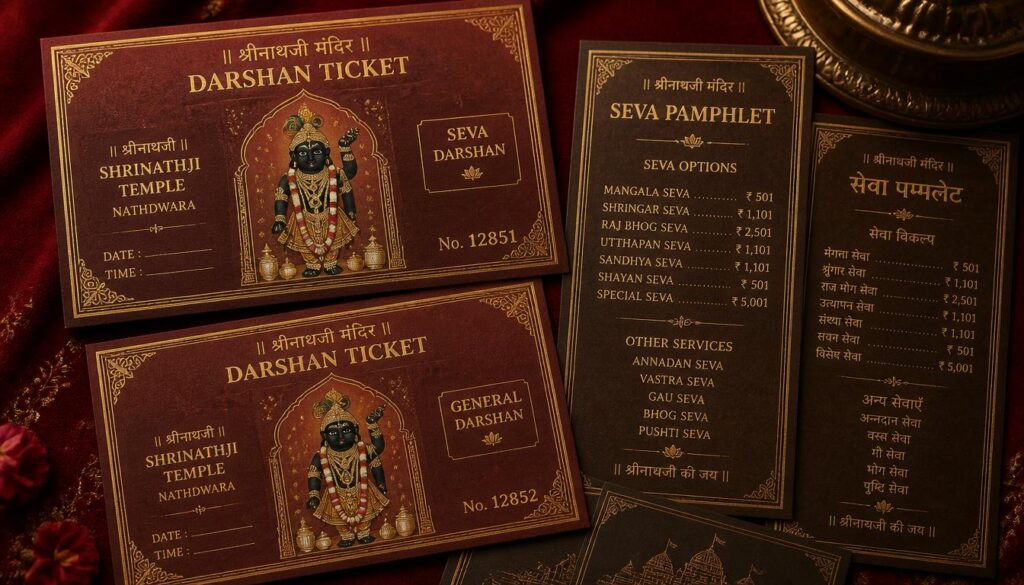
Many visitors search for Shrinathji darshan tickets, Shrinathji seva booking, or Shrinathji Temple darshan registration before travelling.
The official website provides online account facilities connected with darshan bookings, seva-related services, manorath and other temple functions.
For special seva, it is particularly important to use official channels rather than trusting random social-media pages or people promising guaranteed access. Temple-related arrangements can involve specific rules, receipts and registration procedures.
The official manorath information, for example, states that online manorath participants should bring a printed receipt and that changes or cancellations may be restricted after submission.
The spiritual identity of Nathdwara is strongly connected with Pushtimarg Vaishnavism, a devotional tradition associated with Vallabhacharya.
The temple is often described as a haveli-style temple, and the worship of Shrinathji follows a daily routine that resembles caring for a beloved divine child or royal household.
That is why you encounter terms such as Mangla, Shringar, Gwaal, Rajbhog, Utthapan, Bhog, Aarti and Shayan rather than one single daily puja period.
The official temple website itself gives extensive information about Pushtimarg, Vallabhacharya, darshan seva and the eight darshan forms.
This perspective makes the schedule much easier to understand. You’re not merely waiting for a door to open. You are witnessing different moments in a devotional day.
If you are travelling around Krishna Janmashtami, Annakut, Govardhan Puja, Diwali, Holi or Sharad Purnima, do not plan your journey using the ordinary daily timetable.
Festivals can bring additional seva, special bhog, elaborate shringar and larger crowds. The temple’s official site maintains calendar and festival information, while its daily darshan section is the better place to check the actual current schedule.
This matters especially around Janmashtami, when Nathdwara becomes part of the wider celebration of Krishna’s birthday. What is normally a short darshan schedule can become a much more complicated visitor experience during major celebrations.
A temple visit is not the moment to treat the sacred space like a tourist attraction. Dress respectfully and follow the instructions provided by temple staff.
Visitors should also remember that rules concerning photography, entry, queues, belongings and special access can vary. Rather than relying on something a stranger told you at a tea stall, listen to the temple authorities when you arrive.
And keep your plan flexible. If one darshan is missed, don’t let the whole visit become stressful. Nathdwara has multiple daily sessions, and the devotional experience is bigger than one particular minute on your watch.
Food has a beautiful place in the Pushtimarg tradition. Bhog, Prasadam, Panchamrit, Chhappan Bhog and other sacred offerings are closely connected with worship.
The idea of offering food before receiving it as Prasad turns an ordinary meal into something devotional. In Nathdwara, this relationship between seva, bhog and darshan is part of what makes the temple culture so distinctive.
During festivals, the scale can become extraordinary, especially with traditions associated with Chhappan Bhog and Annakut. It is not simply decoration for visitors; it belongs to the ritual and cultural life of the temple.
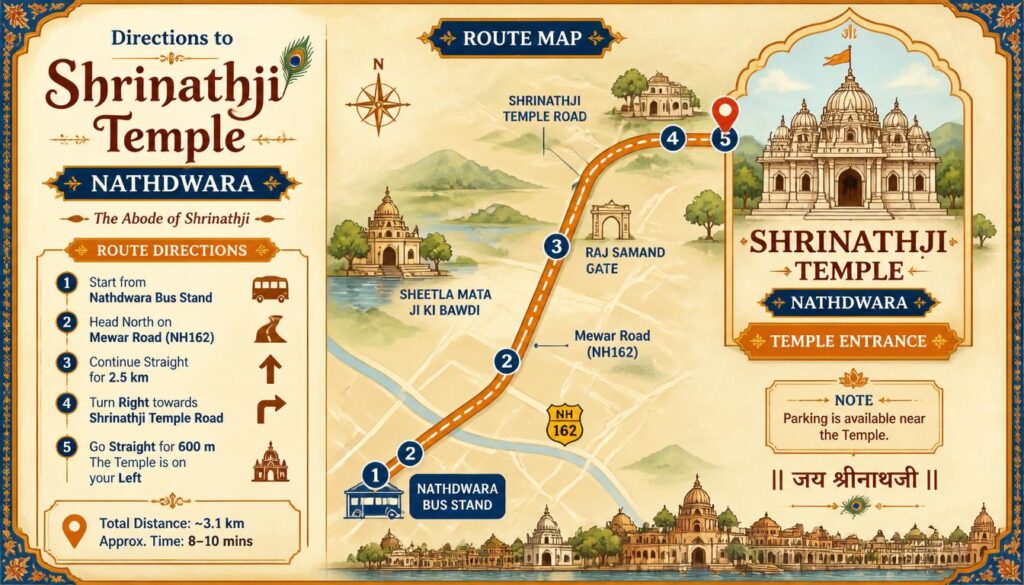
Nathdwara, Rajasthan, is located in the Rajsamand region and is well known as a major pilgrimage destination connected with Shrinathji.
If you are travelling from another city, plan the final part of the journey carefully. Reaching Nathdwara is one thing; reaching the temple area with enough time before your chosen darshan is another thing entirely.
You can also consider accommodation near Shrinathji Temple if your selected darshan is early morning. The official temple website lists accommodation options and reservation facilities for pilgrims, including temple-board-associated properties.
Staying nearby can save you from a very sleepy early-morning drive, which is not a small benefit when Mangla darshan is your goal.
Keep a screenshot or written copy of the Shrinathji Temple schedule before leaving your accommodation, but verify it against the official website because the daily schedule can change.
Arrive early enough to account for walking, queues and entry procedures. Ten minutes may feel like plenty of time on Google Maps; inside a busy pilgrimage town, ten minutes can evaporate rather impressively.
If you’re travelling with elderly family members or children, give yourself even more time and avoid making the itinerary so tight that one delayed darshan ruins the whole day.
And most importantly, keep patience. A pilgrimage is not supposed to feel like catching a flight.
The official website provides daily darshan information that can change by date. On September 2, 2026, it was showing Rajbhog from 11:15 AM to 11:55 AM when checked.
The approximate Mangla session begins around 5:30 AM, according to the temple’s current visitor information. The exact daily schedule should still be verified before travelling.
The official visitor page currently lists Mangla approximately from 5:30 AM to 6:30 AM. Exact timings may change according to the daily schedule.
For September 2, 2026, the official Shrinathji Temple website was displaying 11:15 AM to 11:55 AM for Rajbhog at the time checked.
The eight daily darshans are Mangla, Shringar, Gwaal, Rajbhog, Utthapan, Bhog, Aarti and Shayan. Together they form the daily Ashtayama darshan cycle.
Yes. The official temple’s administrative information says daily darshan timings are tentative and can be adjusted for bhog, shringar and special utsava arrangements.
No. Darshan takes place in separate sessions, with breaks between them. This is one of the biggest differences between visiting Shrinathji and visiting a temple with continuous general opening hours.
Read more: https://templetimingsdaily.com/onam-2026/
A visit to Shrinathji Temple, Nathdwara, Rajasthan becomes much easier when you stop thinking of the temple as a building that is simply “open” or “closed.” The day has a rhythm of its own: awakening, dressing, offering food, resting, returning, worshipping and finally preparing for the night.
That rhythm is the heart of Pushtimarg devotion.
If you are planning your Nathdwara Shrinathji darshan, use the approximate timings in this guide for orientation, but always verify the official daily schedule immediately before travelling.
The temple itself shows changing darshan information, and September 2, 2026 is a good example of why a generic timetable should not be treated as an absolute promise.
And perhaps that is the nicest part of the journey. You may arrive with a carefully planned itinerary, phone charged, bags packed and every minute calculated. Then a temple bell rings, the crowd becomes quiet for a moment, and suddenly the whole schedule feels very small.