Physical Address
304 North Cardinal St.
Dorchester Center, MA 02124
Physical Address
304 North Cardinal St.
Dorchester Center, MA 02124

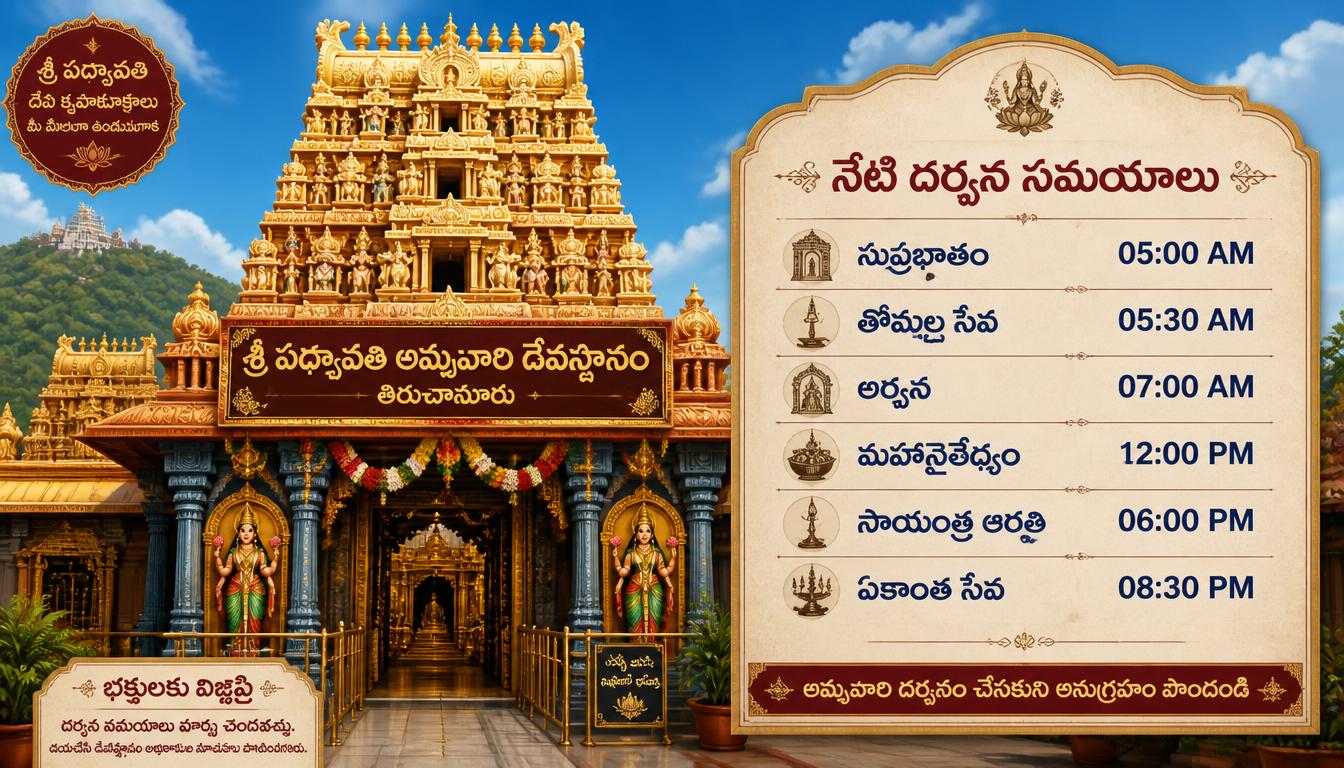
Visiting a temple often begins much before reaching its entrance. You check the road, think about the darshan, plan the morning, and quietly wonder whether you will reach before the doors close. For devotees planning a visit to Kadiri, knowing the Kadiri Narasimha Swamy Temple Timings Today can make the whole experience calmer and more meaningful.
The Kadiri Narasimha Swamy Temple is a revered Hindu temple in Kadiri, Anantapur District, Andhra Pradesh, dedicated to Lord Narasimha. Devotees and pilgrims visit the shrine for darshan, prayer, puja, seva and other sacred rituals. The temple feels especially peaceful during the early hours, when the day is still soft and the first visitors begin arriving.
According to the provided daily schedule, the temple generally opens at 5:00 AM and remains open until 9:00 PM. The main darshan periods are listed as 5:00 AM to 1:00 PM in the morning and 4:00 PM to 9:00 PM in the evening. Because temple schedules can change during festivals or special occasions, visitors should confirm the day’s schedule before travelling.
The reported Kadiri temple timings provide two main visiting periods, with an afternoon break. The temple opens early at 5:00 AM, allowing devotees to begin their prayers soon after the morning rituals start.
The general daily schedule is:
This split schedule is useful to remember if you are travelling from another town. Reaching during the afternoon closure could mean waiting for several hours, which isn’t ideal after a long journey.
For people asking, “Is Kadiri temple open today?” the regular schedule indicates that devotees can visit during the morning and evening windows. Still, special occasions, temple administration decisions and festival arrangements may affect the normal routine.
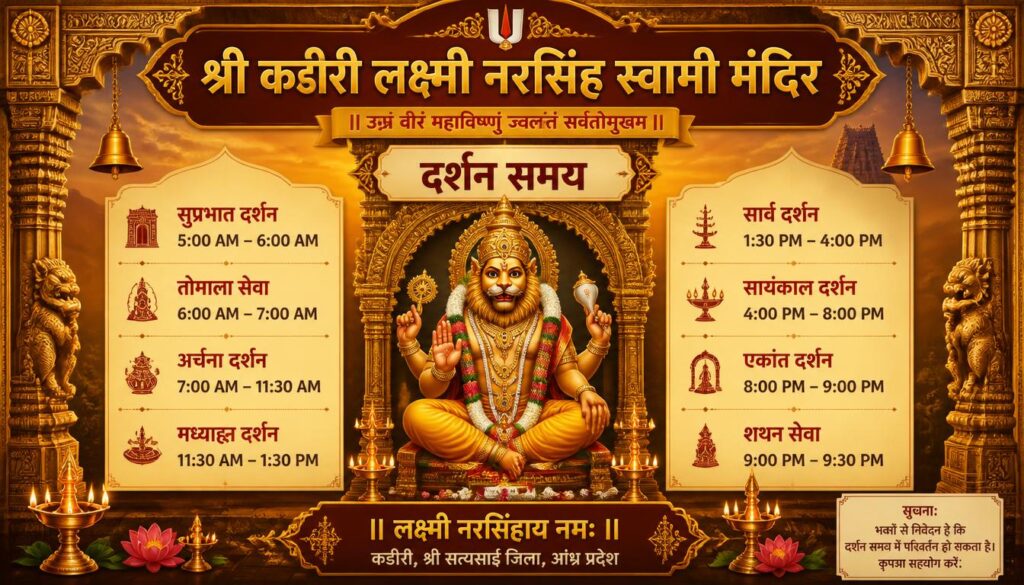
The Kadiri Narasimha Swamy Temple darshan timings are divided into morning and evening sessions. Morning darshan begins at 5:00 AM and continues until 1:00 PM, while the evening session starts at 4:00 PM and continues until 9:00 PM.
Early morning can be a particularly comfortable time for devotees who prefer a quieter temple visit. The atmosphere is different at that hour, with fewer distractions and a more traditional rhythm of worship, though crowd levels can still vary from day to day.
The evening session is another convenient option, especially for visitors who cannot reach Kadiri before noon. After the afternoon break, devotees can return for darshan from 4:00 PM onward.
If you are planning your journey around a particular puja or aarti, it is better not to treat the general darshan schedule as the exact timing of every ritual. Rituals have their own sequence, and some services may have separate arrangements.
Morning has a special place in the daily life of many Hindu temples. At Kadiri, the reported morning darshan period begins at 5:00 AM and runs until 1:00 PM.
Devotees who want to attend the first part of the day’s worship may prefer arriving early rather than coming close to the end of the morning session. Honestly, reaching a temple just before closing time can turn a peaceful visit into a little race against the clock.
The reported morning ritual schedule includes Praat Aarti at 6:00 AM and Uchikala Pooja at 12:00 PM. These timings should be treated as part of the supplied schedule and confirmed locally if they are important to your visit.
A simple morning plan could look like this:
The evening Kadiri Narasimha Swamy Temple timings begin at 4:00 PM after the afternoon break. The temple remains available for evening darshan until 9:00 PM according to the supplied daily schedule.
For families and travellers, this can be a useful visiting window. Someone arriving in Kadiri during the afternoon can have some rest, food or travel time before returning to the temple in the evening. No need to stand outside wondering what happens next.
The reported evening ritual schedule includes Sandhya Aarti at 6:30 PM and Shayan Aarti at 8:30 PM. If your main purpose is to attend a particular ritual, checking with the temple before travelling is sensible because ritual schedules may vary on special days.
A temple visit is not only about entering the shrine and leaving after darshan. For many devotees, the daily pooja timings, aarti and other rituals are the heart of the visit.
The supplied schedule mentions these ritual times:
These rituals represent different parts of the temple’s daily worship cycle. Morning worship begins the day’s devotional rhythm, while the evening rituals gradually bring the day’s temple activities toward a close.
If you are specifically travelling for an aarti, don’t rely only on a general website schedule. Temple rituals can sometimes be adjusted for festivals, special sevas or administrative arrangements, so a same-day confirmation is the safer approach.
General darshan is listed as free, while special darshan is provided in the supplied information at approximately ₹50–₹200. Actual charges can depend on the particular service or arrangement available at the temple.
The reported general darshan waiting period is around 20–60 minutes, while special darshan may take around 10–20 minutes. These are only approximate figures, however, because temple crowds are never perfectly predictable.
Weekends, festival periods and important religious occasions can attract more devotees. A queue that looks short when you arrive can suddenly become longer, particularly when groups of pilgrims reach the temple together.
If you are travelling with elderly family members or children, allowing extra time is a smart idea. A schedule with some breathing room is much better than planning every minute.
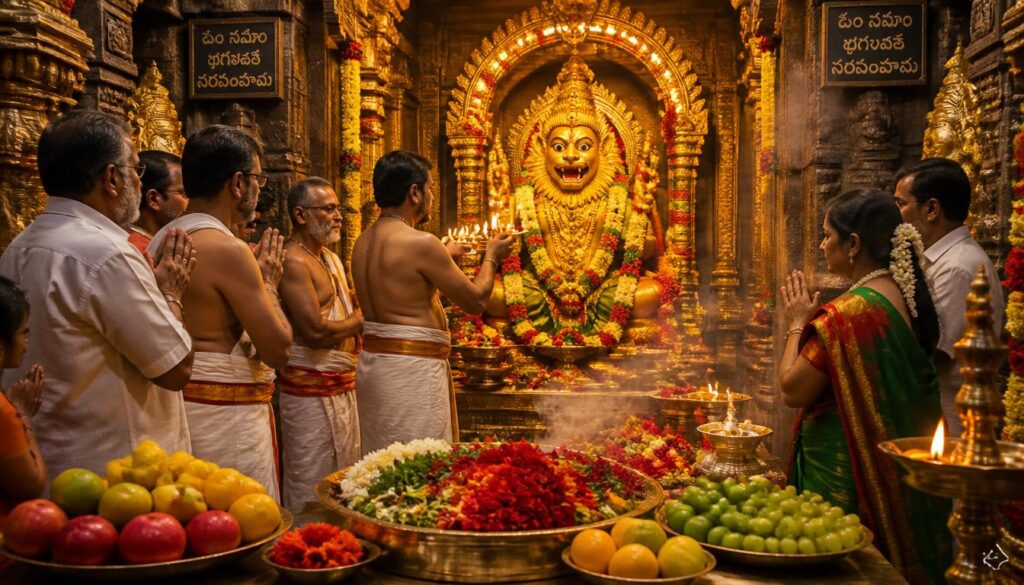
Devotees may visit the temple not only for general darshan but also for different Pujas & Sevas. These offerings allow visitors to participate in devotional activities according to the services available through the temple.
The supplied information includes Vidhyarambham, Abhishekam and Archana among the services associated with the temple.
Reported price ranges include:
Prices and availability should be confirmed before making a payment, particularly if you are travelling specifically for a seva. A service may have its own timing, registration process or capacity.
For parents seeking blessings for a child’s education, Vidhyarambham can hold particular emotional meaning. The act of beginning learning in a sacred environment is a beautiful tradition, and families may remember that small temple moment for years.
After darshan, many visitors look for temple prasadam, which is regarded as a sacred offering rather than simply something to eat. Receiving prasadam can become a small but memorable part of the temple visit.
The supplied information mentions Prasad Packets in the approximate range of ₹20–₹50. It also refers to offerings such as Vibhuti and Thulasi Theertham, depending on temple arrangements.
Availability, prices and types of prasadam can change, so visitors should check the prasadam counter on the day. If you are carrying prasadam home for family members, keeping it safely packed during the journey is a simple but useful thing to remember.
Normal daily timings may not apply exactly during major religious celebrations. Narasimha Jayanti, Annual Brahmotsavam and other important festival days can bring larger crowds, special rituals and changes in the usual temple schedule.
During a major festival, devotees may arrive much earlier than usual. The temple atmosphere can become lively and crowded, with special worship taking place throughout the day.
If your visit coincides with a festival, plan for additional travel and queue time. It is also wise to check whether special darshan, seva registration or temporary entry arrangements are being used.
For a festival visit, the question isn’t only “What time does the temple open?” You should also ask about darshan arrangements, special poojas, crowd conditions and the timing of the particular ritual you want to attend.
There isn’t one universal visiting time that suits every devotee. Someone seeking early morning worship may prefer the first hours after opening, while another visitor may find the evening session more practical.
The reported morning temple timings are from 5:00 AM to 1:00 PM, and the evening timings are from 4:00 PM to 9:00 PM. Within those windows, your ideal time can depend on your travel plans, family needs and whether you want to attend a particular ritual.
If you are visiting on a normal day, arriving with enough time before the desired darshan period is sensible. On festival days, arriving considerably earlier may help you manage the crowds.
The temple is located in Kadiri, in Anantapur District, Andhra Pradesh, India. Kadiri is connected with nearby towns and cities through road and rail networks, making it accessible to pilgrims travelling from different parts of the region.
Visitors commonly consider road travel, buses and railway connections when planning their journey. If you are coming from outside Kadiri, check the latest transport schedule before leaving because travel times can vary.
Using a current map service for the exact Kadiri Narasimha Swamy Temple location is also helpful. It can provide updated road directions and assist with finding nearby parking or accommodation.
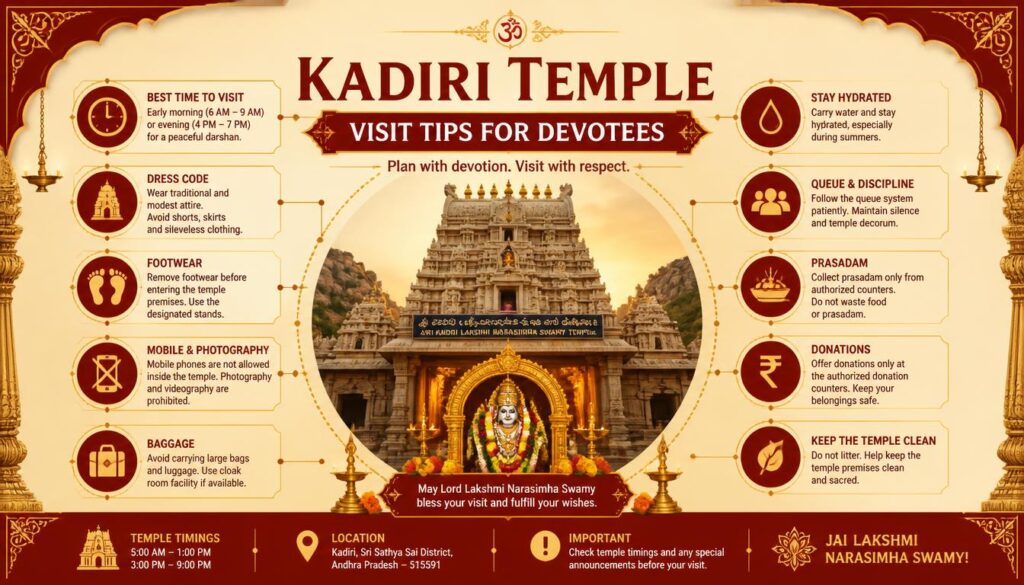
A little preparation can make a temple visit noticeably smoother. You don’t need an enormous checklist; a few practical things are usually enough.
These little preparations may sound ordinary, but they can save quite a bit of stress. A spiritual visit feels much better when you aren’t constantly checking the clock.
According to the supplied daily schedule, the Kadiri Narasimha Swamy Temple opening time is 5:00 AM. Visitors should confirm the day’s schedule if travelling for a special occasion.
The reported temple closing time is 9:00 PM. The evening darshan period is listed from 4:00 PM to 9:00 PM.
The supplied schedule lists morning darshan from 5:00 AM to 1:00 PM and evening darshan from 4:00 PM to 9:00 PM.
Yes, the provided schedule shows an afternoon closure from 1:00 PM to 4:00 PM. Visitors planning a midday trip should keep this break in mind.
The supplied information lists Praat Aarti at 6:00 AM. If attending this ritual is important, confirm the timing with the temple before travelling.
The reported Sandhya Aarti time is 6:30 PM. Festival or special-day schedules may differ.
The provided information lists General Darshan as free. Special darshan is separately listed with an approximate fee range of ₹50–₹200.
Crowds can increase during weekends, important religious occasions, Narasimha Jayanti, Brahmotsavam and other festival periods. Actual crowd levels naturally vary.
The supplied information mentions services such as Vidhyarambham, Abhishekam and Archana. Availability, timing and charges should be checked with the temple.
The simplest way to plan is to decide first what you actually want from the visit. If your purpose is ordinary darshan, either the morning or evening session can work according to the reported schedule.
If you want to attend a specific ritual, build your journey around that ritual instead of the general opening time. For example, someone interested in the 6:30 PM Sandhya Aarti should plan to arrive comfortably before the evening worship rather than reaching at the last minute.
Likewise, devotees travelling from another district should leave enough room for unexpected traffic, transport delays and queues. A temple journey should have a little breathing space in it, otherwise even a beautiful visit can feel hurried.
Knowing the Kadiri Narasimha Swamy Temple Timings Today is the first practical step toward planning a peaceful visit. The supplied regular schedule lists the temple as open from 5:00 AM to 1:00 PM in the morning and 4:00 PM to 9:00 PM in the evening, with the temple closing during the afternoon interval.
The reported daily rituals, including Praat Aarti, Uchikala Pooja, Sandhya Aarti and Shayan Aarti, add another layer to the experience for devotees who wish to participate in temple worship rather than simply complete darshan.
Most importantly, remember that a temple schedule is useful for planning, but special days can change the rhythm. Before travelling, especially for Narasimha Jayanti, Brahmotsavam, a special seva or another important occasion, verify the current arrangements.
May your visit to the Sri Narasimha Swamy Temple be peaceful, your journey comfortable, and your time in Kadiri filled with devotion and good memories. Sometimes a short temple visit stays in the heart much longer than the journey itself.