Physical Address
304 North Cardinal St.
Dorchester Center, MA 02124
Physical Address
304 North Cardinal St.
Dorchester Center, MA 02124

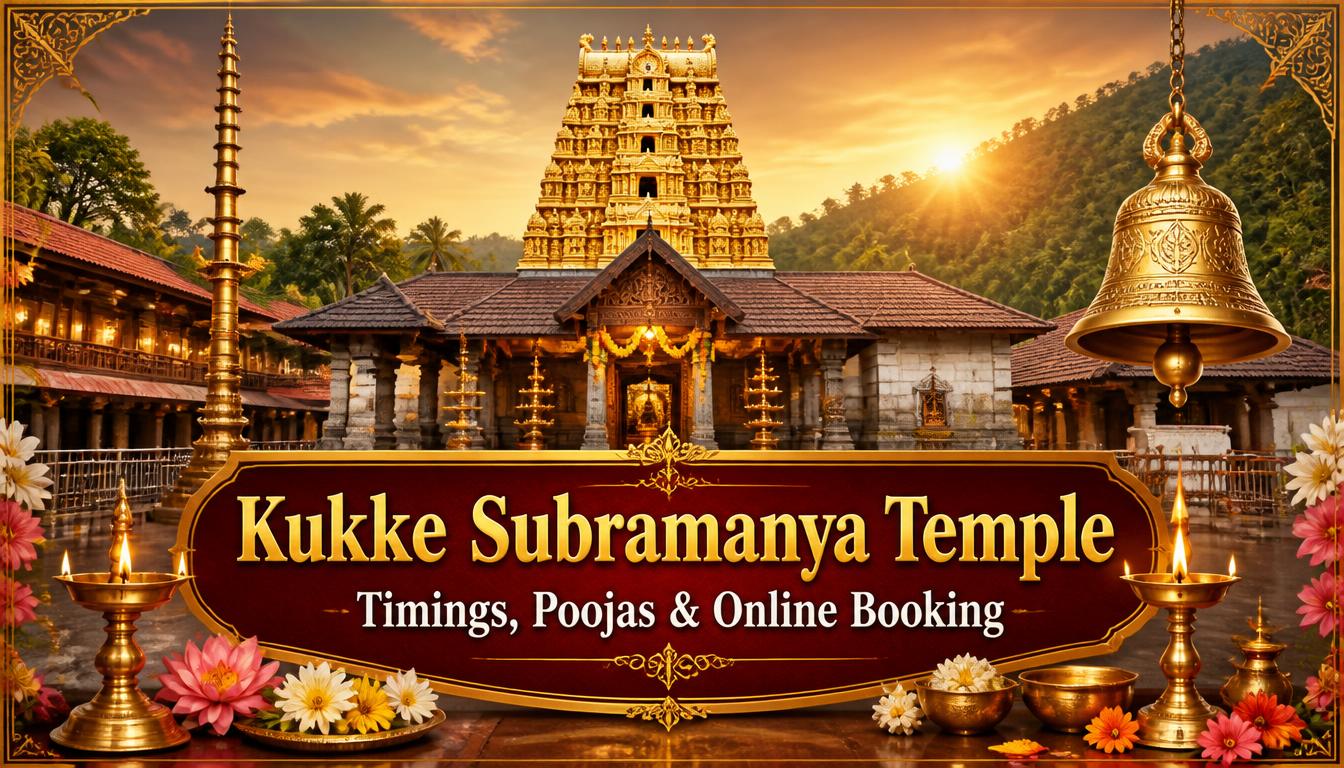
A visit to Kukke Subramanya Temple is not simply another stop on a pilgrimage route. For many devotees, the journey through the green Western Ghats of Karnataka feels like a quiet movement away from ordinary life and toward something deeply spiritual. The temple, associated with Lord Subramanya, is especially revered for Naga worship and several traditional rituals connected with serpent-related beliefs.
Before travelling, however, it is important to understand the Kukke Subramanya Temple timings, daily darshan schedule, important pooja timings, and booking process. A little planning can save a devotee from standing around unsure about reporting times or available seva slots.
This guide explains the major rituals, approximate schedules, booking information, costs mentioned for different sevas, and useful visitor details in one place.
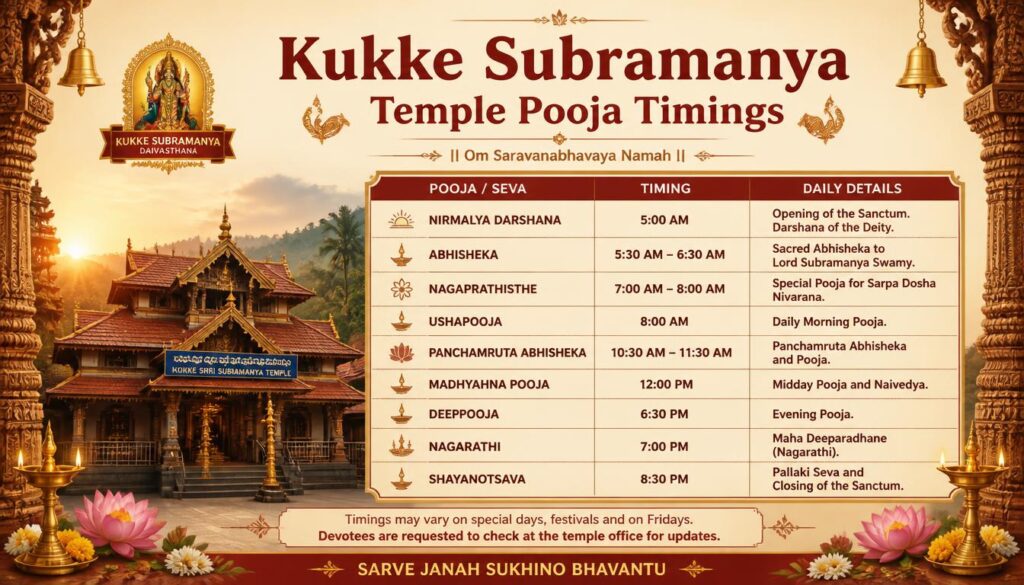
The Kukke Temple timings are particularly useful to know because the temple follows different periods for darshan and rituals during the day. Devotees who arrive early can generally plan for morning darshan, while others may choose the afternoon or evening period.
A commonly followed daily schedule is:
These timings can change during festivals, special rituals, maintenance, or particular religious occasions. So, even if your travel plan looks perfectly neat on paper, checking the latest information with the temple office before leaving is a sensible thing to do.
The quiet morning hours can also feel quite different from the busier festival periods. If your purpose is mainly Kukke Subramanya darshan, reaching early gives you more time to understand the temple surroundings without rushing.
The Kukke Temple darshan timings are important for visitors who are coming specifically to have darshan of Lord Subrahmanya, regarded here as a powerful deity associated with serpent worship.
Morning hours usually begin early, with temple rituals taking place before and around the main darshan period. Devotees may encounter a mixture of regular worship, pooja rituals, and other scheduled sevas.
The broad schedule can be understood like this:
If you are travelling for a specific seva, don’t treat the general darshan schedule as your reporting time. A ritual can have its own reporting requirements, and some ceremonies may require devotees to arrive well before the actual starting time.
The temple is particularly known for several traditional poojas and sevas. Some are associated with Naga Dosha, Sarpa Dosha, serpent worship, and other religious beliefs.
Among the better-known rituals are Sarpa Samskara Pooja, Ashlesha Bali Pooja, Naga Pratishta, Karthikeya Pooja, and Nagadevatha Archana.
The exact timing of an individual ritual may depend on the booking date, temple schedule, availability, and religious calendar. Therefore, devotees should distinguish between general temple timings and the specific reporting time printed or provided with a seva booking.
For example, a devotee may have a booking for a ritual that begins in the morning but still needs to report earlier. Missing that reporting window can create unnecessary difficulty, especially when the ritual involves several participants.
Sarpa Samskara is one of the rituals most strongly associated with the Kukke pilgrimage. Devotees who follow traditional Hindu beliefs may undertake this ceremony in connection with Sarpa Dosha, Naga Dosha, or beliefs concerning ancestral serpent-related afflictions.
The ritual is traditionally performed with the guidance of temple priests, rather than treated like an ordinary individual prayer. Its procedure can involve more than one stage, which is why devotees should carefully understand the reporting instructions before travelling.
Some commonly mentioned details include:
The commonly cited Sarpa Samskara cost in the provided information is around ₹3,200, although devotees should confirm the current fee before making travel arrangements because temple charges can change.
Ashlesha Bali is another well-known ritual associated with Kukke. It is traditionally connected with Ashlesha Nakshatra, Naga worship, and beliefs surrounding Sarpa Dosha and related astrological concerns.
The ritual is conducted in batches according to the temple’s schedule. Because of this, a devotee should not assume that arriving at any random time will allow immediate participation.
Commonly mentioned timing information includes morning ritual periods such as around 7:00 AM to 10:30 AM, while some specific schedules may differ according to the date.
The listed Ashlesha Bali cost in the supplied information ranges around ₹600 to ₹1,000, depending on the applicable arrangement or ritual category.
If you are booking this seva, keep your preferred date, devotee information, and reporting instructions ready. It is one of those situations where ten minutes of preparation beforehand can prevent an entire morning of confusion.
Naga Pratishta, also written as Naga Pratishtha or Sarpa Pratishta, is another significant ritual connected with Naga worship at Kukke.
The ceremony involves the religious installation or worship of a Naga idol or associated serpent deity representation. Devotees may approach this ritual according to their family’s traditions, religious practices, or beliefs concerning Naga Dosha.
The timing may depend on the selected date and muhurtham. For this reason, devotees should check the exact schedule instead of assuming that the ritual follows ordinary temple opening hours.
The supplied information mentions approximate costs such as ₹4,000 to ₹6,000 for Naga Pratishta-related arrangements, while another Nagaprathista cost mentioned is around ₹3,500 to ₹5,000 for particular categories.
Because fees and ritual arrangements can vary, these figures should be treated as reference amounts rather than guaranteed current prices.
Not every devotee visits Kukke specifically for Sarpa-related rituals. The temple also offers other forms of worship, including Karthikeya Pooja, special archana, and Nagadevatha Archana.
Karthikeya Pooja is associated with Lord Subramanya, also known as Karthikeya, and can be meaningful for devotees seeking blessings, spiritual strength, courage, or success according to their religious beliefs.
The supplied information lists a Karthikeya Pooja cost of around ₹150.
Other temple sevas may have their own prices, eligibility requirements, reporting times, and booking procedures. If a particular ritual is important to your pilgrimage, check its individual details instead of relying only on the general Kukke Temple pooja list.
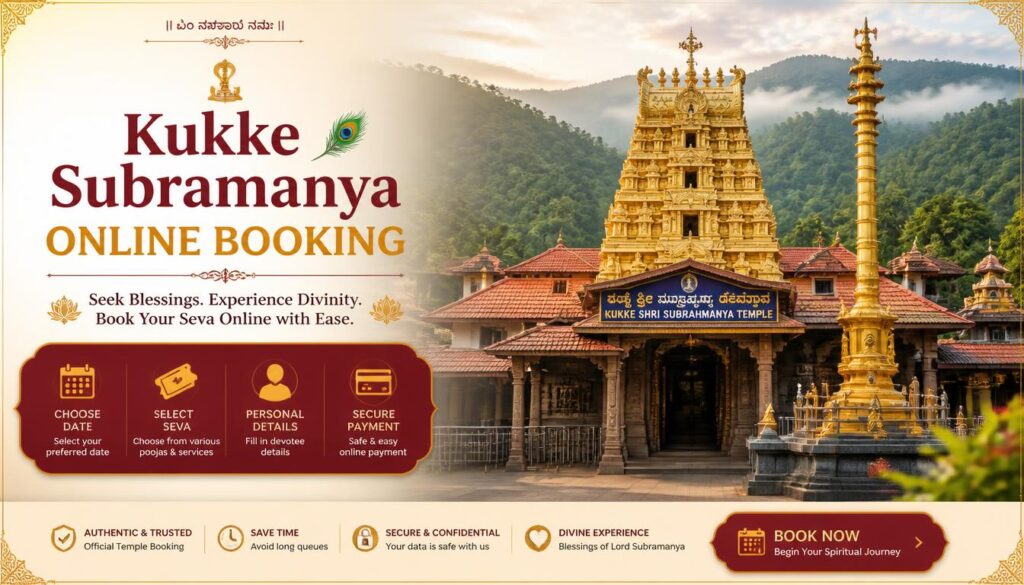
For devotees travelling from another city or state, Kukke Subramanya online booking can make planning considerably easier. Online seva booking may allow devotees to select an available service and date before making the journey.
A typical online pooja booking process may involve these steps:
Do not leave the receipt sitting somewhere inside your email inbox like a forgotten shopping bill. Download it, keep a digital copy, and, where appropriate, carry a printed copy during the pilgrimage.
Before completing Kukke Temple online booking, carefully check the spelling of names and other personal details. A small mistake in devotee information can become irritating when you are already standing at the temple office.
Pay attention to:
Some rituals may have special participation requirements. For example, information supplied for certain rituals mentions males above 18 or particular participant arrangements. These requirements can vary by seva, so they should always be checked against the current temple instructions.
The cost of a ritual depends on the type of seva selected. Based on the supplied information, commonly cited amounts include:
| Pooja or Seva | Mentioned Cost |
|---|---|
| Sarpa Samskara | Around ₹3,200 |
| Ashlesha Bali | Around ₹600–₹1,000 |
| Naga Pratishta | Around ₹4,000–₹6,000 |
| Nagaprathista | Around ₹3,500–₹5,000 |
| Karthikeya Pooja | Around ₹150 |
These amounts are useful for preliminary planning, but they should not be treated as permanently fixed prices. Pooja cost, booking fees, materials, or other arrangements may change.
Some devotees may also have additional expenses for accommodation, transportation, food, and other pilgrimage requirements. In short, the seva fee is only one piece of the travel budget.
Kukke is especially known among devotees who follow traditional beliefs surrounding Naga Dosha, Sarpa Dosha, and Rahu-Ketu Dosha. Some visitors come seeking a religious remedy for perceived obstacles in life, marriage, family matters, or other personal concerns.
It is important to understand that these are religious and astrological beliefs, not medically or scientifically established causes of life events.
Within traditional practice, devotees may seek guidance about a suitable Naga Dosha remedy, Sarpa Dosha remedy, or other ritual based on their nakshatra, gothra, family tradition, or astrological consultation.
The appropriate ritual can therefore differ from person to person. A devotee should not automatically assume that every visitor needs the same pooja.
There is no single perfect time for every pilgrim because the purpose of the visit matters. Someone coming for simple Kukke Subramanya darshan may plan around the daily schedule, while someone undertaking Sarpa Samskara or Ashlesha Bali needs to organise the trip around the assigned ritual slot.
Festival days can bring a different atmosphere, with larger numbers of devotees and additional religious activity. Important occasions such as Shivaratri, Ekadashi, and other temple or Hindu-calendar events may affect schedules.
Similarly, special astronomical or religious occasions such as Grahana may result in changes to normal temple routines.
For a ritual-focused visit, the booking date and reporting instructions should be the starting point of your itinerary.
The spiritual experience of visiting Kukke Subramanya Karnataka extends beyond the main shrine. The Kumaradhara River is an important part of the wider pilgrimage environment.
Some devotees traditionally take a holy dip in Kumaradhara before proceeding for darshan, following their religious customs. Whether you choose to do this or not, visitors should follow local instructions and take ordinary safety precautions around the river.
The surrounding Western Ghats also give the journey a distinctive setting. Green hills, flowing water, temple traditions, and the movement of pilgrims create an atmosphere that feels quite different from an ordinary tourist visit.
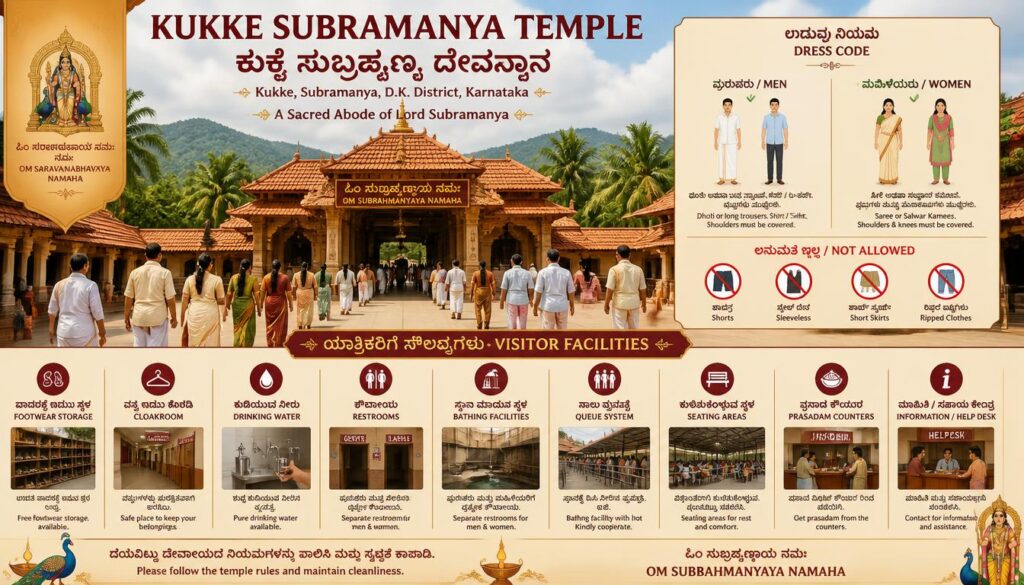
As a Hindu temple and important pilgrimage site, Kukke Subramanya expects visitors to dress respectfully. Devotees should choose clean, modest clothing appropriate for temple worship.
Certain sevas can have additional dress or participation requirements, particularly rituals involving direct participation in religious ceremonies.
Before travelling, it is also sensible to check available temple facilities, accommodation options, food arrangements, transport, and the location of the temple office.
If you have booked an important ritual, arrive with enough time to locate the correct area rather than reaching at the final minute. Temples can be peaceful, but large pilgrimage crowds can make simple navigation surprisingly slow.
A little preparation makes the pilgrimage smoother. Keep the following points in mind:
The biggest practical mistake is usually assuming that a general temple opening time equals the reporting time for a specific seva. Those two things are not necessarily the same.
A simple itinerary can make the entire visit less stressful. First, decide whether your primary purpose is darshan, a particular pooja, or both.
If you are attending Sarpa Samskara, Ashlesha Bali, or Naga Pratishta, begin with the ritual’s booking availability and reporting time. Then arrange transportation and accommodation around it.
For a regular temple visit, work backward from the daily Kukke Temple timings. Arriving early can give you breathing room for parking, walking, queues, and other temple procedures.
And don’t make the schedule so tight that one delayed bus ruins the whole day. Pilgrimage is supposed to have some breathing space in it.
The commonly provided schedule is around 5:30 AM to 8:00 PM, with a midday closure approximately from 1:30 PM to 3:00 PM. Timings may change on special days.
The temple is commonly listed as opening around 5:30 AM. Devotees attending a specific seva should follow its separate reporting time.
The commonly supplied closing time is around 8:00 PM. Special occasions may affect the regular schedule.
read more: https://templetimingsdaily.com/hariyali-teej-2026/
Sarpa Samskara is a traditional Hindu ritual associated with serpent worship and beliefs concerning Sarpa Dosha and related ancestral serpent afflictions.
The supplied information lists the Sarpa Samskara cost at approximately ₹3,200. Confirm the current fee before booking.
Where online booking is available for the selected seva, devotees can use the applicable booking system to provide their details, select a date, make payment, and receive a booking confirmation.
Depending on the seva, you may need the devotee’s name, gothra, nakshatra, age, preferred date, and other requested information.
Ashlesha Bali is a traditional ritual associated with Ashlesha Nakshatra, Naga worship, and religious beliefs concerning Sarpa-related doshas.
Naga Dosha is an astrological and religious concept. It should be understood within that traditional belief system rather than as a scientifically established explanation for personal events.
Yes. Temple schedules, seva availability, fees, and reporting instructions can change, particularly around festivals and special religious occasions. Checking current information before travelling is a wise final step.
A pilgrimage to Kukke Subramanya Temple can be meaningful for devotees seeking darshan, participating in traditional pooja rituals, or observing long-held family practices connected with Naga worship. The journey becomes much easier when the practical details are handled before arrival.
Know the Kukke Temple timings, understand the difference between darshan hours and seva reporting times, keep your booking confirmation safe, and confirm current fees and requirements before travelling.
Whether you come for Sarpa Samskara, Ashlesha Bali, Naga Pratishta, Karthikeya Pooja, or simply the darshan of Lord Subramanya, approach the visit with patience and respect. The green landscape of Karnataka, the presence of the Western Ghats, the Kumaradhara River, and the temple’s long-standing traditions all become part of the experience.
A well-planned pilgrimage doesn’t need to feel rushed. Sometimes the most memorable part is simply arriving early, standing quietly among fellow devotees, and allowing the atmosphere of the sacred place to settle in.