Physical Address
304 North Cardinal St.
Dorchester Center, MA 02124
Physical Address
304 North Cardinal St.
Dorchester Center, MA 02124

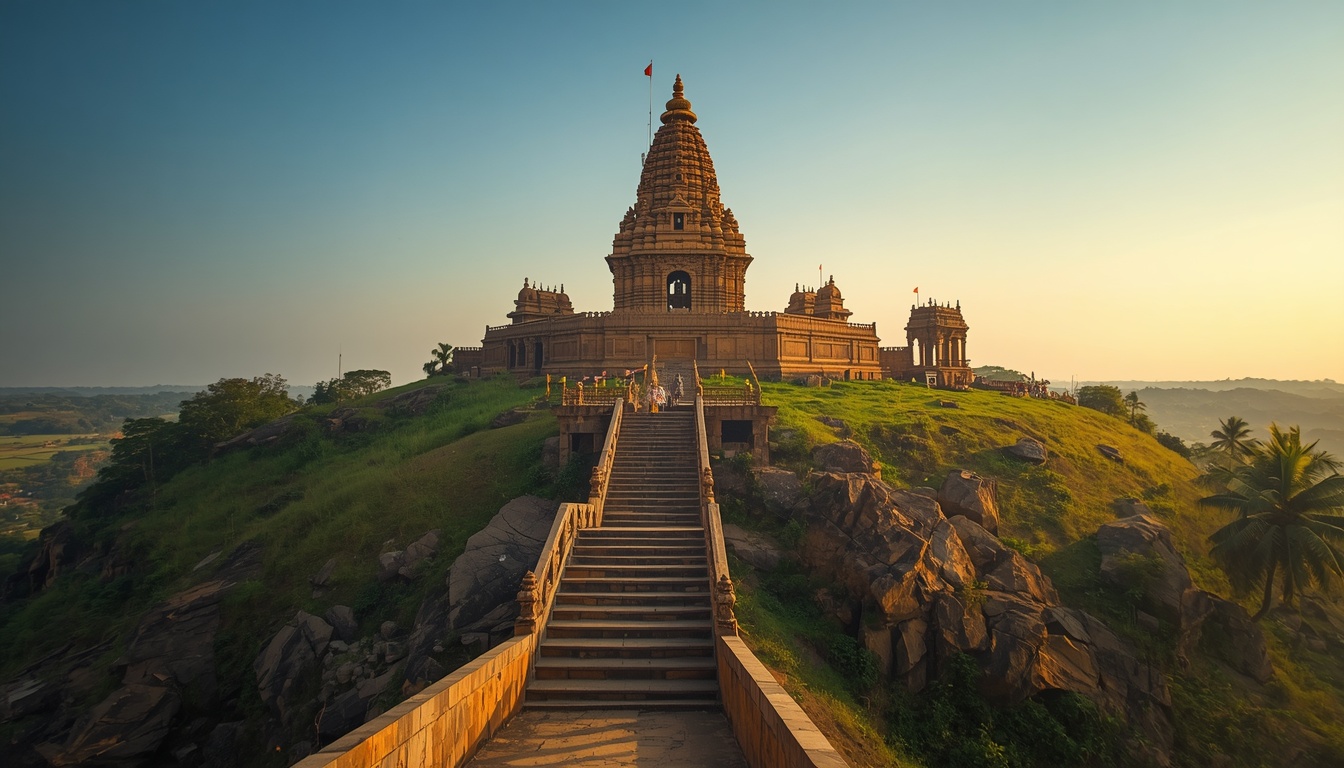
There are some temples you visit for darshan, and then there are places where the journey itself starts feeling like a prayer. Anjanadri Hill Temple near Hampi is one of those places. Sitting high on a sacred hill in Karnataka, the shrine is deeply connected with Lord Hanuman, the Ramayana, and the ancient Kishkindha Kshetra tradition.
The climb can leave your legs asking for a break, honestly, but the view from the top has a strange way of making you forget the tiredness. Looking across the landscape, with the Tungabhadra River, rocky hills, fields and distant Hampi ruins, a visitor can understand why this area has attracted pilgrims for generations.
For devotees, Anjanadri Hill is especially important because it is traditionally regarded as the birthplace of Hanuman. The hilltop shrine dedicated to Hanuman brings together mythology, devotion, natural beauty and the ancient religious heritage of Karnataka in a very memorable way.
The central belief surrounding Anjanadri Hill Temple is its connection with the birth of Lord Hanuman. According to the traditional Ramayana-linked account, Hanuman was born to Anjana Devi through divine circumstances associated with Vayu, the Wind God.
Because of this connection, Hanuman is also lovingly called Vayuputra, meaning the son of Vayu. Other names such as Anjaneya are connected with his mother Anjana Devi, making the hill especially meaningful to Hanuman devotees.
The story gives the hill more than geographical importance. For many pilgrims, standing here means standing at a place connected with the early story of one of Hinduism’s most beloved divine figures.
The belief is devotional and mythological rather than something that can be established as ordinary historical fact. Still, that distinction does not reduce the emotional importance the site has for millions of believers. Faith has its own language, and sacred places often speak through it.
Anjanadri Hill Hampi is located in the broader landscape traditionally associated with Kishkindha Kshetra, the region connected with important events in the Ramayana.
Hampi is already famous for its monumental ruins and the heritage of the Vijayanagara Empire, but the surrounding landscape has an older layer of religious stories too. The rocky terrain, caves, rivers and hills make the area feel almost like a living backdrop to ancient literature.
From the hilltop, visitors can see portions of the surrounding countryside and, depending on conditions, beautiful views toward the Tungabhadra River and nearby rocky landscapes. It is one of those views where you may stop taking photographs for a minute and just look.
The connection with Kishkindha makes the pilgrimage especially meaningful for devotees of Lord Rama and Hanuman. The area is traditionally associated with figures and episodes from the Ramayana, including Hanuman’s devotion to Rama.
The mythology of Anjanadri Hill Temple begins with Anjana Devi, who is traditionally believed to have performed penance seeking a divine child. Through divine blessings connected with Vayu, Hanuman was born.
This story explains why the hill is sometimes described as the Hanuman birthplace or Hanuman birthplace temple in pilgrimage discussions. Devotees come not merely to see a deity but to experience a place believed to be connected with the beginning of Hanuman’s earthly story.
Hanuman’s character in the Ramayana is remembered for extraordinary devotion, courage, humility and strength. His greatest quality, however, is often considered his complete devotion to Lord Rama.
That is why the atmosphere around a Hanuman shrine frequently includes chanting, prayer and remembrance of Rama. A simple Rama Nama can sometimes feel more powerful in a quiet temple than a long speech ever could.
The wider Hampi region also carries immense historical value because of the Vijayanagara Empire. Its surviving temples, monuments and ruins demonstrate the extraordinary religious and architectural culture that developed in this part of Karnataka.
The traditional belief that Anjanadri Hill is Hanuman’s birthplace comes from local religious traditions connecting the hill with Anjana Devi and the birth of her son Hanuman.
Different places have sometimes been associated with Hanuman’s birth in religious traditions, so visitors should understand that the claim is part of sacred tradition rather than a universally established historical conclusion.
For devotees who accept the tradition, however, the importance is enormous. Visiting the hill becomes an opportunity to offer prayers at a location believed to be connected with Hanuman’s earliest days.
The name Anjanadri itself is closely associated with Anjana. That connection gives the hill its distinctive identity among the many pilgrimage locations around Hampi.
The Anjanadri Hill Hanuman Temple is a relatively simple hilltop pilgrimage destination compared with some of the grand monumental temples found elsewhere in India.
Its power for devotees comes less from enormous architectural scale and more from location, tradition and spiritual association. The temple’s position on the hill creates a very different experience from visiting a shrine at street level.
Pilgrims may offer prayers to Hanuman, perform archana, seek blessings and spend quiet moments in devotion. Depending on temple practices and the day of visit, devotees may also encounter offerings such as flowers, fruits, sweets, coconuts or sindoor.
Many Hanuman devotees also recite the Hanuman Chalisa here. For some people, the climb followed by prayer becomes a personal act of discipline, almost like leaving worries behind one step at a time.
Visitors often search for Anjanadri Hill temple timings, Anjanadri Hill darshan timings, and the temple’s opening and closing hours before planning their journey.
Reported visiting schedules can vary by source, season, festivals and local temple arrangements. Some commonly published schedules mention morning and evening darshan periods, while other sources list broader visiting hours.
Because temple schedules can change, especially during festivals or special religious events, it is sensible to confirm the current timing locally before starting the climb.
A typical pilgrimage plan should allow enough time not only for darshan but also for the hill climb, rest, photography and the return journey. Rushing to reach the shrine just before closing is really not the best way to experience this place.
For ordinary temple darshan, visitors generally look for information about an Anjanadri Hill temple entry fee and whether there is a separate charge to enter the shrine.
The temple is generally visited as a religious pilgrimage site without a standard high-priced admission system. However, particular services, offerings or facilities may have separate arrangements.
It is always better to check current local information rather than relying on an old travel post. Temple practices can change, and online information sometimes remains unchanged long after the actual arrangement has moved on.
One of the most common questions is how many steps to Anjanadri Hill Temple.
You may find different figures online, including references to approximately 550 steps or 575 steps. The variation is partly because people count sections differently, and online sources do not always use the same measurement.
The important point is that reaching the hilltop requires a substantial stair climb. It is not a completely effortless temple visit, especially for elderly visitors, young children or anyone who has difficulty walking uphill.
Take water, walk at your own pace and use the available resting areas. There is absolutely no prize for reaching the top five minutes earlier.
The Anjanadri Hill climb is itself an important part of the pilgrimage experience. The stone steps lead upward through the rocky hill landscape, gradually separating visitors from the noise and movement below.
During busy pilgrimage periods, the stairs may become crowded. Early morning can feel more comfortable because temperatures are generally lower and the atmosphere can be calmer.
Visitors should wear comfortable footwear for the approach and choose respectful clothing suitable for a Hindu temple. Carrying only essential items can also make the climb easier.
People with mobility limitations should plan carefully. The steep climb and stairs can make complete accessibility difficult, particularly for wheelchair users. Elderly devotees may want to travel with family members who can provide support.
The Anjanadri Hill spiritual significance is strongly connected with Hanuman’s qualities: courage, devotion, strength and fearlessness.
Devotees often pray to Hanuman when facing personal obstacles, fear, uncertainty or difficult circumstances. His character represents the idea that physical strength becomes meaningful when guided by humility and devotion.
For many visitors, the temple provides a peaceful setting for mental clarity and emotional peace. Sitting quietly after completing the climb can become a surprisingly personal moment.
The hill is also associated with the idea of Vayu Shakti, reflecting Hanuman’s connection with the Wind God. In devotional thought, this association represents movement, vitality, strength and divine power.
A pilgrimage here may therefore be less about asking for something specific and more about finding inner strength to deal with whatever is already waiting back home.
Hanuman worship at the shrine may include daily puja, archana, prayers and devotional offerings. Practices can differ depending on the day and temple arrangements.
Some devotees bring coconuts, fruits or sweets as offerings. Sindoor is also strongly associated with Hanuman worship in many Hindu traditions.
Others simply fold their hands, close their eyes and repeat the name of Rama. There is no need for an elaborate ritual for a sincere prayer to feel meaningful.
Devotees may also recite the Hanuman Chalisa, Hanuman mantras or Rama Nama. These practices are especially meaningful for people who already have a personal tradition of Hanuman devotion.
Hanuman Jayanti is naturally one of the most significant occasions for Hanuman devotees. The festival commemorates the birth of Hanuman according to the relevant regional and religious calendar tradition.
During festival periods, devotees may participate in special prayers, abhishekam, offerings and other devotional activities. The atmosphere can become considerably more crowded than on ordinary days.
Rama Navami is also spiritually relevant because Hanuman’s identity is inseparable from his devotion to Lord Rama. Devotees may connect prayers to Rama with remembrance of Hanuman’s service.
Tuesdays and Saturdays are traditionally important days for Hanuman worship in many Hindu communities. Deepavali and other festival periods can also bring increased religious activity in the wider region.
If you prefer a quieter experience, visiting outside major festivals may be a better choice. If you want to experience collective devotion, festival days can feel powerful but crowded.
The connection between Anjanadri Hill and the Ramayana is one of the strongest reasons pilgrims include this location in a Hampi itinerary.
Hanuman’s role in the Ramayana is extraordinary. He becomes one of Rama’s most trusted devotees and plays a major role in the search for Sita and the eventual battle against Ravana.
The broader Kishkindha tradition connects the Hampi landscape with the Vanara kingdom described in the epic. Places around the region are therefore often interpreted through Ramayana traditions.
Standing on a hill associated with Hanuman while looking across the ancient landscape can make the stories feel unusually close. It is not history presented behind glass; it is mythology woven into the geography people are actually walking through.
Read more: https://templetimingsdaily.com/diwali/
The hilltop shrine has a different visual character from the monumental temple complexes that dominate central Hampi.
Its setting is the main attraction. The hilltop shrine, stone steps and surrounding rocky landscape create a pilgrimage environment where architecture and nature seem to sit together without trying too hard.
Visitors can also appreciate the wider Hampi heritage architecture during the same journey. The surviving monuments of the Vijayanagara period provide a powerful reminder of Karnataka’s architectural and religious history.
The surrounding landscape, meanwhile, includes rocky formations, agricultural areas and views toward the river. In good weather, the panoramic scene from the hill can become one of the most memorable parts of the visit.
Travelers planning an Anjanadri Hill parking stop should expect a pilgrimage location rather than a modern tourist complex.
Parking arrangements can become busier during weekends, holidays and festival periods. Arriving earlier generally gives visitors a better chance of finding a convenient place and beginning the climb without unnecessary delay.
Basic visitor planning matters here. Carry drinking water, protect yourself from strong sunlight and avoid carrying heavy bags up the hill.
Visitors should also follow temple visitor guidelines, maintain cleanliness and respect religious practices. A sacred place is shared by thousands of people, so even small acts of care make a difference.
There may not always be a complicated formal Anjanadri Hill temple dress code, but modest and respectful clothing is the safest choice.
As this is a Hindu pilgrimage site dedicated to Hanuman, visitors should behave respectfully inside and around the shrine. Avoid loud conversations, inappropriate photography where restricted and anything that interferes with worship.
If temple staff provide instructions about queues, offerings or photography, follow them. Rules can differ according to current arrangements and special occasions.
A little patience goes a long way in pilgrimage places. Everyone has come with their own prayer, and that prayer deserves some space too.
Anjanadri Hill pilgrimage is particularly meaningful for Hanuman devotees, people interested in the Ramayana, spiritual travelers and visitors exploring the religious heritage of Hampi.
It can also appeal to people who enjoy heritage landscapes and scenic hilltop locations. The combination of mythology, nature and ancient surroundings makes the experience broader than an ordinary temple stop.
However, visitors should remember that the climb can be physically demanding. Anyone with mobility concerns should consider the stairs carefully and make arrangements before beginning the journey.
For families, it can become a meaningful way to introduce children to the stories of Hanuman, Anjana Devi, Rama and the Ramayana while also showing them how pilgrimage traditions continue in real life.
Instead of treating the visit as another item on a sightseeing checklist, take a few quiet minutes before entering the shrine.
Think about the qualities associated with Hanuman: faith, courage, physical strength, fearlessness, humility and devotion. Then consider which of those qualities you personally need at this stage of life.
You might recite the Hanuman Chalisa, repeat Rama Nama or simply sit silently for a moment. Spiritual experiences do not always arrive with dramatic feelings. Sometimes they are just a little more peace inside your head.
After darshan, take time to look at the surrounding landscape. The view toward the Tungabhadra River, rocky hills and Hampi’s heritage landscape gives the visit another dimension.
The lasting appeal of Anjanadri Hill Temple is not based on one single thing. It is the combination of mythology, devotion, landscape and heritage that gives the place its character.
For believers, the hill is associated with the birth of Lord Hanuman and therefore carries deep sacred meaning. For history and heritage enthusiasts, it forms part of the extraordinary cultural landscape around Hampi.
For someone simply looking for a quiet moment, the climb itself can become meaningful. Each step takes you farther from the ordinary noise of the road and closer to a hilltop where generations of devotees have prayed.
The story of Hanuman ultimately points toward more than supernatural strength. It speaks about using strength in service, meeting fear with courage and keeping faith during difficult moments.
Bilkul, headings ko change nahi kiya. Har H3 ke liye 1–2 line ka concise English answer:
The Anjanadri village Hanuman statue is a spiritual attraction dedicated to Lord Hanuman, drawing devotees and visitors seeking blessings and peaceful surroundings.
Anjanadri Hill near Hampi is traditionally believed to be the birthplace of Lord Hanuman and is known for its sacred temple, stone steps, and scenic views.
Anjanadri Hill in Hanumanahalli, Karnataka, is a revered pilgrimage destination associated with Lord Hanuman and the legendary Kishkindha region.
A visit to Anjanadri Hill Temple can be physically demanding, spiritually calming and visually unforgettable all at once. The climb, the temple, the Hanuman tradition and the Hampi landscape come together in a way that is hard to reproduce anywhere else.
Whether you come because you believe this is the Hanuman birthplace, because you want to explore Kishkindha Kshetra, or simply because you want to experience one of Karnataka’s distinctive pilgrimage landscapes, give yourself enough time to actually absorb the place.
And when you finally stand before Hanuman, perhaps the simplest prayer is also the most beautiful: may there be enough courage for the difficult days, enough humility for the good ones, and enough faith to keep moving forward.
If you have visited Anjanadri Hill Temple, share your experience, favorite part of the climb, or the prayer that meant the most to you. Sometimes one pilgrim’s small experience becomes another person’s reason to make the journey.