Physical Address
304 North Cardinal St.
Dorchester Center, MA 02124
Physical Address
304 North Cardinal St.
Dorchester Center, MA 02124

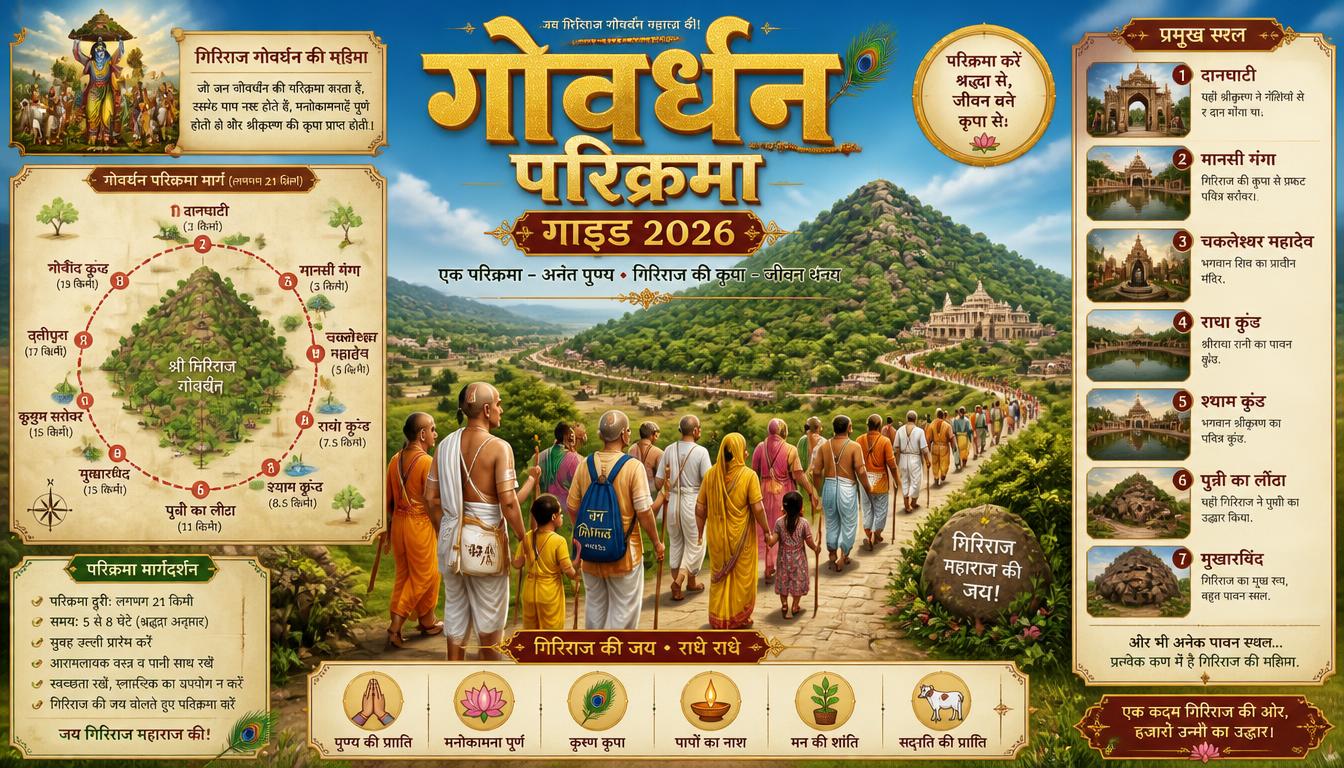
Govardhan Parikrama is not just a religious walk; it is a journey of faith, devotion, and deep spiritual connection with Lord Krishna and Giriraj Maharaj.
Every year, millions of devotees visit Govardhan Parvat in Mathura, Uttar Pradesh, to complete this sacred circumambulation around the divine hill that is considered a living form of Krishna himself.
This Govardhan Parikrama Guide 2026: Distance, Route, Timings, History, Rituals & Best Time covers everything a devotee needs to know before planning the pilgrimage from
the 21 km parikrama distance, route map, important temples, spiritual significance, best visiting season, rituals, rules, and practical travel tips.
Whether you are visiting for the first time or returning for another divine experience, this guide will help you complete the parikrama with proper planning and devotion.
Govardhan Parikrama is the sacred practice of walking clockwise around Govardhan Hill (Giriraj Maharaj) as an act of worship and surrender. The pilgrimage takes place in the holy land of Braj Bhoomi, where Lord Krishna spent his childhood performing divine pastimes.
Devotees believe that Govardhan Parvat is not an ordinary hill but a divine manifestation of Shri Krishna. Therefore, walking around Govardhan is considered equal to offering prayers directly to Krishna.
The parikrama is performed throughout the year, but its spiritual importance increases during Kartik month, Govardhan Puja, Guru Purnima, Kartik Purnima, Amavasya, and Ekadashi. During these occasions, the entire route becomes filled with devotees chanting “Radhe Radhe” and “Jai Giriraj Maharaj.”
The total Govardhan Parikrama distance is approximately 21 kilometers. This sacred route is traditionally divided into two sections: Badi Parikrama and Chhoti Parikrama.
| Parikrama Type | Distance | Description |
|---|---|---|
| Badi Parikrama | 12 km | Outer route covering the wider circumference of Govardhan Hill |
| Chhoti Parikrama | 9 km | Inner route covering important sacred places and kunds |
| Complete Parikrama | 21 km | Full circumambulation around Govardhan Parvat |
The Badi Parikrama is considered the longer and traditional outer route. It connects several important religious locations, temples, and sacred spots associated with Krishna’s pastimes.
This route is preferred by devotees who want to experience the complete spiritual circuit around Govardhan Hill.
The Chhoti Parikrama is a shorter route that covers many of the most spiritually significant locations, including Radha Kund, Shyam Kund, and Mansi Ganga.
Many elderly devotees, first-time visitors, or people with limited time choose this route while maintaining the same devotional intention.
A complete 21 km Govardhan Parikrama usually takes around 5 to 6 hours for devotees walking at a normal pace. However, the actual time depends on several factors:
During major festivals like Govardhan Puja and Kartik Purnima, the route becomes extremely crowded, so completion time can increase.
Devotees performing Dandavat Parikrama may take several days or even weeks because they complete the journey through repeated full-body prostrations.
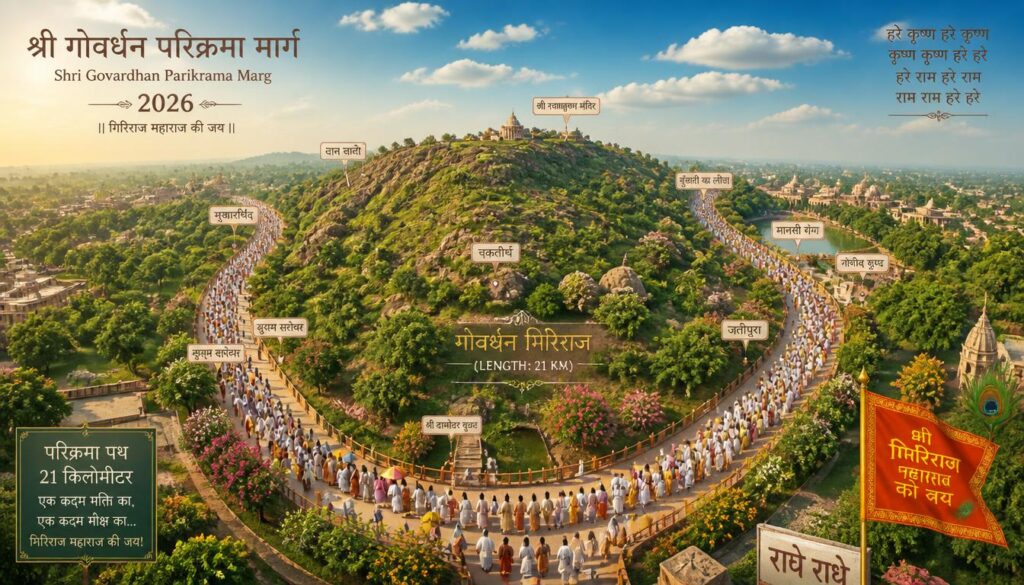
The traditional Govardhan Parikrama route follows a clockwise direction, beginning and ending at Daan Ghati Mandir. The path passes through villages, ancient temples, sacred kunds, and important places connected with Krishna’s divine activities.
Most pilgrims begin their journey from Daan Ghati Mandir, one of the most famous temples on the Govardhan route.
This place is connected with Krishna’s playful daan leela, where Krishna is believed to have stopped the Gopis and asked for offerings. Devotees usually take blessings here before starting the sacred walk.
Sankarshan Kund is associated with Lord Balaram (Sankarshan) and is considered an important spiritual stop along the route.
Devotees visit this place to remember the divine connection between Krishna and Balaram.
Poonchhri Ka Lautha is a unique sacred location near the southern side of Govardhan.
Many devotees believe that visiting this spot completes an important part of the Govardhan pilgrimage experience.
The Shri Nath Ji Temple represents the devotional relationship between Krishna and his devotees.
The peaceful atmosphere here allows pilgrims to pause, pray, and reconnect spiritually during the long walk.
Indraman Bhang is linked with the story of Lord Indra’s pride being defeated by Krishna.
This location reminds devotees of humility and the importance of surrender before the divine.
Jatipura Temple is among the most important stops of Govardhan Parikrama.
Devotees offer Chhappan Bhog and seek blessings from the Mukharvind of Giriraj Maharaj.
Radha Kund is one of the holiest places in Braj Bhoomi. It is deeply connected with Radha Rani and Lord Krishna’s divine pastimes.
Many devotees consider bathing or offering prayers near Radha Kund an extremely sacred activity.
Located near Radha Kund, Shyam Kund is associated with Krishna’s purification leela after defeating the demon Arishtasura.
Together, Radha Kund and Shyam Kund hold immense importance in Vaishnav traditions.
Kusum Sarovar is famous for its peaceful surroundings and connection with Radha Krishna’s flower pastimes.
Many pilgrims stop here for meditation, photography, and spiritual reflection.
At Kaan Wale Baba, devotees whisper their wishes into the stone ear of Giriraj Maharaj with the belief that their prayers are heard.
Mansi Ganga is considered the spiritual heart of Govardhan.
According to belief, Mother Ganga appeared here through Krishna’s divine will. Many devotees take a holy bath at Mansi Ganga before beginning their parikrama.
The history of Govardhan Parikrama is connected with the ancient traditions of Dwapar Yuga and the life of Lord Krishna.
According to Hindu scriptures, the people of Braj traditionally worshipped Lord Indra for rainfall. Krishna explained that instead of worshipping Indra, they should honor Govardhan Hill, which provided them food, water, and protection.
Lord Indra became angry and sent heavy storms toward Braj. To protect the villagers and their cattle, Lord Krishna lifted Govardhan Hill on his little finger for seven days and nights.
After this divine event, Govardhan became known as Giriraj Maharaj, the protector of devotees. The tradition of walking around the hill began as an expression of gratitude, devotion, and surrender.

The best time for Govardhan Parikrama in 2026 depends on weather, crowd preference, and spiritual priorities.
October to March is considered the most comfortable period because the weather remains cooler and walking becomes easier.
The most spiritually significant times include:
During these dates, devotees should expect large crowds and plan accordingly.
The beauty of Govardhan Parikrama lies in the devotion and rituals followed by pilgrims.
Many devotees walk barefoot as a symbol of humility and surrender toward Giriraj Maharaj. However, people with health concerns can choose comfortable footwear.
Devotees continuously chant:
These chants help maintain focus and create a devotional atmosphere.
Pilgrims offer:
at different temples and sacred points along the route.
Dandavat Parikrama is a highly devoted form of pilgrimage where devotees lie flat on the ground, mark the spot, stand again, and repeat the process.
Due to the physical effort involved, this practice may take many days.
Many devotees observe Vrat (fasting) during the pilgrimage and consume simple vegetarian food or prasad after completing their spiritual practice.
To maintain the sanctity of the pilgrimage, devotees traditionally follow these guidelines:
For first-time pilgrims, proper preparation makes the journey smoother.
Govardhan is located around 22 km from Mathura.
Travel options include:
The nearest major airports are Agra Airport and Delhi International Airport.
Pilgrims can generally find:
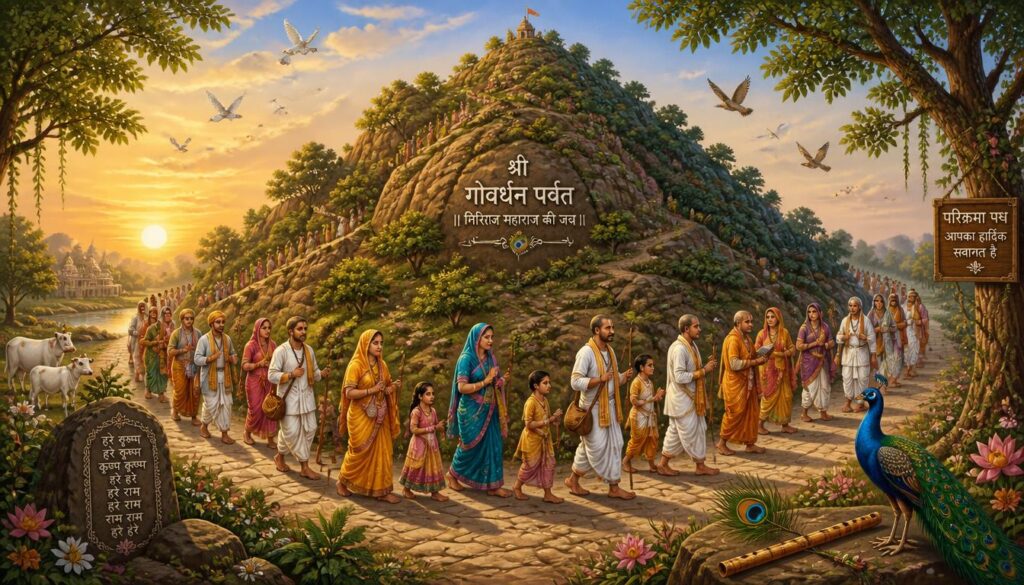
The spiritual importance of Govardhan Parikrama comes from the belief that every step taken around Giriraj Maharaj is an act of devotion.
Devotees believe this sacred journey can help develop:
For many people, the parikrama is not about completing 21 kilometers quickly. It is about experiencing devotion with every step.
The complete Govardhan Parikrama distance is approximately 21 km, which includes the 12 km Badi Parikrama and 9 km Chhoti Parikrama routes. Most devotees complete it within 5 to 6 hours depending on walking speed and darshan stops.
The best time for Govardhan Parikrama is from October to March because of comfortable weather. Early morning between 4 AM and 6 AM is considered ideal. Kartik month and Govardhan Puja are highly auspicious but attract heavy crowds.
Most devotees start and end their journey at Daan Ghati Mandir. The traditional route follows a clockwise direction around Govardhan Hill and covers important locations like Radha Kund, Shyam Kund, Kusum Sarovar, and Mansi Ganga.
Many devotees prefer walking barefoot as a devotional practice, but footwear is acceptable for people who cannot walk barefoot due to health or safety reasons. The main purpose of the pilgrimage is devotion, respect, and spiritual connection.