Physical Address
304 North Cardinal St.
Dorchester Center, MA 02124
Physical Address
304 North Cardinal St.
Dorchester Center, MA 02124

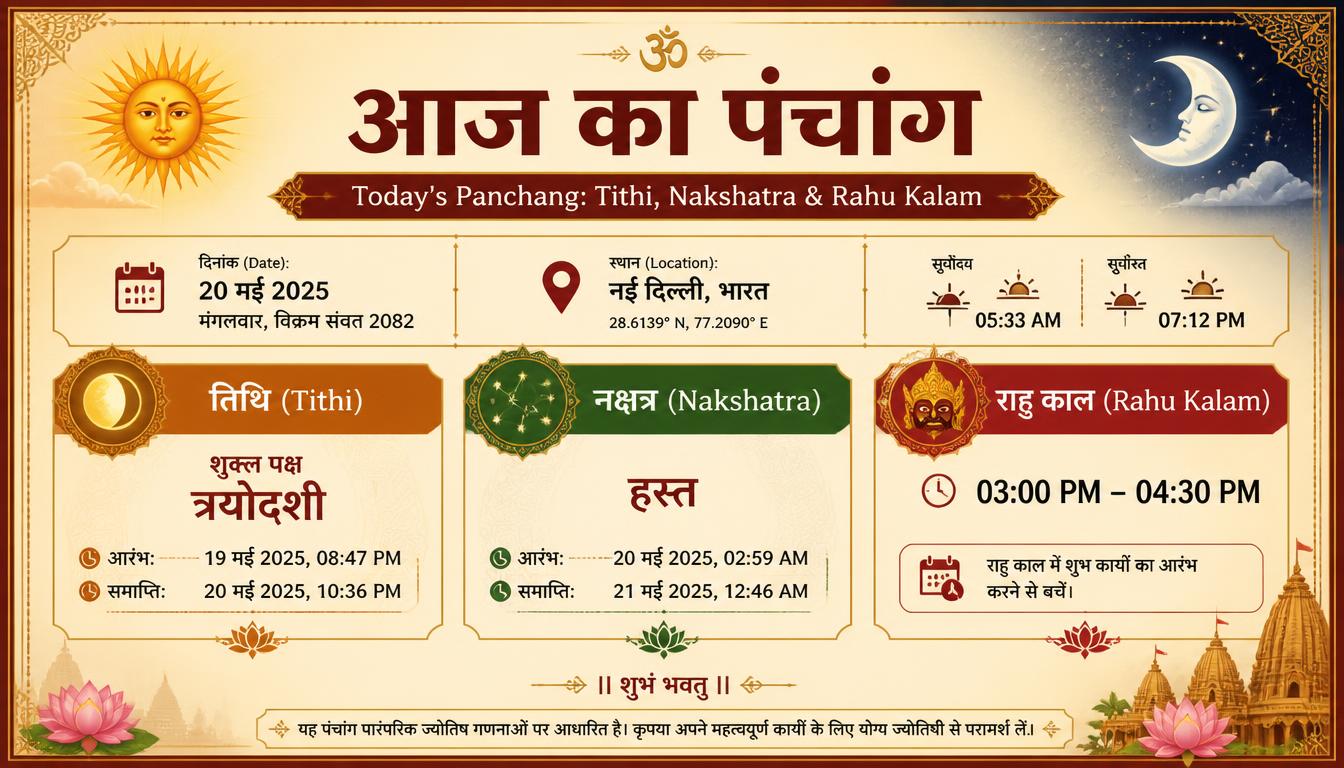
There are mornings when we simply look at the clock and start the day. Then there are mornings when we pause for a moment and ask, Is this the right time for what I am about to do? That small question is where Panchang becomes meaningful. It connects an ordinary day with the traditional wisdom of the Hindu calendar, giving people a way to understand Tithi, Nakshatra, Yoga, Karana, Vara, and important auspicious or inauspicious periods.
For 5 October 2026, people looking for today’s Panchang can use these traditional calculations to understand the lunar day, Moon’s position, daily timings, and periods such as Rahu Kalam. The exact timings can change according to location, so a Panchang for Karachi, for example, may not show exactly the same clock times as one prepared for another city. Thats why location matters more than many people realise.
A Daily Panchang is essentially a traditional time reference based on astronomical and astrological calculations. It helps explain the character of a particular day rather than simply telling us what date it is.
For October 5, 2026, the relevant Panchang details include the following traditional elements:
For a local calculation, the selected city, latitude, longitude, timezone and astronomical settings can all influence the displayed timings. In other words, Panchang is not just a calendar hanging quietly on a wall; it is a location-sensitive calculation.
The Tithi is one of the most important parts of any Panchanga. It represents a lunar day and is calculated from the angular relationship between the Sun and Moon.
Unlike the ordinary date that changes at midnight, a Tithi can begin or end at different times of the day. This is why someone checking today Tithi may notice that the current Tithi changes during daylight hours.
Traditional calendars divide the lunar cycle into different Tithis, including Dashami, Ekadashi and other lunar days. The waxing and waning halves are also significant, with terms such as Shukla Paksha and Krishna Paksha commonly appearing in Hindu calendar calculations.
A Panchang may therefore show information such as the current Tithi, its ending time, and the next Tithi. This is especially useful for people observing religious events, fasting days, Shraddha Tithi, Sankalpa, or other traditional observances.
The Nakshatra tells us about the Moon’s position against the traditional system of 27 stellar divisions. Since the Moon moves relatively quickly, the current Nakshatra can change during the day.
Among the names that appear in traditional Panchang calculations are Pushya Nakshatra and Ashlesha Nakshatra. Each Nakshatra has its own traditional associations, symbolism and astrological interpretation.
When someone searches for today’s Nakshatra, they are usually interested in knowing which lunar constellation is active at a particular time. The Panchang may also provide the Nakshatra ending time, allowing readers to see when the next Nakshatra begins.
This becomes particularly useful when selecting an appropriate period for a ceremony or understanding traditional astrological conditions. Still, Nakshatra alone does not decide every Muhurta; other factors are considered too.
Rahu Kalam is one of the most frequently searched parts of the daily Panchang. It is traditionally regarded as an inauspicious time for beginning certain important activities.
The duration and clock time of Rahu Kalam are calculated in relation to the day’s sunrise and sunset. Because sunrise differs from city to city, Rahu Kalam today will also vary according to geographical location.
People traditionally try to avoid starting activities such as major ceremonies, important journeys or significant new ventures during this period. It does not mean that everything happening during Rahu Kalam is automatically harmful, though. The traditional idea is more specifically about avoiding the beginning of important activities.
If you are checking today’s Rahu Kalam, always select your city or use a Panchang that calculates the timings for your local timezone. Using a timing copied from another city can give you a surprisingly different result.
The word Panchanga is associated with five fundamental limbs. These are the foundation of a traditional Hindu Panchang.
Tithi represents the lunar day and is based on the angular separation between the Sun and Moon. Its ending time can occur at any hour, which is why it does not always match the civil calendar date.
Vara refers to the weekday. Monday, Tuesday and the other days are associated traditionally with planetary rulers, adding another layer to the daily calculation.
Nakshatra represents the Moon’s position within one of the 27 stellar divisions. It is frequently consulted when considering traditional activities and ceremonies.
Yoga is another Panchanga component calculated from the positions of the Sun and Moon. There are traditionally 27 Yogas, including names such as Shiva Yoga and Siddha Yoga.
Karana is half of a Tithi. Traditional Panchangam calculations can show Karanas such as Garija Karana and Vanija Karana, along with their ending or changing times.
Together, these five elements create the foundation of the Panchang calculation. It is this combination, rather than one single factor, that makes the daily Panchanga detailed.
Not every part of a Panchang is about avoiding something. A major purpose of the traditional system is also to identify auspicious times.
Depending on the Panchang and location, readers may see periods such as Abhijit Muhurta, Brahma Muhurta, or Amrit Ghati. These periods are traditionally associated with favorable activities, spiritual practices or particular types of work.
Abhijit Muhurta is often treated as a generally favorable daytime period. Brahma Muhurta, occurring before sunrise, has a strong traditional association with prayer, meditation, study and spiritual practices.
The important point is that a good time for one activity may not automatically be the perfect time for another. A detailed Muhurta can involve additional astrological considerations, especially for major ceremonies.
A complete Panchang also identifies periods traditionally considered unfavorable. These may include Rahu Kalam, Durmuhurta, Varjyam, and other Dur Yogas.
These periods are not meant to make people fearful of ordinary daily life. Rather, they are part of a traditional system used to decide when certain significant activities should preferably begin.
For example, a person may check today’s Panchang before starting a new business activity, beginning a journey, purchasing a vehicle, or conducting a ceremony. Someone following these traditions may simply shift the starting time to a more suitable period.
This approach turns the Panchang into a practical daily planning tool, although personal beliefs and regional traditions can naturally differ.
Sunrise and sunset are much more important to Panchang calculations than they might first appear.
For the Karachi calculation referenced in the Panchang data, sunrise is listed around 6:29 AM, while sunset is around 6:11 PM. These values are location-specific and should not be treated as universal timings for every part of Pakistan.
Many daily calculations depend on the length between sunrise and sunset. Rahu Kalam, for instance, is traditionally derived from the daytime period. Various Muhurtas and observances can also depend on sunrise.
This is why a proper Panchang according to location is preferable to using one generic table for an entire country. Even nearby cities can have slightly different sunrise and sunset times.
Another useful part of today’s Panchang is the Rashi, or Moon sign. In the supplied Panchang information, the Moon is associated with Cancer Rashi, also known as Karka Rashi.
The Moon’s movement through the zodiac is an important part of Vedic astrology. The Moon sign can be considered alongside Nakshatra and other planetary positions when interpreting a person’s day.
A daily Panchang generally provides the Moon’s current position rather than giving a complete personal horoscope. A birth chart, Kundali, or Janmakundali requires personal birth information such as date, time and place of birth.
So, while today’s Rashi is useful for general Panchang information, it should not be confused with a complete personal horoscope analysis.
The Hindu calendar is not simply another version of the Gregorian calendar. It combines solar and lunar movements and follows traditional regional systems.
Different traditions may use Amanta or Purnimanta methods for defining lunar months. As a result, names and dates of Hindu months can sometimes appear differently depending on the regional calendar being followed.
The Panchang data for this date includes traditional calendar references such as Bhadrapada Maasa, Ashwayuja Maasa, Dakshinayana, Sharad Rithu, and Parabhava Samvatsara.
These terms help place the day within the broader traditional Hindu calendar. They may look complicated initially, but each one describes a particular part of the traditional system of measuring time.
This is probably one of the most useful things to understand about Panchang timings today.
Panchang calculations depend partly on geographical information. A city has its own latitude, longitude and timezone, which influence the local position and timing of astronomical events.
That is why Karachi Panchang, Panchang Pakistan, and a Panchang calculated for another city may show different sunrise, sunset, Moonrise, Moonset, Tithi or Nakshatra ending times.
The difference does not necessarily mean that one Panchang is wrong. They may simply be calculating the astronomical events for different observers.
For accurate daily use, choose the correct city before checking today’s Tithi, today’s Nakshatra, or Rahu Kalam today.
Read more: https://templetimingsdaily.com/diwali/
Modern Panchang services can use detailed astronomical calculations to determine planetary positions and daily timings. Systems may incorporate geocentric, topocentric, or observer-based calculations depending on the purpose.
Technical Panchang systems can use an ephemeris, geographical coordinates, timezone information and settings such as Ayanamsha. Some digital services use astronomical engines such as the Swiss Ephemeris alongside traditional rules.
The calculation can involve the positions of the Sun and Moon, sunrise and sunset definitions, Moonrise and Moonset, planetary longitudes and other astronomical factors.
Regional traditions can also affect how particular dates or observances are presented. This explains why two online Panchang services can occasionally show slightly different results, even when both are based on serious calculations.
A Panchang can be used for more than checking religious dates. Traditionally, people consult it while planning different everyday activities.
Some common examples include:
For major events, however, a general daily Panchang may not be enough. A marriage Muhurta, Griha Pravesh, foundation-laying ceremony, or other significant event can involve a much more detailed analysis.
In those situations, practitioners may consider Lagna, planetary conditions, personal birth data, Kundali factors and other traditional rules.
The value of Panchang isn’t only about finding a “good” or “bad” hour. For many people, it creates a small pause in a busy day.
Looking at Brahma Muhurta, sunrise, Tithi or Nakshatra can become part of a personal routine involving prayer, meditation, study or reflection. The clock keeps moving anyway, but the Panchang gives that movement a traditional framework.
Someone may use it for a daily Sankalp, another person may simply check the lunar day before a religious observance. Both approaches can coexist quite comfortably.
The deeper appeal of Vedic Jyotish and the Hindu calendar is often this sense of rhythm: the day is not treated as an empty box on a calendar, but as something connected with celestial movements and traditional observances.
Today’s Tithi is the current lunar day calculated from the angular relationship between the Sun and Moon. Its ending time can occur during the day, so it should be checked using a location-specific Panchang.
Today’s Nakshatra is the lunar stellar division occupied by the Moon at a particular time. Because the Moon moves continuously, the Nakshatra may change during the day.
Rahu Kalam is a traditionally inauspicious period calculated from the local daytime duration. Its exact clock time depends on the day’s sunrise and sunset for the selected location.
Abhijit Muhurta is a traditionally favorable daytime period that appears in many Panchang systems. It is commonly considered suitable for certain auspicious activities.
Brahma Muhurta is a pre-sunrise period traditionally associated with spiritual practices, meditation, prayer and learning.
Traditional Jyotish considers Rahu Kalam an unfavorable period for beginning certain important activities. It does not mean that every action performed during it is automatically harmful.
Panchang timings depend on geographical location, including latitude, longitude, timezone and local sunrise or sunset. Therefore, a Panchang calculated for Karachi may differ from one calculated for another city.
The civil calendar date normally changes at midnight, but many traditional Hindu observances are connected with sunrise and specific astronomical conditions. This is why Panchang calculations should not be understood as simply changing everything at 12:00 AM.
A general Panchang can provide useful timing information, but traditional marriage Muhurta selection may require additional factors such as the couple’s birth details, Lagna and planetary conditions.
Local sunrise is used in several traditional Panchang calculations, including the division of daytime for periods such as Rahu Kalam. That is why the selected city matters.
Brahma Muhurta is the early morning period before sunrise, traditionally considered ideal for meditation, prayer, yoga, and spiritual practices.
Today’s Panchangam provides important details such as Tithi, Nakshatra, Yoga, Karana, Rahu Kalam, sunrise, sunset, and other auspicious timings.
Today’s good and bad times are determined through traditional Panchang calculations, including auspicious Muhurta, Rahu Kalam, Durmuhurta, and other unfavorable periods.
Today’s Brahma Muhurta time depends on your local sunrise, so the exact timing can vary from one city or location to another.
Godhuli Bela is the twilight period around sunset, traditionally regarded as a peaceful and spiritually significant time for prayer and evening rituals.
The simplest approach is to start with your location. Select the correct city and timezone, then check today’s Tithi, Nakshatra, Yoga, Karana, sunrise and sunset.
After that, look at Rahu Kalam, Durmuhurta, Varjyam, and the available auspicious periods. If you are planning an ordinary activity, these details may be enough for traditional daily planning.
For a major ceremony, don’t treat a generic online timing as a complete personal Muhurta. Marriage, housewarming and other important ceremonies can involve individual horoscope factors and regional customs.
It is also wise to remember that Panchang is a traditional system. People follow it in different ways, and practices can vary between families, regions and communities.
Today’s Panchang offers a fascinating way to look at October 5, 2026, through the traditional framework of Tithi, Nakshatra, Yoga, Karana, Rashi, sunrise, sunset, Rahu Kalam, and auspicious Muhurta.
Its real usefulness comes from seeing these elements together rather than focusing on one isolated timing. The five limbs of Panchanga create a fuller picture of the day, while local astronomical calculations make the information relevant to a particular place.
Whether you check Panchang today with Tithi, search for today’s Nakshatra, look up Rahu Kalam today, or simply want to understand the Hindu calendar better, the basic principle remains beautifully simple: time has many layers.
A clock tells us when something happens. A Panchang, in its traditional sense, asks us to notice what kind of time it is.
And perhaps that is why this ancient system still finds a place in modern daily life — not because everyone follows every rule in exactly the same way, but because sometimes it feels good to pause, look upward for a moment, and begin the day with a little more awareness.