Physical Address
304 North Cardinal St.
Dorchester Center, MA 02124
Physical Address
304 North Cardinal St.
Dorchester Center, MA 02124

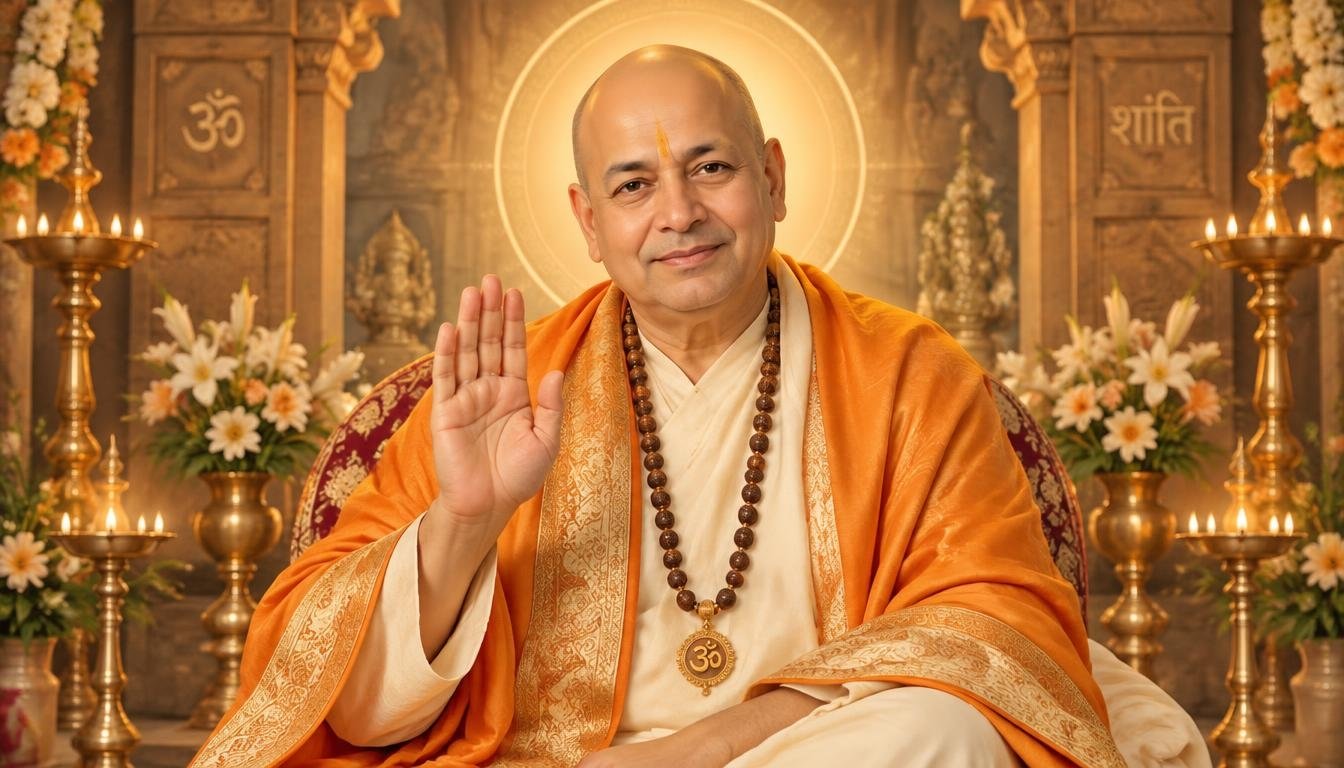
There are some personalities whose presence cannot be explained simply through stories, photographs, or the memories of people who met them. Their influence travels from one heart to another, quietly becoming a part of people’s lives.
Guruji Maharaj is remembered by His devotees in much the same way. For thousands of followers, Guruji is not merely a spiritual master or a religious personality. He is the embodiment of divine love, compassion, and the supreme consciousness of Lord Shiva in human form.
People from different backgrounds, religions, professions, and generations have found a spiritual connection with Guruji. Some devotees speak about the peace they experience through His blessings,
while others remember the transformation that came into their lives after becoming part of His sangat. Interestingly, the stories often begin with a simple encounter but continue as a lifelong journey of faith.
The official account of Guruji’s life describes Him as a divine presence whose human biography is deliberately limited. It also acknowledges that memories and stories can change over time,
so the available details should be understood with care. Yet, for His devotees, the spiritual significance of Guruji goes far beyond the details of an ordinary biography.
Understanding Guruji Maharaj’s life story, therefore, means exploring not only His early years and spiritual journey but also the values He encouraged: unconditional love, good karma, self-realization, humanity, and complete faith in the Divine.
Guruji Maharaj is worshipped by His devotees as Lord Shiva in human form. His followers believe that the Supreme Lord, who is beyond human understanding and worldly limitations, manifested Himself in a human body to guide people towards spiritual awareness.
In Hindu spirituality, Lord Shiva represents transformation, supreme consciousness, compassion, and the destruction of ignorance. He is known as the Lord of the three worlds, often described through the symbolism of His blue throat, serpents, and divine presence.
The devotional understanding of Guruji connects these traditional symbols with His earthly appearance and life. The official biography specifically mentions the presence of serpents around the time of His birth, interpreting this as a significant indication of His association with Shivji.
For devotees, the expression Shiva as Guruji is not simply a comparison between two spiritual personalities. It represents their belief that the same divine consciousness associated with Lord Shiva was present through Guruji’s human form.
This belief also explains why devotees address Him with affection and reverence. They see Guruji as a spiritual father, protector, guide, and the source of divine blessings.
According to the official account, Guruji Maharaj was born on 7 July 1954 in Dugri village, in the Malerkotla region of Punjab, India.
His birthplace was a farming village where everyday life revolved around agriculture, family responsibilities, and traditional community values. His father remembered that Guruji would often accompany him to the fields and help with farming activities.
The biography recalls an unusual observation: whenever Guruji worked in a particular field, its yield was believed to be considerably greater than that of surrounding fields. Such childhood accounts became an important part of the stories shared by His followers.
Another significant place in His early life was the dera of Sant Sewa Dasji. Guruji frequently visited the saint and spent time in the company of sages. His family, naturally concerned about His education, sometimes tried to prevent these visits.
However, He would continue returning to the dera.
The sages reportedly recognised something extraordinary in the young Guruji. They would describe Him as the Lord of all three lokas, a phrase carrying profound significance in Hindu spiritual tradition.
For devotees, these early incidents offer glimpses into what they consider His divine identity. They believe His spiritual nature was evident even during childhood, long before large numbers of people came to know Him.
Some of the most memorable stories about Guruji Maharaj come from His school days. They are shared by devotees as examples of His kindness, unusual abilities, and concern for others.
One account describes a schoolmate whose fountain pen became damaged shortly before an examination. Guruji reportedly offered His own pen to the classmate so that the boy could complete his examination.
Guruji then wrote His own paper using the broken pen.
It is a simple story, but there is something meaningful about it. Rather than worrying about His own convenience, He helped another student at a moment when help was needed. His devotees often connect such incidents with the larger spiritual principle of selfless service.
Other childhood stories mention teachers being surprised by His unusual behaviour and classmates remembering His remarkable understanding of examination questions.
Whether viewed as devotional accounts or childhood memories preserved through oral tradition, these stories have become part of the Guruji Maharaj biography shared within His spiritual community.
What stands out is the recurring theme of compassion. His followers believe that divinity is not always expressed through grand displays. Sometimes, it appears through an ordinary act of kindness that makes another person’s difficult moment a little easier.
Guruji also completed higher education, fulfilling His father’s wish that He receive a good academic foundation.
According to the official biography, He obtained two Master’s degrees, one in English and another in Economics.
This aspect of His life is particularly interesting because it shows that His early years included both conventional education and a deep attraction towards spiritual company.
His parents gradually came to understand that their son followed a path that was different from the usual expectations of family and society.
The biography recalls that His mother affectionately called Him Guruji, just as His devotees did. During satsangs, she was also seen touching His feet as a mark of reverence.
At a certain point, Guruji began moving beyond His family home and travelling as part of His spiritual journey. He would stay with acquaintances for some days and then leave, sometimes remaining away for extended periods.
When asked about His name, the official account says He would respond that Mahapurushs have no name.
The explanation reflects a spiritual understanding in which an enlightened being is no longer defined by ordinary personal identity. The individual self is considered merged with the Divine.
For devotees, this idea provides another insight into Guruji Maharaj’s divine identity.
The relationship between Guruji Maharaj and Lord Shiva is central to the faith of His followers.
In traditional Hindu belief, Lord Shiva is the Supreme Lord associated with creation, preservation, and transformation through the wider understanding of divine consciousness. His symbolism includes the serpent, the crescent moon, the third eye, and the blue throat.
The official Guruji biography draws particular attention to the serpents associated with His birth and connects this detail with the traditional imagery of Shivji.
For devotees, this is one of the reasons they believe that Guruji was Lord Shiva incarnate.
However, the deeper meaning of this belief is not limited to recognising familiar religious symbols. It also concerns the qualities associated with Shiva: detachment, compassion, fearlessness, spiritual awareness, and the ability to transform suffering.
Guruji’s followers see these qualities reflected in His teachings and the way He interacted with people.
The expression Lord Shiva in human form therefore represents a deeply held devotional conviction. It explains why many devotees approach Guruji with the same faith, surrender, and affection that they associate with worshipping Mahadev.
Two devotional expressions closely associated with this spiritual connection are:
These words are more than familiar devotional phrases for many followers. They represent a continuing relationship with the Divine.
Perhaps the most meaningful part of Guruji Maharaj’s legacy is His emphasis on becoming a good human being.
According to the official biography, Guruji did not depend on lengthy sermons or complicated religious explanations. His approach was described as practical spirituality.
He encouraged people to love God, help others, avoid harming anyone, and develop a compassionate attitude towards humanity.
One of the central ideas associated with His teachings is that all religions come from the same divine source.
This understanding promotes universal brotherhood, where people are not separated by caste, creed, religious identity, financial position, or social status.
For Guruji’s devotees, spirituality should not create distance between human beings. It should bring them closer.
Some important principles associated with His teachings include:
These principles are simple to understand, yet following them consistently requires patience and self-awareness.
That is where the idea of practical spirituality becomes especially important. It asks people to bring their beliefs into ordinary life, not just remember them during prayer.
Karma is an important concept in Hindu philosophy. It refers broadly to the relationship between actions and their consequences.
People often encounter difficult situations and wonder why certain problems have entered their lives. Guruji’s devotees understand His spiritual guidance in relation to the challenges associated with past karma.
The official biography describes Guruji as helping devotees navigate their karma and suffering. It also presents His willingness to take upon Himself the difficulties of His devotees as an expression of divine sacrifice.
For His followers, this is one of the most touching aspects of His spiritual identity.
They believe that divine grace can provide strength when human beings feel overwhelmed by circumstances they cannot control.
However, the message is not simply to wait for problems to disappear. Guruji encouraged people to become better human beings, perform good deeds, and maintain faith.
This understanding makes Guruji Maharaj blessings meaningful beyond material expectations.
A blessing can be understood as peace during a difficult period, courage when facing uncertainty, or the wisdom to choose the right path.
It may also encourage a person to become more patient, forgiving, and helpful towards others.
The idea is that spiritual progress should be reflected in how people live, not merely in what they ask from God.
Guruji satsang became an important part of His spiritual journey and the lives of His devotees.
Satsang traditionally refers to a spiritual gathering where people come together in the company of a spiritual guide or in remembrance of divine truth.
Guruji held satsangs at different places, including Jalandhar, Chandigarh, Panchkula, and New Delhi.
Over time, people from different parts of India and other countries began attending these gatherings to seek His blessings.
There was a special atmosphere associated with these gatherings. Devotees came not only with their personal concerns but also with a desire to experience spiritual peace and a sense of belonging.
An interesting aspect of Guruji’s approach was the absence of social distinctions. People from different economic and cultural backgrounds could participate in the same congregation.
For many followers, this was a practical expression of His message that humanity belongs to one universal family.
The Guruji sangat became more than a group of people attending religious gatherings. It developed into a community connected through faith, devotion, and shared spiritual experiences.
Even today, devotees remember these gatherings as important moments in their spiritual lives.
Music has always played a special role in spiritual traditions across India.
Bhajans, kirtans, and shabads have helped people express emotions that are sometimes difficult to communicate through ordinary speech.
In Guruji’s spiritual tradition, Guruji shabads hold particular significance.
The official biography explains that Guruji did not deliver conventional sermons. Instead, His teachings reached devotees through the shabads sung during satsangs.
These devotional compositions became a way of communicating spiritual ideas, encouraging reflection, and strengthening the Guru-disciple relationship.
A person listening to a shabad may find comfort in its words, while another may discover a reminder about humility, faith, or the importance of doing good.
This is one of the beautiful qualities of devotional music. Its meaning can become deeply personal.
For devotees, shabads are not simply songs performed during religious gatherings. They are spiritual reminders that help keep the mind connected with the Divine.
They also encourage the listener to look beyond temporary concerns and remember the larger purpose of life.
Food has a special place in Indian religious and cultural traditions.
In Sikh spirituality, for example, langar represents the spirit of equality, service, and community. People sit together and share food without distinctions based on wealth, caste, or social position.
A similar sense of togetherness is associated with the Guruji langar prasad served during satsangs.
The official account mentions that tea and blessed food were served at these gatherings and were regarded by devotees as carrying Guruji’s divine blessings.
For many people, these simple offerings became treasured memories.
Imagine attending a spiritual gathering, sitting among people you may have never met before, and sharing a cup of tea or a meal. For a while, differences in profession, status, and background become unimportant.
That feeling of belonging is itself a beautiful expression of community.
Devotees often associate prasad with gratitude and divine grace. Receiving it is not simply about eating something. It is about remembering the sacredness of sharing and accepting what is offered with humility.
Many devotees approach Guruji Maharaj with the hope of receiving blessings during difficult phases of life.
Some seek strength during family problems, others pray for good health, and many remember Guruji when they face uncertainty in their professional or personal lives.
The official biography mentions that people initially approached Him with various material difficulties, including problems related to homes, businesses, employment, and illness.
However, Guruji encouraged people to approach the Divine for love rather than merely for worldly benefits.
This is an important distinction in understanding Guruji Maharaj spirituality.
Faith should not become a transaction in which a person remembers God only when something is needed. Instead, devotion should grow from love, gratitude, and surrender.
Guruji’s message also included the importance of the Guru-disciple relationship.
According to the devotional understanding presented in His biography, this sacred connection could help transform a devotee’s life and bring greater peace, fulfilment, and joy.
His words, including “Kalyan karta” and “Blessings always”, are remembered by devotees as expressions of divine compassion.
The greatest blessing, in this understanding, is not necessarily the fulfilment of every worldly desire. It is the opportunity for self-realization and a deeper connection with the Divine.
<PRIVATE_PERSON> devotees often associate their spiritual journey with Bade Mandir, the sacred temple connected with Guruji Maharaj.
The official biography explains that after Guruji left His physical form on 31 May 2007, devotees lovingly established His samadhi within the mandir.
Set amid a beautiful garden, Bade Mandir became an important place of devotion and remembrance.
For followers, visiting the temple is an opportunity to express gratitude, remember Guruji’s teachings, and experience a sense of spiritual connection.
The atmosphere of a sacred place can mean different things to different people. Some may find peace in prayer, while others appreciate the opportunity to sit quietly and reflect.
For devotees, Bade Mandir represents much more than a physical structure.
It is associated with memories of Guruji, the shared experiences of the sangat, devotional music, and the belief in His continuing divine presence.
The temple also represents the enduring nature of His spiritual legacy. Although His physical form is no longer present, His followers continue to remember His teachings through devotion and service.
The relationship between a Guru and a disciple is one of the most meaningful ideas in Indian spiritual philosophy.
A Guru is traditionally understood as a guide who helps a person move from ignorance towards knowledge and spiritual awareness.
In Guruji’s tradition, the relationship is described as a sacred connection rooted in love, trust, faith, and surrender.
The disciple does not simply listen to spiritual advice and forget it after leaving a gathering. Instead, the teachings gradually become part of everyday behaviour.
This relationship can encourage a person to examine personal weaknesses, become more compassionate, and develop a stronger sense of responsibility towards others.
For Guruji’s devotees, the connection is also deeply personal.
One follower may remember a particular shabad that helped during a difficult period, while another may recall an experience at satsang that strengthened their faith.
These personal memories form an important part of the collective spiritual experience.
The real value of a spiritual connection, however, can also be seen through its influence on how a person treats family members, friends, strangers, and society.
It is easy to associate spirituality with rituals, religious gatherings, long prayers, and sacred places.
Yet Guruji’s teachings, as described in the official biography, placed particular importance on living a spiritually responsible life.
He discouraged fear-based superstitions and outward practices that distracted people from genuine devotion.
He emphasised loving God and recognising the unity behind different religions.
This message remains relevant because people sometimes become so occupied with religious formalities that they forget the values those traditions are meant to encourage.
Practical spirituality brings attention back to everyday choices.
These actions may seem ordinary, but they reflect the kind of transformation that spiritual teachings seek to inspire.
For devotees, this is an important part of Guruji Maharaj’s legacy as Lord Shiva in human form.
His divine identity is honoured through devotion, while His teachings offer a way to bring that devotion into practical life.
According to the official biography, Guruji Maharaj left His physical form on 31 May 2007.
His devotees remember this date with deep emotion, as it marks the departure of the beloved human form through which they experienced His presence.
The biography also connects His passing with a lesson about the temporary nature of human life. Guruji had repeatedly reminded devotees that physical existence is not permanent.
This understanding is central to many spiritual traditions, where life is seen as a journey towards a deeper awareness of the eternal.
For His followers, however, the departure of His physical form did not mean the end of their spiritual relationship with Him.
They continue to remember Him through satsangs, shabads, prayers, visits to Bade Mandir, and the practice of His teachings.
His legacy is also reflected in the values He encouraged: unconditional faith, compassion, selfless service, and universal brotherhood.
The stories of His childhood, spiritual journey, and divine blessings continue to be shared among devotees and passed on to younger generations.
A spiritual legacy does not survive merely because people remember dates or repeat stories. It survives when its central values continue to influence human behaviour.
That is the deeper significance many followers find in Guruji Maharaj’s life.
For someone who wishes to understand Guruji Maharaj beyond the stories and devotional descriptions, a useful starting point is to reflect on His teachings and apply them in daily life.
Spiritual growth does not necessarily require dramatic changes. Often, it begins with small decisions made consistently.
Here are some meaningful ways to bring His teachings into everyday living:
Practise gratitude: Begin and end the day by remembering the good things in life. Gratitude encourages humility and reduces the tendency to take people and opportunities for granted.
Help others without expecting anything: A small act of assistance can make a meaningful difference in someone’s life. Offer help without making it a reason to demand appreciation.
Respect every religion: Remember the message of universal brotherhood. Avoid judging people simply because their religious practices or beliefs are different.
Listen to devotional shabads: Spend some quiet time listening to meaningful spiritual compositions. Reflect on their messages instead of treating them as background music.
Develop unconditional faith: Difficult situations are a part of human life. Faith can provide emotional strength and encourage a calmer approach to challenges.
Avoid unnecessary criticism: Before speaking negatively about another person, consider whether the words are helpful or merely hurtful.
Remember the Divine: Whether through prayer, meditation, satsang, or quiet reflection, maintain a sincere spiritual connection.
The purpose is not to become perfect overnight. It is to become a little more understanding, patient, and compassionate with each passing day.
Guruji Maharaj is worshipped by His devotees as Lord Shiva in human form and is revered for His divine presence, blessings, and spiritual teachings.
Yes, His devotees believe that Guruji Maharaj is Lord Shiva manifested in human form, representing divine love, compassion, and supreme consciousness.
According to His official biography, Guruji Maharaj was born on 7 July 1954 in Dugri village, in the Malerkotla region of Punjab, India.
Guruji’s teachings focus on loving God, helping humanity, performing good deeds, respecting all religions, practising kindness, and developing unconditional faith.
Bade Mandir is a sacred place associated with Guruji Maharaj, where His samadhi is located. Devotees visit to remember Him, pray, and seek His divine blessings.
Read ARticul: https://templetimingsdaily.com/janpath-market-delhi/
The story of Guruji Maharaj – Lord Shiva in human form is, for His devotees, a story of divine presence, unconditional love, spiritual guidance, and the transformation of human life.
From His birth in Dugri village in Punjab to the spiritual gatherings that brought people together across different cities, His journey remains an important part of the faith and memories of His followers.
His childhood stories, association with Sant Sewa Dasji, educational journey, satsangs, shabads, and connection with Bade Mandir all contribute to the picture of a spiritual personality whose influence continues beyond His physical lifetime.
Yet perhaps the most meaningful part of His legacy is the message that spirituality should make us better human beings.
To love God, help others, harm none, respect every religion, and develop unconditional faith are principles that remain valuable in every generation.
For devotees, Guruji is Shivji, the Supreme Divine Presence who continues to bless and guide them. Their faith is expressed through the words Aum Namah Shivay and Shivji Sada Sahay.
And for anyone exploring His teachings, there is a simple but powerful thought worth carrying forward: the true beauty of devotion is reflected in the kindness we show to others.
May the divine blessings of Guruji Maharaj bring peace, compassion, strength, and spiritual fulfilment into every heart.
Shivji Sada Sahay. Aum Namah Shivay.