Physical Address
304 North Cardinal St.
Dorchester Center, MA 02124
Physical Address
304 North Cardinal St.
Dorchester Center, MA 02124

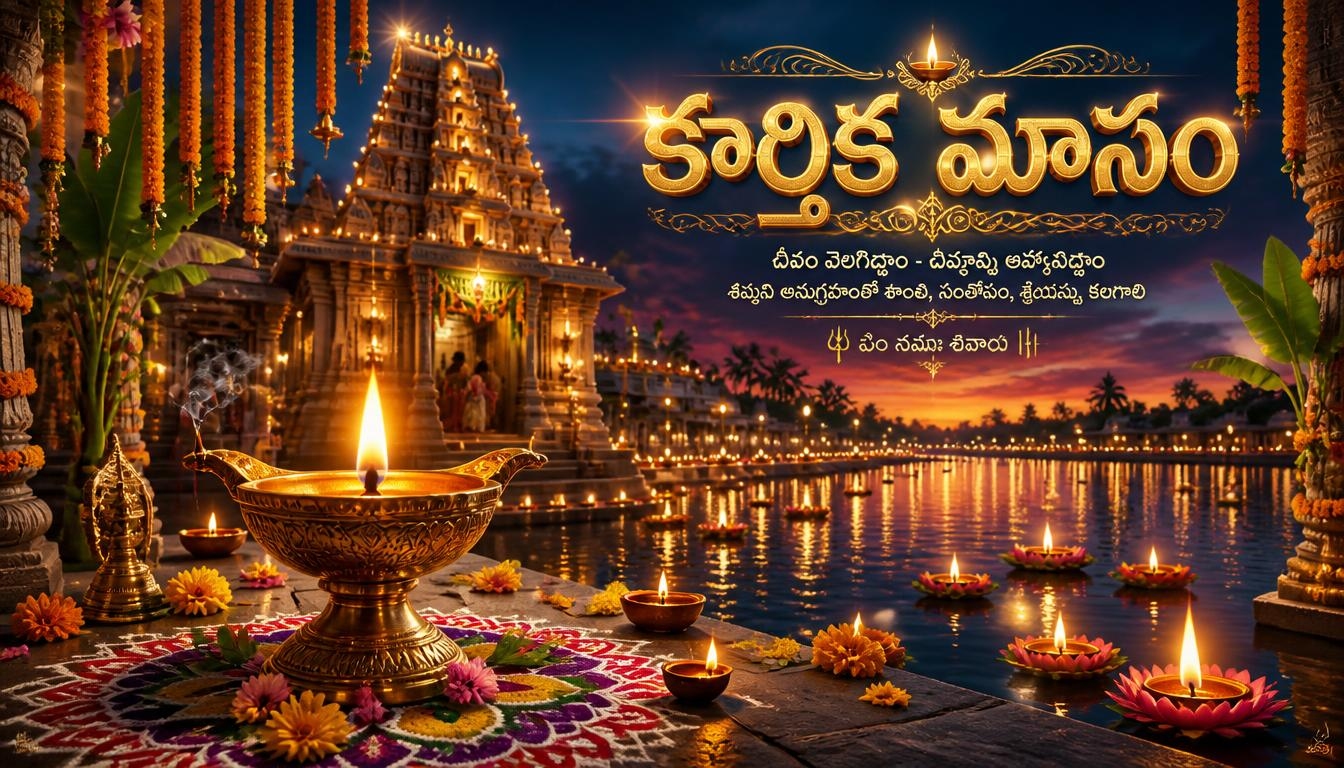
Karthika Masam 2026 is one of the most spiritually significant months in the Hindu calendar, especially for devotees of Lord Shiva and Lord Vishnu.
As the cool November mornings arrive, temples begin to glow with rows of little oil lamps, homes become filled with devotional songs, and families prepare for a month of prayer, fasting, charity, and sacred traditions.
There is something beautiful about this month: even a small earthen diya placed near a doorstep can make an ordinary evening feel deeply meaningful.
Observed with devotion across Andhra Pradesh, Telangana, Tamil Nadu, Karnataka, Maharashtra, and other parts of India, Karthika Masam brings together several important religious practices.
Devotees wake up before sunrise, take holy baths, visit temples, perform Shiva Abhishekam, worship Tulsi plants, and light lamps every evening. Some observe Karthika Somavara Vratam, while others dedicate their time to chanting mantras and helping people in need.
But when does Karthika Masam begin in 2026? Which Mondays are considered auspicious? What is the importance of Karthika Deepam and Karthika Purnima? And how can families observe this sacred month at home?
Let’s explore the important dates, spiritual meaning, traditional rituals, fasting practices, and celebrations associated with this special month.
According to the Telugu Amanta Hindu lunar calendar, Karthika Masam 2026 begins on Tuesday, November 10, 2026, and ends on Tuesday, December 8, 2026. The month begins after Ashwayuja Amavasya and continues until Karthika Amavasya.
It is particularly important for devotees who worship Lord Shiva and Lord Vishnu. Throughout these lunar days, people follow different devotional practices to seek divine blessings, peace, prosperity, and spiritual purification.
The following dates are based on the Telugu calendar tradition followed in Andhra Pradesh and Telangana.
| Occasion | Date in 2026 |
|---|---|
| Karthika Masam begins | Tuesday, November 10 |
| First Karthika Somavaram | Monday, November 16 |
| Second Karthika Somavaram | Monday, November 23 |
| Karthika Purnima | Tuesday, November 24 |
| Third Karthika Somavaram | Monday, November 30 |
| Fourth Karthika Somavaram | Monday, December 7 |
| Karthika Masam ends | Tuesday, December 8 |
These dates make it easier for devotees to prepare their fasting schedules, temple visits, and family pujas in advance.
One important calendar detail: North Indian communities generally follow the Purnimanta system, under which Kartik month in 2026 runs approximately from October 27 to November 24. The dates above specifically follow the Telugu Amanta tradition, so the two calendars should not be confused.
The Karthika Masam 2026 calendar includes several important festivals and religious observances. Each occasion carries its own story, traditional significance, and way of worship.
Some days are dedicated to Lord Shiva, while others celebrate Lord Vishnu, Goddess Tulsi, and Lord Karthikeya. Families often mark these occasions with special prayers and temple visits.
Here are some important dates to remember:
| Festival or Occasion | Date | Significance |
|---|---|---|
| Karthika Masam Begins | November 10 | Beginning of the sacred lunar month |
| Nagula Chavithi | November 13 | Worship of serpent deities |
| Skanda Sashti | November 15 | Celebration associated with Lord Murugan |
| First Somavaram | November 16 | Special Monday worship of Lord Shiva |
| Devutthana Ekadashi | November 20 | Lord Vishnu’s awakening from Chaturmas |
| Ksheerabdi Dwadashi / Tulsi Vivah | November 21 | Sacred Tulsi and Vishnu-related observances |
| Second Somavaram | November 23 | Shiva worship and Vaikuntha Chaturdashi observance |
| Karthika Purnima | November 24 | Sacred full moon and Deepam celebrations |
| Third Somavaram | November 30 | Monday fasting and Shiva puja |
| Fourth Somavaram | December 7 | Final Karthika Monday observance |
| Karthika Amavasya | December 8 | Conclusion of the lunar month |
Festival observances can sometimes differ according to local Panchangam calculations and family traditions. In particular, the timing of Ekadashi and related ceremonies may vary by location.
The Karthika Masam significance comes from its association with devotion, self-discipline, charity, and spiritual growth. Many Hindu traditions consider this an especially auspicious month for worshipping Lord Shiva and Lord Vishnu.
In Shaiva traditions, devotees offer prayers to Mahadeva, perform Shiva Abhishekam, and chant the Shiva Panchakshara Mantra. In Vaishnava traditions, people worship Lord Vishnu, Damodara, and Tulsi Devi with special devotion.
The month also encourages people to slow down and pay attention to their spiritual lives. Instead of focusing only on everyday responsibilities, devotees try to make time for prayer, compassion, and good deeds.
Some of the important spiritual beliefs associated with this month include:
The most beautiful lesson of Karthika Masam is that devotion does not always require elaborate arrangements. Sometimes, a sincere prayer offered with a peaceful heart means more than a grand ceremony.
Karthika Masam holds a special place in the Shaiva tradition. Devotees believe that worshipping Lord Shiva during this month brings spiritual merit and an opportunity to strengthen their relationship with Mahadeva.
Temples dedicated to Shiva become especially active, with devotees offering milk, water, honey, curd, Bilva leaves, and flowers to the Shiva lingam.
One popular practice is Karthika Somavara Abhishekam, performed on Mondays throughout the month. Many devotees visit nearby Shiva temples early in the morning, participate in Rudrabhishekam, and spend time chanting Om Namah Shivaya.
The month is also connected with the story of Lord Shiva and Tripurasura. According to Hindu mythology, Shiva destroyed the three cities of Tripurasura, symbolizing the victory of divine power over destructive forces. This story is remembered during Tripuri Purnima, another name associated with Karthika Purnima.
For many families, the connection with Lord Shiva is not limited to temple worship. They also light lamps at home, read devotional stories, and encourage children to learn about the importance of kindness and humility.
Although Karthika Masam is widely recognized for Shiva worship, it is equally meaningful in Vaishnava traditions.
Lord Vishnu is worshipped in his various forms, including Damodara and Narayana. Devotees offer Tulsi leaves, flowers, fruits, and lamps while reciting Vishnu prayers.
The month also includes Devutthana Ekadashi, also called Prabodhini Ekadashi. According to traditional beliefs, Lord Vishnu awakens from his cosmic rest during Chaturmas on this auspicious occasion.
Another important celebration is Tulsi Vivah, which symbolically celebrates the marriage of Goddess Tulsi with Lord Vishnu in his Shaligrama or Damodara form, depending on the tradition.
This connection between Shiva and Vishnu makes Karthika Masam particularly special. Rather than treating the two traditions as separate, many devotees celebrate both forms of divine worship throughout the month.
Monday is considered particularly sacred for Lord Shiva. During Karthika Masam, devotees observe special prayers and fasting on Mondays, known as Karthika Somavaram or Somavara Vratam.
In 2026, four Mondays fall within the Telugu Karthika month.
| Somavaram | Date | Day |
|---|---|---|
| First Karthika Somavaram | November 16, 2026 | Monday |
| Second Karthika Somavaram | November 23, 2026 | Monday |
| Third Karthika Somavaram | November 30, 2026 | Monday |
| Fourth Karthika Somavaram | December 7, 2026 | Monday |
Each Monday provides another opportunity for devotees to perform Shiva puja and strengthen their spiritual discipline.
Some people observe a complete fast, while others eat one vegetarian meal or follow a simpler dietary routine. There is no single fasting method followed by everyone.
The first Monday marks an important beginning for devotees who have decided to observe the monthly vratam. People wake up early, take a bath, clean their prayer spaces, and visit Shiva temples.
Special Abhishekam, Bilva leaf offerings, and chanting are common practices. Families may also light an oil lamp in the evening and pray for peace and well-being.
The second Monday comes just before Karthika Purnima. It is also associated with Vaikuntha Chaturdashi in 2026.
Some traditions emphasize the worship of both Lord Shiva and Lord Vishnu on this occasion. Devotees may perform special pujas and recite prayers dedicated to both deities.
The third Monday falls during the Krishna Paksha, the waning phase of the lunar month.
Many devotees continue their fasting, temple visits, and evening Deepa Aradhana. It is also a meaningful time to maintain the devotional habits established earlier in the month.
The final Monday is especially important because it coincides with Karthika Masa Shivaratri.
Devotees may perform Shiva Abhishekam, chant sacred mantras, and participate in evening or nighttime temple prayers. Some temples organize special devotional programs and night-long vigils.
The beauty of Karthika Masam can be seen in the variety of rituals followed by Hindu families. Some practices are performed daily, while others are reserved for Mondays, full moon days, and special festival occasions.
Here are the most commonly followed Karthika Masam rituals.
Lighting an oil lamp, known as Deepam, is one of the most recognizable practices of this month.
Families usually light earthen diyas near their home temples, Tulsi plants, entrances, or other clean and appropriate prayer spaces. Sesame oil and ghee are traditionally used.
The glowing flame represents knowledge, purity, and the removal of darkness from life. Many people consider the evening lamp a simple but meaningful expression of devotion.
Taking a sacred bath before sunrise is another important tradition.
Devotees often wake up during Brahma Muhurta, complete their morning bath, and begin the day with prayers. Some visit sacred rivers such as the Godavari River, Krishna River, and Tungabhadra River.
A holy bath is traditionally associated with spiritual purification. People who cannot visit a river may take a regular bath at home and offer their prayers sincerely.
Shiva Abhishekam is performed by offering sacred substances to the Shiva lingam.
Depending on the temple or family tradition, devotees may use water, milk, curd, honey, ghee, and Panchamrit. Bilva leaves are also offered with devotion.
During Karthika Somavaram, many temples organize special Abhishekam ceremonies. Devotees participate in the rituals while listening to Vedic chants and Shiva mantras.
Tulsi worship has a special place during Karthika Masam, particularly among Vaishnava families.
People clean the area around the Tulsi plant, decorate it with flowers, and light a small lamp nearby. Some families perform Tulsi Vivah with traditional offerings and devotional songs.
The Tulsi plant is traditionally regarded as sacred and associated with Goddess Tulsi and Lord Vishnu.
Some families and temples follow special Deepa Aradhana practices involving lamps and symbolic offerings connected with the five elements, known as Panchatatva.
The five elements are earth, water, fire, air, and space. These elements represent the basic components of creation in Hindu philosophy.
The exact arrangement and procedure differ among communities, so devotees generally follow their family’s established tradition.
Temple visits become an important part of the month.
Devotees visit Shiva and Vishnu temples, offer flowers, participate in Abhishekam, and light lamps. Many temples organize Deepotsavam programs in which hundreds or thousands of diyas illuminate the temple premises.
These celebrations create a wonderful atmosphere, especially during the evening hours.
Karthika Masam also encourages acts of generosity.
People donate food, clothing, sesame seeds, and other useful items to those in need. Some families participate in Annadanam, providing meals to devotees and disadvantaged communities.
The real value of charity lies in helping others without expecting anything in return.
Karthika Deepam 2026 is one of the most celebrated occasions associated with the sacred month. In the Telugu calendar, Karthika Deepam is observed on Tuesday, November 24, 2026, coinciding with Karthika Purnima.
The festival celebrates the divine significance of light and is closely associated with Lord Shiva.
One of the most famous celebrations takes place at Arunachaleswarar Temple in Tiruvannamalai, Tamil Nadu. A massive sacred flame is traditionally lit on Arunachala Hill, attracting thousands of devotees.
The celebration is connected with the legend of Lord Shiva appearing as an endless pillar of fire, demonstrating his infinite nature.
In different regions, people celebrate the occasion in their own ways:
The sight of countless little flames shining together is a reminder that even a small source of light can brighten a much larger space.
Karthika Purnima, also known as Kartika Pournami or Tripuri Purnima, falls on Tuesday, November 24, 2026, according to the Indian calendar.
It is one of the most important full moon observances of the month.
The Purnima tithi begins late on November 23 and continues until the evening of November 24, making November 24 the principal observance date in the commonly followed Indian calendar.
Devotees take holy baths, perform special pujas, visit temples, and light lamps in the evening. In some communities, people also observe Satyanarayana Vratam.
Another beautiful tradition involves lighting 365 lamps, symbolically representing the days of the year. This practice is followed by certain families and temples, although the number and method may vary.
Girivalam is a sacred circumambulation of Arunachala Hill in Tiruvannamalai, Tamil Nadu.
Devotees walk along the traditional route around the hill, offering prayers to Lord Arunachaleswarar. The practice is especially popular on full moon nights.
During Karthika Purnima, large numbers of pilgrims visit Tiruvannamalai to participate in the spiritual atmosphere and witness the famous Karthika Deepam celebration.
The journey can take several hours, so visitors should plan their trip carefully, carry drinking water, and follow local temple and crowd-management instructions.
Fasting is an important part of Karthika Masam vratam, particularly on Mondays and Ekadashi.
However, fasting practices are not identical across all Hindu communities. Some devotees observe a complete fast, others eat once a day, and some follow a simple vegetarian diet throughout the month.
Traditional fasting rules may include:
Common foods during this month include fruits, milk, nuts, rice, vegetables, and simple vegetarian preparations, depending on family customs.
Some devotees also avoid onion and garlic during particular vratams.
It is important to remember that fasting should be practiced responsibly. Children, pregnant women, older adults, and people with medical or dietary requirements should not undertake restrictive fasting without appropriate professional advice.
The spiritual purpose of fasting is self-discipline and devotion, not physical hardship.
Mantra chanting is another meaningful practice during this month. Devotees recite prayers dedicated to Lord Shiva, Lord Vishnu, and other deities according to their spiritual traditions.
You do not need to memorize dozens of complicated prayers to begin. Even repeating one simple mantra with sincerity can become a beautiful daily habit.
Some popular Karthika Masam mantras include:
Om Namah Shivaya
This five-syllable mantra is among the most widely recited prayers dedicated to Lord Shiva. Devotees chant it during morning puja, temple visits, and meditation.
Om Tryambakam Yajamahe Sugandhim Pushtivardhanam, Urvarukamiva Bandhanan Mrityor Mukshiya Maamritat.
This sacred mantra is associated with Lord Shiva and is traditionally recited for spiritual strength, protection, and well-being.
Shubham Karoti Kalyanam Arogyam Dhana Sampadah, Shatrubuddhi Vinashaya Deepajyotir Namostute.
This prayer is commonly associated with the lighting of lamps and expresses reverence for the sacred light.
Devotees may also recite:
Some people chant Shiva mantra 108 times using a rudraksha mala. Others prefer listening to devotional songs or reading a short passage from sacred texts.
Choose a practice that you can follow consistently rather than making a complicated routine that becomes difficult to maintain.
Karthika Masam is a wonderful time for temple visits. Many sacred places organize special pujas, Deepotsavam celebrations, and devotional activities throughout the month.
Here are some important temples associated with Shiva and Vishnu worship.
This famous Tamil Nadu temple is closely associated with Lord Shiva as Arunachaleswarar.
Its Karthika Deepam celebration is particularly renowned. The sacred flame on Arunachala Hill is one of the most memorable parts of the festival.
Dedicated to Lord Shiva, Kashi Vishwanath is among the most important Jyotirlinga temples in India.
During Kartik celebrations, the ghats of Varanasi become especially beautiful with devotional activities and rows of lamps.
Mahakaleshwar Temple is an important pilgrimage destination in Madhya Pradesh.
Devotees visit throughout the year to seek the blessings of Lord Shiva and participate in traditional worship.
Srisailam is an important pilgrimage destination dedicated to Lord Mallikarjuna.
Karthika Masam attracts many devotees who participate in special temple worship, lamp-lighting ceremonies, and other religious observances.
Tirumala is one of the most important Vaishnava pilgrimage destinations.
Devotees visit to worship Lord Venkateswara and seek his blessings during the sacred month.
This historic Tamil Nadu temple is dedicated to Lord Nataraja, the cosmic dancer form of Shiva.
It is an important destination for devotees interested in Shaiva traditions and temple worship.
The benefits of observing Karthika Masam are traditionally understood in spiritual and devotional terms.
Many Hindu scriptures and religious traditions emphasize the value of prayer, charity, fasting, bathing, and lighting lamps during this month.
Some commonly described Karthika Masam benefits include:
These are religious beliefs and traditional spiritual benefits rather than scientifically guaranteed outcomes. The deeper message is to use the month as an opportunity to become more compassionate, patient, and devoted.
Not everyone can travel to famous temples or participate in large religious celebrations. Fortunately, Karthika Masam can be observed meaningfully at home.
A simple daily routine is often enough to maintain the spirit of the month.
Here are some ideas:
A family can also set aside a few minutes every evening for a small prayer gathering. Children can participate by helping arrange flowers or lighting a lamp with adult supervision.
The goal is not to make every day complicated. It is to bring a little more devotion and kindness into everyday life.
Chaturmas is a traditional four-month period associated with spiritual discipline and religious observances.
In Vaishnava traditions, this period is connected with the cosmic rest of Lord Vishnu. Devotees observe various restrictions, fasts, and devotional practices during these months.
Karthika Masam comes toward the concluding part of this traditional period.
Devutthana Ekadashi, also known as Prabodhini Ekadashi, marks the symbolic awakening of Lord Vishnu. This occasion is particularly significant for Vaishnava devotees.
The observance is followed by celebrations such as Tulsi Vivah in many communities, marking the beginning of an auspicious period for marriages and other ceremonies according to local traditions.
This connection explains why Karthika Masam includes important practices dedicated to both Lord Shiva and Lord Vishnu.
Karthika Masam starts on Tuesday, November 10, 2026, according to the Telugu Amanta calendar followed in Andhra Pradesh and Telangana.
Read ARticul: https://templetimingsdaily.com/bonalu-2/
The month ends on Tuesday, December 8, 2026, which is observed as Karthika Amavasya in the Telugu calendar.
There are four Karthika Somavarams in 2026: November 16, November 23, November 30, and December 7.
Karthika Purnima falls on Tuesday, November 24, 2026. It is a sacred full moon occasion associated with Lord Shiva, holy baths, lamp offerings, and Deepam celebrations.
Karthika Masam is especially sacred in Shaiva traditions. Devotees perform Shiva Abhishekam, observe Monday fasting, offer Bilva leaves, and chant Om Namah Shivaya to seek Mahadeva’s blessings.
Lamps symbolize divine light, knowledge, purity, and the removal of darkness. Lighting diyas is considered an important devotional practice throughout the month.
Many Hindu families traditionally avoid non-vegetarian food throughout Karthika Masam as part of their devotional discipline. However, customs differ by family and region.
Devotees generally wake up early, take a bath, perform Shiva puja, offer Bilva leaves, chant mantras, observe fasting according to their capacity, and light an evening lamp.
Tulsi Vivah symbolizes the marriage of Goddess Tulsi with Lord Vishnu or his Shaligrama form. It is traditionally celebrated around Ksheerabdi Dwadashi and marks an auspicious occasion in many Hindu communities.
Om Namah Shivaya is one of the most popular mantras for this month. Devotees may also chant the Maha Mrityunjaya Mantra, Deepa Jyoti Mantra, or Vishnu prayers according to their beliefs.
The month is calculated differently in the North Indian Purnimanta and South Indian Amanta calendar systems. In 2026, the Telugu Amanta Karthika Masam runs from November 10 to December 8, while the North Indian Kartik month runs approximately from October 27 to November 24.
Karthika Masam 2026 ends on December 8, 2026, according to the Telugu Amanta Hindu calendar. Devotees mark the occasion with prayers, traditional rituals, and special worship.
Karthika Masam 2026 begins on November 10 and ends on December 8, 2026, in Andhra Pradesh and Telangana. The month is dedicated to the worship of Lord Shiva and Lord Vishnu.
The last date of Karthika Masam 2026 is December 8, which falls on Tuesday. It coincides with Karthika Amavasya in the Telugu lunar calendar.
Karthika Masam 2026 starts on November 10 and concludes on December 8, according to the Telugu Amanta calendar. These dates may differ in other regional Hindu calendar traditions.
Karthika Masam is not only about remembering festival dates or completing religious rituals. It is also about the intentions behind those actions.
If you want to observe the month meaningfully, try choosing a few practices that fit naturally into your daily life. You might light a diya every evening, visit a Shiva temple on Mondays, chant a mantra before starting work, or donate food to someone who needs it.
You can also make the experience more special by involving your family. Share the stories of Lord Shiva and Lord Vishnu with children, explain why Tulsi is worshipped, and encourage everyone to participate in small acts of kindness.
Here are a few practical ideas:
Most importantly, remember that devotion is not measured by the number of lamps you light or the number of hours you spend fasting. A sincere heart, good intentions, and kindness toward others are equally meaningful parts of spiritual life.
Karthika Masam 2026 offers a beautiful opportunity to reconnect with Hindu traditions, worship Lord Shiva and Lord Vishnu, and bring more spirituality into everyday life. Beginning on November 10 and concluding on December 8 in the Telugu Amanta calendar, this sacred month includes four Karthika Somavarams, Karthika Deepam, Karthika Purnima, Tulsi-related celebrations, and many meaningful devotional practices.
Whether you observe a Somavara Vratam, perform Shiva Abhishekam, worship Tulsi, take an early morning bath, or simply light a small diya at home, every sincere act can become a meaningful expression of faith.
May the divine light of Karthika Deepam bring peace to your home, may Lord Shiva and Lord Vishnu bless your family with happiness, and may this sacred month inspire everyone to live with compassion, gratitude, and devotion.
Happy Karthika Masam 2026! May every little lamp you light remind you that even the smallest spark of faith can brighten the darkest night.
If you have a special Karthika Masam tradition, a memorable temple visit, or a family ritual you follow every year, share your experience in the comments. Your story might inspire someone else to celebrate this beautiful month with even more devotion.