Physical Address
304 North Cardinal St.
Dorchester Center, MA 02124
Physical Address
304 North Cardinal St.
Dorchester Center, MA 02124

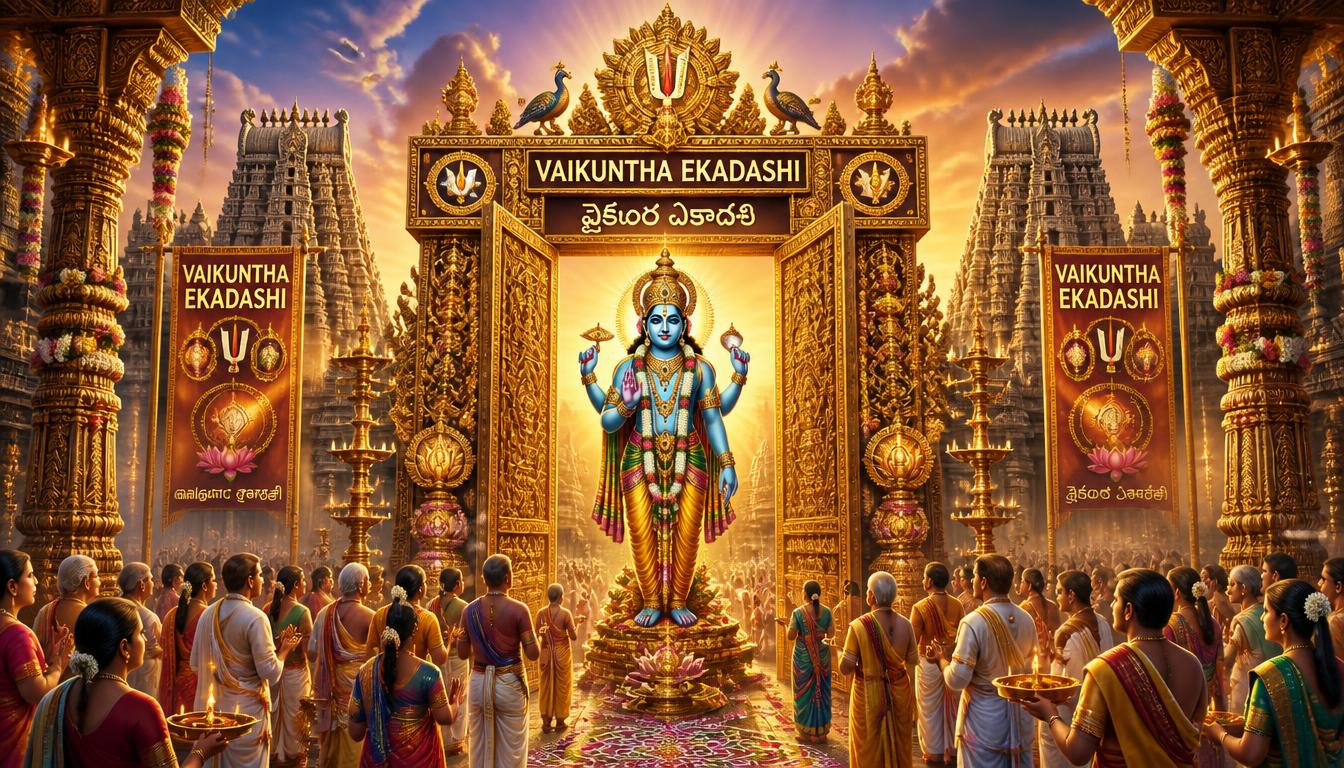
Vaikuntha Ekadashi is one of the most spiritually important days observed by many Vaishnavas, especially devotees who worship Vishnu. The day carries a special feeling of devotion, fasting, prayer, temple visits and quiet hope. For many devotees, it is not simply another Ekadashi on the Hindu calendar, but a sacred opportunity to turn the mind away from everyday distractions and towards Vishnu.
The name itself feels almost like an invitation. Vaikuntha is traditionally described as the divine abode of Vishnu, while Ekadashi refers to the 11th lunar day. When these ideas come together, the festival becomes associated with the spiritual journey toward Vishnu’s abode. Different communities observe it in slightly different ways, so the atmosphere can change from one temple and region to another.
In South India, the occasion can become a huge temple celebration, with thousands of devotees waiting to pass through a specially opened sacred entrance. Elsewhere, people may observe the day quietly at home with Japa, Dhyana, fasting and Vishnu worship. The outer celebration changes, but the devotional heart remains much the same.
Vaikuntha Ekadashi is a sacred Hindu festival associated with Vishnu and the Vaishnava tradition. It falls on the Ekadashi Tithi of the Shukla Paksha during a period connected with Dhanurmasa or Dhanu month. In different parts of India, it may also be known by names such as Vaikunta Ekadasi, Vaikunta Ekadashi, Mukkoti Ekadasi, or Mokshada Ekadashi, depending on regional and traditional usage.
Ekadashi itself occurs twice in many lunar months, once during the waxing fortnight and once during the waning fortnight. Vaikuntha Ekadashi is especially prominent because of its connection with Vaikuntha Dvaram, the symbolic gate associated with Vishnu’s divine abode.
For Vaishnavas, the day can be deeply devotional. People may spend more time chanting Vishnu’s name, reading Hindu scriptures, visiting temples or simply sitting quietly in prayer. It is one of those occasions where even a simple lamp, a small prayer and a few peaceful minutes can feel meaningful.
The Vaikuntha Ekadashi significance is closely connected with devotion to Vishnu and the traditional belief that sincere observance can help devotees move toward spiritual purification and liberation. The festival is therefore sometimes connected with the attainment of Vaikuntha and freedom from worldly attachment.
The sacred gate is perhaps the most recognizable feature of the celebration. In temples that observe this tradition, devotees may enter through a special northern entrance called Vaikuntha Dvaram, Paramapada Vasal, or Svarga Vasal. Walking through it is understood symbolically as entering the divine realm.
There is also a more personal side to the observance. Fasting, prayer and self-control give devotees an opportunity to pause. The day becomes less about collecting religious activities and more about creating a little space for Vishnu worship, reflection and devotion, which is sometimes the part people remember most.
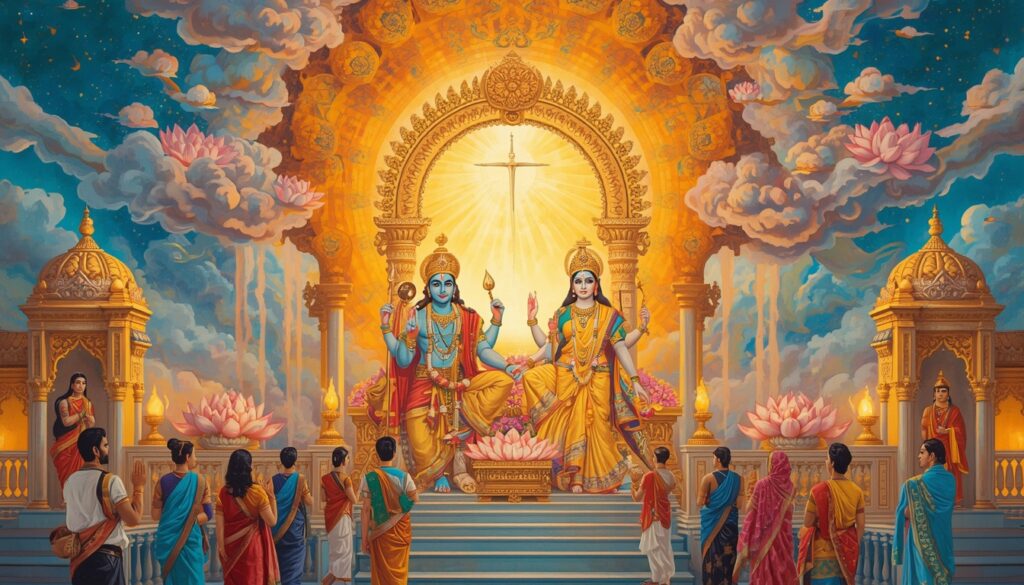
The traditional Vaikuntha Ekadashi story has several versions and is connected with different Hindu scriptures and regional traditions. One widely discussed account describes Vishnu’s battle with the demon Murāsura.
According to the traditional legend, Murāsura had become powerful and created trouble for the Devas. Vishnu engaged him in battle, and after a long struggle, the deity rested in a cave associated with Badarikashrama. While Vishnu was resting, a divine feminine power emerged from him.
This divine energy is identified in the tradition as Ekadashi goddess, or a manifestation connected with Yogamaya. She confronted Murāsura and defeated him. When Vishnu awakened, he recognized the divine power that had appeared from him and blessed her.
The story is often understood symbolically as well. The demon represents forces that disturb spiritual discipline, while Ekadashi represents restraint, awareness and devotion. So the legend is not merely a dramatic battle story; devotees may see in it a reminder that spiritual strength can arise through divine grace and disciplined living.
Another traditional narrative frequently associated with Ekadashi observance involves King Ambarisha and the sage Durvasa. Ambarisha was known for his devotion and strict observance of Ekadashi. A conflict arose when the king was preparing to break his fast on Dvadashi, while Durvasa had not yet returned.
The story eventually involves Sudarshana Chakra, Vishnu’s divine weapon, and is commonly used to illustrate the protection associated with sincere devotion. Different texts and traditions tell these episodes with variations, so readers should treat them as religious narratives rather than as one single historical account.
Vaikuntha Ekadashi fasting is an important part of the observance for many devotees. Some follow a complete fast, while others take permitted foods depending on their health, family tradition and local practice. There is no single fasting method followed identically by every Hindu community.
Commonly, devotees begin preparing from Dashami, the 10th lunar day. They may simplify their meals, avoid certain foods and prepare themselves mentally for the following day’s observance. On Ekadashi, many people avoid grains, particularly rice, according to their tradition.
The purpose of Ekadashi fasting is generally understood as more than simply avoiding food. Devotees may combine fasting with prayer, meditation, scripture reading and chanting. The physical restraint is intended to support a more focused spiritual observance, rather than becoming an endurance competition.
Anyone who is elderly, pregnant, ill, taking medication, or otherwise unable to fast should follow appropriate health guidance and their family’s religious tradition. Devotion does not need to be measured by physical hardship, and different forms of observance have long existed.
The exact Vaikuntha Ekadashi fasting rules can differ between communities, temples and sampradayas. Some devotees observe a complete fast, while others consume fruits, milk or specially prepared fasting foods.
Rice and many grain-based foods are traditionally avoided by devotees who follow common Ekadashi restrictions. Some traditions also avoid beans, certain vegetables and other foods. Because practices differ, checking the rules followed by one’s own temple or family is sensible rather than assuming every household observes the day in exactly the same manner.
Another important point is the timing of breaking the Ekadashi fast. Traditionally, the fast is broken on Dvadashi, the 12th lunar day, within the appropriate period prescribed by the local religious calendar. This period is sometimes called the Parana time.
The Hindu calendar can be complicated because it combines lunar and solar calculations. Therefore, a Vaikuntha Ekadashi date may not correspond to the same Gregorian date everywhere. Local Panchang information is useful when exact fasting and Parana timings matter.
The Vaikuntha Ekadashi rituals generally center on Vishnu worship. Devotees may clean their prayer area, light lamps, offer flowers and perform puja according to their family tradition.
Some devotees recite Vishnu mantras or spend time with sacred texts. Japa, the repeated chanting of a divine name or mantra, can become a major part of the day. Others prefer Dhyana, meditation, because silence helps them focus better than lengthy rituals.
Temple observances may be much more elaborate. Special puja, yagnas, devotional singing, spiritual discourses and processions can continue throughout the festival period. In large Vishnu temples, the atmosphere may become almost impossible to describe properly because thousands of devotees gather with the same religious purpose.
A night vigil is also observed by some devotees. They may remain awake for part of the night, chanting Vishnu’s name or listening to religious stories. It is not compulsory in every tradition, however, and observance varies considerably.
Perhaps the most famous feature of the festival is the opening of the Vaikuntha Dvaram. This special entrance represents the gate to Vaikuntha, Vishnu’s divine abode.
In Tamil traditions, the entrance is often called Paramapada Vasal. In other contexts, names such as Svarga Vasal or Vaikunta Dwaram may be used. The precise customs surrounding the gate depend on the temple.
Devotees often wait in long queues for the opportunity to pass through the sacred entrance. For someone unfamiliar with the tradition, it may look like an ordinary doorway at first, but to devotees the act carries powerful spiritual symbolism.
The idea is beautiful in its simplicity: a physical gate becomes a reminder of a spiritual destination. People walk through it carrying prayers, hopes and gratitude, and for a few moments the crowded temple environment can feel surprisingly personal.
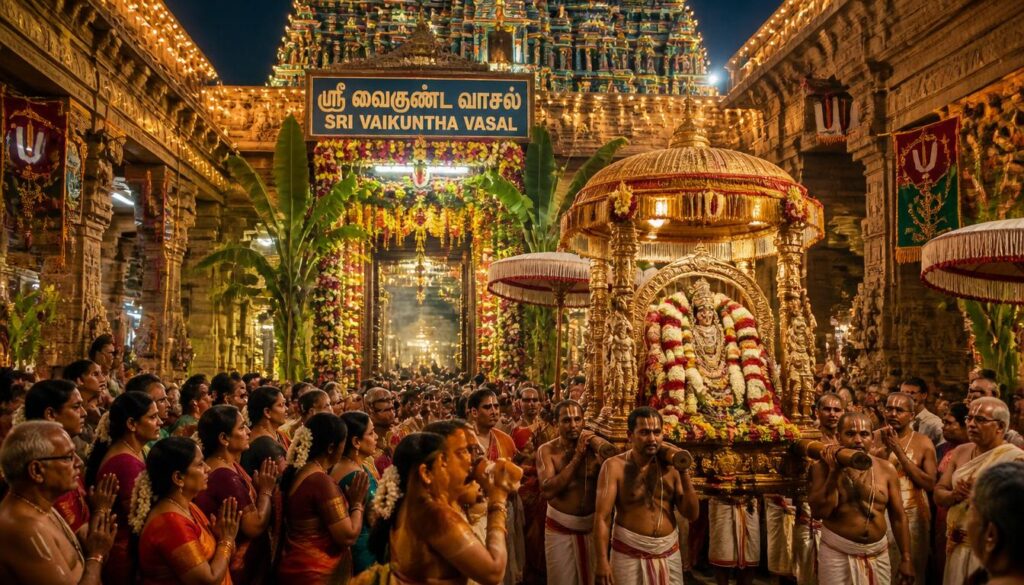
Vaikuntha Ekadashi Srirangam is among the most prominent celebrations associated with this festival. The Sri Ranganathaswamy Temple at Srirangam is dedicated to Ranganatha, a reclining form of Vishnu, and its Vaikuntha Ekadashi observances attract large numbers of devotees.
The celebration is traditionally connected with the 20-day festival known through the periods of Pagal Pathu and Ira Pathu or Irapathu. These temple observances create an extended devotional atmosphere rather than limiting everything to one calendar day.
The processional deity Namperumal has an important role in the festivities. Devotees may witness special decorations, processions and ceremonial activities associated with the festival.
The Paramapada Vasal is especially significant at Srirangam. Devotees gather to pass through the sacred entrance, while temple rituals continue around them. The combination of ancient architecture, devotional music, lamps and large crowds gives the festival an atmosphere that is difficult to reproduce anywhere else.
Vaikuntha Ekadashi Tirupati is another major observance. At the Tirumala Venkateswara Temple, the festival is associated with Venkateswara, a form of Vishnu worshipped by millions of devotees.
The special entrance is commonly known as Vaikunta Dvaram. Devotees consider passing through this gateway an especially meaningful part of the pilgrimage.
In Telugu-speaking regions, the festival is also widely known as Mukkoti Ekadasi. Large numbers of pilgrims may gather at Tirumala for the occasion, making advance planning particularly important for anyone intending to visit.
Temple access, darshan arrangements and other procedures can change from year to year. Visitors should therefore check the temple’s current official information before making travel plans rather than relying on an old festival schedule.
The Vaikuntha Ekadashi date changes according to the Hindu calendar. It is associated with the Shukla Paksha Ekadashi occurring during Dhanurmasa, but the corresponding Gregorian date changes each year.
It generally falls around December or January. The period can overlap with traditions associated with Margashirsha, Margazhi, or Dhanurmasa depending on the calendar system and regional practice.
This is why searching for a fixed date such as “December 16” or “January 13” without checking the relevant year’s Panchang can be misleading. The Gregorian calendar and Hindu lunisolar calendar do not operate in the same way.
For fasting, temple visits and Parana, devotees should use a reliable local Panchang or the calendar followed by their temple and tradition. Exact Tithi timings can differ by location, and thats something worth checking before planning the observance.
Dhanurmasa, also called Dhanu month, has a special place in many Vaishnava traditions. In Tamil practice, the corresponding devotional period is strongly associated with Margazhi, a month famous for early-morning worship and devotional practices.
Vaikuntha Ekadashi occurs within this spiritually important period, which helps explain why the festival receives such attention in Vishnu temples.
In some traditions, devotees wake before sunrise, visit temples, sing devotional hymns and dedicate the early hours to worship. The quiet of the morning becomes part of the experience. It is a very different rhythm from an ordinary busy day.
The connection with Dhanurmasam also means that Vaikuntha Ekadashi is often experienced as part of a broader season of devotion rather than as an isolated event.
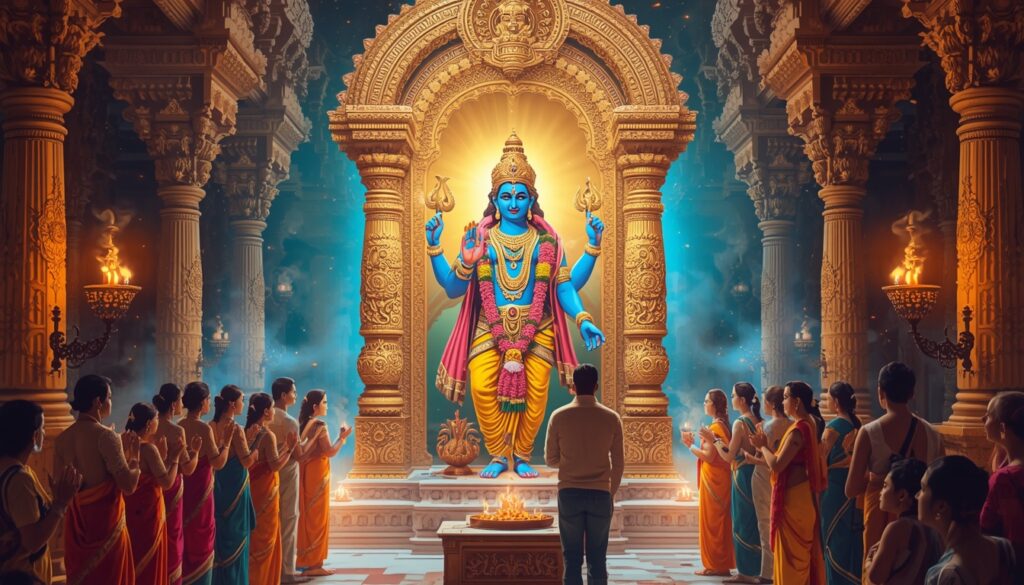
Within Vaishnavism, Vishnu is worshipped as the supreme divine reality, with different Vaishnava traditions developing their own theological interpretations and devotional practices.
For many Sri Vaishnavas, Vaikuntha represents the ultimate spiritual destination and the eternal service of Vishnu. The festival’s imagery of entering the divine gate naturally fits this theological understanding.
At the same time, the festival is not limited to one narrow community. Many Vishnu devotees across India observe Ekadashi with fasting, prayer and temple worship, though the details can be quite different.
This variety is one of the interesting things about Hindu religious practice. Two families may both observe the same Ekadashi while following different food rules, prayers and temple customs, and neither necessarily sees the difference as a problem.
References and narratives associated with Ekadashi and Vishnu devotion appear across several Hindu scriptures and devotional traditions. The Padma Purana is particularly important in discussions of Ekadashi stories and religious observance.
The Vishnu Purana also forms part of the broader textual tradition surrounding Vishnu, his devotees and the theological world of Vaishnavism.
In South Indian Sri Vaishnava tradition, works such as the Naalayira Divya Prabandham have enormous devotional importance. Other works, including Vaikuntha Gadyam, are also associated with Sri Vaishnava spiritual thought.
These texts should not all be treated as if they provide one identical version of the festival. Religious traditions develop through scriptures, commentaries, temple customs and regional practices over long periods, so variations are expected.
The scale of Vaikuntha Ekadashi celebrations depends heavily on the temple. A small Vishnu shrine may observe the day with simple puja and chanting, while a major pilgrimage center may organize processions, special darshan, decorations and elaborate ceremonies.
Devotees may see the deity dressed in special ornaments or clothing. Temple courtyards can be decorated with lamps and flowers, while devotional songs and recitations fill the surrounding spaces.
Some temples also organize spiritual discourses, yagnas, religious ceremonies and cultural programs. The festival can therefore become both a personal spiritual observance and a large community gathering.
In crowded temples, practical preparation matters too. Devotees may need to follow special entry arrangements, queue systems or darshan procedures. Checking current temple announcements before visiting is always a wise move.
A person does not need an elaborate arrangement to observe Vaikuntha Ekadashi meaningfully. A quiet room, a lamp and a sincere prayer may be enough for someone whose circumstances prevent temple travel.
Some devotees chant Vishnu’s name repeatedly through Japa. Others read passages from devotional literature or spend time in Dhyana. Even a few minutes of concentrated prayer can create a pause in an otherwise noisy day.
A common theme behind these practices is self-discipline. Fasting, reduced distractions and devotional activity are intended to bring greater attention to spiritual matters.
For someone observing the festival for the first time, keeping the practice simple may actually make the day easier. A sincere observance does not need to look impressive to other people.
The names associated with Ekadashi can sometimes create confusion. Mokshada Ekadashi, Mukkoti Ekadasi, Trikoti Ekadashi and Vaikuntha Ekadashi may be used in different regional or traditional contexts.
In particular, Mukkoti Ekadasi is strongly associated with Vaikuntha Ekadashi in Telugu-speaking regions. The term reflects a distinctive regional tradition and is especially prominent around Tirumala and other Vishnu temples.
Similarly, calendar naming can vary between regions. One should therefore consider the local Panchang and temple tradition when determining whether two names refer to the same observance in a particular context.
The safest approach is simple: if the date or name matters for a religious ceremony, verify it against the calendar followed by the relevant temple or community.
A home observance can be peaceful and meaningful without becoming complicated. Begin by cleaning the prayer area and placing an image or murti of Vishnu or the family’s chosen form of the deity.
Light a lamp, offer flowers and perform a simple puja. Those who follow fasting traditions can observe the food restrictions appropriate to their practice.
Spend some time with Japa, meditation or devotional reading. If family members are participating, Vishnu bhajans or a short discussion about the meaning of the festival can make the evening feel more connected.
The most important thing is sincerity. The festival is fundamentally a religious observance, not a competition over who can perform the greatest number of rituals or endure the longest fast.
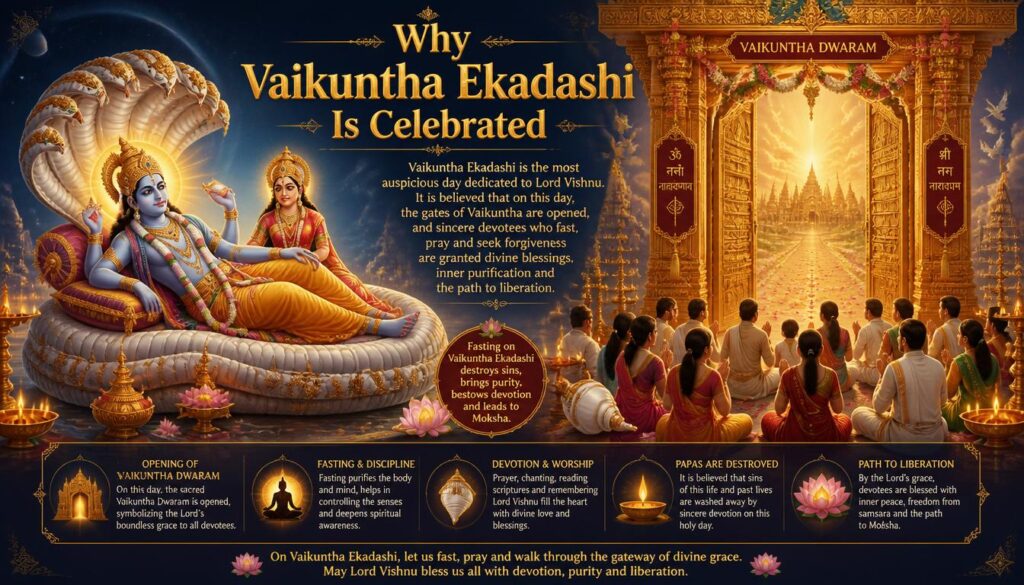
So, why Vaikuntha Ekadashi is celebrated is not answered by only one ritual or legend. For devotees, the festival brings together Vishnu worship, fasting, spiritual discipline, temple tradition and the symbolic hope of reaching Vaikuntha.
The opening of the sacred gate represents a spiritual passage. The fast represents restraint. Prayer represents surrender and remembrance. Temple gatherings represent community and shared devotion.
Together, these practices give the day its distinctive identity. And perhaps thats why the festival continues to hold such a strong place in the devotional calendar for many people.
If you are planning to observe Vaikuntha Ekadashi, a little preparation can prevent unnecessary stress. Check the local Ekadashi Tithi, fasting start and end times, and the Parana period before the day arrives.
If you intend to visit a major temple such as Srirangam or Tirumala, check the latest official temple information regarding entry, darshan and crowd arrangements.
Those observing Ekadashi fasting should also choose a method appropriate to their physical condition and established family tradition. Religious fasting should not put someone’s health at unnecessary risk.
Most importantly, leave some quiet time for prayer. It is easy to become so focused on travel, food restrictions and temple queues that the actual spiritual purpose gets lost somewhere in the middle.
Mukkoti Ekadashii is another name associated with Vaikuntha Ekadashi, especially in Telugu-speaking regions. It is observed with Vishnu worship, fasting, prayers, and special temple celebrations.
Mukkoti Ekadasi 2025 was observed as an important Vaishnava occasion, with devotees observing fasting, visiting Vishnu temples, and participating in special prayers and rituals.
Vaikuntha Ekadashi 2025 was an important Hindu festival dedicated to Lord Vishnu. Devotees observed Ekadashi fasting, offered prayers, and visited temples where special Vaikuntha Dvaram celebrations were held.
Vaikuntha Ekadashi is a sacred Ekadashi dedicated to Vishnu and is especially important among Vaishnavas. The festival is associated with spiritual devotion, fasting, and the symbolic opening of the gate to Vaikuntha.
Vaikunta Ekadasi is another common spelling of Vaikuntha Ekadashi. It is celebrated with Vishnu worship, fasting, devotional activities, and special temple ceremonies in many parts of India.
Vaikuntha Ekadashi 2026 will be observed according to the Hindu calendar’s Ekadashi Tithi during the relevant Dhanurmasa period. The exact date and fasting timings should be checked according to the local Panchang.
Mukkoti Ekadashi 2026 will be observed as a major Vaishnava festival, particularly in Telugu-speaking regions. Devotees traditionally mark the occasion with fasting, Vishnu worship, temple visits, and prayers.
Vaikunta Ekadashi 2026 is another spelling used for this important Vishnu festival. Devotees may observe fasting and take part in special temple celebrations, including the opening of the sacred Vaikunta Dwaram.
The Vaikuntha Ekadashi date 2026 depends on the Hindu calendar and local Tithi calculations. Because timings can vary by location, devotees should check a reliable local Panchang for the exact observance and Parana time.
Vaikuntha Ekadashi fasting 2026 may involve complete fasting or permitted fasting foods according to individual tradition. Devotees commonly avoid grains such as rice and spend the day in prayer, Japa, and Vishnu worship.
Read more: https://templetimingsdaily.com/raksha-bandhan/
Vaikuntha Ekadashi brings together mythology, devotion, fasting, temple culture and the enduring Vaishnava idea of reaching Vaikuntha, the abode of Vishnu. From the sacred Vaikuntha Dvaram of major temples to a small lamp burning in a family’s prayer room, the festival can take many forms.
Its stories of Murāsura, Yogamaya, Vishnu, Ambarisha, Durvasa and Sudarshana Chakra add layers of religious meaning, while traditions at Srirangam and Tirupati show how deeply the observance has become woven into temple culture.
Whether someone follows a complete fast, observes selected food restrictions, visits a Vishnu temple, chants a mantra or simply spends a few quiet moments in prayer, the day can become an opportunity for reflection and devotion.
Perhaps that is the gentle beauty of the occasion. A festival associated with a heavenly gate ultimately asks people to look inward. The physical doorway may be at a temple, but the spiritual journey is carried in the heart, quietly and personally, one prayer at a time.