Physical Address
304 North Cardinal St.
Dorchester Center, MA 02124
Physical Address
304 North Cardinal St.
Dorchester Center, MA 02124

Located in the heart of South Delhi, Kalkaji Mandir Delhi is one of the most revered spiritual destinations for devotees of Maa Kalka Ji, a powerful manifestation of Maa Durga.
Known as a sacred Siddha Peetha, this ancient temple attracts thousands of pilgrims every year who come seeking blessings, peace, and fulfillment of their wishes.
Situated near Nehru Place and just opposite the famous Lotus Temple, Kalkaji Mandir combines centuries-old traditions with the convenience of modern city connectivity.
Whether you are planning an early morning darshan, attending the divine aarti schedule, visiting during Navratri, or looking for details about the VIP Darshan Pass, this complete guide covers everything you need to know before your visit.
The temple is not just a place of worship; it represents faith, history, architecture, and the spiritual energy associated with Kalka Devi Temple Delhi.
From its ancient legends connected with the Mahabharata era to its present-day importance as a pilgrimage center, Kalkaji Mandir continues to hold a special place in the hearts of devotees.
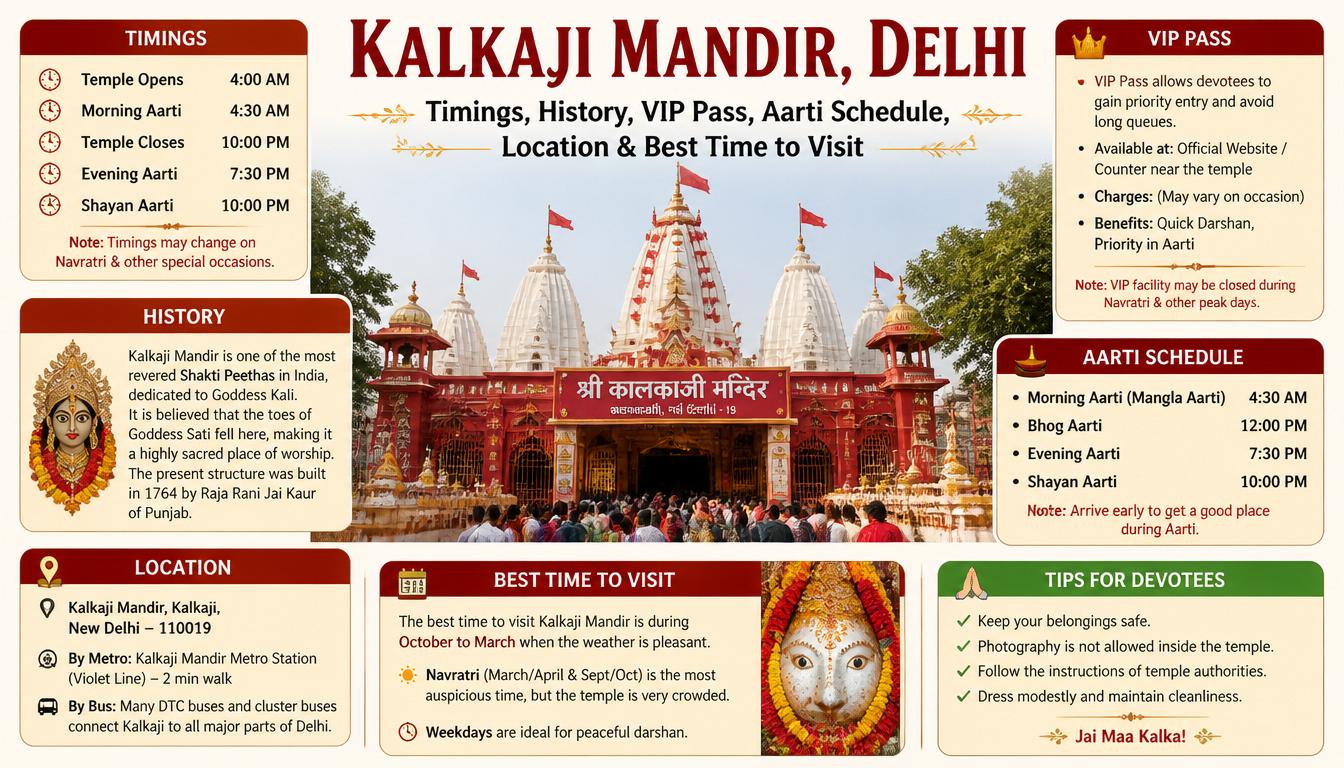
Kalkaji Mandir is open daily from 4:00 AM to 11:30 PM, allowing devotees to visit throughout the day. The temple remains accessible on weekends and public holidays as well.
The general darshan timings are:
| Activity | Timing |
|---|---|
| Temple Opening Time | 4:00 AM |
| Morning Darshan | 4:00 AM onwards |
| Temple Closing Time | 11:30 PM |
| Darshan Availability | Throughout the day except during short ritual breaks |
Devotees should note that during special occasions like Navratri, Ashtami, and other Hindu festivals, the temple may have extended hours. Special prayers, bhajans, and overnight jagrans create a highly spiritual environment during these periods.
For visitors who prefer a peaceful experience, early morning hours are usually the most suitable because the crowd is comparatively less and the atmosphere feels more calm.
The Kalkaji Mandir aarti schedule is one of the biggest attractions for devotees. The daily rituals are performed with traditional chants, devotional music, lamps, and offerings to Maa Kalka Ji.
The main aarti timings are:
| Aarti Name | Timing |
|---|---|
| Mangala Aarti | 4:30 AM |
| Bhog Aarti | 12:00 PM |
| Sandhya Aarti | 7:00 PM |
| Shayan Aarti | 10:30 PM |
The Sandhya Aarti in the evening is especially popular because the temple becomes filled with devotional sounds and a powerful spiritual feeling. Many visitors plan their trip around this time to witness the traditional worship rituals.
During Sharad Navratri and Chaitra Navratri, aartis become more elaborate. The temple witnesses larger gatherings, special decorations, devotional singing, and continuous prayers.
A visit during aarti time can provide a deeper connection with the temple’s traditions, but visitors should also prepare for longer queues during these periods.
Kalkaji Mandir history is connected with centuries of Hindu religious traditions and several fascinating legends. The temple is believed by devotees to be a self-manifested shrine where the divine presence of Maa Kalka Ji has existed for ages.
According to popular belief, the temple has connections with the Mahabharata era. Many devotees believe that the Pandavas and Kauravas worshipped at this sacred site during ancient times.
The present structure of Kalkaji Mandir is believed to have been developed around 1764 AD by the Marathas. Later, in 1816, Mirza Raja Kidar Nath, who served as treasurer under Mughal ruler Akbar Shah II, contributed to the expansion of the temple.
Over time, donations from devotees helped shape the temple into its current form while preserving its traditional rituals and spiritual identity.
Kalkaji Mandir is considered a Siddha Peetha, a sacred place where devotees believe their prayers and wishes receive divine blessings.
The temple is also associated with names like:
The word Manokamna refers to the fulfillment of heartfelt wishes. Devotees from different parts of India visit the temple with strong faith, believing that worshipping Maa Kalka Ji brings protection, courage, prosperity, and positive energy.
Maa Kalka Ji is worshipped as a fierce form of Maa Kali, representing strength, destruction of negativity, and the victory of good over evil.
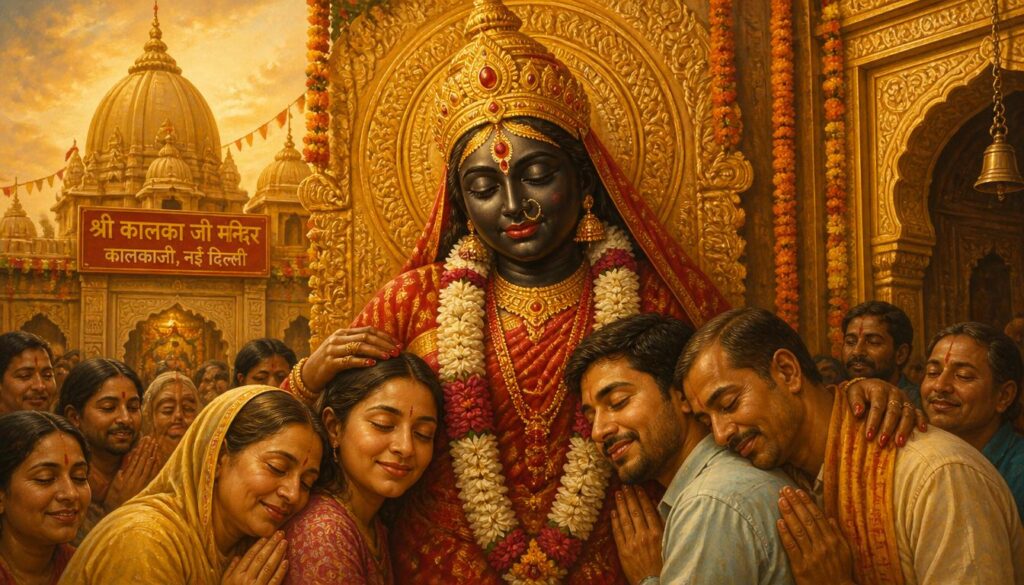
Maa Kalka Ji is one of the most powerful forms of the divine feminine energy in Hindu tradition. She is associated with courage, protection, and spiritual strength.
Devotees believe that Maa Kalka removes obstacles and protects her followers from negative forces. Her fierce appearance represents the power needed to overcome difficulties and challenges in life.
The main beliefs associated with Maa Kalka Ji include:
The spiritual connection between devotees and Maa Kalka Ji is the main reason thousands of people visit Kalkaji Temple Delhi every year.
The architecture of Kalkaji Mandir reflects traditional Indian temple design combined with detailed marble craftsmanship.
Important architectural features include:
The temple’s inner sanctum houses the idol of Maa Kali, accompanied by symbolic elements like the trident and tiger statues representing divine power and courage.
The combination of spiritual importance and traditional architecture makes the temple an interesting destination not only for pilgrims but also for visitors interested in Indian heritage.
The Kalkaji Mandir VIP Darshan Pass helps devotees avoid long waiting lines, especially during busy festival seasons.
The approximate VIP pass details are:
| Feature | Details |
|---|---|
| VIP Pass Price | ₹150–₹300 per person |
| Availability | Usually at temple counters during festivals |
| Online Booking | Generally not available |
| Best Use | Faster darshan during crowded periods |
Visitors should purchase passes only from official temple counters. Avoid unauthorized agents around the temple area because fake passes or unnecessary charges can create problems.
VIP darshan is especially useful for:
However, during extremely crowded festival days, some waiting may still be expected due to security and temple arrangements.
The best time to visit Kalkaji Mandir Delhi depends on whether you prefer peaceful darshan or a festive spiritual experience.
Early morning is considered ideal for devotees who want:
The fresh morning atmosphere makes the experience more relaxing.
Late evening is another good option, especially for visitors who want to attend evening rituals while avoiding daytime rush.
The most energetic time to visit is during:
During these festivals, the temple atmosphere becomes highly devotional, but crowds are also much larger.
Generally, October to March is considered comfortable for visiting Delhi because the weather remains suitable for walking and temple visits.
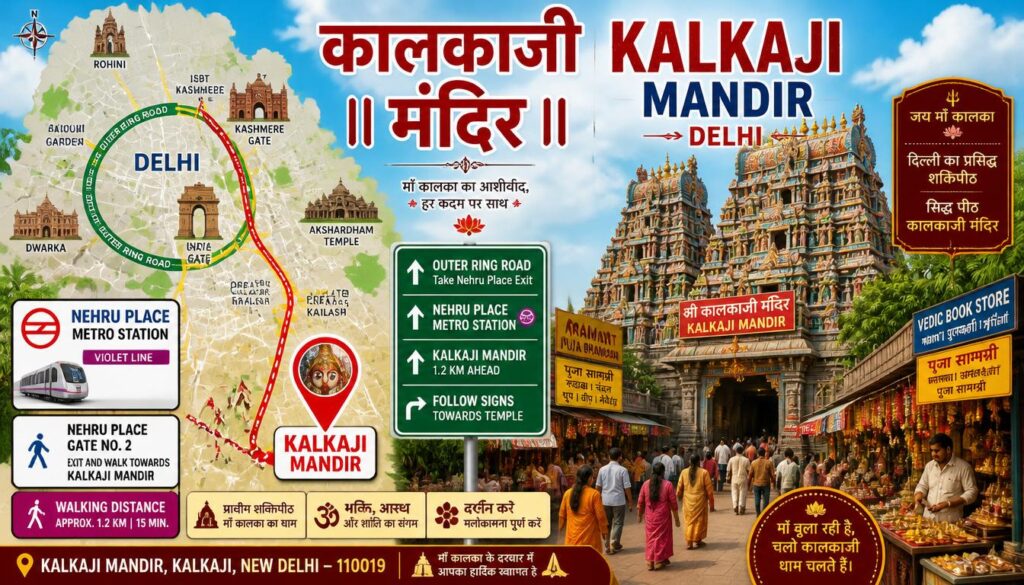
Kalkaji Mandir is well connected through metro, road, and public transport.
The nearest station is:
Kalkaji Mandir Metro Station
It is connected through:
The temple is only around a few minutes walking distance from the metro station.
Visitors can easily reach the temple through:
Nearby areas include:
| Starting Point | Approximate Distance |
|---|---|
| Hazrat Nizamuddin Railway Station | Around 7 km |
| Indira Gandhi International Airport | Around 20 km |
The official location details are:
Kalkaji Mandir
Block 9, Kalkaji, New Delhi, Delhi 110019, India
Important nearby landmarks:
Because of its central location, the temple is easy to include in a South Delhi sightseeing plan along with nearby attractions.
Visitors should maintain the sanctity of the temple by following basic etiquette.
Recommended practices:
Avoid wearing very revealing clothing as temples generally expect visitors to maintain a respectful environment.
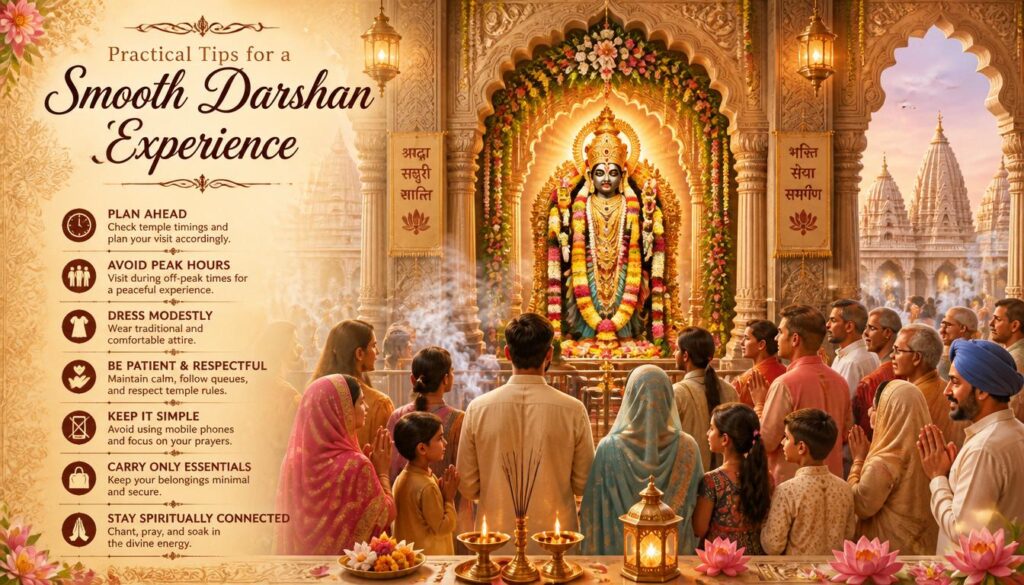
To make your visit comfortable, keep these points in mind:
A little planning can make your Kalkaji Mandir visit much more enjoyable and spiritually meaningful.
Many visitors know about timings and location, but the complete Kalkaji Mandir experience includes several traditional aspects.
Devotees usually begin their visit by offering prayers, flowers, and devotional items before entering the sanctum. The atmosphere changes significantly depending on the time of day. Morning hours feel peaceful, while evenings bring a more energetic devotional environment.
The temple management and traditional caretakers continue maintaining old rituals that have been followed for generations. This connection between history and present-day worship is what makes Kalkaji Mandir unique among Delhi temples.
Kalkaji Mandir Delhi remains open every day from 4:00 AM to 11:30 PM. Devotees can visit throughout the day, except during short intervals for rituals or cleaning activities.
The VIP Darshan Pass at Kalkaji Mandir generally costs around ₹150 to ₹300 per person during crowded periods and festivals. Availability is usually through temple counters rather than online booking.
The best time for peaceful darshan is early morning between 5:00 AM and 7:00 AM. For experiencing rituals and devotional atmosphere, evening aarti time is also highly recommended.
The nearest metro station is Kalkaji Mandir Metro Station, connected through the Violet and Magenta Lines. The temple is located within walking distance from the station.