Physical Address
304 North Cardinal St.
Dorchester Center, MA 02124
Physical Address
304 North Cardinal St.
Dorchester Center, MA 02124

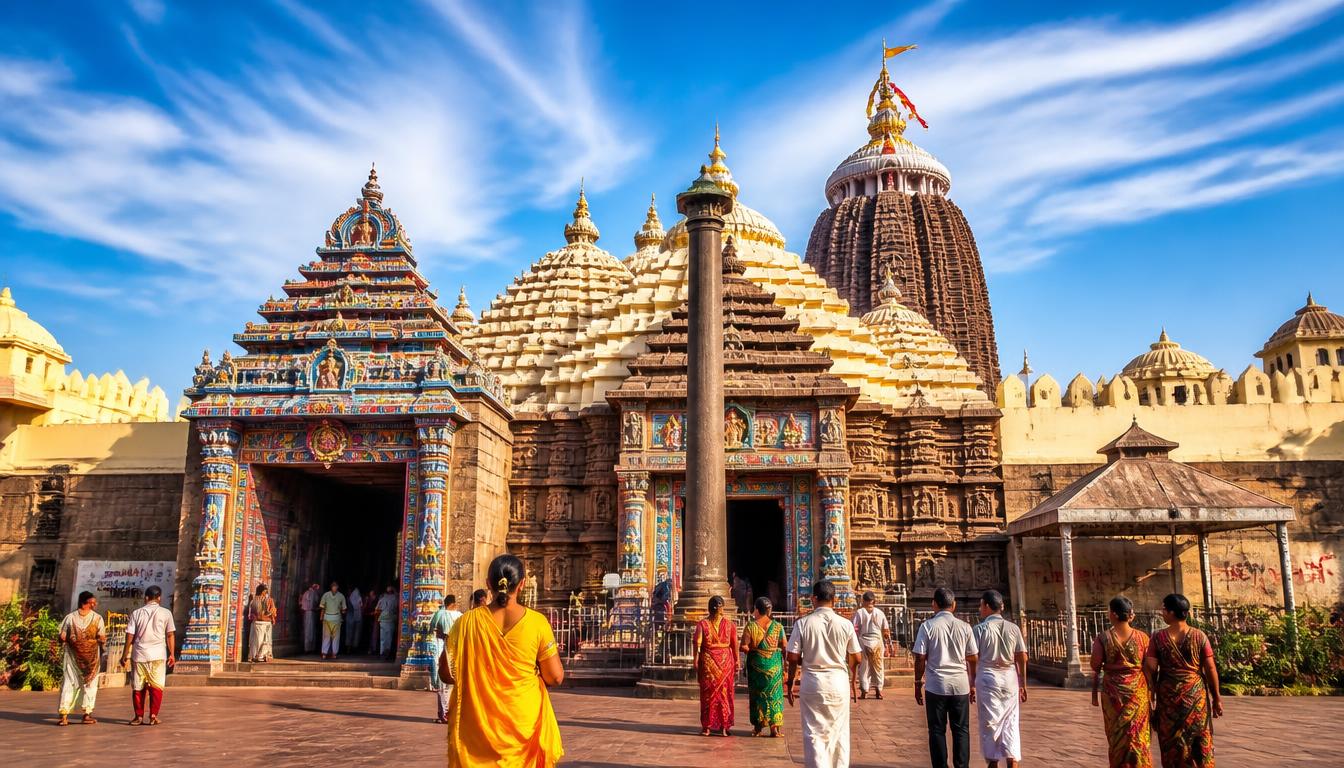
There is something about arriving in Puri, Odisha before the day has properly decided to wake up. The roads are quieter, the air carries that faint smell of incense and food, and somewhere ahead, the great Jagannath Temple Puri is already beginning its ancient rhythm.
For a pilgrim, it is not simply a building that opens at a certain hour and closes at another. The day belongs to Lord Jagannath, and the temple moves according to His rituals, offerings, dressing, rest and darshan.
If you are searching for Jagannath Temple Puri timings today, especially for Monday, September 7, 2026, the first thing to understand is this: published temple information is generally a ritual schedule, not a simple tourist-style opening-hours chart.
Times can move when a particular Puja, Seva, festival observance or other temple duty takes longer than expected. So, yes, the clock matters, but the ritual matters more. templetimings.org+1
For September 7, the safest practical approach is to use the regular daily sequence as your planning framework and confirm the day’s exact sequence locally with the Shree Jagannath Temple Administration (SJTA) or temple officials, because public darshan is interrupted during several rituals.
For a normal day, the current published ritual sequence places the ceremonial opening, Dwaraphita, at about 4:30 AM, with Mangala Alati around 5:30 AM.
Later come Mailam, Abakasha, Gopal Ballav Bhoga, Sakala Dhupa, Bhoga Mandap, afternoon rituals, Sandhya Alati, Badasinghar and finally Pahuda at night.
A recently updated schedule based on the administration’s published sequence gives approximately 11:30 PM for the closing ritual, although many visitor guides simplify this to a 5:00 AM–11:00 PM public-hours description. templetimings.org+1
Here is the useful version for someone actually standing in Puri wondering, “When should I go?”
That may look like a tidy timetable, but the temple is not a railway station, and that distinction saves visitors a lot of frustration. Jagannath Temple darshan timings change around the daily Nitis, so you should leave a little breathing room in your plan.
The frequently quoted Jagannath Temple opening time is 5:00 AM, while many public listings show the temple as closing around 11:00 PM. However, the temple’s ceremonial day begins earlier, with Dwaraphita listed at approximately 4:30 AM, and the final closure follows Pahuda at around 11:30 PM. templetimings.org+1
This difference between “opening hours” and “ritual hours” is important. A visitor arriving at 5:00 AM may encounter the first great morning ritual rather than a wide-open, continuously available darshan period. Likewise, arriving late at night does not mean you can simply walk in until 11:00 PM, because the final rituals progressively restrict public access.
So, if someone asks, what time does Jagannath Temple Puri open, the practical answer is “around 5 AM for visitors,” while the ceremonial answer is earlier. And if someone asks what time does Jagannath Temple Puri close, think roughly 11 PM for planning, with the final ritual sequence extending toward 11:30 PM.
It sounds like a tiny distinction, but when you’ve travelled hundreds of kilometres for darshan, tiny distinctions suddenly become very big ones.
Jagannath Temple darshan does not continue uninterrupted from morning to night. The temple administration’s published schedule indicates public viewing after the morning Mangala Alati, with additional windows later in the day and interruptions for rituals.
One updated account of the administration’s schedule lists morning darshan from about 5:30 AM, a morning interruption of roughly 1 hour and 15 minutes, then afternoon access around 2:00–5:30 PM and an evening window around 8:00–9:00 PM. templetimings.org+1
That means the often searched phrase Jagannath Temple Puri darshan timings today should not be interpreted as one fixed block of visiting hours. Your best opportunity depends on what ritual is happening when you arrive.
For a calmer experience, early morning is usually a sensible choice, but “calmer” in Puri is a relative word. Even an ordinary morning can suddenly become very lively when devotees begin moving toward Singhadwara / Lion Gate.
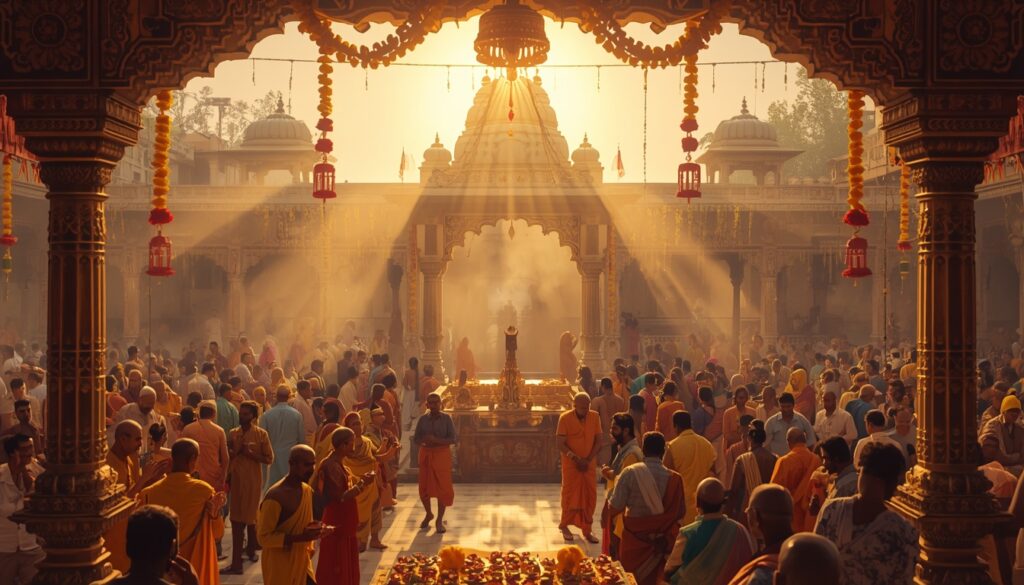
The morning begins with the awakening of Lord Jagannath, Balabhadra and Subhadra, the three central figures of the temple’s Divine Trinity.
The first lamp ritual, Mangala Alati, is traditionally one of the most spiritually significant moments of the daily cycle. Current schedules place it around 5:30 AM, though exact timing can move. templetimings.org+1
After this come rituals such as Mailam, Tadapa Lagi and Abakasha, followed by further worship and offerings. Sahana Mela is especially important because it refers to a period of public darshan, but visitors should not assume that every online article gives the same clock time.
One current schedule describes public darshan beginning after Mangala Alati, while other visitor guides put Sahana Mela around the morning period. templetimings.org+1
The lesson is pleasantly simple: arrive early, expect some waiting, and don’t treat a ten-minute difference between websites as a spiritual emergency.
The phrase Jagannath Temple aarti timings is useful for searching, but the worship system at the temple is much richer than a few standalone aarti ceremonies. The daily cycle contains many Nitis, offerings, dressing rituals and food ceremonies, each forming part of the living worship of the deities.
The approximate sequence includes:
In other words, the daily puja schedule is less like a single ceremony and more like a long conversation between deity, servitors, food, music, clothing and devotion. It has a rhythm which is quite difficult to explain until you’ve actually stood there.
This is perhaps the most important practical point for first-time visitors. Jagannath Temple Puri timings today can differ from the standard schedule because the temple follows its ritual calendar, not a tourist timetable.
Major observances such as Rath Yatra, Bahuda Yatra, Snana Yatra, Snana Purnima, special lunar observances and other annual temple events can produce substantial changes.
During major festivals, huge crowds also affect movement, security arrangements and the duration of individual rituals. In July 2026, for example, the temple’s major Rath Yatra period involved special arrangements and substantial restrictions around darshan. Channel 1
The Hindu calendar therefore matters almost as much as your wristwatch. A schedule that is perfectly reasonable on a quiet weekday can be completely wrong for a major festival day.
One of the most important aspects of planning a Puri temple visit is understanding entry restrictions before you leave your hotel.
The traditional entry policy of the Jagannath Temple permits Hindus to enter the main temple complex. Non-Hindu visitors are not permitted inside and may instead view the temple from designated outside viewpoints, including the area around Raghunandan Library. Current visitor information also notes restrictions on shoes, sandals and leather articles. templetimings.org+1
Do not assume that every item listed on travel blogs is currently banned, though. Rules concerning belongings, security procedures and visitor movement can be updated, and the Temple Administration is the better authority on what applies on the day.
A respectful dress choice is sensible regardless. Modest, traditional clothing generally makes the experience feel more appropriate, especially when you are entering a place where people have come for worship rather than sightseeing.
For many pilgrims, the first truly emotional moment is seeing Singhadwara / Lion Gate and realizing that the temple you have been reading about is suddenly right there.
The area can become crowded quickly. You may encounter queues, security checks, police arrangements, volunteers and pilgrims who have arrived with one very specific wish: to see Lord Jagannath for even a few moments.
Don’t rush that moment.
Keep your belongings simple, follow instructions, and don’t spend your entire darshan wondering whether your phone is safe in your bag. Better yet, leave unnecessary valuables at your accommodation or use officially available facilities where appropriate. Temple security is not the place for improvisation.
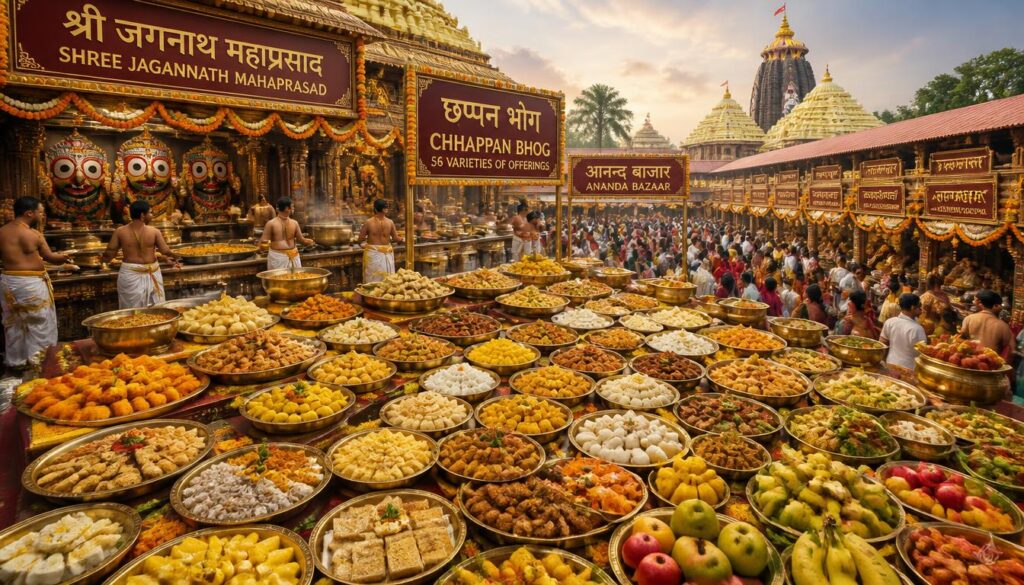
A trip to Puri is incomplete for many devotees without experiencing Jagannath Mahaprasad. The food is not treated merely as something delicious bought after temple sightseeing; it occupies a deeply important place in the religious culture of the shrine.
Chhappan Bhog, popularly described as an offering of 56 food items, is part of the wider devotional food tradition associated with Lord Jagannath. Abadha, the sacred cooked food offered to the deities, is closely associated with the temple’s distinctive food culture.
After the offerings, devotees seek Prasadam / Prasad through Ananda Bazaar, one of the most famous food areas associated with the temple. Rice, dal, vegetables, sweets and other preparations may appear wonderfully ordinary on the plate, and yet the meaning attached to that food is anything but ordinary.
There is something beautifully grounding about sitting down to eat after standing in a crowded queue. Spirituality sometimes arrives wearing the disguise of a simple plate of rice and dal.
The spiritual identity of the temple reaches far beyond its stone walls. Lord Jagannath is widely understood within Vaishnava traditions as a form of Vishnu and is strongly associated with Krishna. He is worshipped alongside Balabhadra and Subhadra, forming the celebrated Divine Trinity of Puri.
This is one reason the temple holds such an extraordinary position in Hinduism. Puri is one of the four Char Dham pilgrimage destinations, alongside Badrinath, Dwarka and Rameswaram in the widely recognized pilgrimage tradition.
For Hindu pilgrims, therefore, visiting the temple can be part of a much larger spiritual journey. Someone may arrive after years of saving, a family vow, a parent’s wish, or simply a sudden feeling that “this is the year I should go.” Every reason has its own quiet story.
If your visit is connected to the famous Jagannath Rath Yatra, don’t use ordinary daily timings to plan it. The chariot festival completely transforms Puri.
The annual Rath Yatra occurs on Ashadha Shukla Dwitiya according to the Hindu calendar. The deities travel in their enormous chariots, including Lord Jagannath’s Nandighosh, before eventually returning during Bahuda Yatra, the return Rath Yatra.
The wider festival cycle also includes Snana Yatra on Jyeshtha Purnima, followed by the traditional Anasara period, when the deities remain away from public view for a period after the ceremonial bathing. In 2026, the deities’ reappearance after the Anasara period was associated with Nabajaubana Besha darshan, which drew thousands of devotees and required special crowd-management measures. Channel 1
During such days, “What time does the temple open?” becomes almost the wrong question. The better question is, “What is today’s ritual and crowd-management schedule?”
Many visitors search for Jagannath Temple Puri online booking, Jagannath Temple darshan tickets or a darshan ticket price because they expect a conventional ticketed monument.
General temple entry and ordinary darshan should not automatically be assumed to work like a commercial attraction. Different special arrangements, sevas and rituals can have separate rules, while online claims about paid “priority darshan” should be treated carefully.
For anything involving SJTA, pilgrim registration, mobile OTP verification, Hindu identity, Aadhaar, Voter ID, Passport, special seva or sponsorship, use information from the official Shree Jagannath Temple Administration Portal or ask temple officials directly.
Don’t hand over personal documents or money to an unknown intermediary simply because someone online promises “VIP darshan today.” That’s a shortcut that can turn a peaceful pilgrimage into a very unpeaceful afternoon.
The Jagannath Temple Puri location is in the heart of the city on Grand Road, commonly given as Puri, Odisha 752001.
If you are arriving by train, Puri Railway Station is the obvious rail gateway. By air, visitors generally travel through the Bhubaneswar airport and continue onward to Puri. Bus services, taxis and private vehicles also connect Puri with other parts of Odisha and eastern India.
When selecting accommodation near Jagannath Temple, don’t judge a hotel only by its distance on a map. A property that looks “five minutes away” can feel rather different when festival crowds, restricted roads, heat and pedestrian traffic enter the equation.
For major festival periods, book hotels / stays well in advance and ask the property about vehicle access, parking and walking distance to the temple.
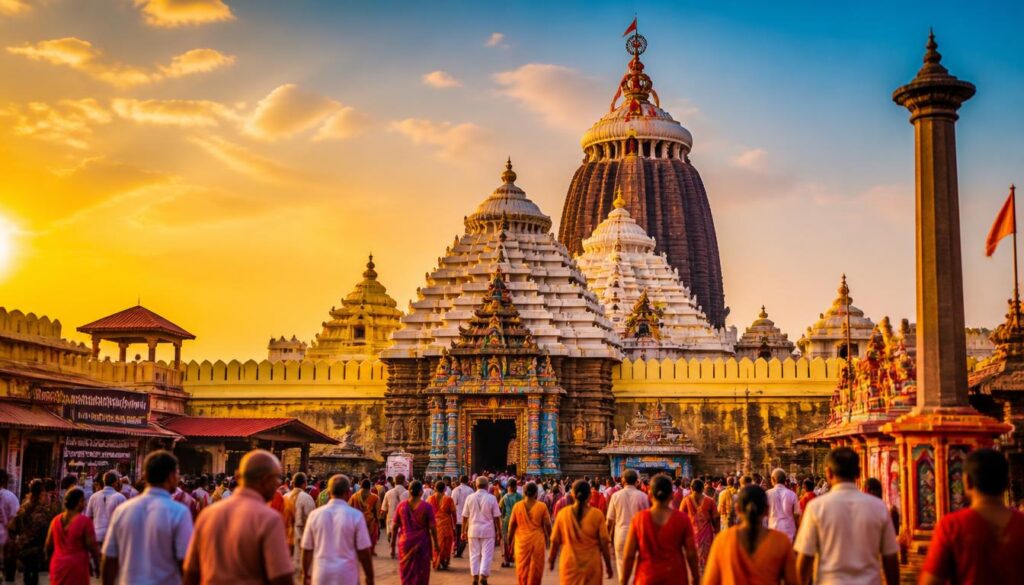
If your priority is a relatively manageable temple queue, early morning is generally the most sensible period to consider. The first rituals also offer a particularly atmospheric beginning to the day.
The trade-off is obvious: you have to wake up before the city really gets going. Your bed will negotiate strongly with you on this matter.
A second useful approach is to plan around the published darshan windows and deliberately avoid arriving immediately before a known food offering or private ritual.
The current administration-based schedule identifies interruptions around ritual periods, including a morning gap and later afternoon and evening windows. templetimings.org
Festival days are a separate category altogether. Expect festival crowds, traffic controls, long queues and altered ritual timings.
Read morE: https://templetimingsdaily.com/dhanteras-2026/
For someone visiting Puri for one day, a practical plan could look like this:
This plan sounds almost boring on paper, but boring is sometimes exactly what a pilgrimage itinerary needs. Leave space for the unexpected.
The internet has an interesting habit of turning approximate temple rituals into wonderfully precise tables. You may see one page saying 5:00 AM, another saying 4:30 AM, and another saying 6:00 AM, all with great confidence.
The reason is often that they are describing different things: ceremonial opening, public entry, first darshan, Mangala Alati, or general visitor hours.
For September 7, 2026, therefore, treat published times as planning guidance rather than a guarantee. The most reliable current source is the Shree Jagannath Temple Administration, particularly when a special ritual or festival is involved.
The administration’s published daily sequence itself makes clear that several rituals are given as a sequence rather than fixed clock times, and darshan can be unavailable during particular ritual periods. templetimings.org
That little bit of humility will serve you better than any “100% exact timing” website.
Jagannath Temple Puri usually opens at 5:00 AM and closes at 12:00 AM (midnight). Timings may vary during festivals and special rituals.
The temple generally remains open from 5:00 AM to midnight, with different darshan and ritual sessions throughout the day.
Puri Jagannath Temple usually opens at 5:00 AM, with morning and evening darshan sessions. The temple typically closes at 12:00 AM.
The usual closing time of Jagannath Temple Puri is 12:00 AM (midnight), although special rituals or festival schedules may change the timing.
Darshan is generally available from 5:00 AM to 1:00 PM and again from 4:00 PM to 12:00 AM, with multiple sessions during these periods.
The beauty of Jagannath Temple Puri is that its day refuses to behave like an ordinary tourist attraction. There is an opening, yes. There is a closing, yes. But between those two points exists a living procession of Darshan, Aarti / Alati, food offering, dressing, Pooja, Seva, sacred rest and devotion.
For Jagannath Temple Puri timings today, Monday, September 7, 2026, a useful working picture is an early ceremonial beginning around 4:30 AM, Mangala Alati around 5:30 AM,
everal morning rituals, afternoon and evening darshan windows, Sandhya Alati around 6:00 PM, the elaborate night rituals and final closure after Pahuda around 11:30 PM. But please build your actual visit around the day’s confirmed temple sequence rather than assuming every minute is fixed. Templetimings.org
And perhaps that is the nicest thing about visiting this temple. You arrive with a timetable. You leave remembering a moment.
Maybe it was the first sight of the towering temple above Grand Road. Maybe it was the sound of bells near Singhadwara. Maybe it was Mahaprasad shared with family, or the quiet feeling that came over you when you finally saw Jagannath, Balabhadra and Subhadra after waiting in the crowd.
If you are planning your own Puri pilgrimage, check the latest SJTA information on the day of travel, arrive with patience, dress respectfully, allow extra time for security and queues, and keep your schedule flexible. The temple has been following its sacred rhythm for centuries; it is probably us who need to learn how to slow down a little.
And if you’ve already visited Puri Jagannath Temple, share your favourite moment or your most useful timing tip. Sometimes the best travel guide is not a timetable at all, but the small story someone tells after coming home.