Physical Address
304 North Cardinal St.
Dorchester Center, MA 02124
Physical Address
304 North Cardinal St.
Dorchester Center, MA 02124


There are some temples you visit for a quick prayer, and then there are places where you somehow end up slowing your footsteps without even deciding to.
Shivoham Shiva Temple Bangalore belongs to that second kind. Standing on Old Airport Road in Bengaluru, the temple is known for its striking Shiva statue, spiritual attractions, rituals, and pilgrimage experiences that make a simple visit feel a little bigger than a normal outing.
If you are planning Shiva darshan, checking the Shivoham Shiva Temple timings before leaving is a sensible idea, especially if your plan includes the light and sound show, Aarti, or one of the available sevas.
Timing information online can be confusing too, because some visitor websites publish different schedules, while the temple’s own website focuses more on its spiritual activities than on a fixed daily timetable. So, a little planning saves that awkward “we came at the wrong time” moment.
This guide brings together the commonly published timings, ticket information, Aarti schedules, location details, temple background, and practical tips, while clearly separating regular visitor information from festival-specific schedules. Timings and charges can change, particularly during Maha Shivaratri, so it is wise to confirm with the temple before travelling.
For people searching simply for Shivoham Shiva Temple timings, the most commonly published visitor schedule lists regular darshan from 6:00 AM to 8:00 PM, with Light & Sound Shows at 7:00 PM, 8:00 PM, and 9:00 PM.
Another important detail is that several current listings describe the temple as open 24 hours, seven days a week, while the regular darshan and show schedule is narrower. In other words, “open” and “regular darshan/show hours” should not automatically be treated as the same thing.
| Visit | Commonly published timing |
|---|---|
| Temple access | Reported as 24 hours, daily |
| Regular Darshan | 6:00 AM–8:00 PM |
| Light & Sound Show | 7:00 PM, 8:00 PM, 9:00 PM |
| Morning Aarti | 9:45 AM, Tuesday–Sunday |
| Evening Aarti | 7:00 PM, Tuesday–Sunday |
| Monday Morning Aarti | 8:45 AM |
| Monday Night Satsang | 10:45 PM |
| Shivoham Aarti after Monday Satsang | 11:45 PM |
The Aarti schedule above comes from a published visitor guide rather than a current timetable displayed on the temple’s main website, so treat it as a planning reference rather than an unchangeable rule. This matters most if you are travelling a long distance just for one particular ritual.
The frequently listed Shivoham Shiva Temple timings for darshan are 6:00 AM to 8:00 PM daily. General entry is reported as free, which makes the temple accessible to visitors who simply want to have darshan without purchasing a special experience.
Some online listings, however, describe the broader temple complex as operating 24 hours, so devotees should distinguish between access to the premises and the scheduled hours for general darshan.
Morning can be a lovely choice if you prefer a quieter atmosphere. The city has not yet completely switched into its daily rush mode, and there is something almost poetic about seeing the towering Lord Shiva statue while Bengaluru is still waking up.
For older visitors or families, an earlier visit may also be more comfortable than arriving during a crowded evening.
If your main purpose is ordinary Shiva idol darshan, you do not necessarily need to buy a premium ticket. Published information lists normal entry as free, while separate charges may apply for special darshan, pooja, or guided experiences.
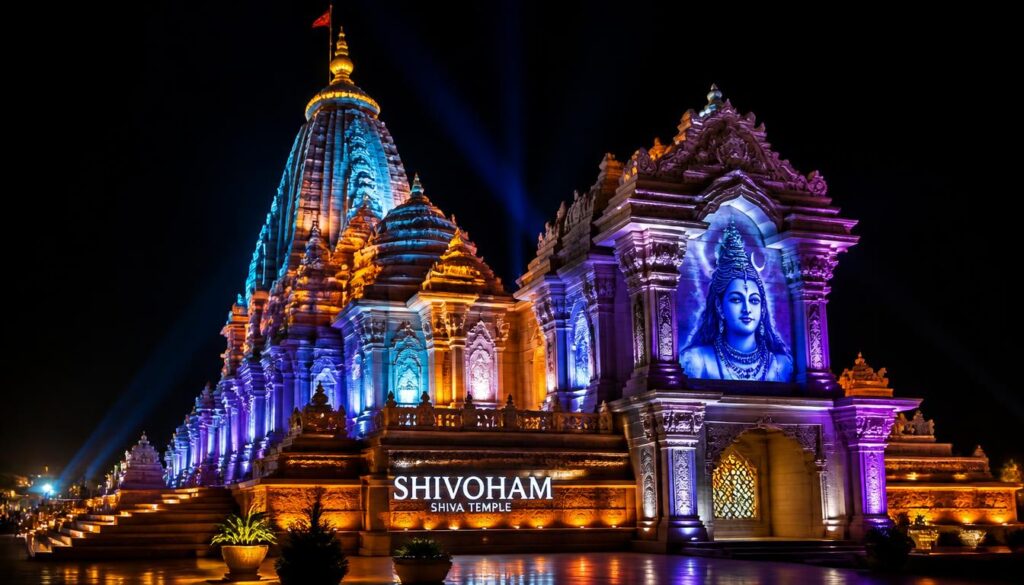
The Shivoham Shiva Temple light show is one of the attractions that makes an evening visit particularly interesting. Commonly published timings list the Light & Sound Show at 7:00 PM, 8:00 PM, and 9:00 PM, although schedules may change for festivals or special events.
The show is not simply another decorative attraction placed beside a temple. It is presented as part of the temple’s broader effort to communicate spiritual ideas through visual and experiential storytelling.
During major celebrations, the schedule can be completely different; for example, the temple’s official Maha Shivratri 2026 page listed special Light and Sound Shows after Aarti at 8:20 PM, 10:20 PM, 12:20 AM, and 2:20 AM.
That difference is worth remembering. If you search for “Shivoham Shiva Temple light show timing” before Maha Shivaratri and then assume the festival timetable applies to an ordinary weekday, the internet may happily lead you into confusion.
For a normal evening visit, arriving before the first listed show is a safer plan. You get time for darshan, can look around the complex without rushing, and then settle in for the evening attraction.
For many devotees, the Shivoham Shiva Temple aarti time is more important than the light show. According to commonly published visitor information, the morning Aarti is listed at 9:45 AM from Tuesday through Sunday, while the evening Aarti is listed at 7:00 PM on those days. Monday has a separate schedule, with a morning Aarti at 8:45 AM.
Monday is especially notable because the temple’s published schedule lists a Special Satsang at 10:45 PM, followed by Shivoham Aarti at 11:45 PM.
That makes Monday night quite different from a routine weekday visit. If your purpose is specifically to experience this late-night spiritual programme, confirming the schedule directly before travelling would be the smart move.
Festival days can change everything. The official 2026 Maha Shivratri programme, for example, announced Special Shiva Aarti every two hours from 6:00 AM on February 15 until 4:00 AM on February 16, alongside 24 hours of celebrations.
So there isn’t really one eternal “Shivoham Aarti time.” There is a regular schedule, and then there are festival schedules that can stretch deep into the night.
Now comes the part most practical visitors want to know: Shivoham Shiva Temple seva ticket price.
Published visitor guides list the following approximate charges:
| Seva / Entry | Reported Price |
| Normal Entry | Free |
| Special Darshan | ₹150–₹250 |
| VIP Entry | Around ₹500 |
| Special Pooja Entry | Around ₹250 |
| Other ritual/seva options | Varies |
The reported Special Darshan packages may include experiences such as the Mini Panch Dham Yatra, 12 Jyotirlinga Darshan, and personal pooja-related offerings. The reported VIP option has been described as including a guided tour and gift bag.
But here is the important little detail people often skip: these prices should not be treated as guaranteed current prices.
The temple’s official website currently provides information about its seva and offerings but does not display a complete fixed price chart on the homepage. Therefore, if you are travelling specifically to purchase a seva, confirm the amount and availability directly with the temple.
Yes, commonly published information lists general entry as free, meaning a visitor does not ordinarily need to purchase a ticket merely to have basic darshan. Paid options are associated with special experiences, rituals, guided visits, or other offerings.
This distinction is useful because “entry fee” and “seva price” are sometimes mixed together online. A person searching for Shivoham Shiva Temple entry fee may see ₹150 or ₹250 on one page and assume that everyone must pay it. That isn’t how the commonly published pricing structure is described.
If you simply want to stand before the Lord Shiva statue, offer your prayers, and experience the temple atmosphere, general entry is reported as free. If you want a more structured spiritual experience, special offerings may carry a charge.
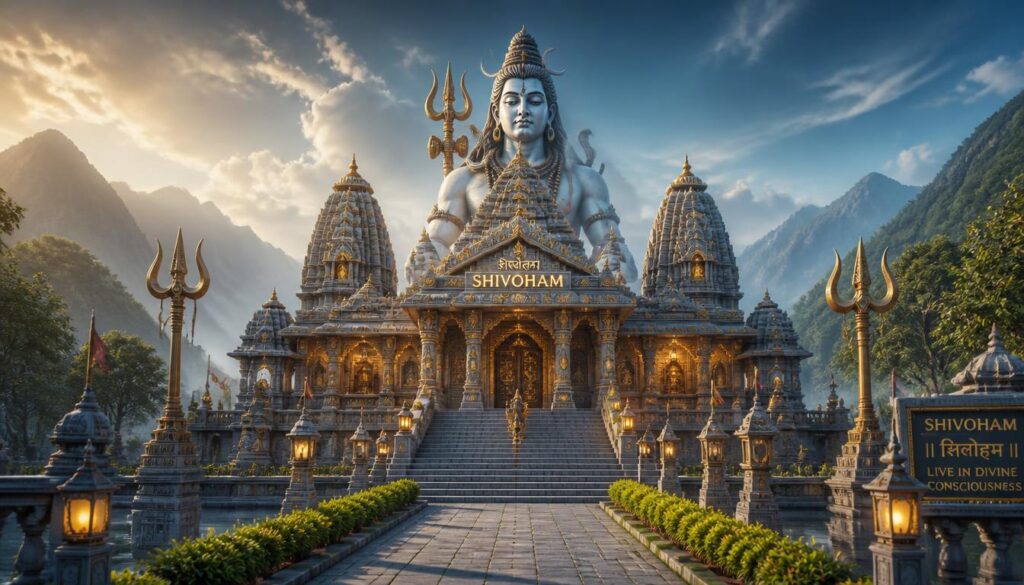
The most immediately noticeable feature is the enormous 65-foot Shiva statue, which has become one of the recognizable religious landmarks of Bengaluru. The temple was established in 1995, and historical descriptions identify it as having been consecrated by the Shankaracharya of Sringeri.
The temple was formerly known as Shiv Mandir, and the name Shivoham Shiva Temple was adopted later. Its spiritual philosophy places emphasis on moving from simply believing toward seeking and realization, reflected in the phrase “Shivoham.”
The temple’s own material connects this idea with the spiritual journey toward understanding the self and the divine.
Another unusual feature is the recreation of pilgrimage experiences. Visitor information describes representations connected with the 12 Jyotirlingas, as well as pilgrimage experiences associated with Amarnath and the Panch Dham tradition.
It means someone who cannot easily undertake a difficult pilgrimage can still encounter representations of several sacred destinations within the temple complex.
The idea behind the Mini Panch Dham Yatra is especially appealing for visitors who want more than a quick photograph and departure. The temple complex recreates elements of major pilgrimage experiences, while the 12 Jyotirlinga Darshan offers representations of the sacred Jyotirlinga tradition.
For some devotees, this turns the visit into a miniature pilgrimage. You are not travelling across the country from one Jyotirlinga shrine to another, obviously, but the recreated environment can introduce visitors to the symbolism and names associated with those sacred places.
It is one of those experiences where the geography becomes smaller, but the meaning does not necessarily become smaller with it.
A temple visit can be silent, but it can also be participatory. At Shivoham Shiva Temple, visitors may encounter Pooja, Aarti, meditation, spiritual talks and other activities depending on the day and programme.
The temple says its priests guide devotees through pooja and explain the meanings of mantras so that the practice can continue at home as well.
The temple’s official website also highlights spiritual sessions, chanting, guided meditation and discourse as part of its broader activities. So if your idea of a temple is only “enter, pray, leave,” there may be a bit more waiting for you here.
During major religious occasions, particularly Maha Shivaratri, the programme becomes considerably larger. The official 2026 celebration included all-night activities, special Aartis, devotional programmes and multiple Light and Sound Show timings.
If your goal is peaceful Shiva darshan, morning is generally the more comfortable choice. You have daylight, more flexibility, and less pressure to fit several attractions into a short evening window.
If you want the Aarti and Light Show, evening is more suitable. The commonly published schedule places the evening Aarti around 7:00 PM from Tuesday through Sunday and lists Light & Sound Shows in the evening. That creates a natural sequence: arrive early, have darshan, attend Aarti, and then experience the show.
For Mondays, expect a different rhythm because of the special late-night Satsang and Shivoham Aarti. And during Maha Shivaratri, forget the normal timetable almost entirely; special programmes take over the night.
The temple’s official 2026 announcement is a good example of how dramatically festival schedules can differ.
Read more: https://templetimingsdaily.com/maa-kamakhya-temple-timings-2026/

The Shivoham Shiva Temple Bangalore location is on Old HAL Old Airport Road in the Ramagiri/Murugeshpalya area of Bengaluru, Karnataka.
Address: No. 97, Old HAL Old Airport Road, Ramagiri, Murugeshpalya, Bengaluru, Karnataka – 560017.
The temple’s official contact page lists the phone number +91 97395 33333 and email support@shivohamshivatemple.org.
Official Shivoham Shiva Temple website
If you are coming from another part of Bengaluru, check the route before leaving because traffic around major roads can turn a short-looking journey into a surprisingly long one. Bengaluru traffic has its own philosophy, apparently.
A few small decisions can make your visit much smoother.
If you want to experience several aspects of the temple without turning the visit into a military operation, an evening plan can work nicely.
Reach the temple with enough time for general darshan. Walk through the relevant pilgrimage attractions and spend a few quiet minutes around the sacred spaces instead of rushing from one attraction to the next.
Then, if the published schedule is operating normally, attend the evening Aarti around 7:00 PM and follow it with the Light & Sound Show.
The commonly listed show times are 7:00 PM, 8:00 PM and 9:00 PM, but check the day’s actual schedule before relying on those slots.
If you prefer a quieter experience, move the entire plan into the morning and skip the evening crowd. There is no rule saying spirituality must happen after sunset.

This is perhaps the most important part of the whole guide.
Online temple information is not always synchronized. One current visitor source says the temple is open 24 hours, while another publishes regular darshan hours of 6:00 AM to 8:00 PM and shows ending around 9:00 PM for certain evening activities.
A separate current listing even says that regular darshan timings are not presently listed and recommends checking directly with the temple.
That doesn’t necessarily mean one source is “lying.” Temples can have different timings for premises access, darshan, rituals, attractions and special events. Festival schedules can then change everything again.
So before travelling, especially from another city, use the official contact details or official website to confirm the exact schedule for your intended date.
Published visitor information commonly lists regular darshan from 6:00 AM to 8:00 PM, while other current listings describe the temple as open 24 hours. Confirm the exact darshan schedule before visiting.
Several current listings describe the temple as open 24 hours a day, seven days a week, but that should not be confused with fixed hours for darshan or special attractions.
Commonly published timings are 7:00 PM, 8:00 PM and 9:00 PM. Festival schedules can differ substantially, so check the programme for your visit date.
A commonly published schedule lists 9:45 AM morning Aarti and 7:00 PM evening Aarti from Tuesday to Sunday, with Monday morning Aarti at 8:45 AM. Monday night also has a special Satsang and later Shivoham Aarti.
General entry is commonly listed as free, while special darshan, VIP entry, pooja and other sevas may have charges.
Published visitor guides report approximately ₹150–₹250 for Special Darshan, around ₹500 for a VIP option, and around ₹250 for Special Pooja, but these prices should be confirmed with the temple because charges can change.
The temple is at No. 97, Old HAL Old Airport Road, Ramagiri, Murugeshpalya, Bengaluru, Karnataka 560017.
Yes, families can visit for darshan and explore the temple’s spiritual and pilgrimage-related attractions. For children and elderly visitors, a daytime visit may be easier than a crowded festival night.
A visit to Shivoham Shiva Temple Bangalore can be as simple or as immersive as you want it to be. You can come for Lord Shiva darshan, spend time beneath the enormous Shiva statue, attend Aarti, explore the recreated pilgrimage experiences, or stay into the evening for the Light & Sound Show.
The key is not to treat the timetable as something carved permanently into stone. Regular visitor schedules are useful, but temple programmes change for Mondays, festivals, special sevas and major occasions. The official temple website and contact number are therefore your safest final check before setting out.
And perhaps that is fitting for a place devoted to Shiva. Plans may begin with a clock, but the actual experience is often measured in quieter things a few minutes of stillness, a prayer you didn’t know you needed,
the glow of an evening Aarti, or simply standing beneath a towering image of Shiva and feeling the noisy city become, for a moment, much further away.
If you have recently visited Shivoham Shiva Temple, sharing your actual darshan, Aarti or Light Show experience can also help future visitors plan better.
Sometimes the most useful travel information isn’t a timetable at all; it is one honest sentence from someone who has already walked through the gate.