Physical Address
304 North Cardinal St.
Dorchester Center, MA 02124
Physical Address
304 North Cardinal St.
Dorchester Center, MA 02124

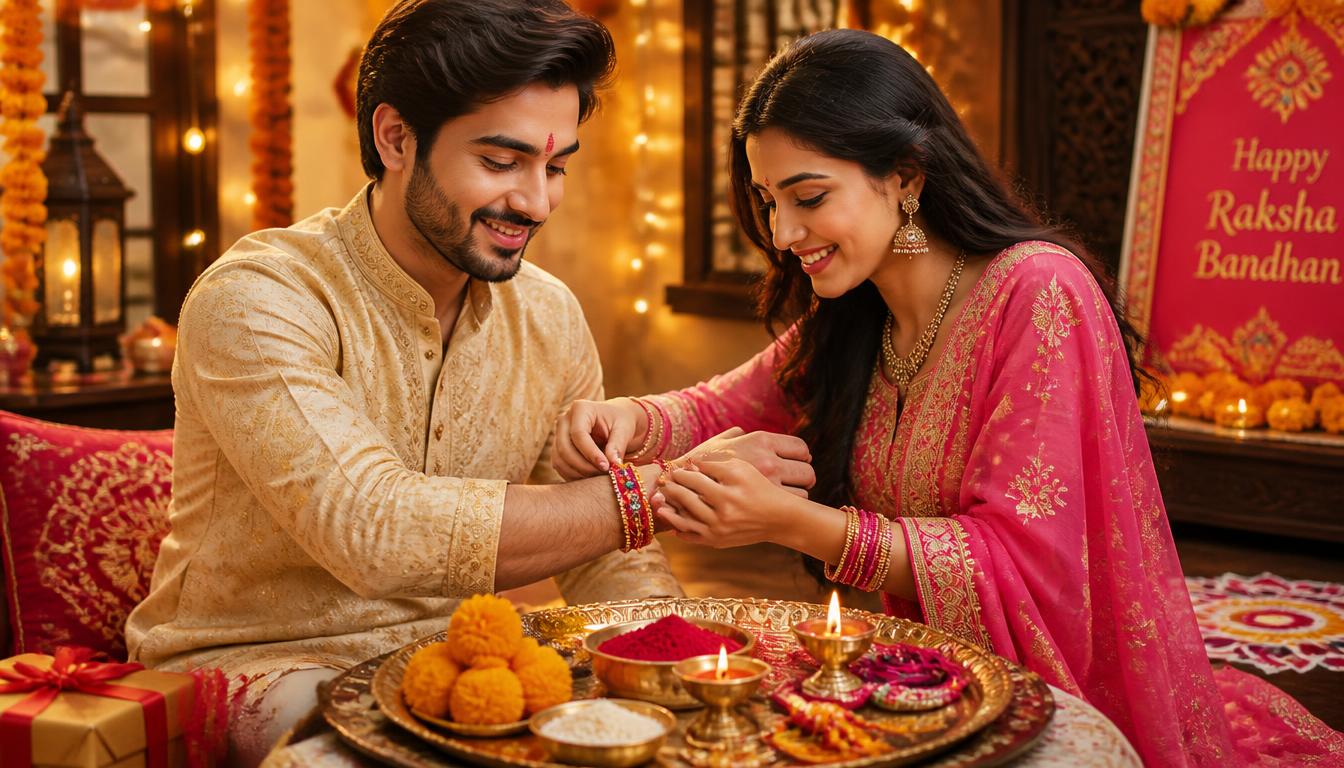
There are festivals that arrive with lamps, festivals that arrive with colors, and then there is Raksha Bandhan, which arrives almost quietly, carrying a tiny thread and a very large emotion. A rakhi may fit around a wrist in seconds, but the memories attached to that little thread can stay for decades.
Known also as Rakhi, Rakhi Purnima, Rakshabandhan, or Rakhi Bandhan, this festival celebrates affection, responsibility, family connection, and the special sibling bond. For many families, it is a day when old childhood arguments suddenly become funny stories, while a brother and sister sit together again like they never really grew up.
The festival is traditionally observed on the full moon of the Hindu month of Shravana, often called Shravan Purnima or Shukla Purnima of Shravana. In 2026, Raksha Bandhan falls on Friday, August 28 in India and several locations in Pakistan, although the exact ritual timing can vary by location.
The simplest Raksha Bandhan meaning comes from two ideas: protection and bonding. The Sanskrit word rakṣā is associated with protection, while bandhan means a bond or tying. Together, the name beautifully captures the basic symbolism of the festival.
Traditionally, a sister ties a rakhi thread around her brother’s wrist and offers prayers or good wishes for his wellbeing. The brother responds with affection, a gift, and a promise of support. But real family life is rarely as simple as one person protecting another, and modern celebrations often express mutual care instead.
That is why the deeper Raksha Bandhan significance is not only about protection. It is about being available when life becomes messy, celebrating each other’s achievements, and remembering that family relationships need care just like anything else.
A rakhi can be colorful, expensive, handmade, tiny, or almost comically oversized. None of that changes its emotional purpose. The thread becomes meaningful because of the person tying it and the memories sitting between those two wrists.
The Raksha Bandhan 2026 date is August 28. The festival is connected with the full moon, or purnima, of Shravana, a month that arrives during the monsoon season and has an important place in the Hindu lunar calendar.
The exact Raksha Bandhan muhurat depends on location because lunar dates and auspicious periods are calculated according to local time. For example, published Panchang timings for Gujranwala, Pakistan and Mohali, India differ slightly even though both observe the festival on August 28 in 2026.
Traditionally, families may prepare a thali with a rakhi, sweets, rice, kumkum or roli, a small lamp, and gifts. Some families follow a detailed puja, while others keep the moment beautifully simple.
The important thing is not making the ceremony look perfect for a photograph. Sometimes the best Rakhi celebration is simply a sister sitting beside her brother, laughing about something that happened twenty years ago.
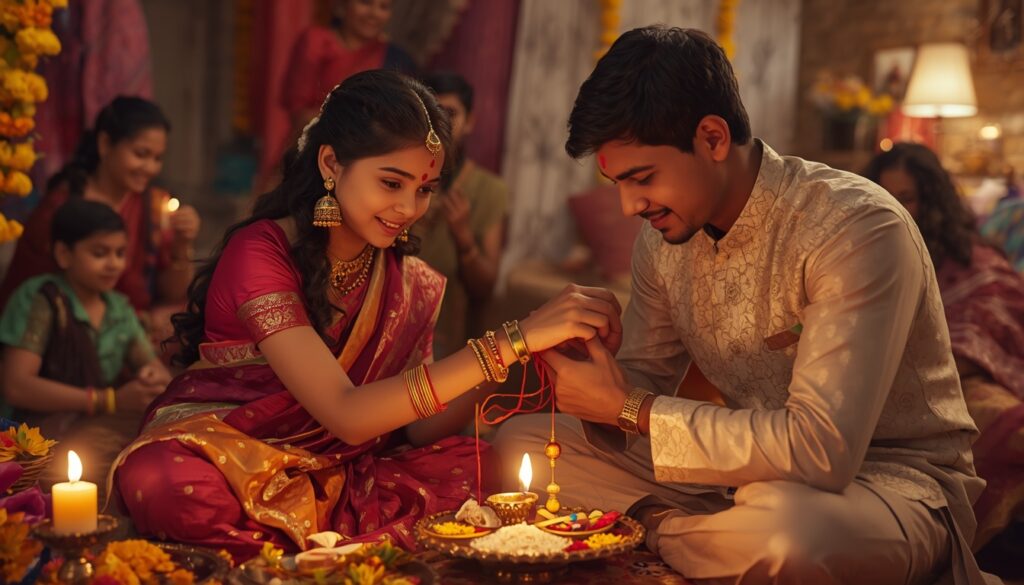
The familiar Raksha Bandhan rituals begin with the family gathering together. A sister may perform a small puja, apply tilak to her brother’s forehead, offer a prayer, and then tie the rakhi around his wrist.
Sweets are usually part of the celebration because apparently no Indian festival is completely satisfied until someone has been handed a sweet and told, “Bas ek aur kha lo.” Gifts may include money, clothes, jewelry, books, electronics, or something personally meaningful.
The brother’s response has traditionally been associated with a promise of protection. Today, however, that promise can take many forms: emotional support, helping during difficult moments, respecting boundaries, or simply answering the phone when the sister calls at an inconvenient hour.
One fascinating part of Raksha Bandhan traditions is that the festival does not look exactly the same everywhere. India and neighboring regions contain many local customs, names, foods, rituals, and interpretations connected with the full moon of Shravana.
In West Bengal, the day can be connected with Jhulan Purnima, while Odisha observes Gamha Purnima. Maharashtra has Narali Poornima, a festival strongly connected with coastal communities and the sea. In Nepal, related observances include Janai Purnima and Rishitarpani, while the Newar community observes Gunhu Punhi.
These traditions show something important about festivals: one date can carry different meanings for different communities. The calendar may provide the common point, but local culture gives the celebration its individual personality.
In some regions, janeoo, janai, or another sacred thread is central to religious observance. Elsewhere, the rakhi itself becomes the most visible symbol. There can also be coconuts, barley shoots, prayers, family meals, fairs, or other local customs.
So when people talk about a single “Rakhi tradition,” they are sometimes simplifying something much bigger. The Rakhi festival has grown through many regional practices rather than existing as one identical ceremony everywhere.
A sister does not have to be younger, older, married, unmarried, nearby, or living in another country for the relationship to matter. The emotional connection can survive all those changes, which is probably why Rakhi feels so personal.
The Raksha Bandhan history is not a single straight-line story. Different communities and texts associate the festival or protective-thread traditions with different stories and rituals.
One popular association involves Krishna and Draupadi. In the widely told story, Draupadi shows affection and concern for Krishna, and their relationship later becomes associated with the protective symbolism of a sacred thread.
Another well-known tradition connects protective threads with Indra and Indrani, while stories involving Yama and Yamuna are also associated with sibling affection and ritual protection.
The story of Rani Karnavati and Emperor Humayun is perhaps one of the most famous historical legends connected with Rakhi. The tale says that Karnavati sent a rakhi to Humayun during a period of political danger and that he responded to the symbolic appeal.
However, this story is often presented more confidently than the available historical evidence allows. It is better understood as a popular historical tradition rather than treating every detail as firmly established fact.
The same caution applies to stories connecting Alexander and King Porus, or other famous figures, with rakhi customs. Such narratives have become part of cultural storytelling, but legend, folklore, and documented history are not always the same thing.
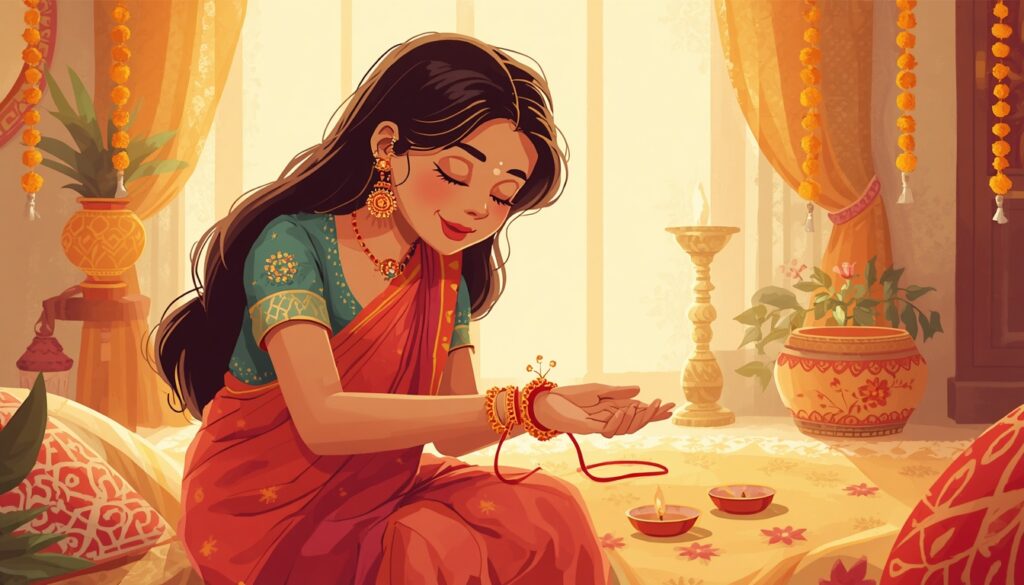
The word “protection” can sound very formal when compared with actual family life. A brother might protect his sister in one situation, while a sister may be the person protecting her brother emotionally in another.
That is why the modern bond of protection can be understood more broadly. It can mean standing beside someone, defending their dignity, listening without judging, or helping them when they are struggling.
This also makes room for relationships that do not fit an old-fashioned family model. Modern families include sisters who support brothers financially, brothers who depend on sisters for emotional strength, and siblings who live thousands of miles apart.
The rakhi can therefore represent mutual responsibility rather than a one-directional promise.
The exchange of gifts is now a major part of Raksha Bandhan celebration. Traditional gifts may include money, sweets, clothes, or useful household items, while modern families often choose personalized presents.
A gift does not have to be expensive to feel special. A handwritten letter, an old photograph, a favorite book, or a small object connected with childhood can sometimes carry more emotional weight than something bought at the last minute.
Sweets also have their own little festival drama. Boxes of laddus, barfi, peda, rasgulla, or other favorites appear on tables, and somebody inevitably says they are “saving them for later” before eating one five minutes later.
For siblings living far away, send rakhi by post has become an important part of the tradition. Migration, urbanization, and technology have changed the logistics of Rakhi without necessarily weakening the emotion behind it.
Not every brother and sister can sit together on Raksha Bandhan. Work, studies, marriage, migration, travel, and international borders can make a physical meeting impossible.
Fortunately, the festival has adapted. Families now use video calls, online gift deliveries, digital greetings, and postal services to maintain the ritual across distance.
A sister may tie a rakhi while talking to her brother through a phone screen. It is not identical to sitting together at home, of course. But sometimes technology does something surprisingly human: it helps people remain present when they cannot physically be present.
A short video message can also become a memory worth keeping. Years later, the imperfect background, the awkward camera angle, and somebody laughing off-screen may be more precious than a perfectly edited greeting.
The festival’s social meaning has also changed with time. Rakhi can symbolize voluntary kin relations, friendship, affection, and chosen forms of family connection.
The concept of fictive kinship is useful here because people sometimes create meaningful bonds that are not based on biological relationships. In different communities and historical settings, tying a protective thread has sometimes been used to establish or publicly recognize a relationship.
This does not mean every rakhi relationship carries the same cultural meaning. Context matters. A family ceremony, a friendship gesture, and a community ritual may all look similar on the surface while representing different relationships underneath.
That variety is part of what makes Rakhi interesting from the perspectives of anthropology, sociology, folklore, and everyday family life.
Cinema and popular media have helped spread particular images of the festival. Hindi films frequently use Rakhi scenes to represent childhood memories, family separation, sacrifice, reunion, or emotional loyalty.
The cultural image of Rakhi has therefore moved beyond the home. Songs, television programs, advertisements, greeting cards, radio broadcasts, and social media have all contributed to the festival’s modern visibility.
Works such as Raksha Bandhan have also brought the subject directly into mainstream entertainment. Meanwhile, older cultural traditions continue alongside factory-made rakhis, online shopping, personalized bracelets, and social-media greetings.
This is a good example of ritual and technology existing together rather than necessarily replacing each other.
The easiest way to make a Rakhi message personal is to stop trying to sound impressive. Start with something only you and your sibling understand.
Mention a childhood memory, an inside joke, a difficult period you survived together, or one quality you genuinely admire. Even one specific sentence can transform a generic greeting into something memorable.
Instead of writing, “Happy Rakhi, stay blessed,” you could mention the time your brother helped you during an important moment or the ridiculous childhood argument you still laugh about.
A useful formula is simple: memory + appreciation + wish for the future.
For example, remember something from childhood, say why the person matters to you today, and finish with a sincere hope for their future. It does not need fancy poetry. Honest words usually travel further.
A traditional ceremony can remain the heart of the celebration while adding a few personal touches.
You might create a small memory box containing childhood photographs, old notes, movie tickets, or funny family memories. Another idea is to prepare a handwritten “sibling coupon” for a dinner, movie night, road trip, or simply one day without arguing over the television remote.
Siblings who live apart can plan a virtual meal and open their gifts together on a video call. They could also exchange voice notes instead of ordinary text messages.
For younger siblings, making a handmade rakhi can turn the celebration into an activity rather than just an exchange of gifts. Ribbons, beads, thread, small charms, and personalized initials can make each rakhi feel completely different.
The best idea is often the least complicated one: create a moment that belongs specifically to your family.
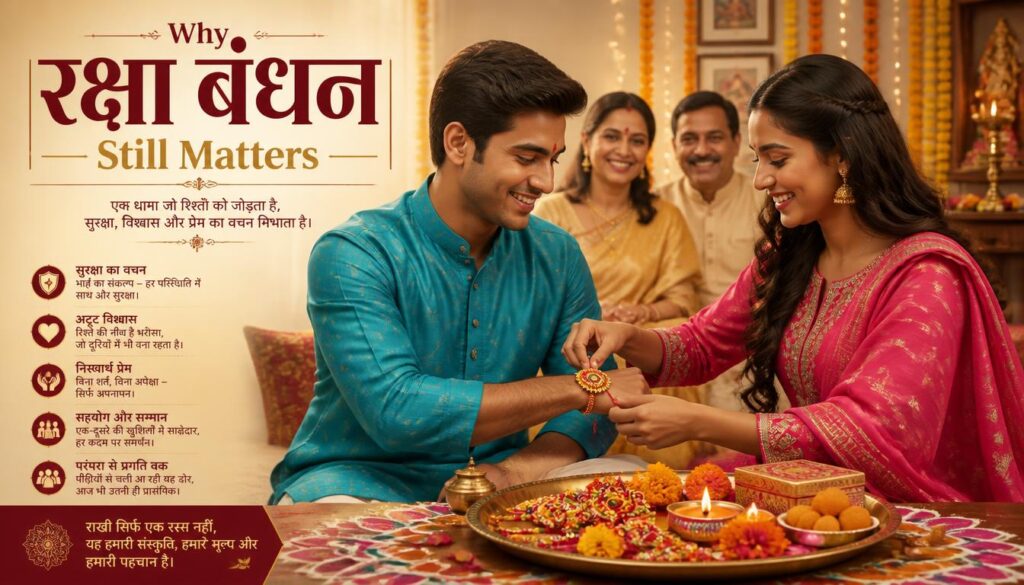
Festivals survive because people keep finding new meanings inside old traditions. Raksha Bandhan has changed with migration, technology, changing family structures, commerce, and modern ideas about relationships, but the desire to express affection remains surprisingly steady.
The festival also reminds us that relationships cannot be maintained only through occasional messages. The rakhi is symbolic, but the real bond is built through countless ordinary actions throughout the year.
A brother answering a late-night call, a sister helping with an important decision, siblings remembering each other’s birthdays, or simply checking in after a difficult week may express the spirit of Rakhi more strongly than an expensive gift.
The thread lasts for a day. The relationship, hopefully, lasts much longer.
Raksha Bandhan 2026 will be celebrated on Friday, August 28, 2026, honoring the special bond between brothers and sisters.
Rakshabandhan 2026 falls on August 28, 2026, and families celebrate it with Rakhi tying, prayers, sweets, and gifts.
Raksha Bandhan 2025 was celebrated on Saturday, August 9, 2025, marking the traditional festival of love and protection between siblings.
Read more: https://templetimingsdaily.com/raksha-bandan/
The Raksha Bandhan 2026 date is August 28, 2026 (Friday), according to the Hindu lunar calendar.
In 2026, Raksha Bandhan will be observed on August 28, with sisters traditionally tying Rakhi on their brothers’ wrists.
Raksha Bandhan is beautiful because it gives something ordinary a deeper meaning. A thread becomes a promise. A sweet becomes a shared memory. A family gathering becomes a reminder that childhood has not disappeared completely, even if everyone has grown older.
Whether you call it Rakhi, Rakhi Purnima, Rakshabandhan, Saluno, Narali Poornima, Janai Purnima, or another regional name, the celebration carries the warmth of connection in its own local language.
On Rakhi, you do not need the most expensive gift or the most poetic message. Sometimes all you need is a few honest words, a little time, and the willingness to tell someone, “You matter to me.”
And perhaps that is the quiet magic of the festival. The rakhi is tied around the wrist, but its real place is somewhere much deeper.