Physical Address
304 North Cardinal St.
Dorchester Center, MA 02124
Physical Address
304 North Cardinal St.
Dorchester Center, MA 02124

There are some months in the Hindu calendar that seem to carry a different kind of quietness, and Karthika Masam is one of them.
The glow of little earthen lamps, the sound of Shiva mantras, the fragrance of Tulsi leaves, and the early morning stillness make this period feel deeply sacred. For many families, it is not simply another month passing by, but a time to slow down and turn the mind toward devotion.
Karthika Masam 2026 is especially important for devotees of Lord Shiva and Lord Vishnu, while followers of Lord Karthikeya, Murugan, and Skanda also observe important traditions during this period. People light lamps, visit temples, take holy baths, observe fasting, offer prayers and perform charity as part of their spiritual routine.
Because Hindu lunar calendars can vary by region, the exact dates may differ between traditions. The supplied calendar information mentions October 17, 2026, to November 15, 2026, while October 26, 2026
is also associated with Karthika Masam in the provided material. So devotees should check their local Telugu lunar calendar, Odia calendar, or family tradition before observing a date-specific ritual.
Karthika Masam is a sacred month in the Hindu lunar calendar and is traditionally associated with devotion, purification and spiritual discipline. It is commonly known as Kartika Masam or the Karthika month, and its observance is particularly prominent in Andhra Pradesh, Telangana, Odisha, Tamil Nadu and several other parts of India.
The month is closely connected with Lord Shiva and Lord Vishnu, which makes it unusual in a beautiful way. Shaiva and Vaishnava traditions both give special importance to this period, although particular customs may vary from one community to another.
For many devotees, the purpose isn’t simply to complete rituals. The deeper idea is to create a little more space for prayer, self-control, kindness and remembrance of the divine in everyday life.
One of the most common questions is, when is Karthika Masam 2026? According to the date information supplied for this article, one traditional calculation places the observance from October 17, 2026, through November 15, 2026.
The Karthika Masam 2026 start date in that calculation is October 17, while the Karthika Masam 2026 end date is November 15. The period falls broadly across October–November and is connected with the Kartika lunar month.
However, regional lunar calendars do not always begin a month on the same Gregorian date. Telugu, Odia, Tamil and North Indian traditions can use different systems and local observances, so the Karthika Masam dates 2026 should be confirmed according to the calendar followed by your family or temple.
The supplied information also identifies October 26, 2026 in connection with Karthika Masam. This is a useful reminder that individual festival or regional observance dates should not automatically be treated as the beginning or ending date of the whole lunar month.
The Karthika Masam significance comes from its strong connection with devotion, light, purification and spiritual discipline. Devotees believe that sincere worship performed during this sacred period can support spiritual progress and encourage a more disciplined life.
The month is also associated with moksha, divine grace, forgiveness and purification. In traditional belief, people use this time to seek freedom from negative habits, ask forgiveness for mistakes and pray for peace in their families.
Another beautiful part of its importance is the idea of divine light. A small lamp may look almost ordinary during the day, but when hundreds of lamps glow around a temple or home, the atmosphere changes completely. That simple image is central to many Karthika traditions.
Lord Shiva receives special attention during Karthika Masam. Devotees may perform Shiva puja, visit Shiva temples, offer bilva leaves, perform Shiva abhishekam, and chant the Shiva Panchakshara Mantra.
The famous mantra Om Namah Shivaya is often repeated as a simple daily spiritual practice. Some devotees also recite the Maha Mrityunjaya Mantra, Shiva Chalisa, Shiva Tandava Stotram, Lingashtakam or Rudrashtakam.
A traditional Shiva worship routine does not have to become complicated. A devotee may offer water, milk, flowers or bilva leaves to a Shiva Lingam according to local custom and spend a few peaceful minutes in prayer. The sincerity behind the practice is considered more important than making the ritual look elaborate.
Although Karthika Masam is strongly associated with Shiva, Vishnu worship is equally significant in many traditions. Devotees may worship Vishnu together with Tulsi, regarded as especially sacred in Vaishnava practice.
The month includes important observances connected with Devotthan Ekadashi, also known as Prabodhini Ekadashi, and Tulsi Vivah. These observances have a special place in many Hindu households and temples.
Devotees may also worship Shaligrama, visit Vishnu temples and maintain a disciplined routine during the month. The combination of Vishnu worship, Tulsi worship and lamp lighting gives Karthika its distinctive devotional character.
Another important connection is with Lord Karthikeya, who is also known as Murugan and Skanda. The traditions surrounding him are particularly significant in South India.
The story of Karthikeya is traditionally connected with the Krittika mothers, from whom the name Kartikeya is associated. His victory over the demon Soorapadman is remembered through important devotional traditions, including Skanda Sashti.
For devotees of Murugan, the month can therefore become a period of prayer, fasting and remembrance of courage, devotion and victory over negative forces.
One of the most recognizable observances of the month is Karthika Deepam 2026. Lamps are lit as symbols of divine light, hope and spiritual awakening.
Homes may be decorated with rows of earthen lamps, while devotees traditionally use oil lamps in temples and around sacred spaces. In some practices, sesame oil lamps are especially valued.
The lamp is small, but its symbolism is not. Lighting one diya can become a daily reminder that spiritual practice doesn’t need to shout. Sometimes it simply needs to keep glowing.
Karthika Purnima 2026 marks the full-moon day associated with the Karthika month. It is also known in some traditions as Tripuri Purnima, and it holds considerable religious importance.
Purnima observances may include temple visits, prayer, charity, ritual bathing and lamp lighting. Some devotees consider the full moon an especially suitable time for deepening their spiritual practice.
The exact observance can vary according to regional calendars, so anyone planning a temple visit or specific ceremony should follow the local Panchang rather than relying only on a generic Gregorian date.
Mondays are particularly important to many Shiva devotees during this month. These observances are often described as Somavara Karthika or Karthika Mondays.
A devotee may begin the day with a ritual bath, visit a Shiva temple, offer bilva leaves and perform Shiva abhishekam. Some people also observe Karthika fasting on Mondays.
For a family, Monday worship can become a very simple tradition. A lamp near the household shrine, a few minutes of chanting and a sincere prayer for family wellbeing may be enough to create a meaningful routine.
The month includes several festivals and spiritual practices. Their exact dates can vary by regional calendar, but their importance remains strong across many traditions.
The Karthika Masam rituals can be simple or elaborate depending on family tradition. There is no need to imitate every practice if you are new to the observance.
Daily lamp lighting is one of the most familiar Karthika practices. Families may light an earthen lamp in the morning or evening, often near a shrine or Tulsi plant.
Some traditions speak of lighting 365 lamps, representing the days of the year. The practice is symbolic and may be followed differently from one household to another.
Devotees may perform Shiva abhishekam using water, milk, honey or panchamrit, depending on their tradition.
Offerings can be accompanied by Om Namah Shivaya or another Shiva mantra. A temple priest may conduct more elaborate rituals, while home worship can remain very simple.
Tulsi worship has a special place in Vaishnava households. A lamp may be placed near the Tulsi plant during evening worship.
This practice can turn an ordinary courtyard or balcony into a tiny sacred corner, which is rather lovely when the evening begins to settle.
A ritual bath, holy dip or river bath is another traditional practice. Some devotees wake before sunrise and bathe during Brahma Muhurta or early morning hours.
Sacred rivers such as the Godavari River, Krishna River and Tungabhadra River are connected with important pilgrimage traditions. People who cannot travel may simply perform their daily bath at home while praying with devotion.
Karthika fasting is observed by some devotees, particularly on Mondays or Ekadashi. Others practice vegetarianism throughout the month as part of their personal discipline.
Fasting customs differ widely, so people should follow practices appropriate to their health, family tradition and religious guidance rather than treating one method as universal.
Prayer is at the heart of the month, and many devotees choose one or two mantras rather than trying to recite everything.
Popular Karthika Masam mantras and devotional texts include:
A person may choose a short daily prayer and maintain it consistently. Ten peaceful minutes every day can sometimes feel more meaningful than a complicated ritual performed once and forgotten.
Traditional beliefs describe several Karthika Masam benefits, particularly in spiritual and devotional terms. Devotees may observe the month with the intention of purification, peace and spiritual progress.
Commonly associated benefits include:
These are traditional religious beliefs rather than scientifically established outcomes, and individual observance naturally differs.
You don’t have to live beside a famous temple to observe Karthika Masam at home. A small prayer space, a lamp and a few minutes of sincere devotion can form the foundation.
Begin the morning with a clean ritual bath and prayer if that fits your tradition. During the evening, light an earthen lamp and spend some quiet time chanting or reading a devotional text.
A simple home routine might include Tulsi plant worship, Shiva puja, vegetarian food, mantra chanting and small acts of charity. Keeping the practice realistic is useful because devotion should become part of life, not another source of stress.
Charity is another meaningful part of Karthika Masam traditions. Devotees may offer food, clothing or other useful items to people in need.
Sesame seed donation is mentioned in several traditional observances, while food donation and temple-related charity are also common practices.
The beautiful thing about charity is that it moves devotion beyond the prayer room. A lamp may illuminate your home, but kindness can brighten somebody else’s difficult day too.
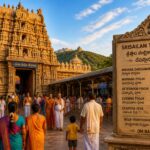
Pilgrimage has an important role in Karthika observances, and several major temples are associated with Shiva or Vishnu worship.
Tiruvannamalai Arunachaleswarar Temple in Tamil Nadu is especially significant for the traditions of Arunachala and the great Karthika flame. Devotees also connect Arunachala hill with the divine manifestation of Shiva as light.
Other important pilgrimage destinations include Kashi Vishwanath Jyotirlinga in Varanasi, Mahakaleshwar Jyotirlinga in Ujjain, Tirumala Venkateswara Temple in Tirupati and Nataraja Temple Chidambaram.
These places represent different streams of Hindu devotion, and visiting a temple during Karthika can become a memorable spiritual experience. Still, pilgrimage is optional; devotion can also be practiced sincerely at home.
The Karthika Mahadeepam tradition at Tiruvannamalai is among the most visually powerful expressions of the festival of light.
At the sacred Arunachala hill, the lighting of the great beacon is associated with the divine flame of Shiva. The surrounding temple traditions and Girivalam draw large numbers of devotees.
For someone seeing it for the first time, the sight can feel almost unreal: a mountain carrying a flame while thousands of smaller lamps glow below. It turns the idea of divine light into something people can actually see.
Read more: https://templetimingsdaily.com/tirumala-venkateswara-temple-timings-today/
Karthika observance is not identical throughout India. In Andhra Pradesh and Telangana, Karthika Masam is deeply connected with Shiva worship, lamps, temple visits and Monday observances.
In Odisha, the month is observed according to local traditions and the Odia lunar calendar. Tamil Nadu has strong traditions surrounding Karthika Deepam and Murugan worship, while pilgrimage centres such as Varanasi and Ujjain have their own distinctive practices.
This regional diversity is important because there isn’t always one single ritual schedule that applies everywhere. The same sacred month can have different local expressions, and that variety is part of its richness.
If you want to follow the month without making your routine overwhelming, choose a few practices and do them sincerely.
You could light a lamp every evening, chant Om Namah Shivaya, visit a nearby temple once a week, eat vegetarian food according to your tradition and donate something useful to someone in need.
You might also choose one Monday for a dedicated Shiva prayer or observe Ekadashi fasting if it is part of your normal religious practice. The goal is not to compete with anyone else’s devotion. It is to make your own spiritual life a little more intentional.
A simple routine may look like this:
Morning: Wake early, take a ritual bath and spend a few minutes in prayer.
Daytime: Follow your chosen dietary or personal discipline and try to practice kindness.
Evening: Light an earthen lamp, worship Shiva or Vishnu according to your tradition and chant a short mantra.
Night: Read a devotional passage or spend a few quiet minutes in gratitude.
This kind of routine is flexible enough for ordinary family life. Even when the day becomes busy, a small lamp and a short prayer can keep the connection alive.
Karthika Masam 2026 ends on November 15, 2026, with the celebration of Karthika Purnima.
The Karthika Masam ending date is November 15, 2026, according to the provided content.
Karthika Masam 2026 starts on October 17, 2026, according to the provided content.
The Karthika Masam start date is October 17, 2026, marking the beginning of this sacred lunar month.
Karthika Pournami 2026 falls on November 15, 2026, and marks the grand conclusion of Karthika Masam.
Karthika Masam 2026 offers devotees a month filled with lamps, prayers, fasting, temple visits, charity and remembrance of the divine. Its traditions connect Lord Shiva, Lord Vishnu, Lord Karthikeya, Tulsi and sacred pilgrimage places through a rich collection of regional practices.
The exact Karthika Masam dates may differ according to the lunar calendar followed in a particular region, so it is wise to check the relevant local Panchang before planning a date-specific observance.
But beyond dates and rituals, the heart of Karthika is beautifully simple: light a lamp, quiet the mind, remember God, help someone and try to live with a little more compassion. That small effort, repeated through the month, can make the sacred season feel much more personal.
If you celebrate Karthika Masam 2026, share your favorite tradition, temple experience, prayer or home ritual with others. Sometimes the most meaningful part of a festival is not the grand ceremony, but the little family practice that has quietly survived from one generation to the next.