Physical Address
304 North Cardinal St.
Dorchester Center, MA 02124
Physical Address
304 North Cardinal St.
Dorchester Center, MA 02124

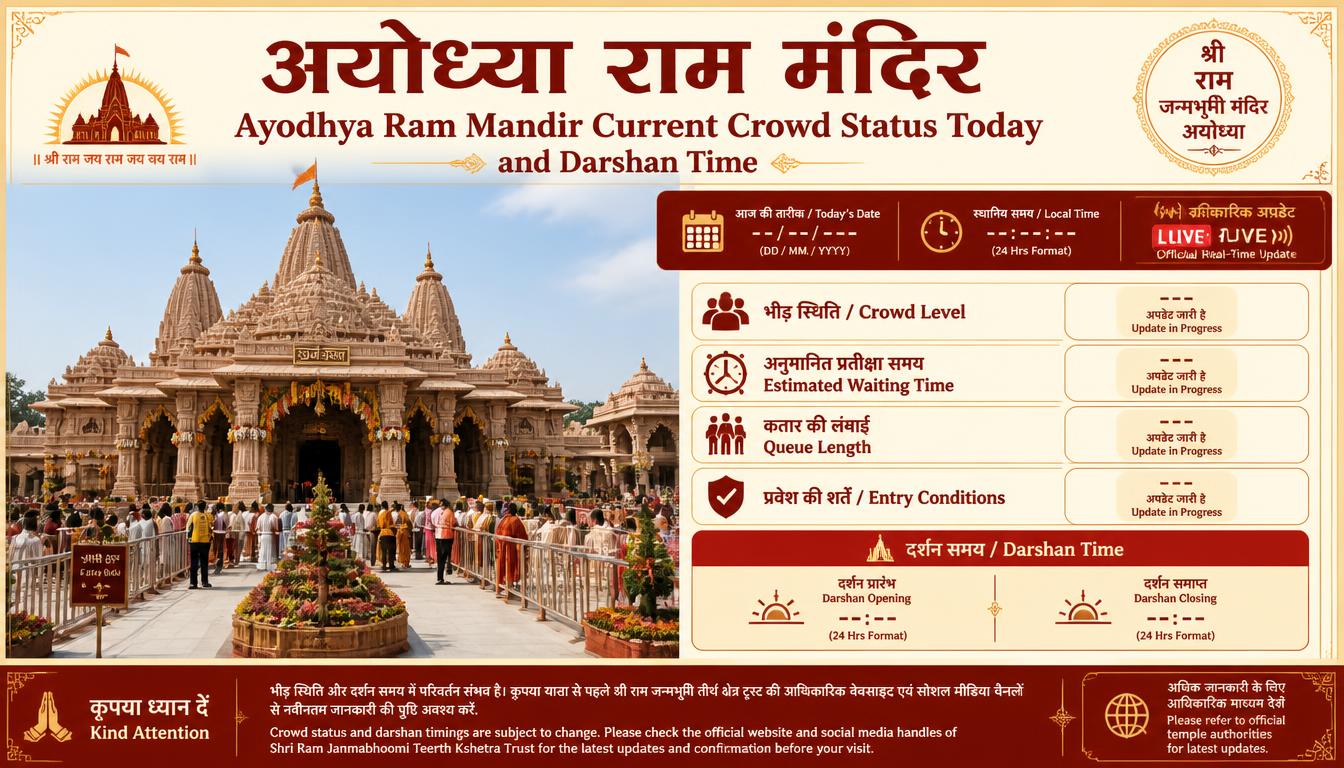
Visiting Ayodhya Ram Mandir is not simply another stop on a travel itinerary. For many devotees, the journey to Ayodhya carries a quiet emotional weight the long road, the first sight of the temple, the sound of devotional chants, and finally the moment of Lord Rama darshan. A little planning can make that experience much easier, especially when the current crowd status matters.
If you are planning your visit today, October 3, 2026, the available live crowd indicators point toward a high crowd level at Ram Mandir, with Saturday weekend traffic contributing to increased pilgrim movement. One live crowd-monitoring source currently marks October 3 as high and notes that conditions can change quickly.
It is important, however, to understand that there is no publicly verified official live queue counter that can guarantee an exact number of people waiting at this minute. So, rather than treating an online estimate as a fixed promise, use it as a planning signal.
For Saturday, October 3, 2026, the current crowd signal for Ayodhya Ram Mandir is reported as high. The same source describes Wednesday through Friday around this week as moderate, while Saturday and Sunday are showing higher visitor pressure.
This makes sense from a practical pilgrimage perspective. Weekends naturally bring more families, groups and out-of-town pilgrims into Ayodhya, Uttar Pradesh, and the movement can become heavier around popular temple hours.
The exact Ram Mandir crowd today can change during the day. Weather, local transportation, religious occasions, school holidays and sudden pilgrim arrivals can all affect the queue.
So if you are already in Ayodhya, check the latest temple notices and on-ground information before joining the queue. The official Ayodhya district website is maintained by the government and was last updated on October 1, 2026.
Current published information for Ram Mandir darshan timings shows several daytime and evening slots rather than one single continuous entry period.
A current timing reference based on the Shri Ram Janmabhoomi Trust’s published schedule lists:
The same source says these timings correspond to booking receipts from April 18, 2026, and warns that older timings found on other websites may no longer be current.
Because temple schedules can be adjusted for special religious occasions, it is sensible to verify the slot shown on your booking/pass before travelling.
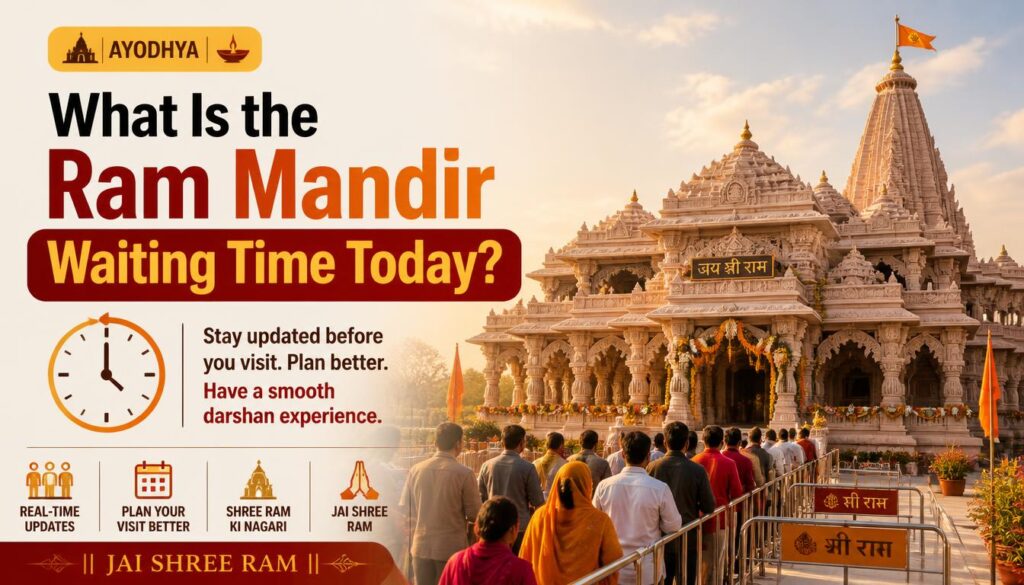
There is no reliable official source publishing a minute-by-minute Ram Mandir waiting time today, so an exact number should not be presented as fact.
Recent 2026 visitor guides give substantially different estimates depending on the day and entry method. One guide estimates roughly 2–3 hours on a normal weekday morning and 4–6 hours on weekends or holidays, while another reports shorter waits during early weekday periods.
That difference is actually useful to understand: waiting time is not fixed.
On a relatively calm morning, the queue may move steadily. On a busy Saturday, however, the same arrival time can produce a much longer darshan waiting time.
For today, with the available live signal showing high crowd conditions, pilgrims should keep extra time available rather than planning their entire day around a short queue.
The complete Ram Mandir darshan experience involves more than the few moments spent viewing Ram Lalla.
Your total time can include:
Some current visitor reports and guides put ordinary visits anywhere from under an hour during quieter periods to several hours when crowds become heavy.
The actual moment of Lord Rama darshan is much shorter than the whole pilgrimage process. That is normal for a major Hindu pilgrimage site with significant daily footfall.
If you are travelling with elderly pilgrims or young children, don’t make the mistake of calculating only the darshan itself. Add plenty of time for walking, security and waiting.
One important point for visitors is that darshan passes are described as free in current information about the Trust’s system. A current guide citing the Trust says it does not charge a fee for darshan or aarti passes.
This is worth remembering because several websites and travel operators use terms such as VIP darshan, fast darshan or special darshan in different ways.
Do not assume that a website selling a tour package is selling an official temple ticket.
For Ayodhya Ram Mandir free darshan, use information from the temple administration or Trust whenever possible, particularly before paying anyone for a supposed entry pass.
The term special darshan pass can be confusing because different websites use different names for faster or scheduled entry.
Recent 2026 information describes Sugam Darshan as a free, slot-based e-pass associated with the Shri Ram Janmabhoomi Teerth Kshetra Trust. According to a September 2026 guide, it is intended to provide a designated entry slot and a separate queue rather than being a paid VIP ticket.
That distinction matters.
If you see a website advertising a “special darshan ticket” for a substantial fee, verify whether it is actually an official temple booking, a tour package, or simply a third-party service.
The safest approach is to follow the instructions connected to your official booking or pass rather than relying on an unfamiliar seller.
If you want to use a Sugam Darshan pass, check the official temple booking system before travelling and follow the current instructions shown there.
The general process is expected to involve:
The precise procedure can change, so don’t rely blindly on an old screenshot or YouTube video.
A recent 2026 guide specifically describes Sugam Darshan as a free e-pass and says the pass provides a designated time slot.
If your priority is avoiding the heaviest crowds, early morning is generally worth considering.
Current visitor guides commonly identify the first morning hours as a comparatively better period, particularly on weekdays. One 2026 guide identifies approximately 6:30–9:00 AM on Tuesday through Thursday as a lower-wait period, although such estimates are not guarantees.
For today, Saturday, the situation is different.
The current live crowd signal identifies Saturday, October 3, as a high-crowd day.
So an early arrival may still help, but it would be unwise to assume that an early visit automatically means a short queue.
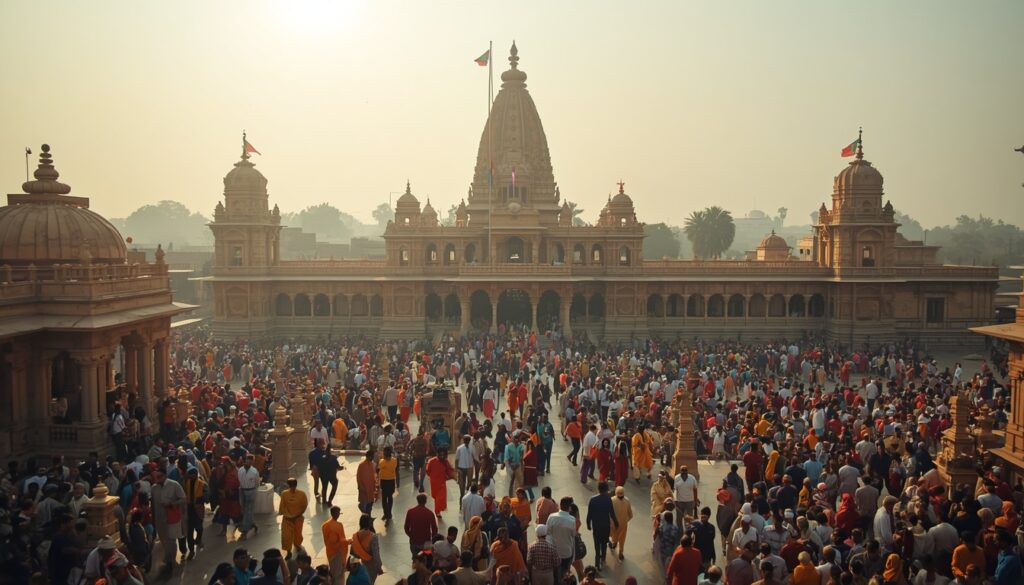
The busiest periods can shift according to the day, season and religious calendar.
Generally, crowd pressure can increase:
A current 2026 crowd guide also identifies festival periods such as Ram Navami and Diwali/Deepotsav as particularly busy periods.
Festival days have their own atmosphere, of course. The same crowds that make movement difficult are also part of the enormous devotional energy of Ayodhya, so the choice depends on what kind of pilgrimage experience you want.
There is no guaranteed “empty” time at such a major pilgrimage site.
Still, historical crowd patterns and current visitor guidance suggest that midweek visits and early morning arrivals can be more manageable than Saturday or Sunday visits.
If your schedule is flexible, choosing a weekday can give you more breathing room.
If your travel dates are fixed, don’t worry too much about finding a perfect hour. Instead, build flexibility into your itinerary. A pilgrimage becomes stressful very quickly when every minute has already been booked.
The weekend crowd deserves special attention.
Saturday and Sunday generally attract more visitors than ordinary weekdays, and the current October 3, 2026 crowd signal specifically marks Saturday as high. Sunday, October 4, is also forecast at a high level by the same monitoring source.
That means visitors arriving today should prepare for:
The queue might move faster than expected—or suddenly slow down. That’s simply the reality of large pilgrimage crowds.
Festival periods can transform the normal rhythm of Ayodhya.
Ram Navami, Diwali, Deepotsav and other major religious occasions can bring exceptionally large numbers of devotees into the city. Historical reporting has also documented special crowd-management measures around major festival periods, including cancellation of VIP passes when temple authorities anticipated heavy footfall.
During these periods, visitors should expect stricter crowd management and possible changes to ordinary arrangements.
Don’t assume that the normal darshan schedule will remain exactly the same during a major festival. Temple authorities can make changes according to safety and crowd conditions.
A comfortable pilgrimage usually begins before reaching the temple gate.
Wear comfortable clothing and shoes suitable for walking. Avoid carrying unnecessary belongings because security procedures and restricted-item rules can add time to your visit.
Travelers should pay particular attention to instructions concerning mobile phones, bags, cameras and other belongings. Current visitor guides report restrictions on electronic items and advise pilgrims to use designated storage facilities where applicable.
For elderly pilgrims, carry necessary personal items while keeping the overall load light.
And yes, water and basic refreshments can matter, especially if you are expecting a long queue. Just follow the current rules about what may enter the temple area.
A family pilgrimage can be beautiful, but the physical side should not be ignored.
Long queues, walking, standing and security procedures can be tiring for older visitors. If you are travelling with elderly family members, consider choosing a less crowded period and allowing additional rest time.
A rushed itinerary can turn a meaningful pilgrimage experience into an exhausting one.
If possible, avoid scheduling several major temples immediately after Ram Mandir. Give everyone some breathing room. Ayodhya has enough spiritual places and historical locations that you do not need to conquer the entire city in one afternoon.

Pilgrims arriving from outside Ayodhya can use a combination of train services, buses, taxis and local transportation.
The city also has hotels, guesthouses and other accommodation near Ram Mandir, although availability and prices can change considerably during busy periods.
If your visit coincides with a major festival or weekend, arranging accommodation earlier is sensible.
Once you arrive, remember that the final approach to the temple may involve walking even if your hotel or vehicle is relatively close. Crowd-control arrangements can affect where vehicles are allowed to go.
A visit to Ayodhya does not have to end immediately after darshan.
Depending on your schedule and the current crowd situation, pilgrims may also explore the Sarayu River, Sarayu ghats, Hanuman Garhi, local markets and other Ramayana historical sites.
However, keep your main purpose in mind if you are travelling during a busy period.
If the city is experiencing heavy visitor movement, allow extra time between locations. Local roads can become considerably slower when large numbers of pilgrims are moving around together.
For Ayodhya Ram Mandir today, October 3, 2026, the most useful points are these:
For Saturday, October 3, 2026, a current crowd-monitoring source reports a high crowd level, but this is an external live signal rather than an official temple queue counter.
There is no verified official live waiting-time figure for today. Recent 2026 visitor guides give different estimates depending on the day, time and entry method, so visitors should allow extra time.
Current published schedules list darshan periods from 7:00 AM through 9:00 PM, with a midday gap, including slots at 7–9 AM, 9–11 AM, 11 AM–12 PM, 1–3 PM, 3–5 PM, 5–7 PM and 7–9 PM.
Current information based on the Trust’s system states that darshan passes are free. Visitors should verify the latest official booking instructions before travelling.
Yes. Current 2026 information describes Sugam Darshan as a free, slot-based e-pass designed to provide scheduled entry.
Midweek and early morning periods are commonly reported as comparatively manageable, although no particular hour can guarantee a short queue.
Read more: https://templetimingsdaily.com/peddamma-temple-aarti-timings-cost-booking/
The total visit can range from under an hour during quieter periods to several hours when the temple is busy. Weekend and festival conditions can increase the waiting period considerably.
Yes, but expect significantly greater crowd flow and footfall during major festivals. Temple authorities may also introduce special crowd-management arrangements.
Ayodhya Ram Mandir timings may vary depending on the day, festival, and temple schedule. It is best to check the latest official timings before visiting.
Darshan is generally available during scheduled morning and evening hours. Early morning is often preferred by devotees because crowds can be lighter.
The temple opens for devotees according to its daily schedule, with timings sometimes adjusted for special occasions and festivals.
The closing time can vary according to the day’s rituals and temple schedule. Visitors should confirm the current closing time before planning their darshan.
For today’s exact Ayodhya Ram Mandir timing, visitors should check the latest official temple updates, as schedules can change on special days.
A visit to Ayodhya Ram Mandir is one of those journeys where patience becomes part of the experience. The queue may be long, the walking may take time, and today’s crowd may not look the same an hour from now—but the purpose of the journey remains deeply meaningful for millions of devotees.
For October 3, 2026, prepare for a high crowd day, leave plenty of time for security and waiting, and verify your latest darshan information before entering the temple area.
Most importantly, don’t let the clock become the whole pilgrimage. Whether your Ram Mandir darshan takes an hour or several, a calm approach, comfortable preparation and respect for fellow pilgrims can make the experience much more peaceful.
And when you finally stand before Lord Rama, even after all that walking and waiting, the noise of the outside world can suddenly feel very far away. That quiet moment is, for many devotees, the real beginning and ending of the journey.