Physical Address
304 North Cardinal St.
Dorchester Center, MA 02124
Physical Address
304 North Cardinal St.
Dorchester Center, MA 02124

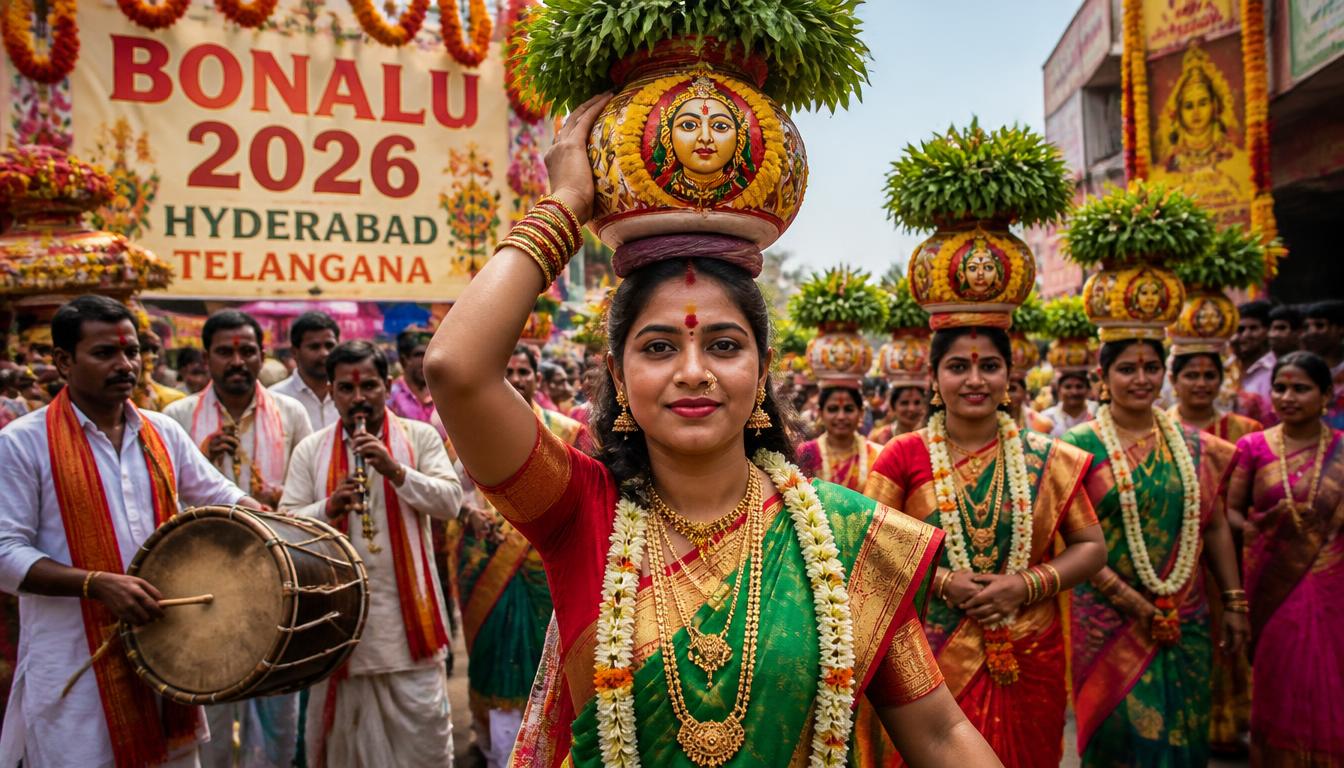
There are some festivals that arrive with a calendar date, and then there are festivals that seem to arrive with the whole neighbourhood walking behind them. Bonalu 2026 belongs to the second kind.
In Telangana, the sound of drums, the bright colours, decorated pots and the name of Goddess Mahankali can turn an ordinary Sunday into something that feels almost alive.
For devotees, Bonalu is not simply a colourful festival. It is an expression of gratitude, devotion and a heartfelt request for divine protection, family wellbeing and prosperity.
The festival brings together temples, homes, streets and communities in a very distinctive form of Shakti worship.
The atmosphere is especially powerful in Hyderabad and Secunderabad, where processions can fill old neighbourhoods with music, dance and devotional energy.
Even a small local shrine may become the centre of a surprisingly large gathering, which is one of the lovely things about this Telangana tradition.
The date commonly identified for Bonalu 2026 is Sunday, July 12, 2026. Bonalu is traditionally associated with the months of Ashadha and Shravan, and celebrations can continue across several Sundays rather than behaving like a one-day festival.
The exact local schedule can differ from temple to temple, so devotees planning to visit a particular Mahankali temple should check the temple’s announcement before travelling. Festival processions are not always as predictable as a normal calendar appointment, and thats part of the experience too.
The festival season is particularly associated with Sundays, with celebrations traditionally extending across around four or five Sundays in different places. The sequence may include major observances at Golconda, temples in the Old City, Lal Darwaza, and Secunderabad.
So, if someone asks, “When is Bonalu 2026?” the simple answer is July 12, 2026 for the key date highlighted for the year, while the wider Bonalu festival 2026 season includes additional temple-based celebrations.
Bonalu festival is a traditional Telangana folk festival dedicated primarily to Goddess Mahankali, a fierce and protective manifestation of the Mother Goddess. The word Bonalu is connected with Bonam, the food offering prepared for the goddess.
The heart of the celebration is beautifully simple: devotees prepare an offering, decorate it with care and carry it to the goddess. Yet the meaning behind that act is much deeper than the pot itself.
The offering represents thanksgiving and devotion. Many devotees pray for family health, protection from disease, prosperity and the wellbeing of children and loved ones. It is almost like saying thank you first, and then asking for strength for whatever comes next.
Bonalu also carries a strong community feeling. Families participate together, neighbours watch processions together, and local traditions pass from one generation to another without needing a classroom.
One important part of Bonalu significance comes from thanksgiving to the goddess for protection from illness and misfortune. Traditional accounts connect the festival’s history with periods of epidemics and difficult conditions, including diseases such as cholera and plague.
The festival also developed within communities that depended heavily on seasonal rainfall and agriculture. Because Bonalu is associated with the monsoon season, ideas of rainfall, agricultural prosperity, health and protection naturally became part of its cultural world.
That is why describing Bonalu as only a religious ceremony misses something important. It is also a festival of community resilience. People gather, remember their traditions and place their collective hopes before the Mother Goddess.
Different families may explain the meaning in slightly different ways. One family may speak about protection, another about fulfilling a vow, and another about gratitude for a healthy year. All of these interpretations can exist side by side.
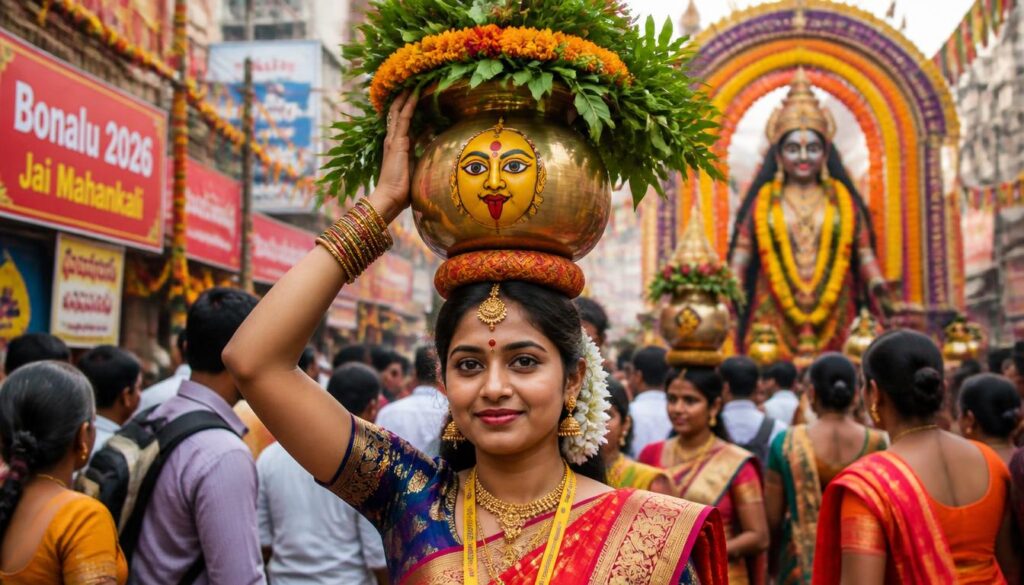
At the centre of Mahankali Bonalu is Goddess Mahankali, worshipped as a powerful guardian and protective form of the divine feminine. She is associated with strength, courage and protection against harmful forces.
The goddess is understood within the wider tradition of Shakti, the divine feminine power. Connections with forms such as Kali and Durga may appear in devotional understanding, although local traditions and temple practices can differ.
For devotees, Mahankali is not simply an abstract divine figure. She is approached as a protector of families and communities, someone before whom fear, illness and uncertainty can be placed with faith.
This protective quality gives Bonalu its particular emotional character. The festival can be loud, energetic and colourful, but underneath all that noise there is a very serious prayer: may the Mother keep us safe.
The Bonam offering is perhaps the most recognisable symbol of the festival. A decorated earthen pot or brass pot is prepared with food and carried by devotees to the temple.
The preparation generally involves cooked rice, often combined with ingredients such as jaggery and curd according to local practice. The pot may be decorated with turmeric, kumkum, vermilion and neem leaves.
A small diya or lit lamp may also be placed as part of the decoration. The result is not just a cooking vessel anymore; it becomes a carefully prepared sacred offering.
Women carrying the decorated Bonam on their heads create one of the most recognisable scenes of the Bonalu celebration. The procession moves slowly, drums beat loudly and devotees make their way toward the temple.
There is something quite touching about this ritual. A meal prepared in a household kitchen becomes an offering for the goddess, and an individual family act becomes part of a much larger community celebration.
The Bonalu rituals vary somewhat between temples and communities, but several elements appear repeatedly during the celebrations.
Devotees may prepare the Bonam at home, decorate the pot and take it to the temple in a procession. At the shrine, the offering is presented to the goddess as naivedya.
After worship, devotees may participate in aarti, listen to sacred chants and receive prasad. Families may also light lamps at their home shrine before or after visiting the temple.
Some devotees make vows, sometimes called manasika, and fulfil them during the festival after receiving or seeking the goddess’s blessings. Such personal vows can make the festival especially meaningful for a family.
The visual details matter too. Neem leaves, turmeric, kumkum and lamps are not random decorations thrown together at the last minute. They are deeply connected with the ritual appearance and symbolism of the celebration.
A Bonalu procession can feel incomplete without the energetic presence of Pothuraju. He is traditionally described as a fierce male attendant or protector associated with the goddess.
In many traditions, Pothuraju is regarded as the brother or male guardian of the goddess. His role carries an unmistakably protective character, with the figure representing strength and the driving away of harmful or negative forces.
During the Pothuraju procession, his powerful movements, traditional appearance and energetic performance create a dramatic contrast with the women carrying Bonam pots.
It can look almost theatrical to someone seeing it for the first time, but for devotees it belongs to the sacred cultural language of Bonalu. The fierce protector stands alongside the Mother Goddess in the imagination of the festival.
Another distinctive tradition is Rangam, a ritual associated with prophecy and divine messages. During the Rangam ceremony, a woman devotee or medium enters a ritual state and is traditionally believed to communicate messages connected with the goddess.
The ceremony is particularly associated with the festival at the Ujjaini Mahankali Temple in Secunderabad. The messages are traditionally understood as guidance or indications concerning the coming year.
Rangam should be understood within its religious and cultural context rather than treated simply as entertainment. For participating devotees, it is a serious part of their festival tradition.
The atmosphere around the ceremony can become very intense. Sacred chants, crowds and anticipation create a moment that feels quite different from an ordinary temple visit.
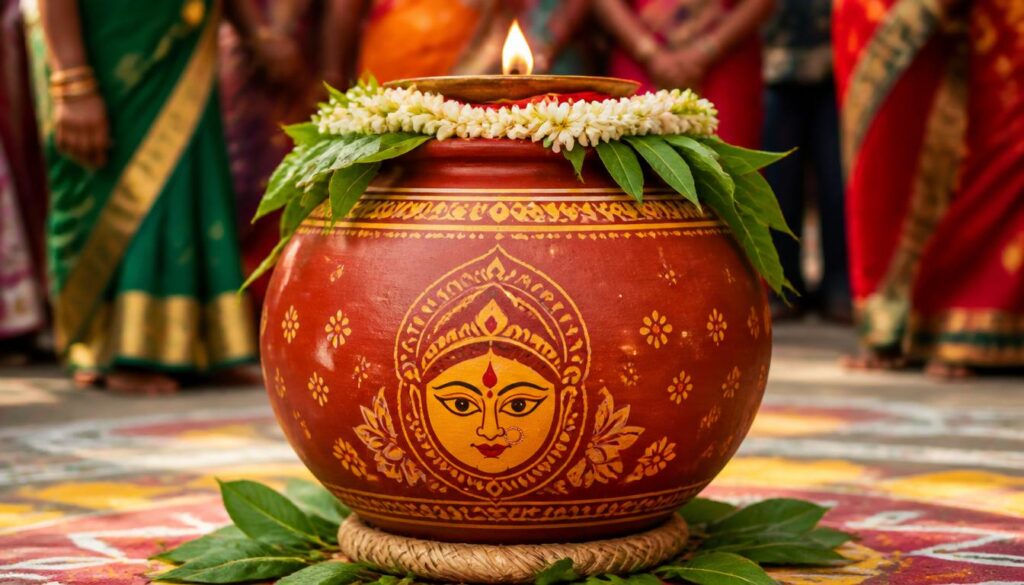
The Ghatam ritual is another important feature of Bonalu traditions. A decorated sacred pot, known as the Ghatam, is carried during a ceremonial procession.
The Ghatam is traditionally associated with a woman representing or embodying the goddess’s presence during the procession. It is taken through the streets before being brought to the temple.
Like the Bonam, the Ghatam shows how a simple household object can become an important sacred symbol when placed inside a larger ritual tradition.
Together, Pothuraju, Rangam and Ghatam give Bonalu a distinctive identity. They are not merely separate activities placed beside one another; they form part of the festival’s broader religious and cultural expression.
Some of the best-known celebrations take place at major temples across Hyderabad and Secunderabad. The festival is especially visible at historic shrines where generations of devotees have maintained the tradition.
Ujjaini Mahankali Temple in Secunderabad is among the most prominent centres of Bonalu worship. Its celebrations attract large numbers of devotees and are closely associated with the city’s Bonalu identity.
In Hyderabad, important traditions are also connected with Golconda Mahankali Temple, Lal Darwaza and the historic Old City. Celebrations around Golconda Fort are particularly associated with the beginning of the wider festival season.
The Akkanna-Madanna Temple is another important name in the festival’s temple landscape. Local shrines dedicated to deities such as Pochamma, Ellamma and Maisamma can also participate in regional traditions.
The temple sequence often spoken about in connection with the festival moves through places such as Golconda, the Old City and Secunderabad. But Bonalu is not limited to famous temples; smaller neighbourhood and village shrines can have their own deeply rooted celebrations.
Bonalu in Hyderabad has a special character because the festival becomes part of the city’s streets. Historic neighbourhoods can suddenly feel transformed by processions, drums, decorations and groups of devotees travelling toward temples.
The contrast is interesting. Hyderabad is a modern, busy city, but during Bonalu, old folk traditions remain remarkably visible. A traditional procession can pass through streets surrounded by everyday urban life, and nobody finds that strange.
At Lal Darwaza, the devotional atmosphere becomes especially significant during major celebrations. Families may arrive together, carry offerings and wait patiently among other devotees.
For many Hyderabad residents, Bonalu is also connected with memory. People remember attending with parents, grandparents or relatives when they were younger. Thats how cultural traditions survive sometimes—not through books, but through repeated family experiences.
The story of Telangana Bonalu is bigger than Hyderabad. Village traditions and smaller-town celebrations also contribute to the festival’s cultural identity.
In many communities, local goddesses such as Pochamma, Ellamma and Maisamma are worshipped as protective village deities. The precise rituals and names can vary, but the underlying themes of protection, health, gratitude and community remain familiar.
A village celebration may not have the huge crowds associated with a famous Hyderabad temple. Yet the emotional importance can be just as strong, perhaps even more personal because everybody knows everybody.
The Bonalu festival Telangana tradition therefore has both a grand public face and a quiet local face. One happens amid enormous processions, while the other may happen around a neighbourhood shrine with families preparing offerings together.
The connection between Bonalu and monsoon is one of the reasons the festival feels so closely tied to the seasonal rhythm of Telangana.
The observance takes place around Ashadha and Shravan, a period associated with the monsoon. Historically, communities depended heavily on rainfall, agriculture and the health of livestock and families.
Prayers for a good season could therefore carry very practical hopes. Rain meant crops, crops meant food, and food meant stability. A festival asking the goddess for blessings could naturally include hopes for a healthy community and agricultural prosperity.
Even today, these older associations give Bonalu a sense of seasonal belonging. It arrives not as an isolated event but as part of a landscape shaped by rain, farming and changing weather.
Read more: https://templetimingsdaily.com/kali-puja-2026-2/
The Bonalu spiritual significance is often expressed through ideas of protection, gratitude, devotion and blessings. Devotees may pray for their families, children, homes and communities.
Some people associate the festival with protection from disease, negative energies, misfortune and the evil eye. Others approach it primarily as an opportunity to fulfil vows and express thanks to the goddess.
Traditional beliefs may also connect spiritual practice with concepts such as ancestral karma or pitru dosha. These beliefs vary among individuals and communities, so they should be understood as part of particular devotional traditions rather than universal religious rules.
At its simplest, however, the spiritual message is easy to understand: people come together before the goddess with hope. They ask for courage, health and protection, while offering gratitude for what they have already received.
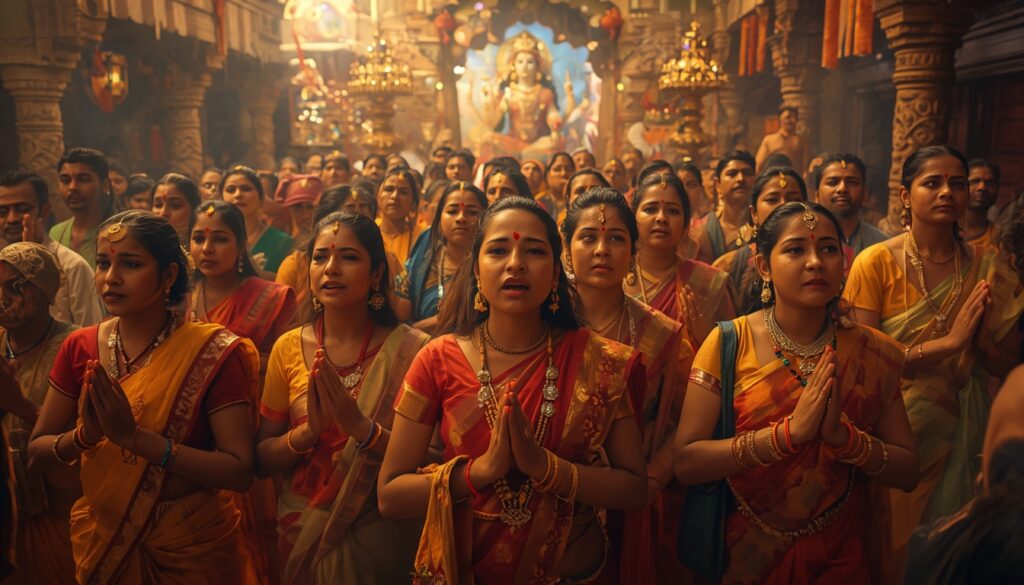
Devotional practice during Bonalu may include Mahakali mantra, Shakti Gayatri, Devi Stuti and other sacred chants. The precise prayers used can depend on temple and family tradition.
Mantra chanting is often treated as a way of focusing the mind during worship. Instead of rushing through the ceremony, devotees repeat sacred words and turn their attention toward the goddess.
The traditional Mahakali Mantra is associated with Goddess Kali and protective divine energy. Shakti Gayatri and Devi Stuti similarly belong to a wider devotional vocabulary centred on Shakti.
Some traditions prescribe particular recitation counts, including 108 repetitions. Devotees following a specific religious practice should follow the guidance of their priest or family tradition rather than assuming every Bonalu ceremony uses exactly the same chant.
A typical Bonalu celebration may begin at home with the preparation of the offering. Rice is cooked, the Bonam pot is decorated and ingredients such as jaggery or curd may be included according to local custom.
The decorated pot can then be carried on the head toward the temple. Along the route, devotees may sing, dance or participate in the procession while traditional drums create the unmistakable sound of the festival.
At the temple, the Bonam offering is presented to the goddess. Devotees participate in worship, aarti, prayers and other rituals before receiving prasad.
Major celebrations may also feature Pothuraju, Ghatam processions and the Rangam ceremony. Each element adds another layer to the festival without changing its central focus: devotion to the Mother Goddess.
The main offering is the Bonam, traditionally prepared with cooked rice and other ingredients. Jaggery, curd and other locally customary additions may be used.
The pot itself is decorated with turmeric and kumkum, and neem leaves are commonly associated with its presentation. A lamp may also be included, creating a striking combination of food, colour and light.
The important point is not that every family must prepare an identical recipe. Local customs differ, and temple instructions may also vary. The meaning lies in preparing and offering food with devotion.
After worship, devotees may receive prasad, sharing in the blessed food associated with the ceremony.
Every year’s festival has its own crowds, weather, family stories and local moments. Bonalu 2026 is special because it continues a tradition that has remained woven into the cultural life of Telangana for generations.
A young person carrying an offering may be following a practice their grandmother once followed. A drummer may be performing rhythms that the neighbourhood already knows by heart. A family visiting a temple may be repeating a journey they have made many times before.
This is the quiet strength of living heritage. It doesn’t need to look ancient every second. It simply needs people willing to carry it forward.
Bonalu also demonstrates how religion and community life can meet in one place. The goddess is worshipped inside the temple, but the festival’s energy spills into streets, homes, music, food and shared memories.
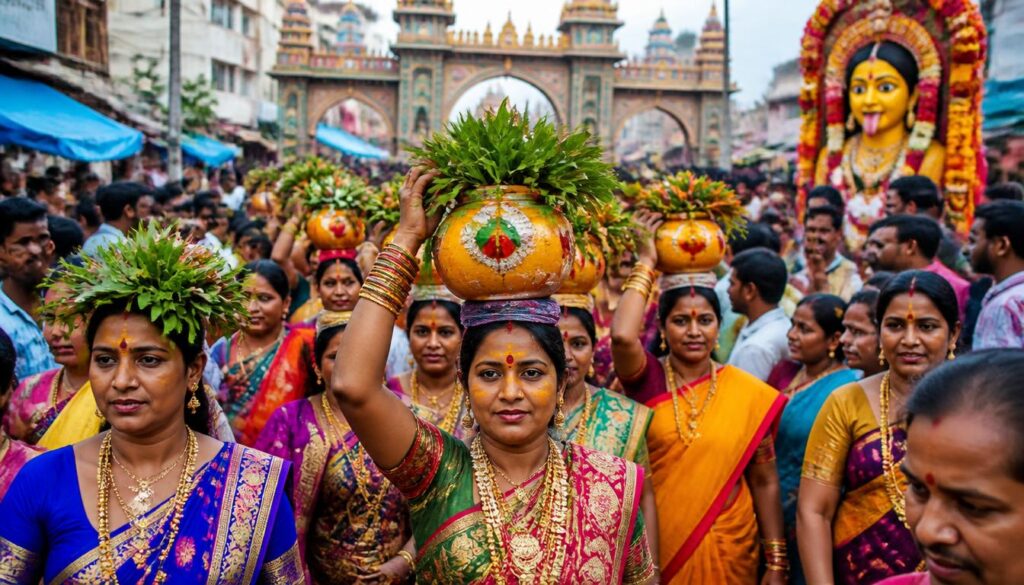
Looking at Bonalu 2026 only through dates and rituals would leave out its most human part. The festival is about people gathering with a shared feeling of gratitude and hope.
The decorated Bonam pot, the powerful presence of Pothuraju, the mystery surrounding Rangam, and the procession of the Ghatam all contribute to a tradition that is visually striking but spiritually grounded.
From Golconda Fort to the Old City and from Ujjaini Mahankali Temple to smaller local shrines, Bonalu shows the remarkable variety within Telangana’s devotional culture.
It is a celebration of Goddess Mahankali, but it is also a celebration of community resilience, family traditions and collective memory.
The key Bonalu 2026 date highlighted for the year is Sunday, July 12, 2026. The broader festival season can include celebrations on multiple Sundays.
Bonalu is a traditional Telangana festival of worship and thanksgiving dedicated primarily to Goddess Mahankali. Devotees offer prepared food and pray for protection, health and prosperity.
Bonam is the sacred food offering prepared in a decorated earthen or brass pot. It commonly includes cooked rice and may include jaggery or curd, with decorations such as neem leaves, turmeric and kumkum.
Goddess Mahankali is the principal deity associated with Bonalu. Local celebrations may also honour village goddesses such as Ellamma, Pochamma and Maisamma.
Pothuraju is a fierce male attendant and protective figure associated with the goddess. His energetic participation in the procession represents strength and protection.
Rangam is a traditional ceremony involving a woman devotee or medium who enters a ritual state and is believed by devotees to convey messages associated with the goddess and the coming year.
Ghatam is a decorated sacred pot carried in a ceremonial procession. It is an important ritual element in several major Bonalu celebrations.
Bonalu is strongly associated with Telangana, especially Hyderabad and Secunderabad. Major celebrations take place at temples including Ujjaini Mahankali, Golconda and Lal Darwaza, while many local shrines also observe the festival.
Bonalu traditions commonly extend across several Sundays during Ashadha and Shravan, often around four or five Sundays depending on the local calendar and temple tradition.
Devotees offer Bonam, usually containing cooked rice and sometimes jaggery and curd. The pot is traditionally decorated with items such as turmeric, kumkum, neem leaves and a lamp.
Bonalu 2026 is more than a date marked on a calendar. It is a living expression of Telangana’s devotion, folk traditions and community spirit, carried from homes to temples and from one generation to another.
The image of a decorated Bonam being carried toward Goddess Mahankali, with drums sounding and devotees filling the streets, says something very simple without needing many words: gratitude can become a celebration when a whole community feels it together.
From Hyderabad and Secunderabad to villages and neighbourhood shrines, the festival continues to hold space for prayer, thanksgiving and hope. Its rituals may look different from one place to another, but the feeling underneath remains familiar.
May Bonalu 2026 be remembered for devotion, family togetherness, community strength and heartfelt prayers for health and protection. And perhaps thats the most beautiful thing about this festival—the tradition does not merely ask people to remember the past; it gives them a reason to carry its spirit into the future.