Physical Address
304 North Cardinal St.
Dorchester Center, MA 02124
Physical Address
304 North Cardinal St.
Dorchester Center, MA 02124

There is a particular feeling inside a temple that is difficult to carry home in words. The bells sound a little louder, incense hangs softly in the air, priests move through rituals learned across generations, and for a few minutes the ordinary rush of life seems to stay outside the doorway. For many devotees, Pratyaksha Seva is about entering that sacred moment personally rather than experiencing worship from a distance.
In simple terms, Pratyaksha Seva generally refers to a Temple Seva in which a devotee physically visits the temple and participates in, witnesses, or receives the benefit of a prescribed religious ceremony according to the temple’s rules. Depending on the temple, this might include Abhishekam, Archana, Homam, a special puja, or another form of Hindu worship.
Yet one thing needs to be clear before anyone reaches for the Book Now button: Seva names, schedules, participation rules, ticket availability, and prices aren’t universal. They can change from temple to temple and even from one festival day to another. So, this guide explains what Pratyaksha Seva booking means, common Sevas you may encounter, and how to approach booking without turning a spiritual visit into a confusing ticket hunt.
The word Pratyaksha broadly carries the sense of something direct, present, or before one’s eyes. In the context of temple worship, Pratyaksha Seva commonly describes an in-person Seva where devotees attend the temple for the ritual instead of arranging it remotely.
That physical presence matters to many worshippers. You may hear Vedic chanting without a speaker between you and the priest, see an Abhishekam ceremony taking place, join your hands during the mantra recitation, and receive darshan after the ritual. It feels less like watching worship and more like standing inside it, which is kinda the whole point.
A Pratyaksha Seva list may contain simple offerings such as Archana as well as elaborate Vedic rituals, Homams, Abhishekams, or ceremonial worship of Utsavamurthulu. The exact offerings depend completely on the temple and its traditions.
It should also not be confused with Paroksha Seva. In many temple systems, Paroksha arrangements allow a religious offering to be performed on behalf of devotees who aren’t physically present. Pratyaksha participation, meanwhile, normally requires the devotee to attend Seva in person.
For someone devoted to Lord Shiva, hearing Om Namah Shivaya or Om Namah Sivaya during a ritual can be far more personal than simply reading the mantra at home. Telugu-speaking devotees may recognize the same sacred invocation as ఓం నమః శివాయ.
The attraction isn’t only about proximity to the deity. A temple ceremony combines prayer, community, tradition, sound, fragrance, sacred offerings, and darshan into one spiritual experience. One small brass bell can somehow make the mind quieter than a whole afternoon of trying to sit quietly, funny how that happens.
Pratyaksha participation may be chosen for a personal prayer, family observance, thanksgiving, a traditional religious purpose, or simply devotion. Some pilgrims plan an entire temple visit around one particular Seva, while others select a ritual after reaching the temple and understanding what’s available.
Most importantly, a Seva should be approached as a religious observance, not merely a paid attraction. The ticket enables participation under temple rules; the meaning comes from worship, prayer, and the devotee’s own intention.
There is no single nationwide menu of Temple Sevas. Still, several names repeatedly appear within South Indian and particularly Shiva-oriented temple traditions. Knowing what these terms generally mean makes a temple Seva booking page much easier to understand.
Archana is a familiar form of deity worship in which sacred names or mantras are recited while offerings are made. It may look simple compared with a large Homam, but spiritually, simplicity isn’t necessarily small.
Some temples offer Archana at Utsavamurthulu, also described as Utsava Murthy Archana. Utsavamurthulu are the festival or processional forms of the deities used in particular ceremonies and temple celebrations.
An Archana booking may request devotee details according to temple practice. Never assume that every temple asks for identical information, though; follow the instructions shown during official booking.
Abhishekam is ceremonial bathing of a deity using substances prescribed by that temple’s tradition. In Shiva worship, a Shiva Abhishekam can be accompanied by mantras and Vedic chanting, creating a deeply immersive atmosphere.
Temple listings may include Sri Swamy Ammavarla Abhishekam, also written in some contexts as Swamy Ammavari Abhishekam. Other deity-specific Abhishekam services may be offered separately.
An Abhishekam booking should be made only after checking what the ticket actually includes. The Abhishekam price, permitted number of participants, reporting time, and whether materials are supplied can differ.
Among more elaborate forms of Shiva worship, Mahanyasa Purvaka Ekadasa Rudrabhishekam is an important ritual name devotees may encounter. Alternate transliterations include Mahanyasapuurvaka Ekadasa Rudraabhisekam, Mahanyasa Rudrabhishekam, and simply Ekadasa Rudrabhishekam.
The ceremony is associated with extensive sacred recitation and ritual worship of Shiva. For a devotee, the experience can be striking: water flowing in ritual offering while Sanskrit chanting seems to fill every stone corner of the temple.
Because such rituals may have fixed days or limited participation, check ticket availability and reporting requirements before travelling specifically for one.
Another name that may appear is Sri Mrutyanjaya Swamy Vari Abhishekam, commonly connected with Mrityunjaya worship. You may also encounter spellings such as Mrutyanjaya and the shorter phrase Mrityunjaya Abhishekam.
The Mrityunjaya form and mantra tradition are associated with Lord Shiva. Devotees may participate with prayerful intentions, but temple worship shouldn’t be presented as a guaranteed solution to medical, financial, or other life problems. Faith can carry meaning without needing impossible promises attached to it.
Sri Guru Dakshinamurthy Swamy Vari Abhishekam, or Dakshinamurthy Abhishekam, centers on Sri Guru Dakshinamurthy Swamy, a form of Shiva traditionally associated with the guru principle, wisdom, and knowledge.
For students, teachers, families, or simply someone seeking clarity, this ceremony can carry a beautifully quiet symbolism. Not every prayer has to ask for something huge; sometimes a person just wants a less noisy mind.
Sri Saneeswara Swamy Vari Abhishekam, also called Saneeswara Abhishekam, concerns Sri Saneeswara Swamy, associated with Shani.
Customs surrounding Saneeswara worship differ among temples. Consequently, devotees should rely on the temple administration for the precise ritual procedure rather than treating random internet instructions as universal temple rules.
A Homam ritual centers around a consecrated fire into which prescribed offerings are made while mantras are chanted. Compared with a short Archana, a Homam may involve more extensive ritual stages, though the format varies with tradition.
Chandi Homam is connected with worship of Chandi, while Rudra Homam belongs to the broader sphere of Rudra or Shiva worship. Searchers looking for Chandi Homam booking, Chandi Homam cost, or Homam booking should verify the specific temple because similarly named ceremonies don’t necessarily have identical schedules or fees.
There is something almost ancient-feeling about sitting near a sacred fire while mantras rise alongside the smoke. Still, visitors should follow designated seating, photography, dress, and movement rules. A sacred ceremony is not the best place to discover that your phone’s camera shutter is surprisingly loud.
Rahu Ketu Pooja, also commonly written Rahu Kethu Pooja, is another frequently searched puja ceremony. Devotees may encounter terms such as Rahu Ketu Dosha Pooja, Rahu Ketu Pooja booking, Rahu Ketu Pooja price, and Rahu Ketu Pooja tickets while researching temple services.
The ritual is associated with Rahu and Ketu within Hindu religious and astrological traditions. Procedures vary significantly by temple, including how devotees participate, what materials are provided, and whether there are multiple ticket categories.
So, avoid assuming that a price or instruction seen for one temple applies to another. For a ritual with this much variation, checking the current official temple information before your pilgrimage can save quite a bit of confusion.
Nityakalyanam, sometimes appearing online with spelling variations such as Nityakalwyanam or Nitya Kalyanam, refers to a ceremonial divine wedding observance offered in certain temples.
Depending on the temple, this can be one of the most visually rich daily temple Sevas. Flowers, sacred recitations, decorated deities, priests, and devotees together create an atmosphere that feels celebratory but still reverent.
Another early-day service may be Suprabhata Seva, written in Telugu as సుప్రభాత సేవ. It is associated with morning worship or awakening service traditions, although its precise form differs among temples.
If you’re considering Suprabhata participation, check the Pratyaksha Seva timings carefully. Morning Sevas can mean properly early morning, not the optimistic version of early where breakfast has already happened.
Swarna Pushparchana, also spelled Swarna Puspaarchana, is another ritual name that may appear within online temple services. Its exact procedure and availability should be understood according to the temple offering it.
Go Pooja or Go Puja, written గోపూజ in Telugu, refers to ritual reverence involving the cow within Hindu tradition. Temples offering it may have specific schedules and participation arrangements.
Other services can include deity-specific Abhishekams, Archana ceremony, special festival rituals, and seasonal Sevas. Some may run every day, others weekly, monthly, or only during particular religious occasions.
This is why the phrase Pratyaksha Seva list should always be tied to a specific temple and date. A list copied six months ago can look wonderfully useful and still send you to the wrong counter at the wrong hour.
Many major temples now provide online services alongside traditional offline booking. Where supported, Pratyaksha Seva online booking allows pilgrims to select a ritual and reserve participation before arriving.
The typical booking procedure is fairly straightforward, although every portal can differ:
A Book Now button should never be the only thing you examine. Read what sits around it. A surprisingly large number of pilgrimage problems begin with somebody clicking faster than they read.
For temple Seva online booking, also make sure you’re using the official or expressly authorized system. Search advertisements and unofficial pages can sometimes resemble genuine booking services.
Not every devotee wants to book digitally, and not every temple handles all services online. Pratyaksha Seva offline booking may be available through an official temple counter or designated administrative office.
For offline booking, arrive with enough time to locate the proper counter and ask whether tickets remain for your preferred ceremony. Same-day availability can be limited, particularly on weekends, festival dates, auspicious days, and busy pilgrimage periods.
An offline counter can also be useful when a ritual’s conditions are difficult to understand online. Asking temple staff whether a ticket covers one person, a couple, or a family is much better than creatively guessing at the temple gate.
Searches for Pratyaksha Seva price, Seva ticket price, Pooja cost, and Seva charges often produce numbers such as ₹50, ₹200, ₹300, ₹500, ₹750, ₹1000, ₹1116, ₹1500, ₹2500, or ₹5000 in Indian Rupees.
Those amounts should not be treated as a universal price chart. Different temples can charge completely different amounts for similarly named rituals, and prices may be revised by the temple administration.
Even within one temple, the Seva price may depend on the ritual, ticket category, number of participants, included offerings, or special occasion. An online system might also display a booking fee or transaction-related charge where applicable.
Therefore, before paying, verify the current amount directly on the official booking system. For something like Rahu Ketu Pooja price, Chandi Homam cost, or an Abhishekam price, the temple’s current listing should take priority over old blog posts and screenshots.
Booking a ritual at 8:00 a.m. doesn’t necessarily mean walking into the temple at 7:59 and expecting everything to work out. Some Sevas require devotees to report considerably earlier for verification, queueing, seating, or movement into the ritual area.
Check both the actual Pratyaksha Seva timings and the reporting time printed on your ticket. They are not always the same thing.
During crowded periods, allow extra time for security checks, footwear counters, baggage rules, and navigating the temple complex. A calm arrival makes a better beginning to prayer than sprinting through a pilgrimage center while clutching a phone at 4% battery.
Dress requirements can also vary. Traditional or modest clothing may be required for particular temple rituals, so confirm the current temple rules before leaving your accommodation.
The distinction between Pratyaksha Seva and Paroksha Seva becomes important when selecting devotional services online.
Pratyaksha generally involves physical Seva participation at the temple. You travel there, follow entry requirements, and take part in or witness the prescribed ritual according to the ticket.
Paroksha arrangements, where offered, generally enable a religious offering or ritual to be performed without the devotee’s physical presence. The exact benefits, prasadam arrangements, names included in worship, and procedures depend on the temple.
Neither should be casually described as spiritually “better” for every person. A pilgrim able to travel may deeply value direct darshan, while an elderly devotee thousands of kilometers away may appreciate online devotional services that let them arrange worship remotely.
A common source of confusion is assuming that a Seva ticket automatically works as a Darshanam booking.
It might include or facilitate darshan in some temple systems, but this cannot be assumed universally. Darshanam, temple Darshan booking, and a specific religious service booking can be separate products with different queues, timings, and conditions.
Before purchasing Pratyaksha Seva tickets, check whether the ticket includes darshan, how many people can enter, and whether accompanying family members require separate tickets.
This little check takes perhaps two minutes. Discovering the answer after travelling several hundred kilometres takes considerably longer.
Preparation for an in-person temple Seva doesn’t need to become complicated. The best preparation is usually a combination of practical planning and respectful awareness.
Keep your booking confirmation accessible, reach the venue before the stated reporting time, and follow instructions given by priests and temple personnel. If the temple prohibits photography during the sacred ritual, keep the phone away; some moments are allowed to exist without becoming camera-roll content.
Listen carefully during Vedic chanting, mantra recitation, and instructions surrounding offerings. You don’t need to understand every Sanskrit word to behave respectfully.
For a Shiva-oriented ceremony, the familiar Shiva mantra Om Namah Shivaya may naturally become part of one’s inward prayer. Ritual practice differs, though, so allow the temple tradition to guide what happens during the ceremony.
If you’re uncertain about materials, don’t automatically arrive carrying an enormous bag of flowers, coconuts, oils, and other items. Some temples supply ritual materials, while others prescribe what devotees should bring.
People often search for the “best” Shiva temple Sevas, but there isn’t one ritual that suits every devotional intention.
Someone drawn toward direct Shiva worship may be interested in Ekadasa Rudrabhishekam, Rudra Homam, or another Abhishekam. Another devotee may prefer Archana, Dakshinamurthy Abhishekam, Mrityunjaya Abhishekam, Saneeswara Abhishekam, Swarna Pushparchana, or a temple-specific ceremony.
A family may choose Nityakalyanam, while another pilgrim may be researching Rahu Ketu Pooja booking. The meaningful choice depends on personal devotion, temple tradition, availability, and one’s reason for the pilgrimage.
When unsure, read the temple’s description or speak with authorized temple staff. Avoid websites that guarantee miraculous outcomes from choosing a more expensive ticket. Sacred worship isn’t a premium subscription where divine blessings unlock at ₹2500.
A few careful checks can make temple pooja booking considerably smoother. Before completing online booking, confirm the exact temple, Seva name, selected date, reporting time, number of allowed participants, and total payable amount.
Look at cancellation or rescheduling rules as well. Advance booking can sometimes sell out, and some temple puja services may have stricter policies than ordinary entry tickets.
Check whether identification is required and whether the name on the booking must match it. Also verify rules for children, senior citizens, accompanying persons, and dress where relevant.
Most of all, use official booking channels. A temple online booking portal operated or authorized by the relevant temple administration is a much safer reference for live availability and current fees than a third-party article—including this one.
It is easy for modern pilgrimage planning to become a strange collection of OTPs, payment screens, screenshots, hotel confirmations, and browser tabs. Somewhere inside all that logistics sits the original reason for going: worship.
Once you reach the temple, allow the booking machinery to fade into the background. Notice the sound of chanting. Watch the lamps. Listen when the priest begins the puja ceremony. Stand before the deity without mentally checking the next task on your itinerary.
That is where Pratyaksha Seva becomes more than a ticket category.
For many devotees, darshan is a quiet meeting rather than an event requiring dramatic emotion. One person may feel overwhelmed, another peaceful, and somebody else may simply stand silently. All of those responses can be human and genuine.
Pratyaksha Seva generally means a temple service attended physically by devotees. The precise meaning and participation format should be confirmed with the individual temple offering the Seva.
Many temples provide Pratyaksha Seva online booking, but availability varies. Use the relevant temple’s official or authorized temple booking portal to check current options.
Usually, no. Pratyaksha Seva involves physical attendance, while Paroksha Seva generally refers to worship performed on a devotee’s behalf without requiring their presence, where such services are offered.
There is no single Pratyaksha Seva price. The amount depends on the temple and ritual, so check current official Seva charges before booking.
Some Seva arrangements may include or lead to Darshanam, while others may require separate arrangements. Read the exact ticket conditions rather than assuming darshan is included.
Where a temple offers the ritual, check its official system for Rahu Ketu Pooja booking, ticket availability, timing, participation rules, and current cost.
It varies by temple. An Abhishekam booking may specify participation, ritual materials, prasadam, or other arrangements, but the ticket description should be checked for the exact inclusions.
Some temples permit offline booking at designated counters, subject to availability. For popular Sevas, advance online reservation may be safer where officially supported.
Bring your valid booking confirmation and any identification or items specifically required by the temple. Don’t assume ritual materials are necessary unless the temple instructs you to bring them.
Follow the reporting time stated by the temple rather than only the ceremony’s starting time. Arriving early is particularly useful during festivals and busy pilgrimage periods.
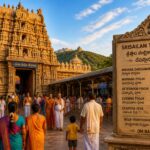
Srikalahasti Temple is a famous Shiva temple in Andhra Pradesh, known especially for its spiritual significance and Rahu Ketu Pooja.
Srikalahasti Temple tickets can be purchased according to the type of Darshan or Seva you want to attend, subject to availability.
Srikalahasti Temple online booking allows devotees to reserve eligible Darshan, Seva, and pooja services before visiting the temple.
Srikalahasti Temple Rahu Ketu Pooja tickets online booking can help devotees reserve the ritual in advance and check available dates and timings.
Sri Kalahasti is a renowned temple town associated with Lord Shiva and is particularly known for its Rahu Ketu Pooja and spiritual traditions.
Read articul: https://templetimingsdaily.com/darshanam/
Pratyaksha Seva brings a devotee physically closer to the living rhythm of temple worship—the mantras, lamps, flowers, sacred water, fire offerings, priests, and that unmistakable stillness which sometimes appears even inside a crowded temple.
Whether your chosen service is Archana, Rahu Ketu Pooja, Chandi Homam, Rudra Homam, Mahanyasa Purvaka Ekadasa Rudrabhishekam, Mrityunjaya Abhishekam, Swarna Pushparchana, Go Pooja, Suprabhata Seva, or Nityakalyanam, understand the ritual first and verify the current booking details with the temple itself.
Use official channels for Pratyaksha Seva booking, check the latest timings and charges, arrive before the reporting time, and respect the temple’s customs. The practical planning matters, yes—but once you stand before Swamy or Ammavaru, it can become wonderfully unimportant.
A ticket gets you to the ceremony. Devotion is what you carry into it. Om Namah Sivaya — ఓం నమః శివాయ.