Physical Address
304 North Cardinal St.
Dorchester Center, MA 02124
Physical Address
304 North Cardinal St.
Dorchester Center, MA 02124

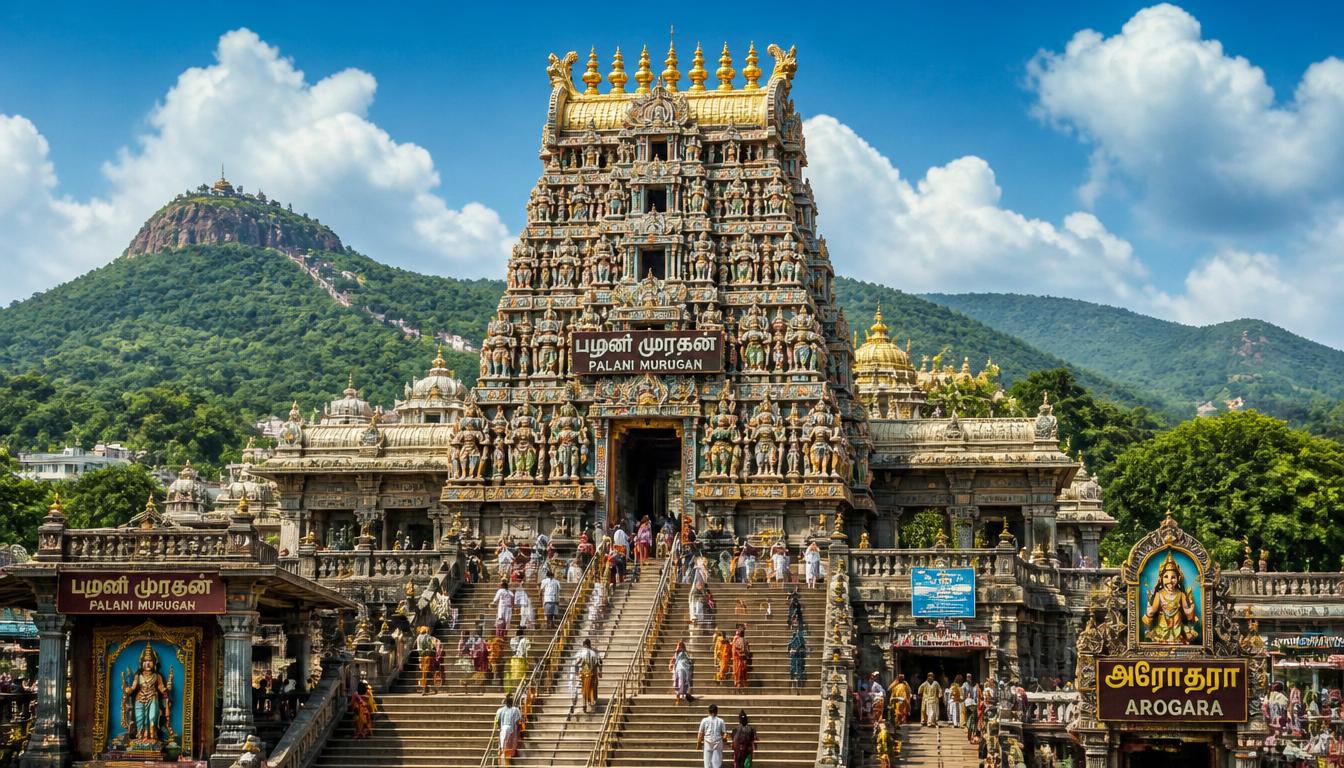
Planning a spiritual journey to the famous Palani Murugan Temple 2026 can become a truly memorable experience when you know the correct darshan timings, pooja schedule, online booking process, ticket charges, travel options, and temple facilities in advance.
Located on the peaceful Palani Hills of Tamil Nadu, this sacred shrine attracts millions of devotees every year seeking blessings, wisdom, good health, and inner peace.
The temple, officially known as Arulmigu Dhandayuthapani Swamy Temple, is among the most important temples dedicated to Lord Murugan and is one of the six sacred abodes called Arupadai Veedu.
Whether you are visiting for a quick darshan, participating in Abhishekam, or planning a family pilgrimage, this detailed 2026 guide will help you organize your visit smoothly.
Palani Murugan Temple is a historic hill temple situated in Palani, Dindigul district, Tamil Nadu. The temple is dedicated to Lord Dhandayuthapani, a unique form of Lord Murugan who appears as a young renunciant holding a staff called Dhandam.
The temple holds a special position among Murugan devotees because Palani Murugan Temple is one of the Arupadai Veedu, the six holy abodes of Lord Murugan.
Devotees believe that worshipping here provides mental clarity, spiritual strength, success, and protection from obstacles.
The main idol of Lord Murugan is associated with the legendary Navapashanam Idol, which is believed to have been created by Siddhar Bogar using a combination of nine medicinal substances. According to traditional beliefs, this sacred idol represents healing energy and divine wisdom.
The famous story behind Palani begins with the Gnana Pazham (fruit of wisdom) offered by Lord Shiva. Shiva announced that the fruit would be given to the son who completed a journey around the world first.
Lord Murugan travelled around the world on his peacock, while Lord Ganesha considered his parents as his entire universe and completed the task by circling them.
Lord Ganesha received the fruit, and Murugan, feeling disappointed, left Mount Kailasa and came to Palani Hills as a renunciant.
This story represents an important spiritual message true wisdom comes from understanding rather than simply achieving external goals.
Palani Temple opens from 5:45 AM to 9:00 PM on regular days, with a short afternoon break between 1:00 PM and 1:30 PM.
Knowing the correct Palani temple timings 2026 helps devotees avoid unnecessary waiting and plan their pooja participation properly.
| Darshan Session | Timing |
|---|---|
| Morning Darshan | 5:45 AM – 1:00 PM |
| Afternoon Break | 1:00 PM – 1:30 PM |
| Evening Darshan | 1:30 PM – 9:00 PM |
The temple timings may change slightly during major festivals, special celebrations, and high crowd periods.
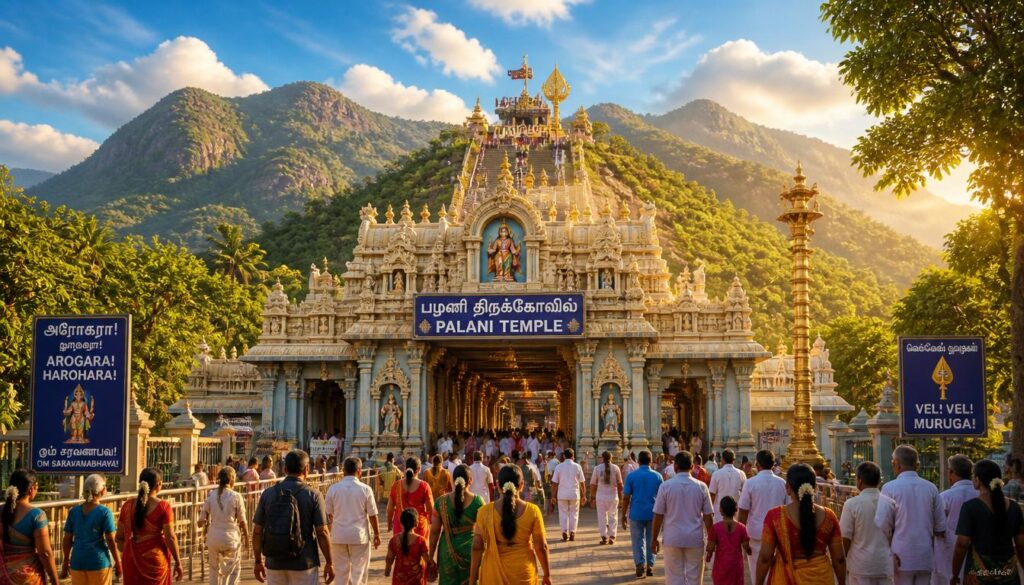
The ideal time to visit depends on your purpose:
Early Morning (5:45 AM – 7:00 AM)
Morning hours are considered the best for peaceful darshan. The crowd is usually lower, the atmosphere feels calm, and devotees can witness important morning rituals.
Evening Hours (After 5:30 PM)
Evening darshan offers a different spiritual experience with lamps, chants, and special rituals. Many devotees prefer this time to experience the devotional atmosphere of the temple.
For a comfortable visit:
The daily rituals at Arulmigu Dhandayuthapani Swamy Temple are performed according to traditional Agamic practices. Each pooja includes sacred chants, offerings, and rituals performed by temple priests.
| Pooja Name | Timing |
|---|---|
| Vishwaroopa Darshan | 5:40 AM |
| Vila Pooja | 6:50 AM |
| Sirukalasanthi | 8:00 AM |
| Kalasanthi | 9:00 AM |
| Uchikalam | 12:00 PM |
| Sayaraksha (Raja Alankaram) | 5:30 PM |
| Rakala Pooja | 8:00 PM |
| Palliarai | 8:30 PM |
Popular rituals include:
Participating in these rituals allows devotees to experience the traditional spiritual practices of Palani Temple more closely.
Devotees can use the official Palani temple online booking facility to reserve special darshan, pooja services, Abhishekam, and other offerings before arrival.
Online booking is useful during weekends, holidays, and festivals because waiting time can increase significantly.
Through online services, devotees can book:
Follow these steps:
Carry your booking confirmation and valid identity proof during your temple visit.
During festivals like Thai Poosam, Panguni Uthiram, and Skanda Sashti, booking slots may fill quickly.
For a smoother experience:

Palani Temple provides both free and paid darshan options so devotees can choose according to their convenience and available time.
The charges may vary during special occasions, so visitors should verify the latest information before travelling.
| Service | Approximate Charges |
|---|---|
| Free Darshan | Free |
| Special Entrance Darshan | ₹10 onwards |
| Special Darshan | Around ₹100 |
| Milk Abhishekam | ₹25 |
| Panchamirtham Abhishekam | ₹25 |
| Archana | ₹5–₹10 |
| Golden Chariot (Thanga Ratham) | Around ₹2,000 |
| Golden Peacock Procession | Around ₹1,000 |
| Panchamirtham Prasadam | Around ₹75 |
Important services include:
Golden Chariot (Thanga Ratham): A special devotional offering where the deity is taken in a golden chariot procession.
Panchamirtham Prasadam: A famous Palani offering prepared traditionally and considered highly sacred among devotees.
Abhishekam: A ritual where sacred substances are offered to the deity as part of worship.
The hilltop temple can be reached through traditional steps or convenient transport facilities.
Palani Temple has 693 stone steps leading to the hilltop shrine. Many devotees climb these steps as an act of devotion and spiritual discipline.
For elderly visitors, children, and those who prefer convenience, the temple provides winch and rope car services.
| Service | Approximate Fare |
|---|---|
| Ordinary Winch | ₹10 onwards |
| Special Winch | ₹50 onwards |
The rope car and winch provide a comfortable journey while also offering beautiful views of the surrounding Palani Hills.
Palani is well-connected by road, rail, and air, making it accessible for devotees from different parts of India.
Regular buses and private vehicles connect Palani with major cities including:
Travelling by road is convenient because visitors can enjoy the scenic landscape around Tamil Nadu’s countryside.
Palani Railway Station connects the town with important destinations in Tamil Nadu. Train travel is preferred by many pilgrims because it is economical and comfortable.
The nearest airports are:
From the airport, taxis and buses are available to reach Palani town.
A simple itinerary can help first-time visitors manage time better.
This type of planning helps avoid rushing and makes the pilgrimage more peaceful.
The temple becomes especially vibrant during major Murugan festivals.
Usually celebrated during January or February, Thai Poosam is one of the biggest festivals at Palani. Thousands of devotees participate in processions, prayers, and Kavadi offerings.
Celebrated during March or April, this festival has great importance among Murugan devotees and attracts large gatherings.
Usually celebrated during October or November, this festival remembers Lord Murugan’s victory over evil forces.
Celebrated during May or June, this festival marks the divine significance of Lord Murugan.
Before visiting Palani Temple, keep these useful points in mind:
Palani Murugan Temple generally opens at 5:45 AM and remains open until 9:00 PM. There is usually an afternoon break between 1:00 PM and 1:30 PM. Timings can vary slightly during festivals and special occasions.
Devotees can book special darshan tickets through the official Palani Temple online services portal. Select the required service, choose the date and time slot, provide devotee details, complete payment, and carry the confirmation during the visit.
The special darshan charge is generally around ₹100 on regular days, while festival or special occasion charges may be higher. Visitors should confirm the latest rates before booking because prices can change based on temple administration decisions.
There are approximately 693 stone steps leading to the hilltop shrine. Devotees can also use rope car or winch services, which are helpful for elderly visitors, children, and pilgrims who prefer a more comfortable journey.