Physical Address
304 North Cardinal St.
Dorchester Center, MA 02124
Physical Address
304 North Cardinal St.
Dorchester Center, MA 02124

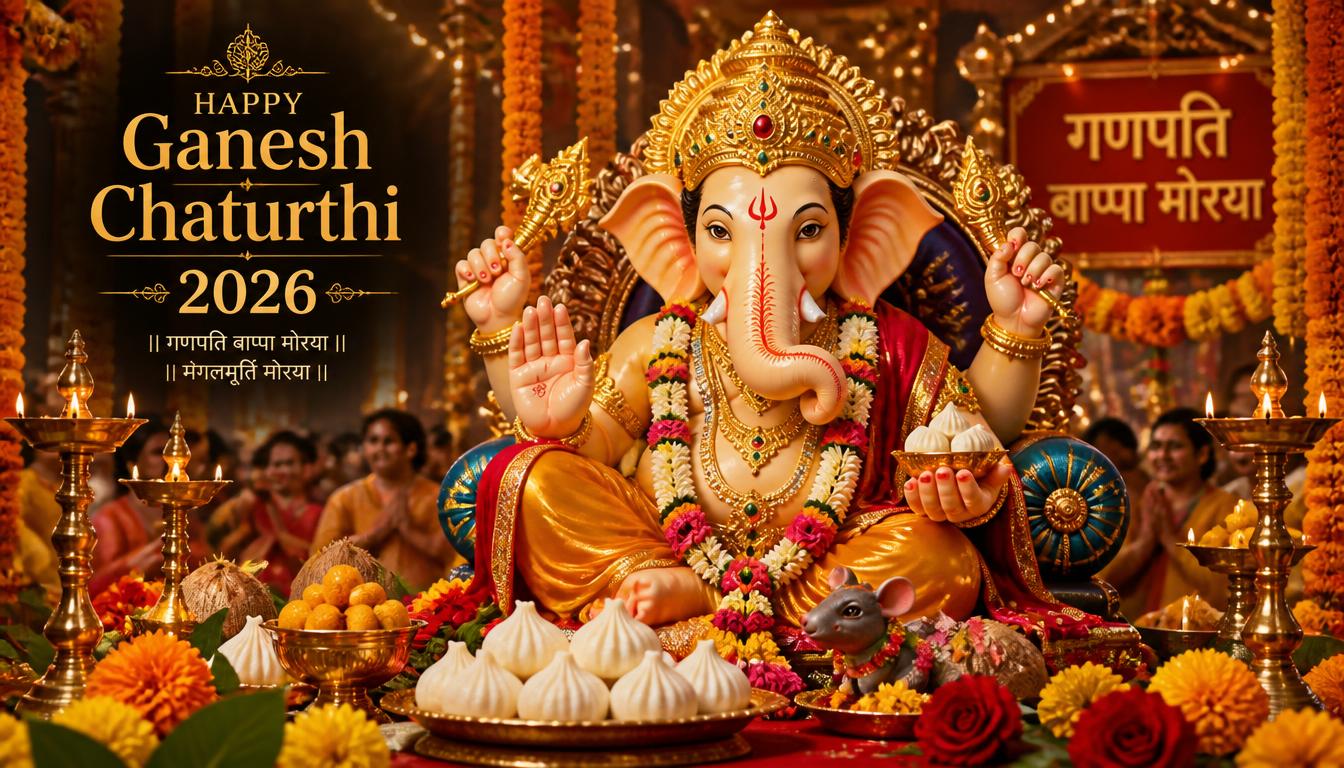
There are some festivals that arrive like a date on the calendar, and then there are festivals that seem to knock softly on the doors of the heart. Ganesh Chaturthi 2026 belongs to the second kind.
When the idol of Lord Ganesha enters a home, a neighbourhood or a beautifully decorated pandal, the atmosphere changes almost instantly.
There is devotion in the air, children become unusually curious, elders remember old traditions, and even the smallest modak somehow feels more special.
The festival is celebrated as the birth anniversary of Lord Ganesha, who is revered as the remover of obstacles and associated with wisdom, intellect, prosperity, success and good fortune.
It is observed during Shukla Paksha of the Bhadrapada month in the Hindu lunar calendar, generally falling in August or September in the English calendar.
And yes, there is a little confusion floating around online about the 2026 date. The correct date for Ganesh Chaturthi 2026 is Monday, September 14, 2026. In many places, the festival then continues with celebrations leading toward Ganesh Visarjan, with September 25 listed as the Visarjan date in the cited Panchang calendars.
Perhaps that is what makes Ganeshotsav so beautiful: it is religious, but also deeply human. People pray for a new beginning, remember loved ones, decorate their homes, prepare sweets, sing aartis and share Ganesh Chaturthi wishes with people who may be miles away. Sometimes a simple “Ganpati Bappa Morya” says what a long paragraph cannot.
If you are searching for when is Ganesh Chaturthi 2026, mark Monday, September 14, 2026 on your calendar. The Panchang information cited for several Indian locations places the Chaturthi Tithi from September 14 into September 15, while the main festival date remains September 14.
For example, the cited Panchang for Dasuya gives the Madhyahna Ganesha Puja Muhurat from approximately 11:08 AM to 1:37 PM, while the Karachi calculation gives approximately 11:13 AM to 1:41 PM. This shows why people should check the Panchang for their own city before following an exact Ganesh Chaturthi puja muhurat, because timings are location-sensitive.
The Chaturthi Tithi is listed as beginning on September 14 and ending on September 15 in the cited calendars. The same sources also list Ganesh Visarjan 2026 for Friday, September 25. So, the celebration is not really just one day; for many families and communities, it becomes a whole stretch of devotion, music, food and togetherness.
At its heart, Ganesh Chaturthi celebrates Lord Ganesha, the elephant-headed Hindu deity traditionally regarded as the son of Lord Shiva and Goddess Parvati. He is worshipped before many important beginnings because devotees associate him with the removal of obstacles and the cultivation of wisdom and good judgment.
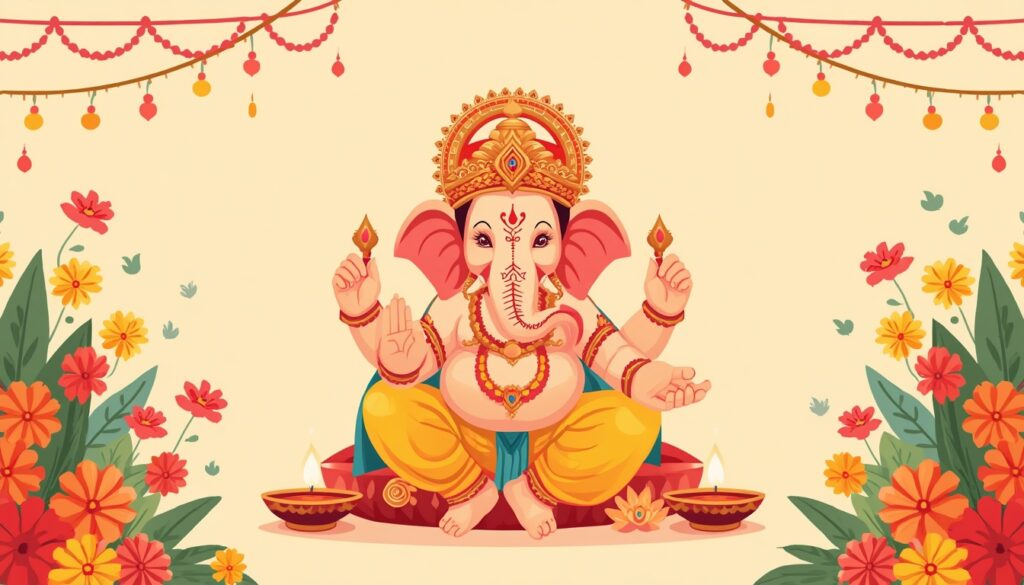
His appearance itself carries layers of symbolism. The large ears remind devotees to listen carefully, the small eyes suggest concentration, and the trunk is often interpreted as a symbol of adaptability and discrimination. Even the little Mushika, Ganesha’s vehicle, is given symbolic meaning in traditions that connect it with controlling the restless ego.
Then there is the modak. It isn’t merely a sweet placed beside the idol because it looks cute on a plate, though it certainly does. Modak is traditionally associated with spiritual knowledge and the sweetness of the rewards that come through wisdom and devotion.
For many devotees, the festival is therefore a time to ask for more than money or success. They pray for clarity when life is confusing, courage when something is difficult, and the wisdom to know which obstacles need to be crossed and which ones need to be understood first.
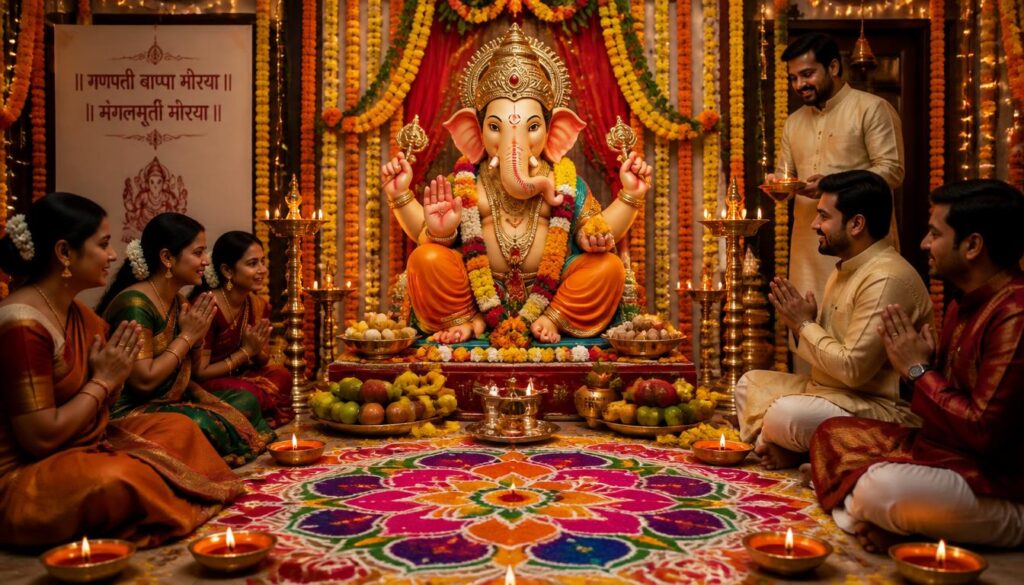
The arrival of Ganesha is often called Ganapati Sthapana, when the idol is ceremonially installed in a home, temple or community pandal. The moment can be surprisingly emotional, especially for families who have maintained the tradition for years.
A child may be holding flowers, an elder may be reciting prayers, and someone in the background is probably still trying to fix the decoration, which is also part of the real festival.
The idol is welcomed with devotion and prepared for Ganapati Puja. Depending on the tradition followed, the worship may include offerings, flowers, lamps, incense, sweets, mantras and other elements of ritual worship. More elaborate observances may follow a form of Shodashopachara Ganapati Puja, involving sixteen traditional offerings.
The important thing is not to turn devotion into a competition. A giant decoration can be beautiful, but a small home shrine where everyone sits together quietly can be just as meaningful. Festivals have a funny habit of reminding us that expensive things are not always the memorable things.
A festival message becomes warmer when it sounds as though it came from an actual person, not from a greeting-card factory. These Ganesh Chaturthi wishes can be sent to parents, siblings, cousins, grandparents and close friends, with a name or personal memory added if you want.
Not every friendship needs a dramatic paragraph. Sometimes a short message sent while everyone is busy with work is enough to make someone’s afternoon better, and honestly, thats one of the nicest uses of a festival greeting.
Lord Ganesha is especially associated with auspicious beginnings, which makes the festival meaningful for someone starting a business, moving into a new home, beginning a project, getting married or simply trying to rebuild life after a difficult chapter.
Short messages work wonderfully when the receiver already knows what you mean. You don’t need to write a philosophical essay at 7:30 in the morning when “Ganpati Bappa Morya” is already carrying half the emotion.
Festivals are spiritual, yes, but families are also families. Someone forgets the flowers, somebody eats the modak before the puja, and one person is always taking 47 photos of the same decoration. A little humour doesn’t reduce devotion; sometimes it makes the celebration feel more real.
There is a particular softness in festival poetry. It doesn’t have to rhyme perfectly; sometimes the best line is simply the one that sounds like something your heart would say at midnight.
Read more: https://templetimingsdaily.com/dushara-2026/
The Ganesh Chaturthi rituals differ by region, family and tradition, but several practices appear widely. Devotees install a Ganesha idol, perform puja, offer flowers and sweets, light lamps, recite prayers and participate in aarti. Some observe fasting or particular dietary practices as part of their religious observance.
The main puja is traditionally associated with Madhyahna Kala, the midday period, because traditional accounts connect Ganesha’s birth with this part of the day. Exact puja windows vary according to location, so a local Panchang is the safer choice rather than copying a timing from another city.
A commonly recited Ganesha mantra is “Om Gam Ganapataye Namah.” Devotees may chant it during prayer or meditation, depending on their family and spiritual practice. The point is less about racing through a fixed number of repetitions and more about creating a moment where the mind actually becomes quiet, even if only for a few minutes.
One of the more unusual traditions connected with the festival is the belief surrounding Ganesh Chaturthi moon sighting. In some Hindu traditions, seeing the moon during the specified Chaturthi period is avoided because of the association with Mithya Dosha or Mithya Kalank, a belief connected with the possibility of false accusations or dishonour.
The traditional story is linked with Lord Krishna and the Syamantaka jewel, and versions of the narrative also involve Sage Narada and God Chandra. The story gives the moon-sighting custom a mythological background rather than making it merely an arbitrary festival rule.
The precise prohibited period is location-dependent. For example, the cited Karachi Panchang lists a moon-sighting avoidance window on September 14, while Indian city calculations show somewhat different local times.
Because customs can differ between families and traditions, anyone observing this practice should follow the guidance of their own Panchang, priest or family tradition. Thats especially useful when festival timings cross midnight or differ significantly between locations.
The emotional character of Ganesh Visarjan is very different from the excitement of Ganapati Sthapana. At the beginning, devotees welcome Ganesha into their homes; at Visarjan, they say farewell. It can feel joyful and bittersweet at the same time, which is a strange but beautiful combination.
In large public celebrations, devotees may carry the idol through streets with music, dancing, devotional chants and a grand procession before immersion. The tradition represents a cycle of arrival and departure, reminding people that forms are temporary while faith, memory and values continue.
Anant Chaturdashi is traditionally associated with the conclusion of the longer Ganeshotsav observance. In 2026, the cited Panchang sources list September 25 as the Ganesh Visarjan date for several locations.
Today, many communities also think carefully about environmentally responsible celebrations. Choosing an appropriate idol, avoiding harmful decorations and following local immersion guidance can help preserve the spirit of the festival without unnecessarily damaging natural water bodies.
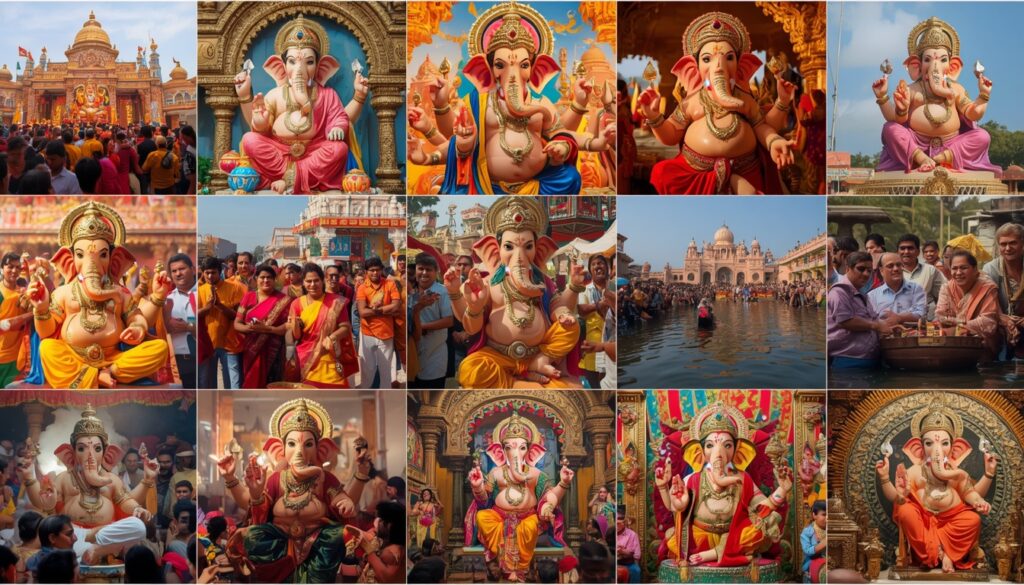
In Maharashtra, Ganesh Chaturthi has become famous for enormous public celebrations, elaborate pandals, cultural programmes and energetic processions. Mumbai’s Lalbaugcha Raja is particularly well known, while Pune has historic public Ganpati traditions associated with names such as Kasba Ganpati and Tambdi Jogeshwari.
The development of large public celebrations is also connected with Lokmanya Tilak, who helped popularise Ganesh festivals as public gatherings during the late nineteenth century. What began as religious celebration became, in many places, a powerful social and cultural tradition too.
In Andhra Pradesh and Telangana, the festival is commonly known as Vinayaka Chavithi, while in Tamil Nadu, the name Vinayagar Chaturthi is widely used. Regional foods such as steamed dumplings and variations of modakam add their own delicious accent to the celebration.
Karnataka has the distinctive Gowri-Ganesha Habba, bringing together the worship of Goddess Gowri, associated with Parvati, and Ganesha. In Goa, families and communities observe Ganesh Chaturthi with traditions that can differ from those seen in neighbouring states, showing once again that one festival can wear many cultural colours.
These variations are not contradictions. They are part of the festival’s richness. One place may emphasise a huge procession, another a family puja, and another a traditional food prepared in the kitchen before sunrise. Same devotion, different rhythm.
The significance of Ganesh Chaturthi can be understood beyond rituals and decorations. Ganesha is often invoked before beginnings because wisdom is needed before action. Prosperity is valuable, but without judgment it can become another source of difficulty. Success is wonderful, but without humility it can become strangely empty.
The symbolism of Ganesha encourages qualities such as listening, concentration, adaptability and thoughtful decision-making. His large ears suggest listening carefully; his small eyes are associated with focus; his trunk suggests flexibility and discrimination; and the mouse beneath him is often interpreted symbolically in relation to the control of ego and restless desires.
So, when people ask for Ganesha blessings, they may be asking for much more than material abundance. They may be asking for a sharp intellect before an exam, patience during a family problem, courage before a new business, or clarity before making a difficult choice.
That is why the festival remains meaningful even for people whose celebration is very simple. A small idol, one lamp and a sincere prayer can carry a surprisingly large amount of hope.
The easiest way to make a festival wish feel personal is to stop trying to make it sound impressive. Think about the person first. A message for your grandmother should not sound like the caption you posted for 2,000 followers, obviously.
Mention something specific: a new job, a new home, a recent achievement, a family memory or even a difficult period the person has overcome. Then connect that detail with a blessing.
For example, instead of simply saying “Happy Ganesh Chaturthi,” you could say that you hope Lord Ganesha gives your friend wisdom and confidence as they begin their new business. A personalised message doesn’t need more words; it needs more meaning.
You can also add “Ganpati Bappa Morya”, a family nickname, a photograph from a previous celebration or a short line about your shared festival memory. Suddenly the message belongs to you, not the internet.
A WhatsApp message is easy, but it isn’t the only option. You can send a short voice note with the sound of an aarti in the background, create a personalised digital greeting, share a family photograph, or write a handwritten card for an elder.
For children, asking them to create their own Ganesh Chaturthi wishes can turn the greeting itself into part of the celebration. Their spelling may wander around a little, but thats exactly what makes it adorable.
For workplaces and community groups, keep messages inclusive and respectful. A simple greeting about wisdom, prosperity, peace and new beginnings usually works better than an overly religious paragraph when the audience is diverse.
Ganesh Chaturthi 2026 will be celebrated on Monday, September 14, 2026. The exact puja timings vary by location.
The festival celebrates Lord Ganesha and is associated with wisdom, prosperity, good fortune and the removal of obstacles. It is also a time for auspicious new beginnings.
Ganapati Sthapana is the ceremonial installation and welcoming of a Ganesha idol into a home, temple or community celebration space.
The cited Panchang calendars list Friday, September 25, 2026 as the Ganesh Visarjan date for several Indian locations. Local traditions and observances can vary.
Some Hindu traditions advise avoiding moon sighting during a specified period because of the belief in Mithya Dosha, traditionally associated with false accusations or dishonour.
One widely used Ganesha Moola Mantra is “Om Gam Ganapataye Namah.” Devotees may chant it as part of their individual prayer or devotional practice.
Modak is traditionally associated with Ganesha and is considered a beloved offering. It also symbolically represents sweetness and the rewards associated with spiritual knowledge.
The observance can vary from one-day household celebrations to longer Ganeshotsav traditions, with the extended festival commonly culminating in Visarjan around Anant Chaturdashi.
Ganesh Chaturthi 2026 is more than a date to circle in red ink. It is a festival about beginning again, listening a little more carefully, thinking before acting and making room for hope when life has become crowded with worries.
From Ganapati Sthapana to Ganesh Puja, from the fragrance of flowers to the sweetness of modak, from huge public pandals to a tiny family shrine, every celebration carries its own story. The traditions may look different across Maharashtra, Karnataka, Tamil Nadu, Goa, Andhra Pradesh and Telangana, but the emotional thread remains remarkably familiar: welcome, devotion, gratitude and eventually farewell.
So, when you send your Ganesh Chaturthi wishes, don’t worry too much about finding the “perfect” words. Say something honest. Remember someone. Bless a new beginning. Tell your family you love them. Sometimes the most meaningful festival message is not the most poetic one, it is simply the one that arrives at the right moment.
May this Ganesh Chaturthi 2026 bring wisdom where there is confusion, courage where there is fear, prosperity without pride, and peace that doesn’t disappear when the decorations come down.
Ganpati Bappa Morya! May Lord Ganesha bless every new beginning with hope, every effort with wisdom, and every home with happiness.