Physical Address
304 North Cardinal St.
Dorchester Center, MA 02124
Physical Address
304 North Cardinal St.
Dorchester Center, MA 02124

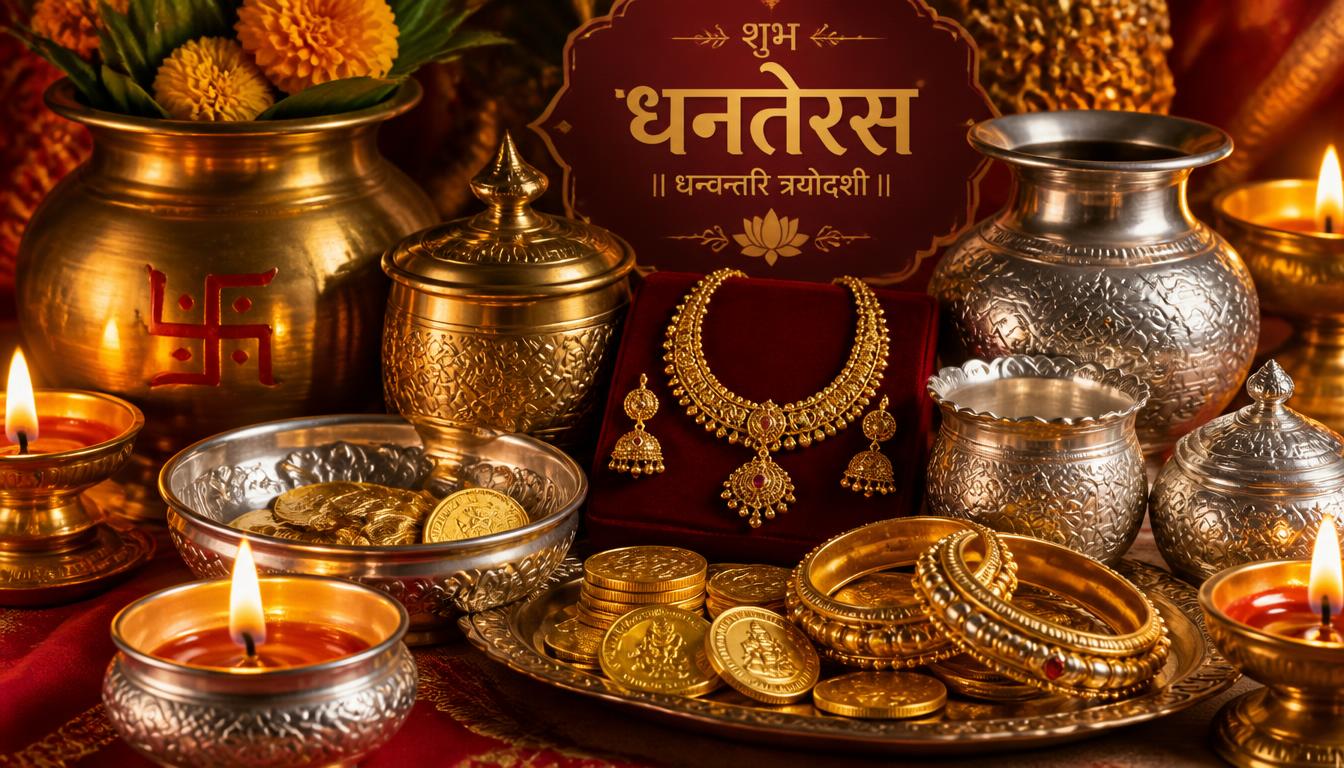
There is something quietly beautiful about Dhanteras. Before the loud fireworks, before the house becomes a maze of diyas, before Diwali sweets start appearing in every tin and somehow disappear just as quickly, there is this one evening that asks families to pause and think about what “wealth” really means.
It may be gold or silver, yes, but it can also be health, peace, a full kitchen, a safe home, and people who sit together at the end of a long day.
In Dhanteras 2026, that feeling arrives on Friday, November 6, 2026. It is observed on Kartik Krishna Paksha Trayodashi, the 13th lunar day of the dark fortnight, and marks the opening of the traditional five-day Diwali period.
Local calendars can differ slightly in timings, so your city-specific panchang is worth checking before planning the puja. Drik Panchang+1
And perhaps thats why Dhanteras messages feel different from ordinary festival greetings. You are not merely saying “Happy Dhanteras.” You are wishing someone a life where prosperity does not arrive alone, but brings good health, wisdom, contentment and a little more light into the home.
The Dhanteras 2026 date is Friday, November 6, 2026. In traditional Hindu calendrical language, it is Dhantrayodashi or Dhanvantari Trayodashi, associated with the Trayodashi tithi of Kartik Krishna Paksha. The date changes each year because it follows the lunar calendar rather than the fixed Gregorian calendar. Drik Panchang+1
For readers asking when is Dhanteras 2026, the simple answer is November 6. But the interesting part begins after the date. The festival connects ideas of wealth, health, protection and renewal, which makes it much richer than a shopping occasion.
The word “dhan” means wealth, while “teras” points toward the 13th lunar day. In many homes, the day is associated with Goddess Lakshmi, Kubera, and Lord Dhanvantari.
That combination itself tells a little story: prosperity needs health to be enjoyed, and wealth needs wisdom to be handled properly.
A gold coin sitting in a box cannot really make a household prosperous if everyone in it is exhausted and unhappy, can it?
For the 2026 observance, published panchang calculations show the Trayodashi tithi beginning around 10:30 a.m.
on November 6 and ending around 10:47 a.m. on November 7 for several Punjab locations, although exact timings vary by place. For example, the Dhanteras puja window listed for Patiala is about 6:02 p.m. to 7:57 p.m. on November 6. Drik Panchang
So, for anyone searching Dhanteras 2026 shubh muhurat, don’t blindly copy a timing from a random post. The location matters, and local sunset and panchang calculations can shift the window.
One of the most loved stories behind the festival comes from the Samudra Manthan, the cosmic churning of the ocean.
According to Hindu tradition, Lord Dhanvantari emerged carrying Amrit, the nectar associated with immortality. He is revered as the divine physician and is closely connected with Ayurveda, healing and wellbeing.
That association gives Dhanteras a surprisingly modern message: health itself is wealth. The phrase sounds familiar because it is true in the most ordinary, stubborn way.
A family may spend months planning purchases for Diwali, but a healthy parent, a peaceful child and a functioning household are treasures nobody can put a price tag on.
The wealth side of the festival is traditionally connected with Goddess Lakshmi, the goddess of prosperity, and Kubera, regarded in Hindu tradition as the treasurer of the gods. In some traditions, devotees perform Lakshmi-Kubera puja, seeking abundance, financial stability and responsible prosperity rather than wealth for its own sake.
There is also the tradition of Yama Deepam, in which a lamp is lit in connection with Yama. Customs vary among regions and families, but the practice is commonly understood as a prayer for protection and longevity.
A tiny earthen diya facing the darkness feels almost humble compared with the giant Diwali decorations, yet that is sort of its beauty.
The connection between Dhanteras and Lord Dhanvantari deserves special attention. Dhanvantari is traditionally regarded as the divine physician associated with Ayurveda and is linked in Puranic accounts with the emergence of healing knowledge and Amrit during the Samudra Manthan.
For many years, India’s National Ayurveda Day was observed on Dhanvantari Jayanti, coinciding with Dhanteras.
However, this changed in 2025: the Government of India designated September 23 as the fixed annual date for Ayurveda Day, replacing the earlier variable lunar-calendar observance.
So in Dhanteras 2026, it is better to describe Dhanvantari’s connection as a religious and cultural association rather than saying that the national observance itself falls on Dhanteras. Press Information Bureau+1
This distinction is small but important for trustworthy festival content. Traditions evolve, official observances change, and a good festival article shouldnt pretend otherwise.
The deeper idea remains lovely, though. When people offer prayers to Dhanvantari, they are reminded that health and longevity belong in the same conversation as prosperity. A new silver bowl is nice. A healthy family gathering around it is much nicer.
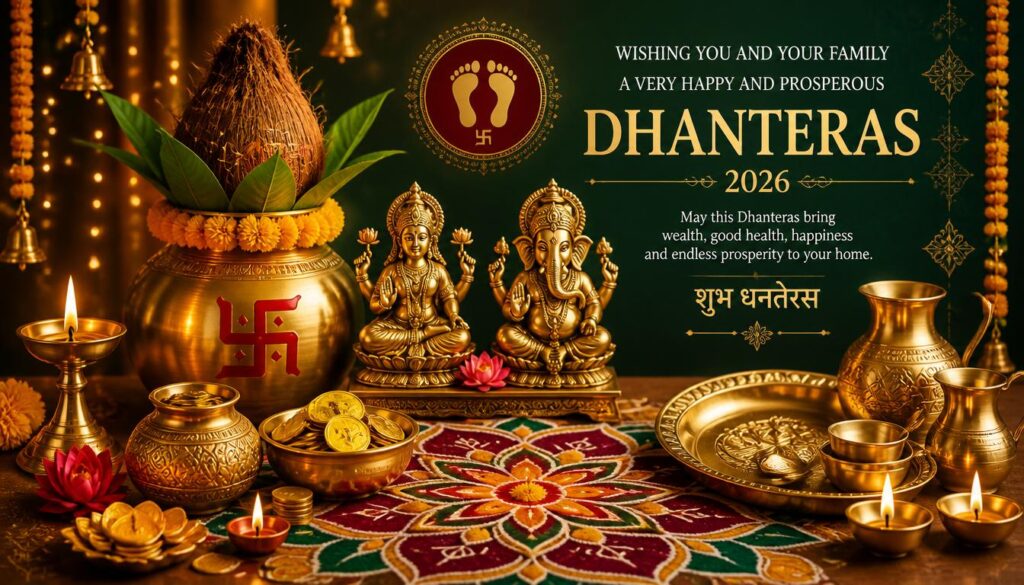
Sometimes the best festival wish is not the grandest one. It is the message that sounds as though you actually know the person receiving it.
These Dhanteras 2026 wishes work well for WhatsApp, greeting cards, family groups and personal messages, and you can easily add a name or a family detail.
Festival greetings do not always need to sound like something printed on a greeting-card rack twenty years ago. For friends and colleagues, a lighter tone often feels more natural, especially when everyone is juggling work, shopping, family plans and approximately 47 WhatsApp groups.
There is a special tenderness in wishing parents or grandparents on Dhanteras. For older generations, the festival may carry memories of simpler shopping, handmade rangoli, steel utensils wrapped in newspaper, oil lamps placed carefully at doorways and recipes nobody has written down because “everyone just knows.”
For traders, shopkeepers and business families, Dhanteras has an especially strong connection with prosperity and financial beginnings.
In parts of western India, Chopda Puja is associated with worshipping account books and seeking blessings for the coming financial year, particularly around the broader Diwali period.
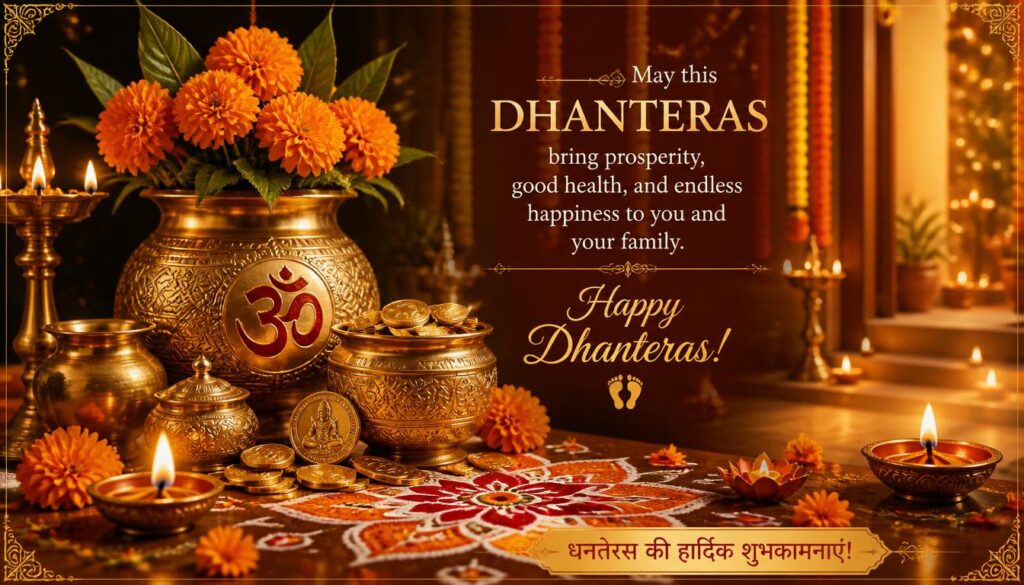
Some people want a message that sounds less like an announcement and more like a small piece of poetry. These are useful for cards, Instagram captions or a family photograph where a simple “Happy Dhanteras” feels a bit too plain.
The tradition of Dhanteras shopping is strongly associated with buying items considered auspicious, particularly metals and household goods. Gold, silver, coins, jewellery and metal utensils are popular choices, while some families also purchase new kitchenware, appliances or other useful household items.
But there is no spiritual requirement that everyone must buy expensive gold. That idea gets lost rather easily in modern festival advertising.
A small silver item, a brass utensil, a useful kitchen purchase or even something meaningful for the household can carry personal significance without creating financial pressure.
Traditional associations also include Dhanteras metal utensils, coins and, in some communities, a new broom. The broom has a symbolic relationship with cleanliness and removing disorder from
the household. Whether you follow that custom or not, the underlying message is rather sensible: prosperity feels better in a home that is cared for.
If you’re considering buying gold on Dhanteras, check the local muhurat and your own budget first. Auspiciousness should not become an excuse for unnecessary debt; a festival about prosperity is a rather odd place to begin financial stress.
A typical Dhanteras puja may involve cleaning the home, decorating the entrance with a rangoli, arranging flowers, lighting diyas, preparing a puja sthal, and offering items such as kumkum, turmeric, rice or akshat, incense and sweets.
Many families worship Goddess Lakshmi and Kubera, while others place special emphasis on Lord Dhanvantari. Regional practices differ, and there isn’t one single ritual script followed identically in every household.
Thats worth remembering when somebody online announces that one particular method is the “only correct” Dhanteras puja.
The evening is also associated with Yama Deepam, traditionally involving an earthen lamp. In some households, 13 diyas on Dhanteras are mentioned as part of the observance, although practices and interpretations differ by region and family tradition.
A simple celebration can be meaningful: clean the home, light the lamps safely, say your prayers, offer food, remember elders, and spend some quiet time thinking about what prosperity means to your family. Rituals don’t become less sacred just because they are simple.
Food adds a very human layer to every Indian festival. On Dhanteras, offerings vary by community, household and region, but sweets and traditional items may be included as Dhanteras prasad.
Some traditions mention kheel, puffed rice, batashe, sweets, coriander seeds or dhania, and jaggery. In certain regional practices, coriander and jaggery have associations with prosperity and auspicious beginnings.
You don’t need a complicated menu. A bowl of homemade sweets shared with grandparents can carry more emotional weight than a table crowded with dishes nobody actually enjoys. The best festive food is usually the food people remember.
India does not celebrate Dhanteras in one single voice. The basic festival has shared religious associations, but its texture changes from one region to another.
In Maharashtra, families may combine Dhanteras observances with preparations for the wider Diwali season, including household cleaning, lamps and purchases.
In Gujarat, business communities have strong associations with prosperity rituals and Diwali-period accounting traditions, while the broader festive season can involve elaborate Lakshmi worship.
In Rajasthan, Uttar Pradesh, Haryana, Punjab and Madhya Pradesh, families may emphasize lamps, household purchases, Lakshmi worship and Yama Deepam, but the exact details can vary even between neighbouring families.
One household may prepare a particular sweet; another may insist on a different ritual entirely. Thats not necessarily contradiction it is how living traditions work.
The beautiful thing about these regional differences is that Dhanteras survives not as a rigid checklist, but as something families keep reshaping while still recognizing its core themes of prosperity, health and light.
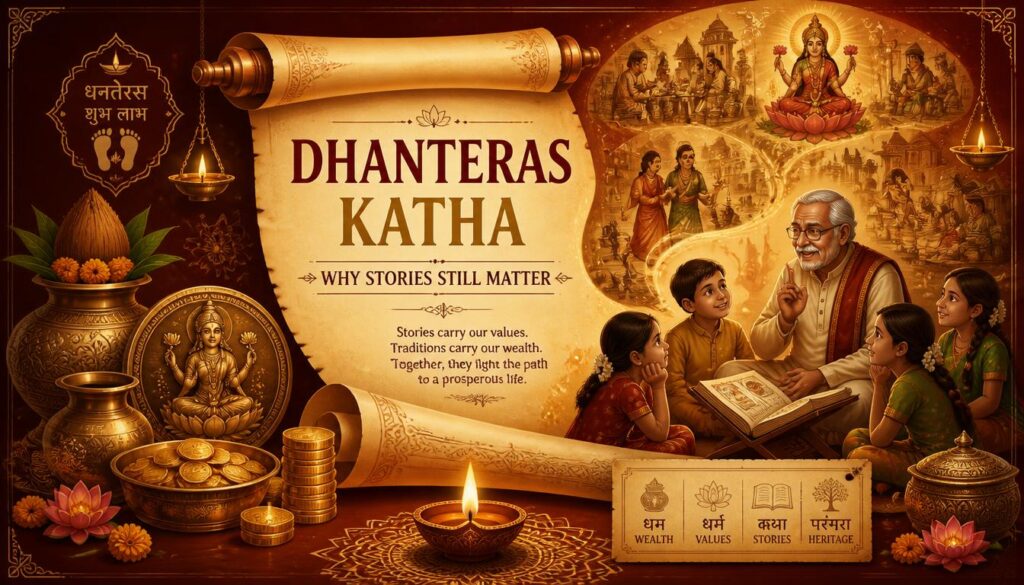
A Dhanteras Katha is not simply an old story inserted into a ritual because tradition says so. Stories give festivals their emotional architecture. They help children understand why a lamp is being lit, why a deity is remembered, or why a certain custom has remained in the family.
Stories connected with Dhanteras and Yama often emphasize protection and longevity, while stories surrounding Lakshmi focus on prosperity and the conditions that invite it. The Dhanvantari tradition turns attention toward health and healing.
The exact versions of these stories can vary across regional and textual traditions, so it is wise to present them as traditional narratives rather than historical events. A festival story does not need to be read like a newspaper report to have cultural value.
A good festival wish takes about thirty seconds to personalize, but that little effort changes everything.
Start with the person’s relationship to you. A message for your grandmother should not sound like one for your college friend.
Then add one concrete detail: her love of cooking, your father’s new business, your friend’s recent achievement, or the family gathering everyone has been waiting for.
You can use this easy pattern without making it sound like a template:
“This Dhanteras, I hope [specific person/detail] brings you [specific blessing], and may the coming year give you [personal hope].”
For example, instead of writing “May you be blessed with prosperity,” write: “May this Dhanteras bring Papa a peaceful year for the shop, healthy mornings and enough time to sit with us over tea.” Suddenly the wish belongs to a real person.
A message becomes more memorable when the delivery has some personality.
Dhanteras 2026 will be celebrated on Friday, November 6, 2026. It marks the first day of the five-day Diwali festival and is considered auspicious for wealth, prosperity, and health.
The Dhanteras 2026 date is Friday, November 6, 2026. It falls on the Trayodashi Tithi of Krishna Paksha in the Hindu month of Kartik.
The 2026 Dhanteras date is November 6, 2026 (Friday). On this day, devotees worship Lord Dhanvantari, Goddess Lakshmi, and Kubera and traditionally purchase gold, silver, or metal items.
The date of Dhanteras in 2026 is Friday, November 6. Dhanteras is observed as the opening day of Diwali celebrations and is associated with wealth, health, and prosperity.
Read more: https://templetimingsdaily.com/vijayawada-kanaka-durga-temple-timings-today/
It is tempting to reduce Dhanteras to gold purchase, jewellery, utensils and shopping lists. Those things are certainly part of the living tradition for many families, but the festival carries a wider idea.
Wealth without health is fragile. Wealth without generosity can become lonely. Wealth without wisdom can disappear quickly. And perhaps most importantly, material wealth is only one form of abundance.
The presence of Goddess Lakshmi reminds devotees of prosperity; Kubera represents treasure and financial abundance; Lord Dhanvantari brings the imagination of health and healing; and Yama Deepam turns the mind toward protection and longevity.
Together, these traditions make Dhanteras feel almost like a conversation about what a good life should contain. And that may be the most useful takeaway from Dhanteras 2026.
Buy what you genuinely need. Celebrate what you genuinely value. Light the diya carefully. Give thanks for the people who made it through another year beside you.
If possible, share something with someone who has less. And when you say “Happy Dhanteras,” let it mean more than a decorative sentence.
May this Dhanteras 2026 bring your home health, prosperity, abundance, financial security, peace and divine blessings. May your lamps burn steadily, your prayers feel sincere, and your family have many reasons to sit together again next year.
After all, the richest home is rarely the one with the most gold. It is usually the one where somebody is still waiting at the door with the light on. Happy Dhanteras, and may your celebration be bright in all the ways that actually matter.DPSources