Physical Address
304 North Cardinal St.
Dorchester Center, MA 02124
Physical Address
304 North Cardinal St.
Dorchester Center, MA 02124

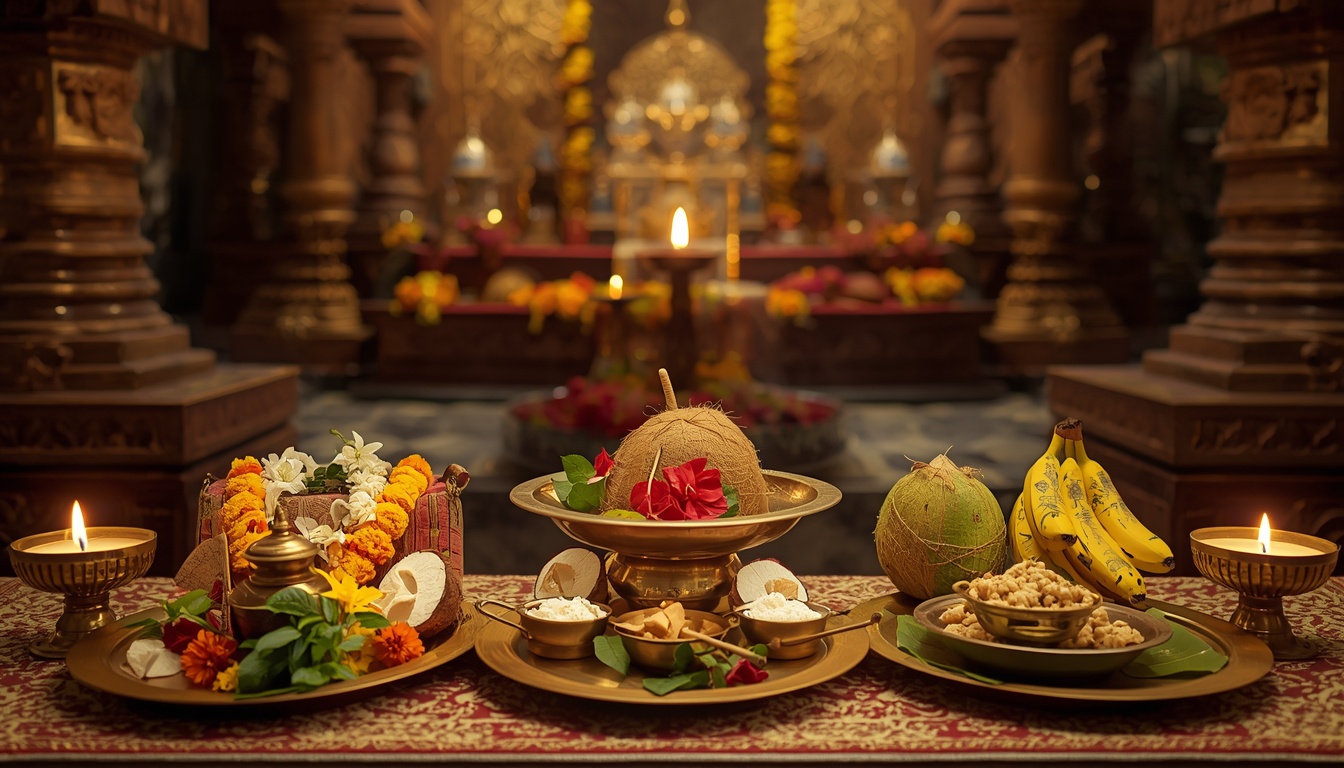
A visit to the Guruvayur Temple is rarely just a visit to a temple. For many devotees, it carries a quiet feeling that is hard to put into ordinary words.
A person may arrive carrying a prayer, a promise, gratitude for something already received, or simply a wish to stand before Guruvayurappan for a few peaceful moments. The offering becomes part of that feeling, not merely a payment made at a counter.
The Guruvayur Sree Krishna Temple in Kerala is dedicated to Lord Krishna, worshipped here as Guruvayurappan. Devotees make different temple offerings, or Vazhipadu, according to their family traditions, personal prayers, and the purpose of their visit. Some offerings are very simple, while others involve elaborate rituals, food, lamps, or special ceremonies.
For someone visiting for the first time, the Guruvayur offerings list can look surprisingly large. There are poojas, nivedyams, abhishekams, archana, lamps, payasam, annadhanam and special ceremonies. So, knowing what each offering means can make the visit feel much more intentional, rather than choosing something in a hurry.
In the tradition of Guruvayur, a Vazhipadu is a devotional offering made to the deity. It may be food, flowers, a lamp, a ritual, a prayer service, or another approved temple service. The deeper idea is Bhakthi, or devotion, rather than the monetary value of the offering.
The official Guruvayur Devaswom platform provides online services for offerings, darshan, prasadam and other pilgrim services, making it possible for devotees in India and abroad to plan parts of their pilgrimage in advance.
This is why two devotees can choose completely different offerings and still approach the temple with the same sincere feeling. One may select Pal Payasam, another may choose Archana, while someone else may arrange Thulabharam or Udayasthamana Pooja.
The main offerings cover several kinds of devotion, from everyday nivedyam to major ceremonial services. The traditional list includes Udayasthamana Pooja, Prasada Oottu, Tulabharam, and Choroonu/Annaprasanam, along with many food and ritual offerings.
Here are some of the offerings devotees commonly look for:
These offerings show how broad the idea of a temple offering can be. It is not always something grand or expensive; sometimes a small devotional act feels more meaningful to the person making it.
For devotees who want a more prayer-focused service, Guruvayur temple pooja options include several forms of archana and chanting. The exact availability and charges can change, so devotees should check the current booking system before making plans.
Commonly listed services include:
A person choosing an Archana may simply want to place a prayer before the deity in a traditional form. There does not have to be a dramatic reason behind it, and thats one of the gentle things about devotional practice.
Food offerings have a special place in the devotional culture of Guruvayur. The Guruvayur temple nivedyam list contains several preparations, and payasam is one of the names visitors often search for first.
The listed offerings include Pal Payasam, Nei Payasam, Sarkara Payasam, Palada Pradhaman, and Eratti Payasam. Other nivedyam options include Appam, Ada, Avil, Thirumadhuram, Butter Nivedyam, Sugar Plantain, Undamala, and Malar Nivedyam.
For many devotees, Guruvayur Pal Payasam is more than a sweet dish. It becomes something remembered after the journey, perhaps carried home as Guruvayur prasadam where the applicable service permits it. Food offered in a sacred setting often carries a different emotional meaning, even when the ingredients themselves are wonderfully ordinary.
The important point is that devotees should not assume every item has the same quantity, collection procedure, or current price. Temple schedules and rates can be revised, so the current service listing should always be checked before payment.
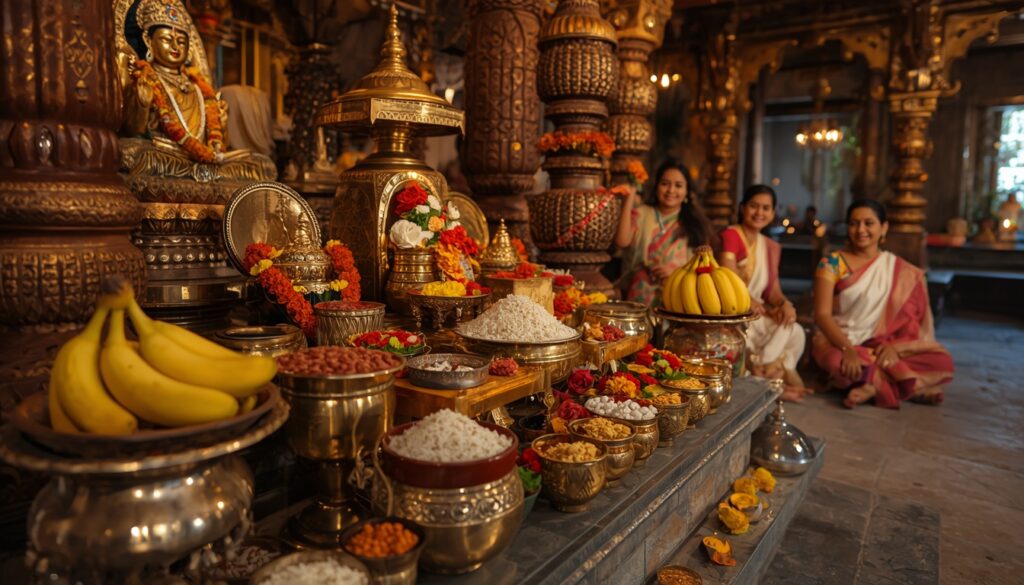
Some Guruvayur temple ceremonies are especially meaningful for families. Among the best-known is Choroonu, the first rice-feeding ceremony, also referred to as Annaprasanam.
For parents, grandparents and relatives, a ceremony like this can become one of those family memories that survives for years. The child may remember almost nothing of the day, of course, but the photographs, stories and blessings remain with the family.
Vidyarambham is another family-oriented service associated with the beginning of learning. It is connected with the traditional introduction of a child to letters and education.
Other family-related or practical devotional services can include Thali Pooja, Vahana Pooja, and offerings associated with personal prayers. The right choice depends on what the family is actually visiting the temple to mark, rather than simply choosing the most expensive service.
Another important group consists of Guruvayur temple abhishekam and lamp-related offerings. These rituals use traditional substances and devotional practices as part of worship.
The listed services include:
The Sreekovil offerings naturally carry a special significance because the Sreekovil is the innermost sanctum of the temple. Some services involving lamps or other rituals have specific rules and availability, so they should be selected through the authorized system rather than through an unofficial intermediary.
A lamp is a tiny thing when seen alone, but inside a temple it can become part of a much larger atmosphere of prayer. Thats probably why lamp offerings remain so popular among devotees.
Guruvayur Thulabharam is one of the offerings most closely associated with the temple in the minds of many visitors. In this ceremony, a devotee is traditionally weighed against a selected offering material, subject to the temple’s rules and arrangements.
The idea can carry different personal meanings. Some devotees connect it with gratitude after a prayer has been fulfilled, while others perform it because it is part of a family vow or tradition. It is better understood as a devotional practice rather than simply a transaction.
Other notable offerings and services in the broader list include Anayoottu, Go-pooja, Go-Preethi, support for Elephant maintenance, Alroopam, and Vahana Pooja.
Vahana Pooja can be particularly practical for devotees who want to offer prayers connected with a vehicle. Different vehicle categories have been listed separately in offering information, so checking the current service details is important.
One of the most searched questions is about Guruvayur offering charges. Older published lists show individual prices for offerings such as payasam, archana, lamps, abhishekam and other services, but those figures should not automatically be treated as the current Guruvayur offering price.
For example, a published offering list contains historical figures for Pal Payasam, Nei Payasam, Sarkara Payasam, Ashtotharam Archana, Sahasra Namam Archana, Milk Abhishekam, and many other services.
Because temple charges can be revised, the safest approach is to check the current Guruvayur temple charges directly in the authorized online booking system before making payment. This matters especially when searching for a complete Guruvayur Temple offerings and charges list in INR.
Do not rely on a random blog’s old price table just because it appears in Google. A price that was accurate several years ago may not be accurate today, and that little difference can cause unnecessary trouble at the temple.
The Guruvayur temple offerings online booking facility allows devotees to arrange selected services without depending entirely on an in-person visit to the counter. The official Devaswom website states that devotees living in India and abroad can use its online services for offerings and other pilgrimage services.
The online Guruvayur vazhipadu booking system allows devotees to select the deity, choose an available offering and enter the relevant details. Its booking page also provides options for selecting dates and entering the name of the person making the offering.
A simple process is generally:
The official site also warns devotees that Guruvayur Devaswom does not authorize agents for online booking of Darshan, accommodation or donations. It advises users not to share passwords, OTPs, PINs, CVVs or other sensitive banking information over phone or email.
That warning is worth remembering. When a pilgrimage is emotionally important, people sometimes rush because they are worried about availability, and scammers know exactly that.
Krishnanattam is another distinctive part of Guruvayur’s devotional culture. It presents episodes from the life and stories of Krishna through traditional performance.
The listed Krishnanattam themes include:
Related services also include Chuttuvilakku, Sastha Chuttuvilakku, and Chuttambalam Theliyikkal. The current Devaswom platform specifically notes that Krishnanattam bookings are available for selected future months, showing why checking availability before travel is useful.
A devotee interested in this service should check the available date rather than assuming that every performance can be booked on any day.
The wider Guruvayur vazhipadu list includes many services that may not be familiar to a first-time visitor. Among the names found in published offering information are Nalambalam Vilakku Veypu, Palakapuram, Ahassu, Malayidal, Kettu Nira, Thulabharam Thattil Panam, and Nivedyakooru.
There are also offerings involving lamps and temple spaces, such as the East Deepasthambham, West Deepasthambham, Bhagavathy Chuttuvilakku, and Chuttambalam.
Some services have a devotional connection to particular personal circumstances, while others are connected with larger temple customs. It is perfectly fine if you do not understand every name at first; the list is broad because Guruvayur has a long and highly developed tradition of ritual services.
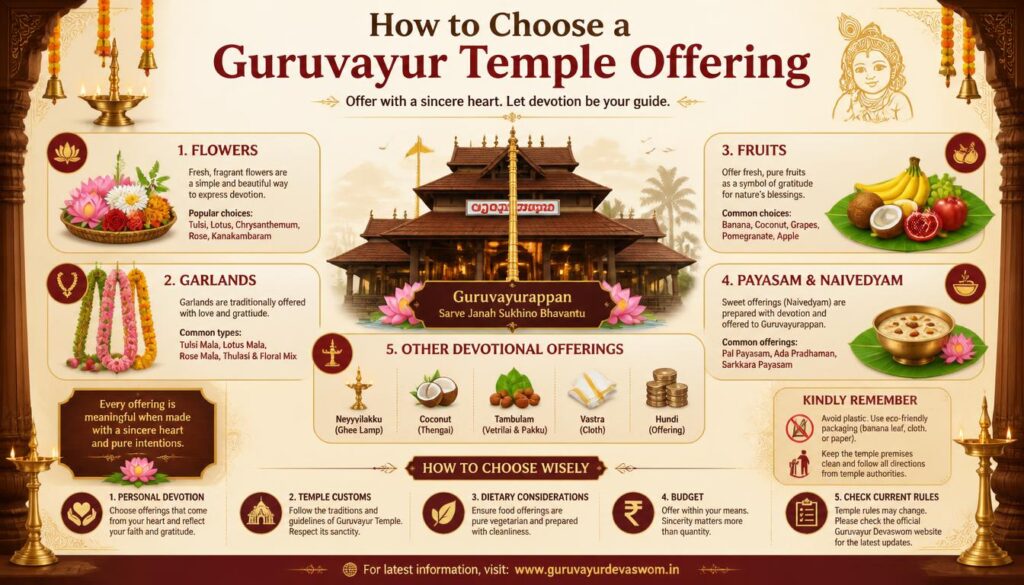
Choosing an offering does not have to become a competition between prices. A useful starting point is to ask why you are visiting.
If your visit is mainly for gratitude, you might choose a simple Nivedyam, Archana, or lamp offering. For a family milestone, Choroonu, Annaprasanam, or Vidyarambham may be more relevant.
For a prayer connected with a personal vow, the appropriate Vazhipadu may already be part of your family’s tradition. In that situation, following the established family practice can feel much more natural than selecting something simply because it is popular online.
And if you are uncertain, asking the temple’s authorized staff about the current service procedure is much better than relying on assumptions. Devotion doesn’t need to be complicated to be sincere.
Before visiting, it helps to understand a few basic Guruvayur temple customs. The official Devaswom platform currently lists the temple dress code as Dhoti and Angavastram for male devotees and Saree, Chudidhar or Half Saree for female devotees.
Keep your booking receipt safely if you have arranged an offering online. Also check the date, name and selected service before travelling, because correcting an error later may be inconvenient.
If you are travelling from outside Kerala, allow extra time for queues, ceremonies and the practical parts of a pilgrimage. A temple visit rarely moves at the same speed as an ordinary shopping trip, and thats part of what makes it feel different.
The real meaning of a devotional offering is not necessarily found in its price. For many devotees, it represents gratitude, surrender, remembrance or a promise kept.
Someone may offer a little food. Someone else may arrange a major pooja. Another devotee may simply stand before Guruvayurappan with folded hands and leave without anything elaborate.
That difference is important. A sacred tradition can hold both the grand ceremony and the smallest gesture. The feeling behind the act is often what makes it personally meaningful.
The published description of Guruvayur offerings similarly explains them in terms of devotion and gratitude, noting that devotees make offerings for many reasons, including mental peace, success, health and family hopes.
Read more: https://templetimingsdaily.com/raksha-bandan/
Guruvayur vazhipadu can be booked online for selected offerings, making it easier for devotees to choose and arrange their preferred offering before visiting the temple.
The Guruvayur Temple vazhipadu list includes various offerings such as payasam, archana, abhishekam, ghee lamps, Thulabharam, and other devotional services.
The Guruvayoor Temple vazhipadu list contains different poojas and offerings available for devotees, along with their applicable charges.
The Guruvayoor vazhipadu list in Malayalam can help devotees understand the available offerings, poojas, and related temple services in their preferred language.
Guruvayoor vazhipadu refers to the various religious offerings and poojas performed by devotees at Guruvayur Temple as an expression of devotion.
The world of Guruvayur Temple offerings is large because the devotional life surrounding Guruvayur is large. From Pal Payasam and Nei Payasam to Archana, Abhishekam, Ghee Lamp, Thulabharam, Choroonu, Udayasthamana Pooja, Prasada Oottu, and Krishnanattam, each service gives devotees a different way to express their faith.
If you are planning a visit, don’t choose an offering only because its name appears frequently in search results. Think about the reason for your visit, check the current Guruvayur offering price, confirm availability, and use the authorized Devaswom booking platform when arranging services online.
Most importantly, let the offering remain what it is meant to be: an expression of devotion. Whether it is something simple or a carefully planned ceremony, the quiet moment before Lord Krishna is often the part people remember longest.
For current offerings, availability and booking instructions, always verify the details through the official Guruvayur Devaswom platform because prices, schedules and booking arrangements can change.