Physical Address
304 North Cardinal St.
Dorchester Center, MA 02124
Physical Address
304 North Cardinal St.
Dorchester Center, MA 02124

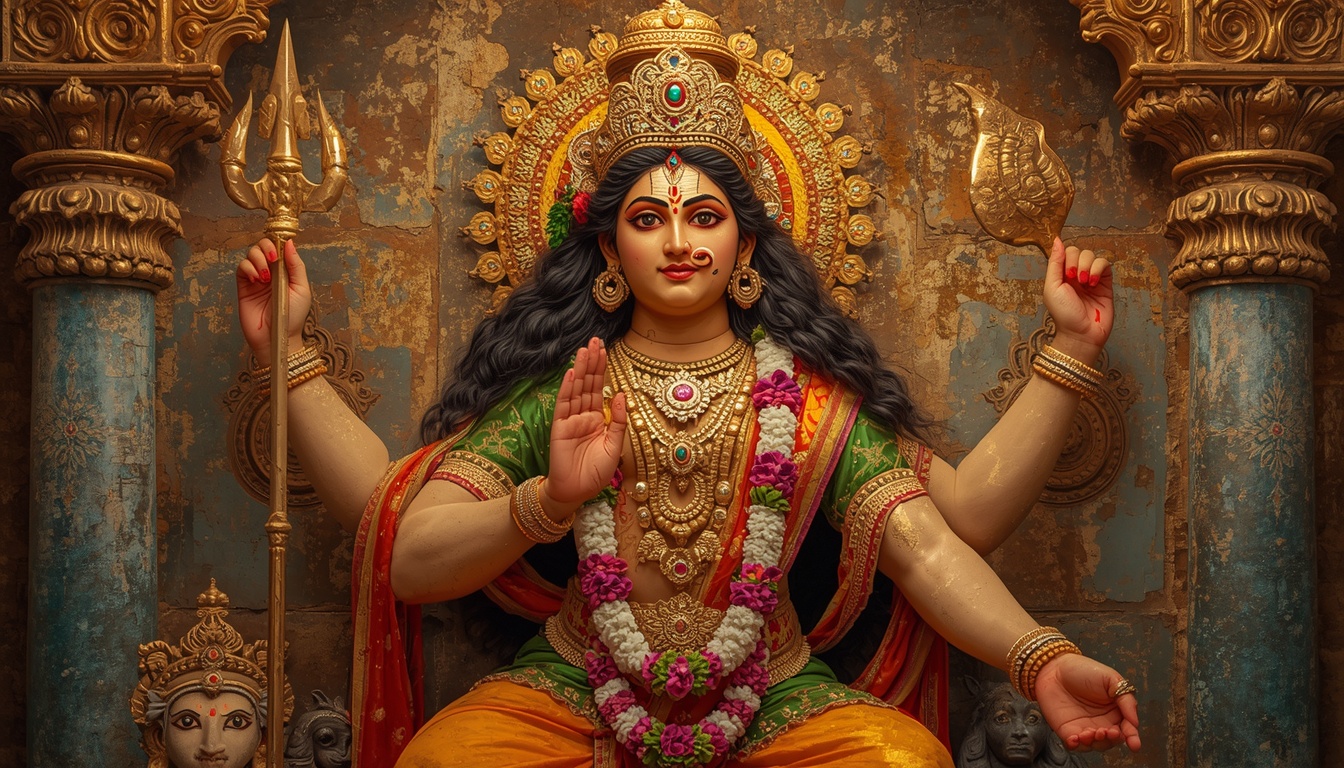
Among the many divine figures celebrated in Indian heritage, Lord Muruga holds a very special place, particularly in Tamil culture and throughout Southern India.
He is remembered not only as the son of Lord Shiva and Parvati, but also as a youthful warrior, a teacher of profound spiritual wisdom, and a protector of devotees.
There is something wonderfully unusual about Muruga: he can appear as a playful young god in one story and as a mighty divine commander in another, yet both images somehow belong together.
Known by many names such as Murugan, Murugar, Kartikeya, Skanda, Subrahmanya, Kumara and Shanmukha, Muruga’s stories stretch across mythology, devotion, philosophy and temple traditions. For Tamil people especially, he is lovingly called Tamil Kadavul, meaning the Tamil God.
His presence is deeply connected with hilltop temples, sacred journeys, festivals and the everyday faith of millions.
Lord Muruga is traditionally described as the second son of Shiva and Parvati and the younger brother of Lord Ganesha. He is often shown as a handsome, courageous and youthful deity carrying the Vel, a sacred divine spear given to him by Parvati. His mount, the peacock, makes his appearance instantly recognizable, even from a distance.
Muruga is not simply portrayed as a warrior who fights enemies. His battles often represent the struggle between divine order and destructive forces. In this sense, the Murugan deity becomes a symbol of courage, discipline, wisdom and victory over inner darkness too.
In Tamil Nadu, devotion to Muruga has a particularly strong emotional character. He is called Kundra Kadavul, the God of the hills, and many ancient Murugan shrines are associated with mountains, forests and elevated sacred places. A hill itself almost seems to become part of his story.
The relationship between Shiva, Parvati and Muruga is central to understanding his place within Hindu mythology. As the son of the divine couple, Muruga represents both Siva-Sakthi, the masculine and feminine divine principles united in creation and consciousness.
He is also remembered as the brother of Ganesha, and stories involving the two brothers often show their different personalities. Ganesha is associated with wisdom and thoughtful intelligence, while Muruga is frequently presented as energetic, adventurous and warrior-like. They are different, but not opposites in any simple way.
One famous story concerns a sacred fruit and a dispute between Ganesha and Muruga. According to the popular version, Shiva and Parvati offered a special fruit to whichever son could travel around the world first. Muruga immediately flew away on his peacock, determined to win.
Ganesha instead walked around Shiva and Parvati, saying that his parents were his entire world. When he was declared the winner, Muruga became upset and left for the hills. This story is often remembered as a charming lesson about wisdom, devotion and the different ways intelligence can work.
The Murugan birth story is one of the most extraordinary accounts in Hindu mythology. According to a traditional account, powerful sparks emerged from the third eye of Shiva. These sparks were so intense that ordinary beings could not bear them.
The divine energy was carried through Vayu and Agni, associated with air and fire, and eventually reached the sacred waters connected with the Ganges. From there, the divine sparks were associated with Saravana Poigai, where six babies appeared.
The six children were cared for by six divine women known as the Karthigai Pengal. When Parvati came to them, the six babies became one divine child with six heads. This is why Muruga became known as Shanmukha, or the six-faced one.
The story is more than a dramatic account of divine birth. The six faces have been given philosophical meanings in different traditions, connecting Muruga with expanded awareness, perception and spiritual development. His unusual birth also explains why the image of the six-headed Murugan became such an important part of South Indian religious art.
The six heads of Muruga are among his most recognizable symbols. At a simple level, they are connected with his birth as six divine babies becoming one. But Indian spiritual traditions often look beneath the literal story, and several symbolic interpretations have developed.
One interpretation connects the six heads with the five sense organs and the mind. The idea is that spiritual development requires the senses to become refined and controlled rather than allowing them to control a person.
Another interpretation associates Muruga with the six centres of psychic energy, or Chakras, through which spiritual energy is traditionally described as rising. In this philosophical reading, Muruga represents consciousness moving beyond ordinary limitations.
The traditional chakra system commonly discusses Mulaadhara, Svaadhisthana, Manipura, Anahata, Vishuddha and Ajna as six important centres, while Sahasrara is described as the highest destination or crown level. This distinction matters because people sometimes simply call all seven points the “six chakras,” which can become confusing.
Thus, Shanmukha meaning is not restricted to having six faces. His six-fold form can also represent the movement from ordinary perception toward spiritual consciousness, refined awareness and higher understanding.
The warrior aspect of Muruga becomes especially prominent in the story of Sura Padman, a powerful Asura who challenged the Devas and created suffering for divine beings and Rishis.
Muruga was appointed as a divine commander, often associated with the title Devasenapati. Armed with the Sakthi Vel, he confronted Sura Padman in a great battle. The Vel is not merely a weapon in artistic representations; it is also viewed as a symbol of divine knowledge cutting through ignorance.
The battle eventually ended with the defeat of Surapadman. In a well-known part of the story, the defeated Asura transformed into a tree. Muruga’s Vel split the tree, and from its transformation came the peacock and cock emblem associated with Muruga.
The peacock became Muruga’s vahana, or divine mount, while the cock became part of his flag symbolism. It is a fascinating ending because the enemy is not simply erased from existence. His transformed forms become symbols connected with Muruga himself.
The Murugan peacock is one of the most familiar symbols in South Indian temples. It is often shown standing beneath or beside the youthful deity, carrying him through the divine world.
The peacock can be interpreted in several ways, including beauty, majesty and the overcoming of pride. Since spiritual traditions frequently use animals symbolically, its presence beside Muruga gives the image another layer beyond decoration.
The cock emblem is connected with the Surapadman story and is often shown on Muruga’s flag. Together, the peacock, cock and Vel create a visual language of courage, transformation, protection and victory.
Perhaps one of the most beautiful aspects of Murugan mythology is that Muruga is not always the student. In the famous Swamimalai tradition, he becomes the teacher of his own father, Lord Shiva.
The story concerns OM, the Pranava Mantram, whose deeper meaning Muruga knows. Shiva asks Muruga to explain it, and Muruga agrees on the condition that Shiva listens to him as a student.
This gives Muruga the name Swaminathan in this context. The story reverses the usual relationship between father and son, showing that divine wisdom cannot always be measured by age.
There is a gentle lesson hidden inside this story. Knowledge does not become less valuable because it comes from someone younger. Sometimes, the person we expect to teach may quietly become the person teaching us instead.
The family story of Muruga becomes even richer through his two consorts, Valli and Devasena. Both relationships have their own traditions and symbolic interpretations.
Valli Devi is traditionally described as a tribal girl, and stories about Muruga’s relationship with her are often playful, romantic and full of divine disguises. The stories are very different in mood from the battle narratives, showing Muruga as mischievous and charming rather than only heroic.
Devasena, on the other hand, is associated with the divine world and is traditionally described as the daughter of Indra, the king of the Devas. Muruga’s marriage to Devasena is especially connected with Tiruparankundram, one of his major sacred abodes.
Together, Valli and Devasena represent two important dimensions of Muruga’s mythology. One comes through a more earthly and intimate setting, while the other is associated with the celestial order.
The Arupadai Veedu, also written Aru Padai Veedu, refers to the six major sacred abodes of Muruga in Tamil tradition. These temples are not merely tourist destinations. For devotees, they form a spiritual landscape through which the many dimensions of Muruga can be experienced.
Palani is one of the most famous Muruga pilgrimage centres. The tradition of the sacred fruit is strongly associated with this place, and Muruga is worshipped here in a form connected with renunciation and spiritual simplicity.
For many devotees, climbing toward the hill temple is itself part of the devotional experience. The physical journey and the inner journey almost seem to walk side by side.
Swamimalai is especially famous for the story of Muruga teaching Shiva the meaning of OM. Here, the name Swaminathan becomes particularly meaningful.
The temple tradition therefore presents Muruga not simply as a youthful warrior, but as a divine teacher possessing profound knowledge. It is one of the most memorable examples of role reversal in Hindu mythology.
Tiruchendur is a remarkable coastal shrine and is strongly connected with Muruga’s battle against Surapadman. Unlike several hill temples, this sacred place stands beside the sea.
The combination of ocean, temple and warrior mythology gives Tiruchendur a very distinctive atmosphere. Devotees visit for worship, darshan and a deeper connection with Muruga’s victory over destructive forces.
Near Madurai stands Tiruparankundram, traditionally associated with Muruga’s marriage to Devasena. It is therefore an important place in the story of Muruga’s family and divine relationships.
The temple is also remembered as one of the oldest and most significant sacred centres connected with Muruga in Tamil tradition. Its importance extends beyond one story, making it a major pilgrimage destination.
Tiruttani is another important Muruga shrine, traditionally connected with Valli and the divine marriage stories surrounding her.
The temple’s elevated setting continues the long-standing connection between Muruga and hills. Devotees climbing toward the shrine often experience the journey itself as part of their worship.
Located near Madurai, Pazhamudircholai is traditionally associated with Muruga, Valli and Devasena. The natural setting of the shrine adds a special character to the devotional experience.
It completes the traditional list of the six Murugan temples known collectively as the Arupadai Veedu. Together, these six abodes form one of the strongest pilgrimage traditions associated with the Tamil god Muruga.
The title Tamil Kadavul reflects the especially deep relationship between Muruga and Tamil culture. His worship is found throughout Tamil Nadu, and his name appears in devotional songs, literature, temple traditions and family prayers.
Calling Muruga the Tamil God Murugan does not simply describe geography. It expresses an emotional and cultural relationship that has developed over generations. Hill temples, festivals, processions and devotional practices have all helped keep this connection alive.
The term Kundra Kadavul, or God of the hills, also reflects the old association between Muruga and mountainous sacred spaces. In many traditions, nature is not just the background to the divine story; the landscape itself becomes part of the sacred experience.
The philosophical symbolism of Muruga can also be explored through Yoga psychology. His six heads have been associated by some interpreters with the six major psychic centres and the movement of Kundalini, or spiritual energy, toward higher consciousness.
The journey begins with ordinary human awareness and moves toward increasingly refined states of perception. In this interpretation, Muruga becomes an image of the perfected being, someone whose senses, mind and spiritual energy are brought into greater harmony.
The symbolism should not be treated as a single universal interpretation, because Hindu traditions contain many schools and explanations. Still, the association between Muruga, six-fold symbolism, consciousness and spiritual development remains an important part of his philosophical appeal.
One reason Muruga is so fascinating is the extraordinary number of names used for him. Each name can highlight a particular quality, story or relationship.
Kartikeya connects him with the Karthigai tradition. Skanda is another ancient and widely recognized name. Subrahmanya is commonly used in temple worship, while Kumara emphasizes his youthful divine nature.
Shanmukha points toward his six-faced form. Saravanabhava connects him with his sacred birth tradition. Guha carries the sense of one who is hidden or dwelling within, while Swaminathan recalls the story of his teaching Shiva.
These are not simply different labels for the same deity. In devotional practice, names can become small doors into different aspects of the divine personality.
The image of Muruga combines qualities that might seem separate at first: youth and authority, beauty and warfare, playfulness and wisdom, family affection and spiritual independence.
His Vel represents courage and divine power, while his role as spiritual teacher represents knowledge. His peacock suggests majesty and transformation, while his six heads suggest expanded awareness.
That combination is probably one reason Lord Murugan continues to attract devotion across generations. He is not presented as a distant figure who belongs only to ancient stories. For many devotees, his qualities remain practical ideals: be courageous, seek wisdom, control the senses, protect others and keep moving toward higher understanding.
Indian heritage is not preserved only inside museums or old manuscripts. It survives when stories are remembered, temples are visited, names are spoken and symbols continue to have meaning in people’s lives.
The traditions surrounding Muruga, Shiva and Parvati, the stories of Ganesha and Muruga, the six sacred abodes and the symbolism of the Vel and peacock all contribute to a living cultural heritage.
For someone discovering Muruga for the first time, there may seem to be a huge number of stories and names. But they gradually connect: the divine birth leads to Shanmukha, Shanmukha leads to the symbolism of six, the warrior story leads to the Vel, the Vel leads to Surapadman, and the temple traditions bring these stories into real places that devotees can visit.
Muruga is a popular Hindu deity and the son of Lord Shiva and Goddess Parvati. He is especially worshipped in South India and is regarded as the Tamil Kadavul.
Murugar is another name used for Lord Muruga, the divine warrior and son of Shiva and Parvati. He is associated with courage, wisdom, victory, and spiritual knowledge.
ಮುರುಗ (Muruga) is the Kannada form associated with Lord Muruga, a beloved Hindu deity worshipped widely in South India. He is traditionally represented with a spear and peacock.
ಮುರುಗನ್ (Murugan) refers to Lord Muruga, one of the most revered deities in Tamil tradition. He is known by many names, including Skanda, Kartikeya, and Subrahmanya.
முருகா (Muruga) is a Tamil form of the name of Lord Muruga, who is deeply revered by Tamil devotees. He is celebrated as a brave warrior, spiritual teacher, and protector.
Read more: https://templetimingsdaily.com/11-rudra-avatars-of-lord-shiva/
Lord Muruga, the beloved son of Lord Shiva and Parvati, is far more than a single character within Hindu mythology. He is Kartikeya, Skanda, Subrahmanya, Shanmukha, Swaminathan, Tamil Kadavul and many other names, with each identity opening another part of his story.
His six heads speak through layers of symbolism, his Sakthi Vel represents divine strength and knowledge, his peacock carries the imagery of transformation, and his battles represent the triumph of good over destructive forces. His relationships with Valli and Devasena add tenderness to his warrior identity, while his teaching of Shiva presents him as a surprising source of spiritual wisdom.
The six Arupadai Veedu temples keep this heritage rooted in the landscape of Tamil Nadu, from Palani and Swamimalai to Tiruchendur, Tiruparankundram, Tiruttani and Pazhamudircholai. Each place carries its own story, atmosphere and devotional tradition.
Perhaps that is the enduring beauty of Muruga. He is simultaneously the youthful son, fearless warrior, wise teacher and divine protector. His stories invite people to look beyond the surface, because behind the spear there is knowledge, behind the battle there is symbolism, and behind the youthful face there is a remarkably deep vision of spiritual consciousness.